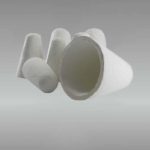
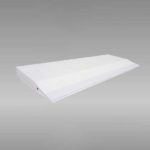
An alumina ceramic foam filter (CFF) is used to remove non-metallic inclusions from molten aluminum before casting. Selecting the right filter requires more than choosing a PPI rating: filter dimensions, available filtration area, metal flow rate, sealing design, and filter box compatibility all affect performance. AdTech supplies ceramic foam filters for aluminum casting applications, with standard sizes, multiple pore densities, and customized specifications for different casting line requirements.
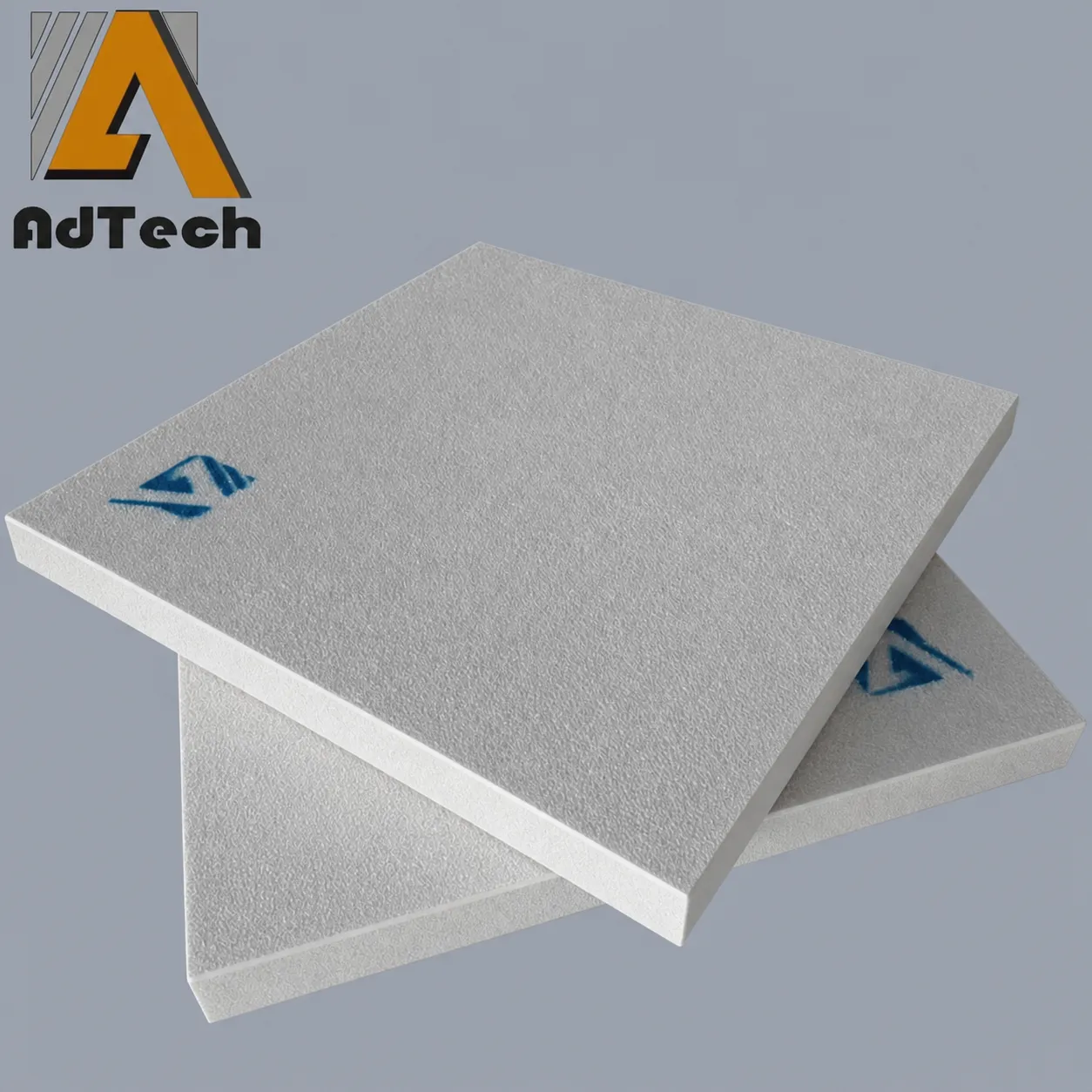
ceramic foam filter for filtration
Which Ceramic Foam Filter Is Suitable for Aluminum Casting?
The appropriate ceramic foam filter depends on the alloy, casting process, required metal cleanliness, and production rate. A filter designed for general foundry casting may not be the best choice for high-quality billet, rolling slab, or other applications with demanding inclusion requirements.
Alumina-based ceramic foam filters are widely used in aluminum melt filtration. Their interconnected, three-dimensional pore structure allows molten metal to pass through while capturing non-metallic particles within and on the surfaces of the ceramic structure. Filtration involves more than simple particle screening; inclusion retention also depends on pore geometry, flow conditions, and interactions between particles and the filter structure.
For purchasing purposes, the first step is to identify the application and production conditions. The filter must provide the required filtration performance without restricting metal flow beyond what the casting process can accommodate.
تشمل التطبيقات الشائعة ما يلي:
- Aluminum billet and ingot casting
- إنتاج الألواح المدرفلة
- سبائك الألومنيوم المستخدمة في صناعة السبك
- Recycled aluminum melt treatment
- Aluminum products requiring controlled inclusion levels and surface quality
The specification should be based on the actual casting process rather than the application name alone.
How Should You Choose the PPI of a Ceramic Foam Filter?
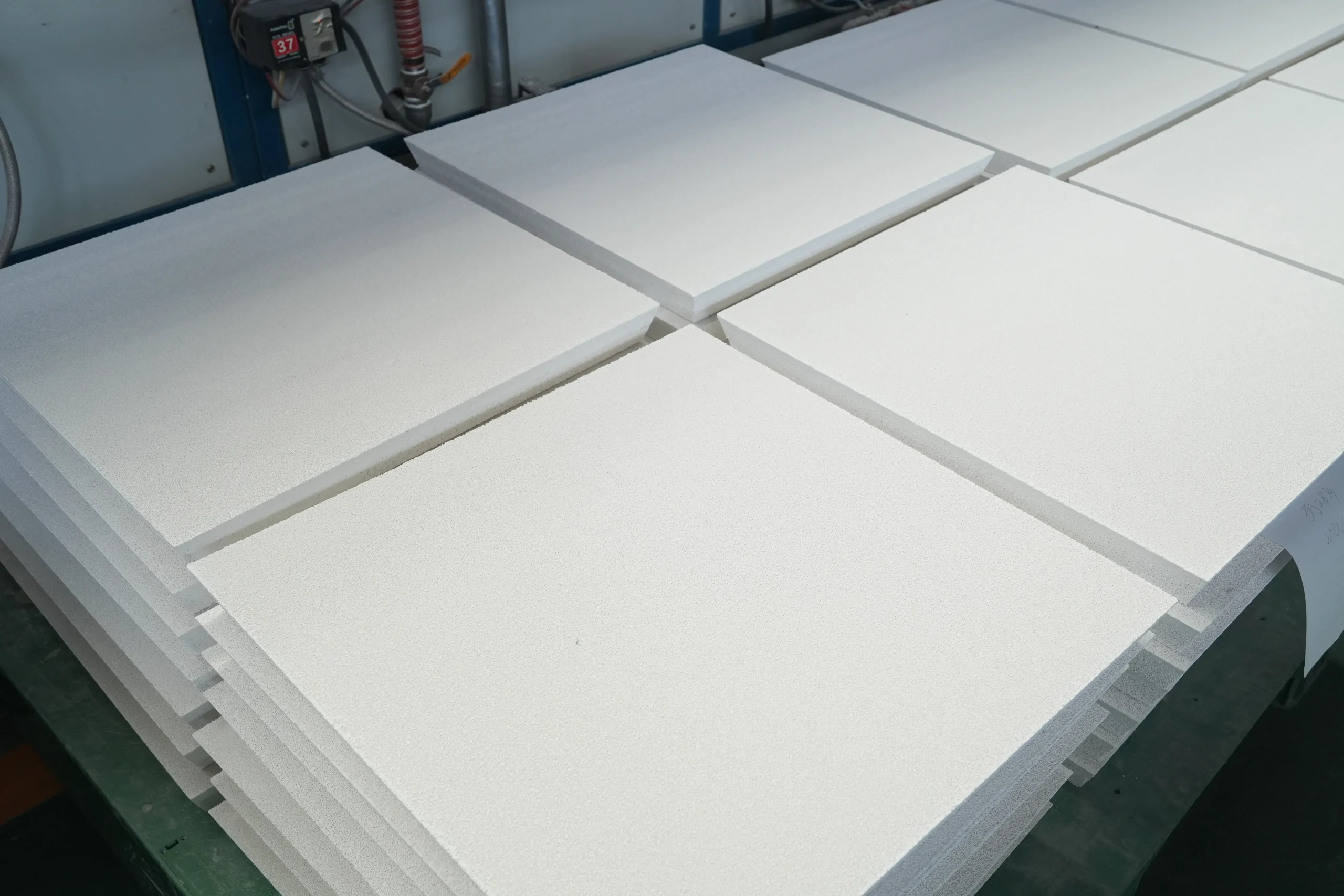
مرشح رغوي خزفي
PPI means pores per inch and describes the pore density of the ceramic foam. It is an important selection parameter, but it does not represent an exact inclusion removal size or guarantee a particular filtration efficiency.
Higher PPI filters generally have finer pore structures and can provide finer filtration, but they may also offer greater resistance to metal flow. The appropriate grade depends on the required cleanliness and the hydraulic conditions of the filtration system.
| CFF rating | General filtration characteristics | Selection considerations |
|---|---|---|
| 10 PPI | Coarser pore structure with relatively high flow capacity | Applications prioritizing flow capacity and removal of larger inclusions |
| 20 نقطة في البوصة | Relatively open structure | General filtration where flow capacity remains important |
| 30 نقطة لكل بوصة | Intermediate pore density | A common starting point for general aluminum casting |
| 40 نقطة في البوصة | Finer pore structure | Applications requiring greater inclusion control, subject to flow capacity |
| 50 نقطة في البوصة | Fine filtration | Applications with stricter cleanliness requirements |
| 60 نقطة في البوصة | Very fine pore structure within this product range | Specialized applications requiring careful validation of flow and filter loading |
This table is a starting guide, not a universal grade-to-application rule. Actual performance varies with filter structure, melt cleanliness, metal flow rate, filtration area, and operating conditions.
A common purchasing mistake is to select the highest available PPI without checking whether the filter area and process can support the required throughput. Where finer filtration increases flow resistance, a larger filter area or a different filtration configuration may be more appropriate.
What Ceramic Foam Filter Sizes Are Available?
Filter dimensions must match the filtration chamber and the required metal throughput. AdTech offers standard square ceramic foam filters in several nominal sizes, with a standard thickness of 50 mm. Customized dimensions can be considered when the existing filter box or casting line requires a different specification.
| Nominal filter size | Approximate dimensions in millimeters | Typical purchasing consideration |
|---|---|---|
| 7 × 7 in | 178 × 178 mm | Smaller filtration chambers |
| 9 × 9 in | 229 × 229 mm | Compact casting installations |
| 12 × 12 in | 305 × 305 mm | Intermediate filtration area |
| 15 × 15 in | 381 × 381 mm | Larger metal throughput requirements |
| 17 × 17 in | 432 × 432 mm | Filtration systems requiring additional area |
| 20 × 20 in | 508 × 508 mm | Larger casting operations |
| 23 × 23 in | 584 × 584 mm | High-capacity filtration configurations |
| 26 × 26 in | 660 × 660 mm | Large filtration chambers and high-throughput applications |
These are nominal dimensions; the final drawing should specify the required dimensional tolerances and thickness.
Filter size should not be selected from casting tonnage alone. The required filtration area also depends on the instantaneous metal flow rate, the design of the filter chamber, the casting process, and the available metallostatic head. A suitable filter must fit the installation and provide enough flow capacity throughout the intended casting operation.
Why Does the Filter’s Edge-Sealing Design Matter?
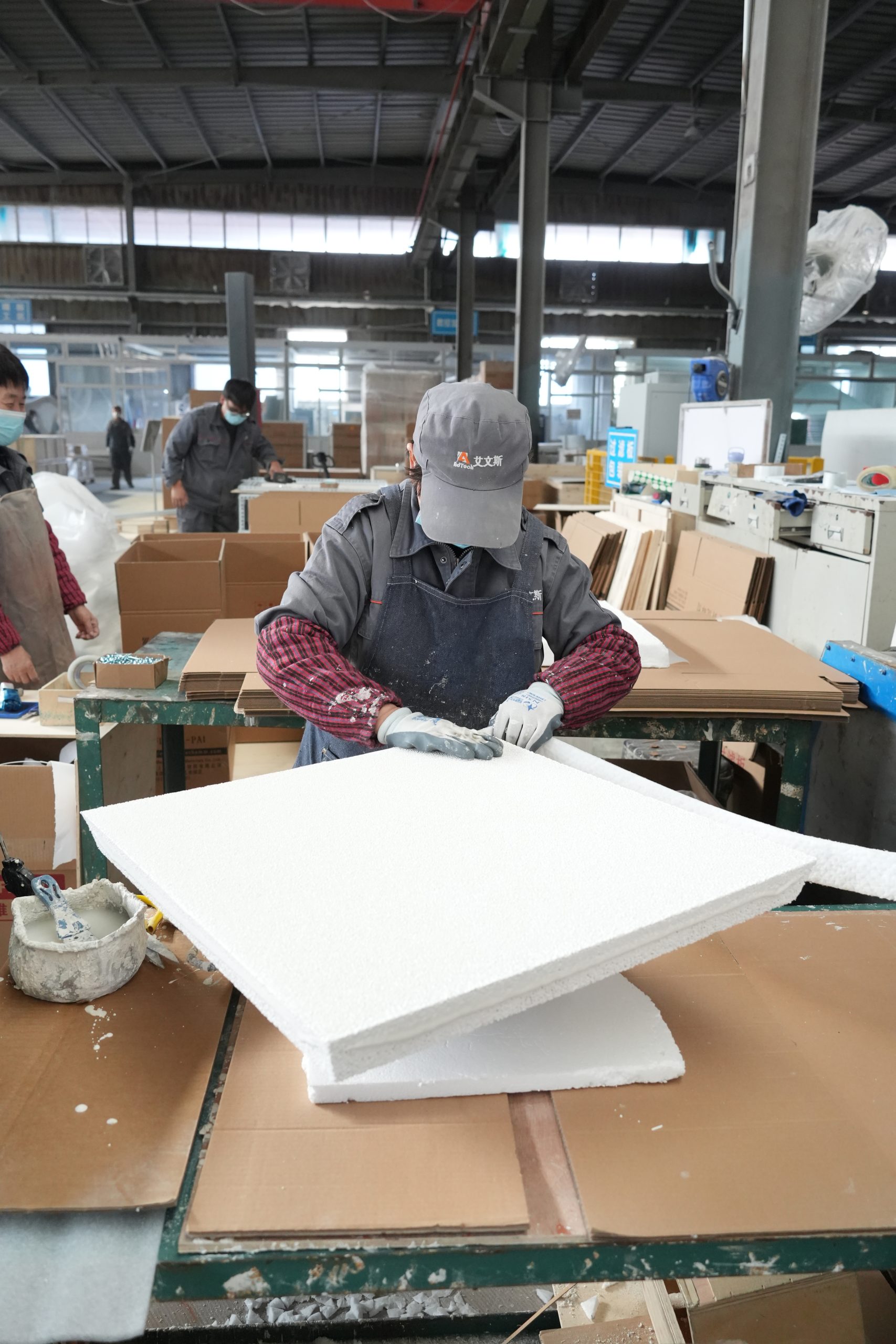
Workers applying CFF edging
A ceramic foam filter must fit securely in the filter chamber. If molten aluminum flows around the filter instead of through it, part of the metal bypasses the filtration medium. This can undermine the purpose of installing a filter, even when the selected PPI is appropriate.
The sealing arrangement is therefore an important part of the purchase specification.
AdTech offers a ceramic foam filter design with an expanding fiber edge. During the specified preheating process, the edge expands to help close small gaps between the filter and its seat, reducing the risk of metal bypass.
When comparing CFF suppliers, check the following:
| ميزة | What to verify |
|---|---|
| Filter dimensions | Compatibility with the filter chamber and seat |
| Edge geometry | Correct fit and support within the filter box |
| Sealing material | Suitability for the intended thermal conditions |
| Expansion behavior | Compatibility with the specified preheating procedure |
| Filter integrity | No unacceptable cracks, chips, or structural damage |
| Installation method | Clear instructions for seating and sealing the filter |
The sealing design must work with the actual filter box. A gasket cannot compensate for a badly mismatched filter dimension or incorrect installation.
What Should You Check When Buying Ceramic Foam Filters from a Manufacturer?
A reliable CFF specification should identify more than the product name and PPI rating. Buyers should confirm that the supplier can provide consistent dimensions, a defined material specification, and a filter suitable for the intended aluminum casting process.
The following items help distinguish a technically complete quotation from one that only lists a unit price.
| المواصفات | Information to confirm before ordering |
|---|---|
| المواد | Alumina-based ceramic suitable for molten aluminum filtration |
| مؤشر أسعار المنتجين (PPI) | Required pore density and available grade |
| الأبعاد | Length, width, thickness, and dimensional tolerance |
| Edge design | Standard edge or specified sealing arrangement |
| Operating conditions | Alloy, metal temperature, and process requirements |
| Flow requirements | Metal throughput and available filtration area |
| فحص الجودة | Dimensional checks and agreed acceptance criteria |
| التغليف | Protection against breakage during storage and transport |
| Supply consistency | Whether repeat orders can follow the approved specification |
For a production line running continuously, consistency between deliveries matters. A nominally identical filter that differs in dimensions or pore structure may not behave identically in the same filtration system. Requesting a controlled product specification and agreed inspection criteria helps reduce uncertainty when placing repeat orders.
Claims such as a fixed filtration percentage or a guaranteed removal size should be evaluated against the test method and operating conditions behind them. PPI alone is not sufficient evidence of a particular filtration result.
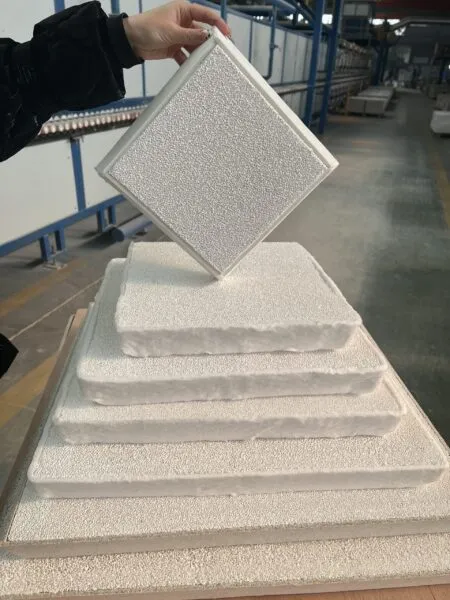
ceramic foam filter with cotton edge
How Much Does a Ceramic Foam Filter Cost?
The price of a ceramic foam filter depends on its size, PPI, material specification, sealing design, order quantity, and customization requirements. Comparing unit prices is useful only when the quoted filters share the same technical specification.
A lower-priced filter may not offer the required dimensions or filtration characteristics. Conversely, selecting a finer PPI than the process needs can add cost or create unnecessary flow restrictions.
When comparing quotations, consider:
- Filter size and thickness
- درجة PPI
- Sealing edge configuration
- Custom manufacturing requirements
- Order quantity and packaging
- Delivery destination and shipping terms
- Documentation and agreed quality inspection
The practical objective is to purchase a filter that meets the process requirements consistently, not simply to obtain the lowest price per piece.
Which Information Should You Provide When Ordering CFF?
Providing the operating details at the enquiry stage allows the manufacturer to assess the specification more accurately and reduces repeated clarification.
| Required information | Why it matters |
|---|---|
| Aluminum alloy or product type | Helps establish the filtration requirements |
| Casting process | Identifies the operating context |
| Required PPI | Defines the target pore density |
| Filter dimensions | Confirms compatibility with the filter chamber |
| Metal flow rate or casting speed | Helps assess filtration capacity |
| Filter box drawing or internal dimensions | Confirms fit and sealing conditions |
| Required quantity | Supports production and packaging planning |
| Delivery destination | Allows shipping arrangements to be evaluated |
If the correct PPI has not yet been established, provide the casting process, current filter specification, approximate metal flow rate, and required product quality. These details are more useful for technical selection than requesting a filter based only on a general description such as “high-efficiency CFF.”
Ceramic Foam Filters from AdTech
AdTech manufactures alumina ceramic foam filters for molten aluminum filtration, including standard PPI grades and sizes for different casting requirements. Customized specifications can be considered according to filter box dimensions, sealing requirements, and process conditions.
For buyers comparing ceramic foam filter suppliers, the key is to establish a specification that can be verified and repeated. Confirming PPI, dimensions, thickness, edge design, material requirements, and flow conditions before ordering helps ensure that the selected filter is compatible with the casting line.
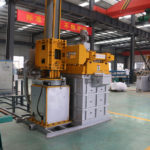
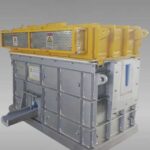
AdTech’s ceramic foam filter range for aluminum casting provides further product specifications and selection guidance. For systems requiring coordinated filtration equipment, the plate-type filter equipment can also be evaluated as part of the wider molten aluminum treatment arrangement.
The final selection should be based on the actual operating requirements, with particular attention to filtration area, flow capacity, sealing, and consistent product specifications.
1. What is a ceramic foam filter used for in aluminum casting?
A ceramic foam filter removes non-metallic inclusions from molten aluminum before casting, helping improve melt cleanliness and reduce inclusion-related defects.
2. What PPI ceramic foam filter should I choose for aluminum casting?
The appropriate PPI depends on the required melt cleanliness, metal flow rate, filter area, and casting conditions. Higher PPI generally means a finer pore structure, but it does not guarantee a specific filtration efficiency.
3. What sizes are available for alumina ceramic foam filters?
Standard square sizes are available for different filter boxes and casting requirements. AdTech also considers customized dimensions to match specific equipment and installation needs.
4. What is the standard thickness of an AdTech ceramic foam filter?
AdTech’s standard ceramic foam filter thickness is 50 mm. Confirm the required thickness and dimensional tolerances when ordering.
5. Can ceramic foam filters be customized?
Yes. Filter dimensions and specifications can be customized according to the filter box, casting process, required PPI, and operating conditions.
6. How much does a ceramic foam filter for aluminum cost?
Pricing depends on filter size, PPI, material specification, edge-sealing design, order quantity, and delivery requirements. A comparable technical specification is necessary for accurate supplier price comparisons.
7. How do I ensure a ceramic foam filter fits my filter box?
Provide the filter box’s internal dimensions, filter seat measurements, required thickness, and any existing filter drawings. These details help verify fit and reduce the risk of molten aluminum bypassing the filter.
8. Does a ceramic foam filter remove hydrogen from molten aluminum?
No. Its primary function is to remove solid non-metallic inclusions. Dissolved hydrogen is primarily controlled through degassing, so filtration and degassing may be used together.
9. What should I check before ordering ceramic foam filters in bulk?
Confirm the PPI, dimensions, thickness, material specification, edge design, inspection criteria, packaging, and consistency requirements for repeat orders.
10. How do I choose a reliable ceramic foam filter manufacturer?
Check the manufacturer’s material specifications, available PPI grades, dimensional control, customization capability, quality inspection procedures, and experience supplying filters for aluminum casting applications.