For aluminum casting operations, melt quality has a direct influence on casting performance and final product consistency. Among the factors that need to be controlled before casting, dissolved hydrogen is particularly important because excess hydrogen can contribute to gas porosity during solidification.
This makes إزالة الغازات من الألومنيوم المنصهر an important part of aluminum melt treatment.
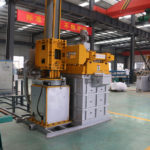
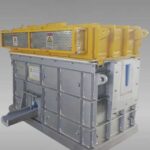
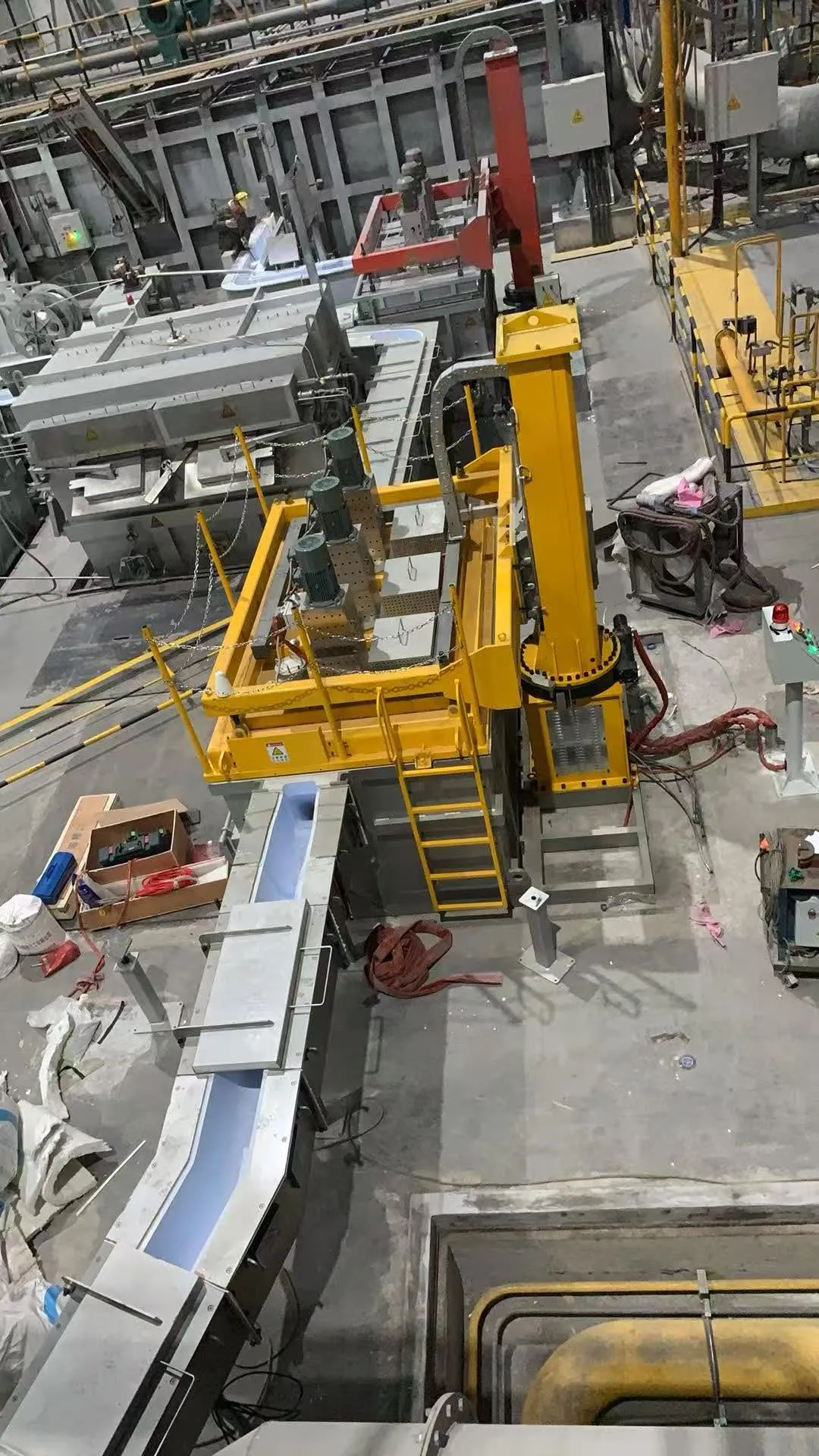
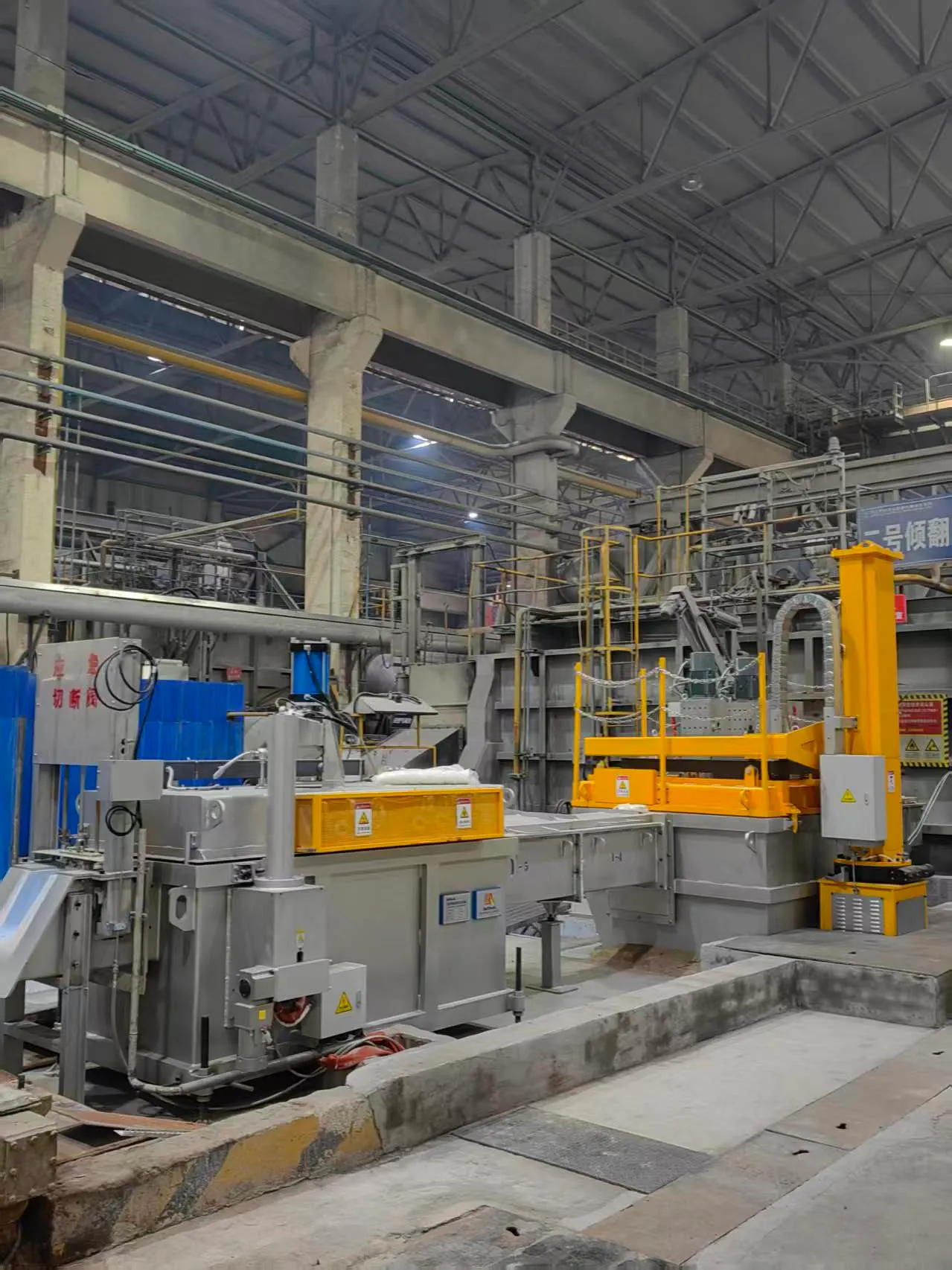
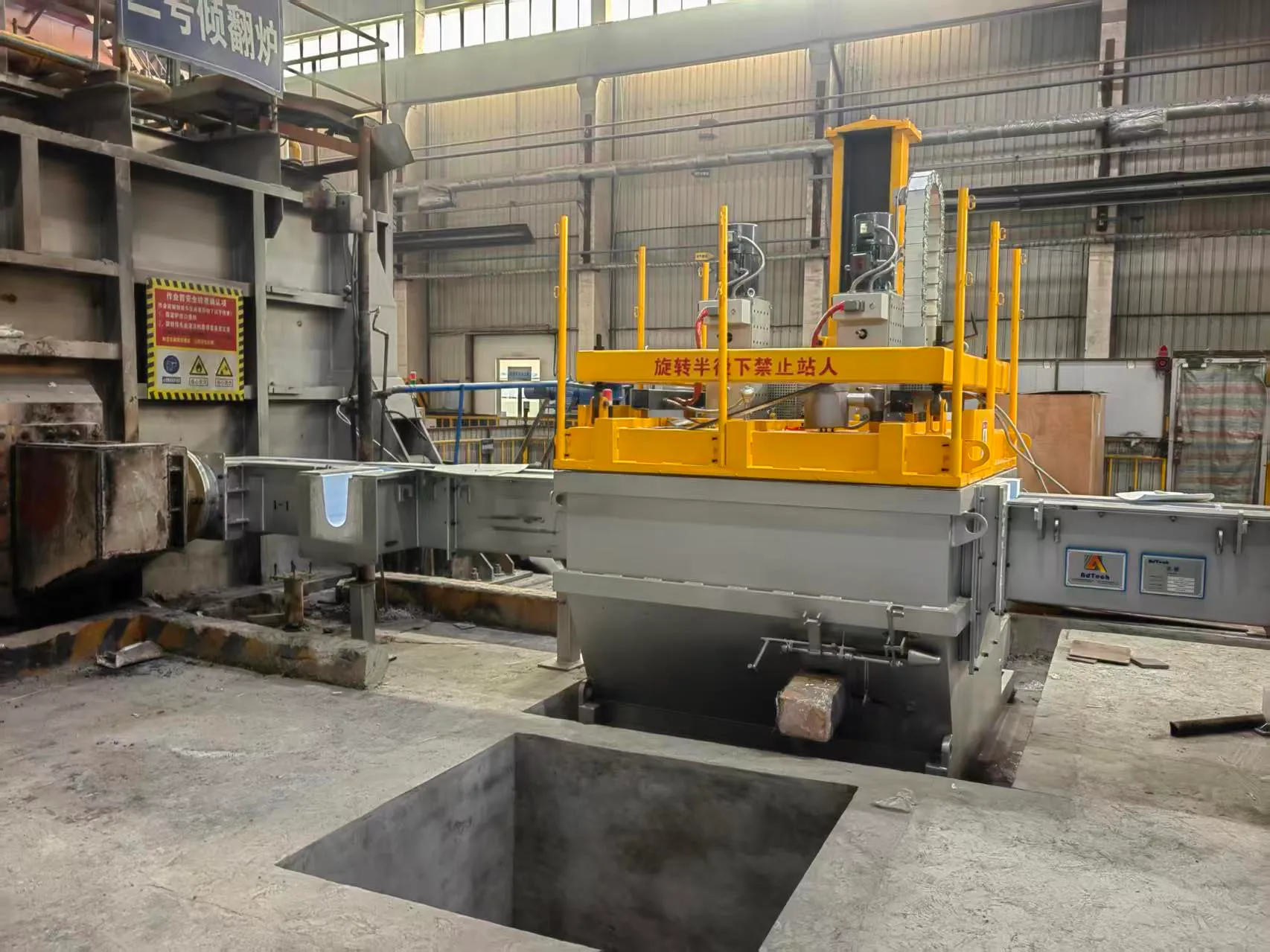
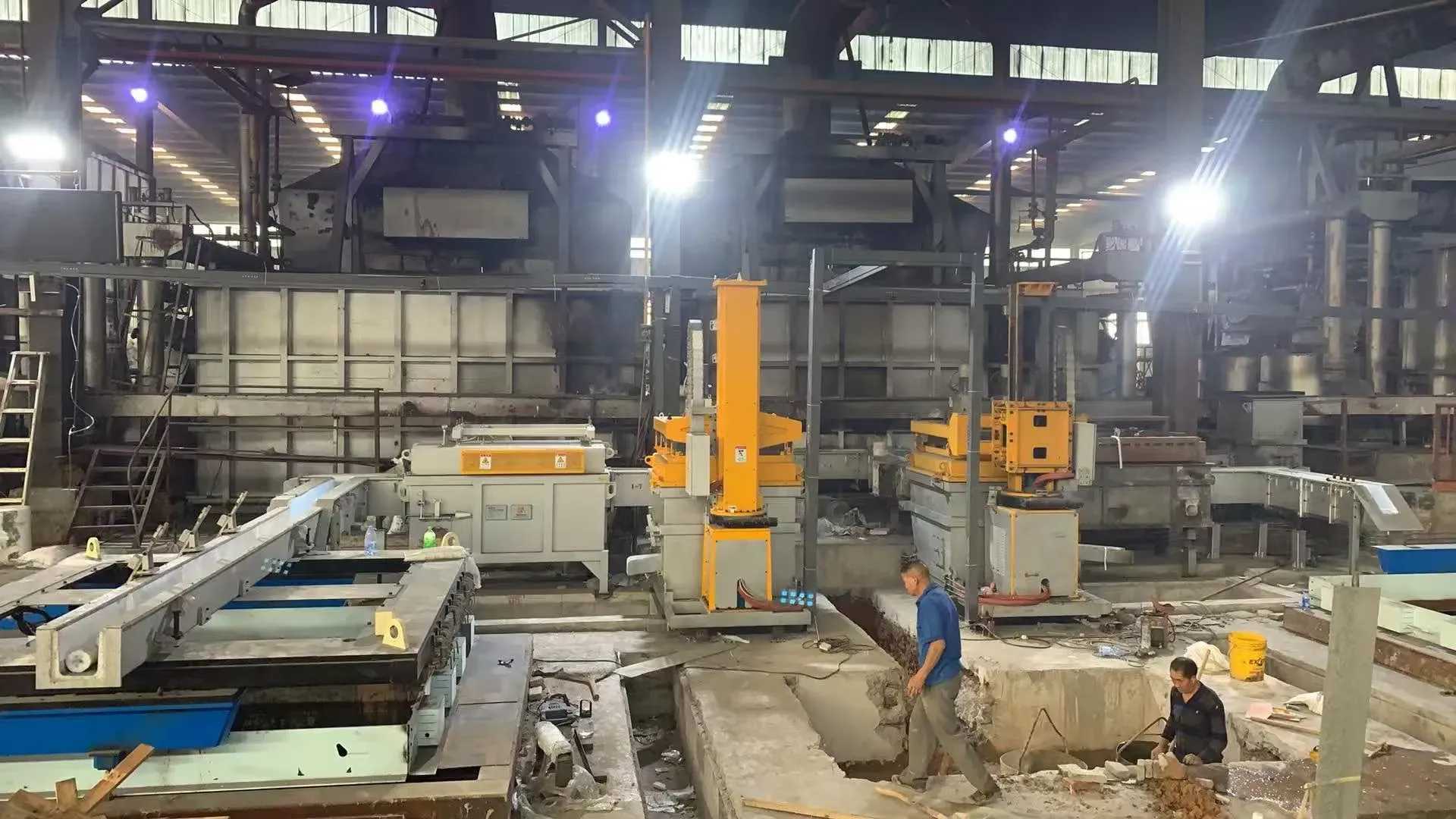
A recent project at Gansu Guangyin Aluminum Co., Ltd. provides a practical example of how degassing equipment can be integrated into an industrial aluminum production process. AdTech Metallurgical Materials Co., Ltd. supplied a tilting-type degassing system for the project and provided on-site installation, commissioning, process adaptation, and operator training before the equipment entered production.
Contact Us to Optimize Your Production Line.
Why Is Degassing Important for Molten Aluminum?
Hydrogen can dissolve into molten aluminum during melting and subsequent handling. Its solubility decreases as the metal cools and solidifies. When the melt contains excessive dissolved hydrogen, hydrogen can form gas pores during solidification.
Porosity can affect the internal quality of aluminum cast products and, depending on the application, may influence mechanical performance, machining behavior, surface quality, or downstream processing.
Degassing is therefore used to reduce dissolved hydrogen before casting.
The principle is relatively straightforward: an inert gas is introduced into the molten aluminum, creating bubbles that provide a pathway for dissolved hydrogen to transfer out of the melt.
Rotary degassing is one commonly used industrial approach. A rotating rotor disperses the inert gas into the melt, increasing gas-metal contact and promoting hydrogen removal.
However, the final result depends on more than the degassing principle itself. Melt temperature, treatment time, gas flow, rotor speed, rotor design, melt depth, alloy composition, and equipment configuration can all influence treatment performance.
How Does Degassing Fit Into Aluminum Melt Treatment?
Degassing should be viewed as one stage of a broader melt treatment process rather than a complete purification solution by itself.
A typical process may include:
Melting → Furnace Treatment → Degassing → Inclusion Separation → Filtration → Casting
Each stage has a different purpose.
| Treatment | Main Purpose |
|---|---|
| Furnace treatment | Prepare and condition the melt |
| معالجة التدفق | Help manage dross and certain melt contaminants |
| إزالة الغازات | Reduce dissolved hydrogen |
| Settling/skimming | Separate floated contaminants |
| الترشيح باستخدام الرغوة الخزفية | Remove suspended non-metallic inclusions |
| الترشيح في طبقة عميقة | Provide high-level inclusion filtration |
| التصوير | Solidify the treated metal into the required product |
This distinction is important when troubleshooting casting defects.
If hydrogen-related porosity is the main concern, improving filtration alone will not address the root cause. Conversely, if oxide inclusions are the main problem, degassing alone cannot replace an effective filtration system.
In demanding aluminum casting applications, degassing and filtration are often complementary rather than competing technologies.
What Happens During Molten Aluminum Degassing?
During a typical rotary degassing process, an inert gas is introduced through a rotor immersed in the molten aluminum.
The rotor disperses the gas into numerous bubbles. Dissolved hydrogen moves from the molten aluminum into these bubbles, which then rise toward the surface.
The basic process can be represented as:
Inert Gas Injection → Bubble Dispersion → Hydrogen Transfer → Bubble Rise → Hydrogen Removal
The quality of this process depends heavily on bubble behavior.
Large bubbles provide less effective gas-metal contact than a well-dispersed population of smaller bubbles. Rotor design, rotation speed, gas flow, immersion depth, and melt conditions therefore need to be considered when setting up the process.
For this reason, an aluminum degassing system should be selected according to the actual production process rather than treated as a standalone machine with one fixed operating recipe.
Guangyin Aluminum: Applying Degassing Equipment in Actual Production
At Gansu Guangyin Aluminum, AdTech supplied a tilting-type degassing system for integration into the customer’s aluminum melt treatment process.
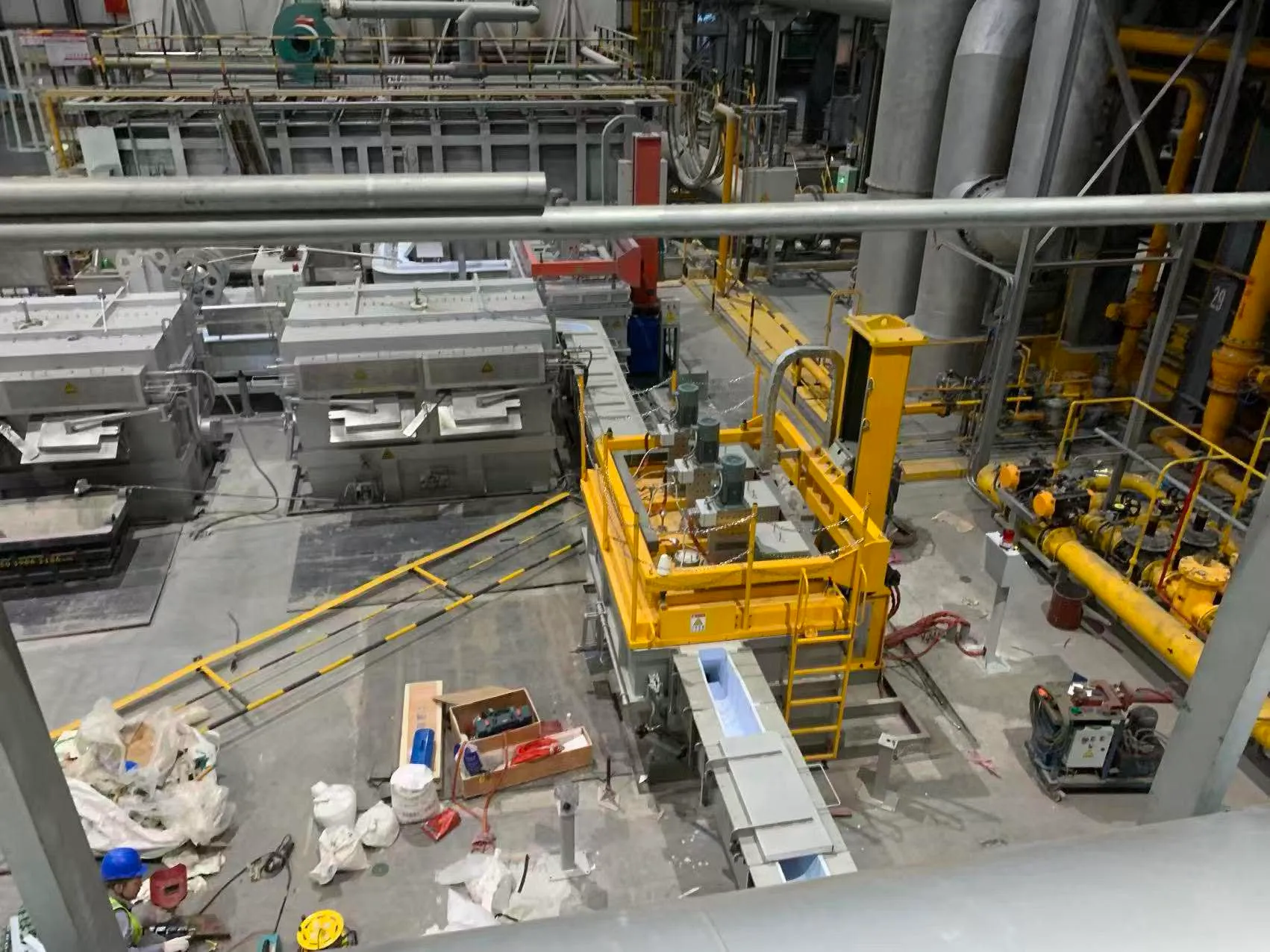
The project did not end with equipment delivery. AdTech’s technical team traveled to the customer’s facility to complete the installation and commissioning work under actual production conditions.
The main activities included:
- Equipment positioning and installation
- Pipeline connections
- Operating parameter configuration
- Equipment and interlock testing
- Trial operation
- Process adaptation
- تدريب المشغلين
- Routine maintenance training
Working directly with the customer’s production and equipment personnel allowed the engineering team to verify the system under actual site conditions.
This is particularly important for melt treatment equipment because the installation environment and production process can vary from one aluminum plant to another.
Why Does On-Site Commissioning Matter?
A degassing system may have the correct technical specifications on paper but still require adjustment after installation.
Actual production conditions can affect the treatment process. For example, the melt volume, metal depth, treatment time, gas flow, rotor position, and surrounding equipment may differ from the assumptions made during initial system planning.
On-site commissioning provides an opportunity to check these factors together.
For the Guangyin Aluminum project, AdTech’s engineers carried out equipment testing and parameter configuration after installation, followed by trial operation and process verification.
The team also addressed site-specific requirements during commissioning and provided practical training for the customer’s operators.
This approach helps ensure that the equipment is not only installed correctly but is also ready to be used as part of the customer’s regular production process.
What Were the Results of the Guangyin Aluminum Project?
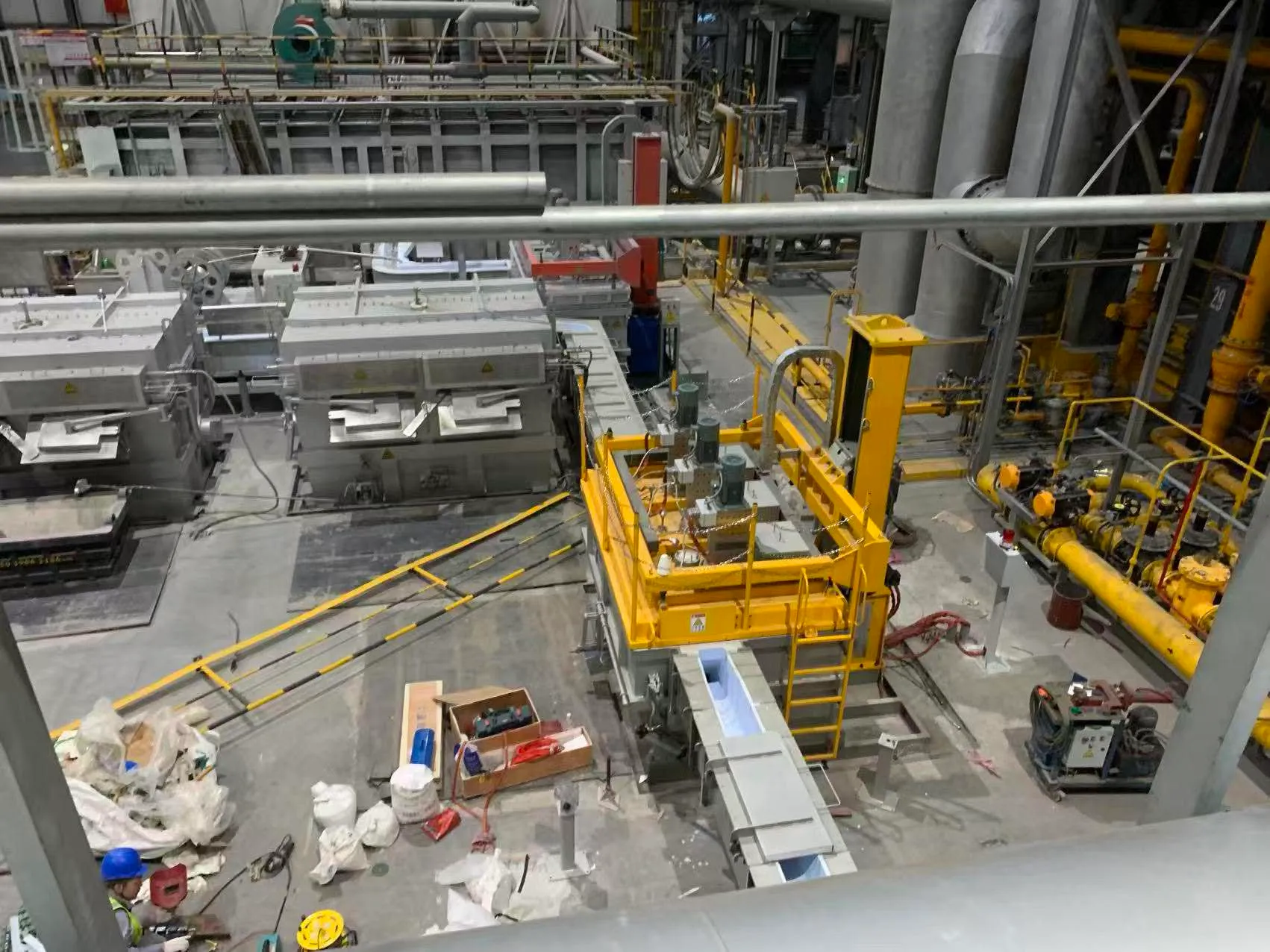
Following installation and commissioning, the tilting degassing equipment completed its initial trial run successfully and was put into production.
During the trial operation, the equipment operated with stable parameters, and its performance indicators met the requirements specified in the project contract.
The successful production start-up demonstrated that the degassing system could be integrated into the customer’s actual aluminum melt treatment process.
The project also gave the customer’s operators hands-on experience with equipment operation and maintenance, helping establish the procedures required for continued production.
Guangyin Aluminum Project
Can Degassing Alone Remove All Aluminum Melt Impurities?
No.
This is an important distinction when selecting aluminum melt treatment equipment.
Degassing primarily addresses dissolved gas, especially hydrogen.
It does not replace a dedicated filtration system for removing solid non-metallic inclusions.
Molten aluminum can contain oxide films, dross particles, refractory fragments, and other non-metallic contaminants. These materials require separation or filtration.
For this reason, a production line may use a combination such as:
Rotary Degassing → Ceramic Foam Filtration → Casting
In other applications, particularly high-throughput casting operations requiring very high melt cleanliness, a deep-bed filtration system may be considered.
The appropriate combination depends on the alloy, charge materials, production rate, casting method, and required final quality.
How Can Aluminum Producers Improve Degassing Performance?
Installing degassing equipment is only the first step. Consistent results require appropriate process control.
Important factors include:
Melt temperature
Degassing should be carried out within an appropriate temperature range for the alloy and production process. Excessive temperature can increase hydrogen absorption and oxidation, while insufficient temperature can affect melt handling and treatment conditions.
مدة العلاج
The melt needs sufficient treatment time for hydrogen transfer to occur. Excessively short treatment may result in inadequate degassing, while unnecessarily long treatment can reduce production efficiency.
Gas flow
Gas flow should be controlled according to the equipment and melt conditions. Excessive gas flow does not automatically mean better degassing and may increase turbulence.
Rotor condition
The rotor is a critical component of a rotary degassing system. Its condition, immersion depth, rotation behavior, and gas distribution all influence bubble dispersion.
Melt handling
Even after successful degassing, excessive turbulence or poor melt handling can allow the aluminum to pick up hydrogen or generate additional oxide films.
This is why melt quality needs to be controlled throughout the process rather than only at the degassing stage.
What Does This Project Show About Aluminum Degassing?
The Guangyin Aluminum project demonstrates that successful molten aluminum degassing involves more than equipment selection.
A reliable solution requires the equipment to be properly integrated into the production line, commissioned under actual operating conditions, and used according to appropriate process parameters.
The project followed this approach from installation through production start-up:
Equipment Supply → On-Site Installation → Parameter Configuration → Commissioning → Trial Operation → Operator Training → Production
The tilting degassing equipment subsequently entered production with stable operating parameters and performance meeting the project’s design requirements.
Degassing and Filtration: Two Different Jobs
For aluminum producers evaluating a complete melt purification system, it is useful to separate the functions of degassing and filtration.
| المشكلة | Preferred Treatment |
|---|---|
| الهيدروجين المذاب | إزالة الغازات |
| Hydrogen-related porosity | Degassing + process control |
| شوائب الأكسيد | الترشيح |
| Dross | Furnace treatment + skimming |
| Fine non-metallic inclusions | Fine/deep-bed filtration |
| Overall melt cleanliness | Combined melt treatment |
This functional approach is more useful than asking which individual technology is “the best.”
For many casting operations, a combination of degassing followed by filtration provides a practical way to address both dissolved hydrogen and suspended inclusions before the metal reaches the casting stage.
الخلاصة
Controlling molten aluminum quality requires more than one treatment step. Dissolved hydrogen and solid inclusions have different characteristics and therefore require different removal methods.
Molten aluminum degassing is primarily used to reduce dissolved hydrogen and help control hydrogen-related casting defects, while filtration technologies such as ceramic foam filters are used to remove non-metallic inclusions.
The successful application of AdTech’s tilting degassing equipment at Gansu Guangyin Aluminum demonstrates how a degassing system can be integrated into an industrial aluminum production process through proper installation, commissioning, process adaptation, and operator training.
For aluminum producers evaluating a new degassing system, the most important consideration is not simply the equipment itself, but how well the system matches the alloy, melt volume, casting process, treatment requirements, and existing production line.
AdTech provides aluminum melt treatment solutions and technical support for aluminum producers seeking more controlled and consistent molten aluminum treatment.