
Aluminum can manufacturing begins long before a can reaches a can-making plant. Aluminum is first melted and alloyed, then treated to control dissolved hydrogen and non-metallic inclusions before it is cast into slabs. The slabs are subsequently rolled into aluminum can sheet, which is formed into can bodies and ends. For this reason, molten aluminum quality at the casting stage is an important part of the overall aluminum can manufacturing process.
How Are Aluminum Cans Manufactured?
The production of an aluminum beverage can can be divided into two major parts: aluminum can sheet production و can making.
The upstream process produces the aluminum sheet used by can manufacturers:
Aluminum scrap and/or primary aluminum → Melting → Alloying → Molten aluminum treatment → Degassing → Filtration → DC casting → Slab → Hot rolling → Cold rolling → Can sheet
The downstream can-making process starts with the finished can sheet:
Can sheet coil → Blanking and drawing → Ironing → Trimming → Washing → Printing → Internal coating → Necking → Flanging → Inspection → Finished can
The exact production route varies between manufacturers and plants, but the distinction is important: a can sheet producer or rolling mill and an aluminum can manufacturer are not necessarily the same company.
According to the Aluminum Association, molten aluminum can be cast into slabs that are subsequently rolled into sheet and used for consumer packaging such as cans. The Can Manufacturers Institute describes the later can-making process as starting with coils of aluminum sheet.
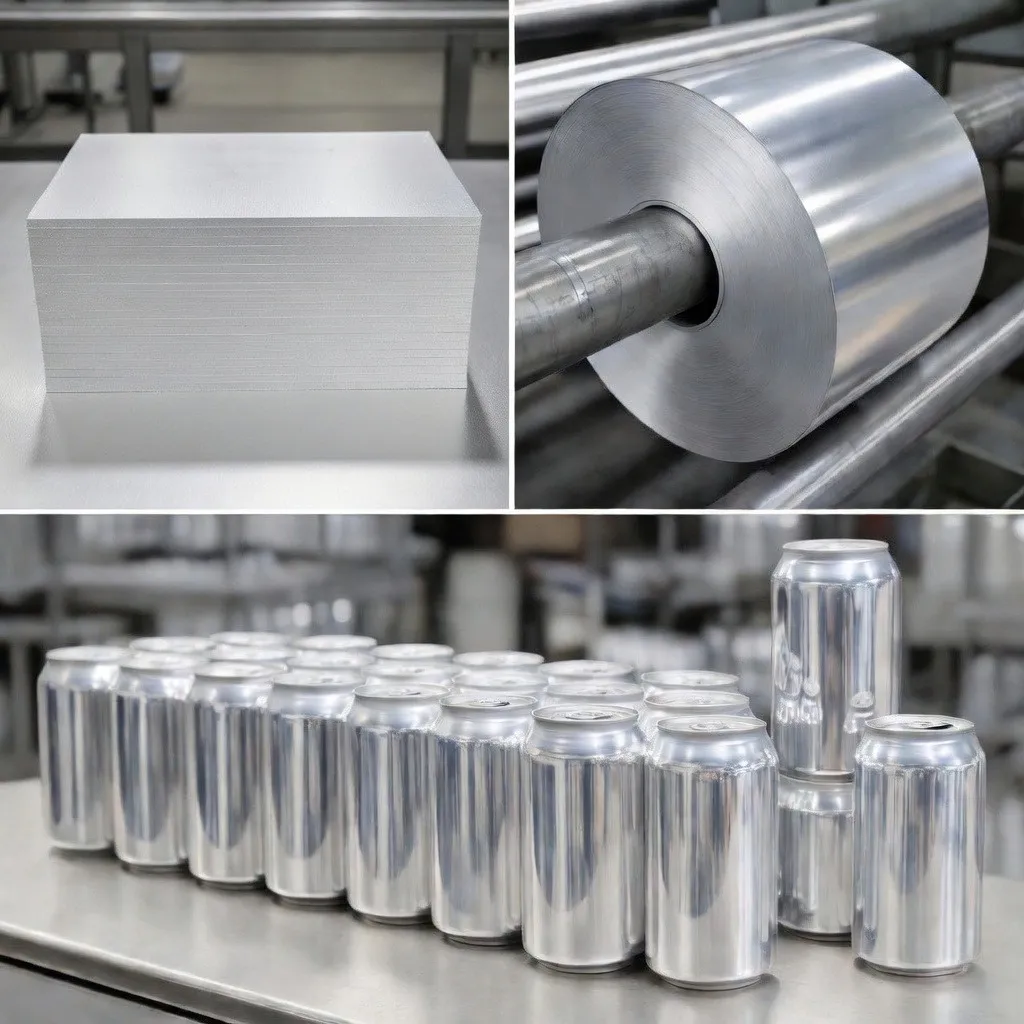
aluminum can
What Aluminum Is Used to Make Beverage Cans?
Aluminum beverage cans are made from wrought aluminum alloys rather than commercially pure aluminum.
Different parts of the can can use different alloy compositions. For example, the Aluminum Association identifies 3004 and related alloys for beverage-can bodies and 5182 for can ends.
The alloy must provide a suitable combination of:
- Formability
- القوة
- مقاومة التآكل
- جودة السطح
- Compatibility with high-speed can forming
- Suitable response to rolling and heat treatment
The can body and lid therefore do not necessarily use the same aluminum alloy.
This also means that aluminum can production is not simply a matter of melting aluminum and forming it into a can. The melt chemistry and casting quality must be controlled before the material reaches the rolling and can-making stages.
What Happens During Aluminum Melting for Can Sheet?
The first major stage in producing aluminum can sheet is preparing the molten metal.
Depending on the plant and alloy, the charge may contain primary aluminum, recycled aluminum, alloying additions, and process scrap. Secondary aluminum is particularly important in the can industry because aluminum can be recycled and returned to the production cycle.
During melting, the plant must control the alloy composition while also limiting the introduction of unwanted materials into the melt.
Important factors include:
- Alloying element concentration
- Charge material quality
- Melt temperature
- Oxide formation
- الهيدروجين المذاب
- الشوائب غير المعدنية
- Dross formation
- تلوث الرطوبة
For recycled aluminum, charge preparation and melt handling become especially important because scrap can carry coatings, oxides, moisture, and other contaminants.
The objective is not simply to obtain liquid aluminum. The melt must be brought into a condition suitable for casting and subsequent rolling.
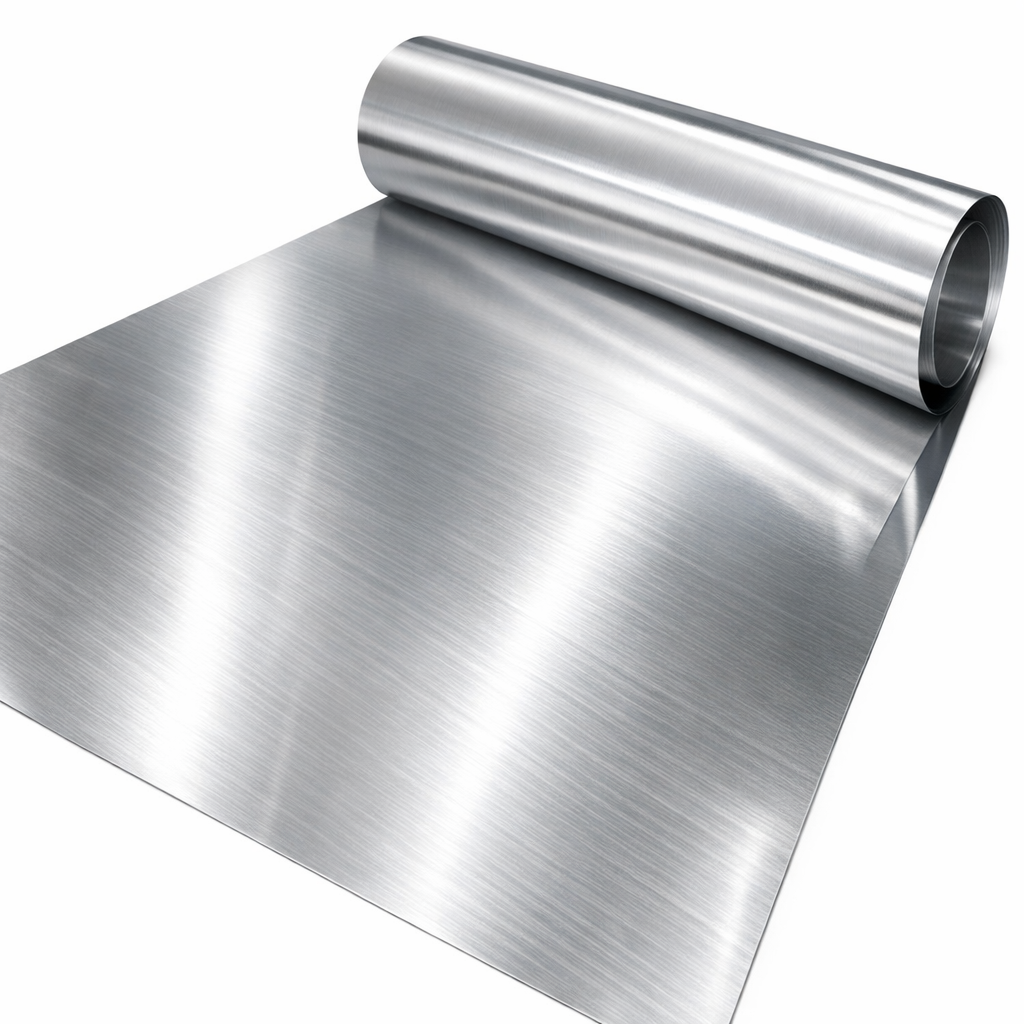
aluminum can sheet
Why Does Molten Aluminum Need Treatment Before Casting?
Molten aluminum can contain both dissolved gases و solid non-metallic inclusions.
These contaminants behave differently and therefore require different treatment methods.
The two major melt-treatment operations are:
| Melt-quality issue | Main treatment | Typical purpose |
|---|---|---|
| الهيدروجين المذاب | إزالة الغازات | Reduce dissolved hydrogen |
| الشوائب غير المعدنية | الترشيح | إزالة الشوائب الصلبة |
| أغشية الأكسيد | Filtration and melt-quality control | Reduce inclusions entering the casting process |
| Excess alloying element | Alloy adjustment / dedicated treatment | Bring chemistry within specification |
| Dross | Skimming and process control | Remove surface material from the melt |
Degassing and filtration should not be treated as interchangeable operations.
Degassing primarily addresses dissolved hydrogen, while filtration is used to remove non-metallic inclusions from molten aluminum.
This distinction is particularly important for aluminum producers supplying high-quality sheet and can stock.
Why Is Degassing Important in Aluminum Can Production?
Hydrogen is highly soluble in liquid aluminum compared with solid aluminum. Moisture from the charge materials, furnace atmosphere, tools, and other sources can contribute to hydrogen entering the melt.
When aluminum solidifies, the solubility of hydrogen decreases sharply. Excess dissolved hydrogen can therefore contribute to gas porosity in the solidified metal.
For this reason, aluminum producers commonly use rotary degassing or other melt-treatment systems before casting.
A typical rotary degassing process introduces an inert gas such as nitrogen or argon into the molten aluminum through a rotating impeller. The gas is dispersed into fine bubbles, creating a large gas-metal interface. Dissolved hydrogen transfers from the molten aluminum into the gas bubbles and is then removed from the melt.
The effectiveness of the treatment depends on process conditions such as:
- Melt temperature
- Initial hydrogen concentration
- Gas type and flow rate
- تصميم الدوار
- سرعة الدوار
- مدة العلاج
- Melt depth
- Furnace or treatment-unit configuration
Degassing is therefore a controlled metallurgical process rather than simply “adding gas to molten aluminum.”
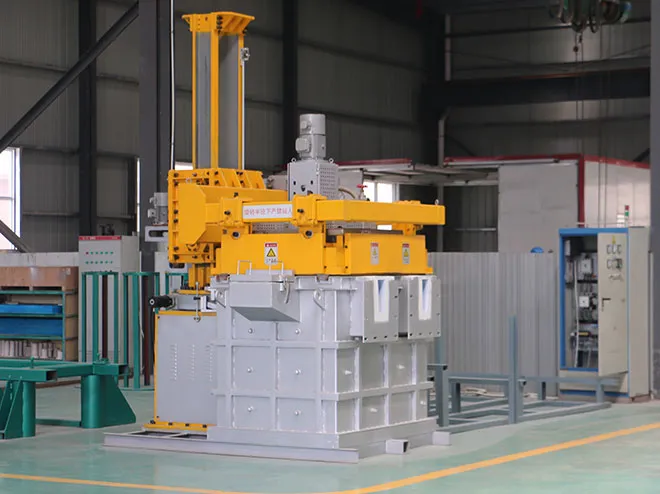
نظام إزالة الغازات عبر الإنترنت
What Happens If Hydrogen Is Not Properly Controlled?
Excess hydrogen can contribute to porosity during solidification. For material that will later undergo hot rolling, cold rolling, and high-speed forming, internal defects originating during casting can become a downstream quality concern.
The appropriate hydrogen target depends on the alloy, casting process, product specification, and plant requirements. Therefore, a degassing system should be selected according to actual melt conditions rather than by equipment capacity alone.
Why Is Filtration Important for Aluminum Can Sheet?
Filtration removes solid non-metallic inclusions from molten aluminum before casting.
These inclusions can originate from oxide formation, charge materials, furnace operations, alloy additions, refractory contact, and other stages of melt handling.
For aluminum sheet production, controlling inclusions is important because the material may later pass through multiple rolling and forming operations. Defects introduced during casting cannot always be corrected by subsequent rolling.
A ceramic foam filter is commonly used to remove suspended inclusions from molten aluminum. Depending on the production line and required cleanliness, filtration may also involve plate-type filter boxes, cartridge filters, deep-bed filtration, or combinations of filtration technologies.
The appropriate filtration system depends on factors such as:
- سبيكة
- Metal flow rate
- Required metal cleanliness
- آلة الصب
- Filtration location
- منطقة التصفية
- Filter media
- Expected inclusion load
- Production capacity
Ceramic Foam Filters vs. Other Aluminum Filtration Systems
Ceramic foam filtration is one part of the broader molten aluminum filtration system.
A ceramic foam filter provides a porous structure through which molten aluminum passes while inclusions are retained by the filter.
For higher filtration requirements, a plant may use more than one filtration stage.
| Filtration method | Main role | Typical application |
|---|---|---|
| مرشح رغوي خزفي | Removal of non-metallic inclusions | General aluminum casting |
| Plate-type filter | Controlled filtration through a filter box | Slab, billet, and other casting lines |
| مرشح الكارتريدج | Fine filtration | Applications requiring additional inclusion control |
| الترشيح في طبقة عميقة | High-capacity inclusion removal | High-quality aluminum production |
| Combined filtration | Multi-stage cleanliness control | More demanding casting processes |
The best configuration depends on the casting line rather than on the filter type alone.
For example, an aluminum producer may combine on-line degassing with ceramic foam filtration before the casting machine to address both dissolved hydrogen and non-metallic inclusions.
What Casting Process Is Used to Produce Aluminum Can Sheet?
Aluminum can sheet is produced from cast aluminum slabs.
In a typical integrated operation, molten aluminum is transferred from the melting and holding area through the melt-treatment system and then to a direct-chill casting machine.
A simplified process is:
Melting furnace → Holding furnace → Degassing → Filtration → Distribution launder → DC casting → Aluminum slab
The slab is then processed through the rolling mill to produce the required sheet thickness and mechanical properties.
The Aluminum Association describes sheet ingots, or slabs, as being rolled into flat aluminum products used in applications including cans and other consumer packaging.
For this reason, the quality of the molten aluminum entering the DC caster is an important upstream factor in can-sheet production.
What Is the Role of the Launder in Aluminum Can Sheet Production?
A launder transfers molten aluminum between process units while maintaining a stable flow and limiting unnecessary heat loss.
A typical casting line may include launders between:
Holding furnace → Degassing unit → Filter box → Casting machine
The launder must be designed for the required metal temperature, flow rate, transfer distance, and plant layout.
Important characteristics include:
- Resistance to molten aluminum erosion
- الاستقرار الحراري
- Low wettability with molten aluminum
- Suitable thermal insulation
- Smooth internal surface
- ثبات الأبعاد
- Compatibility with the casting-line layout
A properly designed molten aluminum launder is therefore more than a simple channel. It is part of the controlled metal-transfer system between melt treatment and casting.
How Does Melt Quality Affect Aluminum Can Sheet?
The relationship between melt quality and can production can be viewed as a chain:
Molten aluminum quality → Slab quality → Rolling quality → Can sheet quality → Can forming performance
A problem introduced during melting or casting can therefore become visible much later.
على سبيل المثال:
Excess hydrogen → Porosity during solidification → Internal casting defects → Potential downstream material-quality problems
Similarly:
Non-metallic inclusions → Inclusion defects in slab → Defects during rolling or later processing
This does not mean that every can-sheet defect originates in the melt. Rolling conditions, alloy chemistry, heat treatment, surface preparation, forming parameters, and other downstream processes also affect the final product.
The point is that melt quality establishes one of the important foundations for the subsequent manufacturing stages.
How Is Aluminum Can Sheet Made From Cast Slabs?
After DC casting, aluminum slabs are processed through a series of rolling operations.
A simplified route is:
DC-cast slab → Scalping / surface preparation → Homogenization or reheating → Hot rolling → Cold rolling → Annealing or temper control → Can sheet coil
The exact sequence depends on alloy, product specification, mill configuration, and required properties.
Hot rolling reduces the slab thickness substantially while producing a long aluminum strip. Cold rolling then further reduces thickness and controls the required dimensions, surface characteristics, and mechanical properties.
The finished can sheet is supplied in coils or other forms suitable for can manufacturing.
How Are Two-Piece Aluminum Beverage Cans Made?
Once the can sheet reaches the can-making plant, the process changes from metal production to high-speed forming.
The basic two-piece beverage-can process includes:
- Blanking and drawing – circular blanks are cut from the aluminum sheet and formed into cups.
- Ironing – the cup passes through forming rings that reduce wall thickness and increase the height of the can.
- Doming – the bottom is formed into its required shape.
- Trimming – the can is trimmed to a controlled height.
- Washing – the can is cleaned.
- Printing – the external decoration is applied.
- Bottom and internal coating – protective coatings are applied where required.
- الخبز – coatings are cured.
- Necking – the upper diameter is reduced.
- Flanging – the top edge is prepared for attachment of the lid.
- Inspection – cans are checked for defects and leakage.
The Can Manufacturers Institute describes blanking and drawing, ironing, trimming, washing, printing, coating, necking, flanging, and testing as key stages in two-piece can manufacturing.
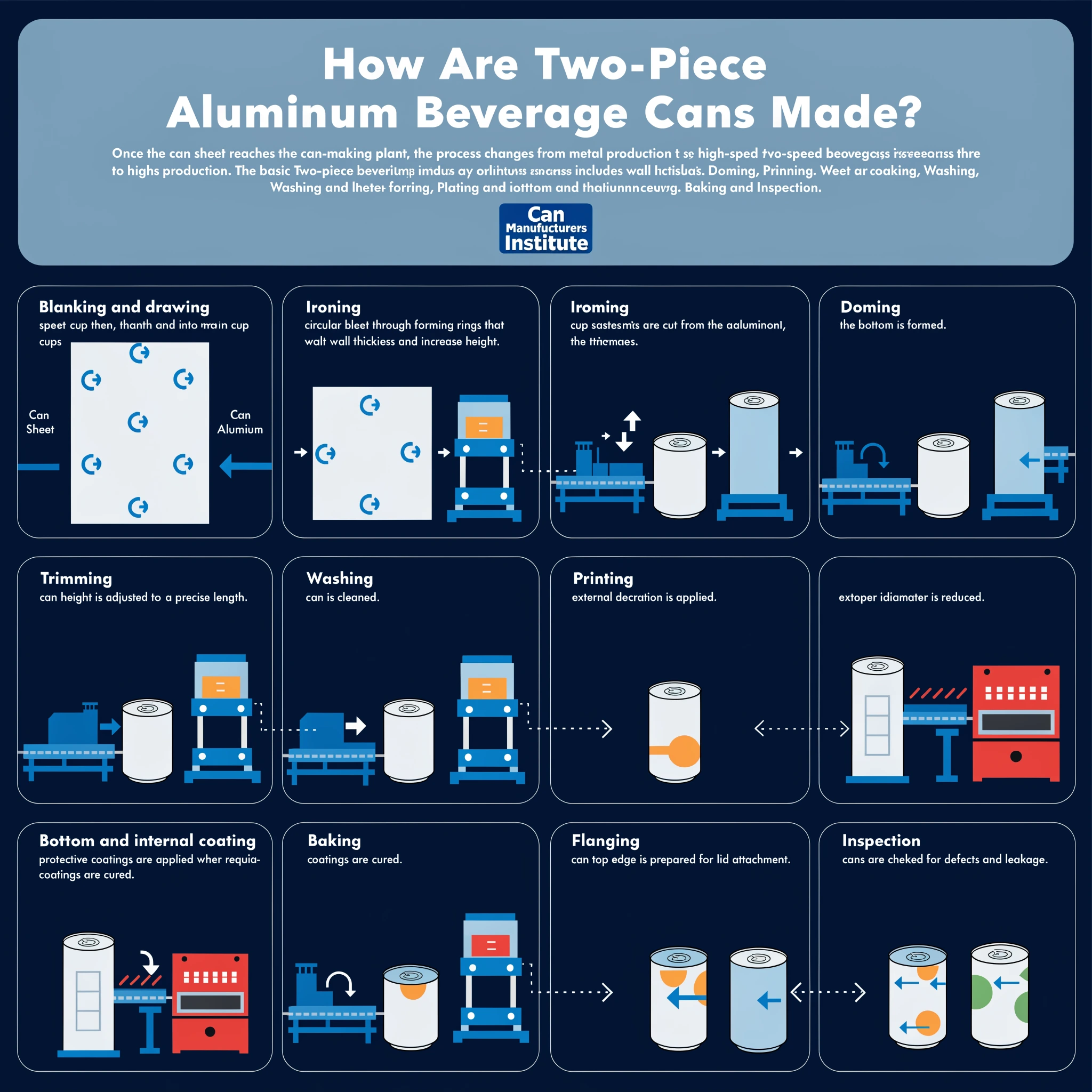
how are two-piece aluminum beverage cans made
اتصل بنا للحصول على استشارة فنية
How Are Aluminum Can Lids Made?
The can lid is manufactured separately from the can body.
The lid uses a different aluminum alloy because it requires different mechanical properties. The Aluminum Association identifies 5182 as a common alloy for beverage-can ends, while 3004 is used for can bodies.
The basic lid-making process includes:
Can-stock coil → Blanking → Shell forming → Curling → Sealing compound → Tab forming → End forming → Inspection
The finished end is later attached to the can body through double seaming.
What Is the Difference Between a Can Manufacturer and a Can Sheet Producer?
This distinction is important when evaluating companies in the aluminum can supply chain.
| Company type | Main operation | Relationship to molten aluminum |
|---|---|---|
| Primary aluminum producer | Produces aluminum from alumina | Upstream |
| Secondary aluminum producer / recycler | Melts and processes recycled aluminum | Upstream |
| Cast house | Melts, treats, and casts aluminum slabs | Directly related |
| Rolling mill | Converts slabs into sheet and can stock | Downstream of casting |
| Can sheet producer | Produces sheet for beverage cans | Downstream of rolling |
| Can manufacturer | Forms sheet into finished cans | Further downstream |
| Beverage company | Fills and sells beverages | End user / brand owner |
A can manufacturer may therefore have little or no direct need for molten aluminum treatment equipment if it purchases finished can sheet.
The companies most directly relevant to equipment such as on-line degassing units, ceramic foam filtration systems, cartridge filters, and molten aluminum launders are typically the aluminum producers, cast houses, recyclers, and integrated facilities that melt and cast the aluminum before rolling.
This distinction is useful when identifying potential customers for aluminum melt-treatment equipment.
What Equipment Is Used in Aluminum Melt Treatment for Can Sheet?
A can-sheet cast house may use several types of equipment to control molten aluminum before casting.
| المعدات | Main function |
|---|---|
| فرن الصهر | Melt primary or recycled aluminum |
| فرن التثبيت | Maintain melt temperature and composition |
| On-line degassing unit | Reduce dissolved hydrogen |
| مرشح رغوي خزفي | Remove non-metallic inclusions |
| Plate-type filter box | Provide controlled filtration before casting |
| Cartridge filter equipment | Provide additional or fine filtration |
| Cartridge filter tube | Filtration component used in suitable systems |
| Molten aluminum launder | Transfer molten aluminum between process units |
| Distribution system | Deliver treated metal to the casting machine |
The actual configuration depends on the casting method, alloy, metal flow, cleanliness requirements, and plant layout.
For example, an integrated aluminum casting line may use:
Holding furnace → On-line degassing → Ceramic foam filtration → Cartridge filtration → Launder → DC caster
Not every plant requires every stage, so equipment selection should be based on the actual production process.
How Can Recycled Aluminum Be Used in Can Production?
Recycled aluminum is an important part of the beverage-can material cycle.
Used beverage cans can be collected, sorted, processed, melted, cast, rolled into new can sheet, and returned to can manufacturing.
The Can Manufacturers Institute describes a recycling route in which used beverage cans are processed at aluminum mills, melted, cast into large ingots, rolled into can sheet, and then supplied to can manufacturers.
Recycled aluminum can therefore return to the can-production cycle rather than being treated as waste.
However, recycling also introduces additional requirements for charge preparation and melt quality control. Coatings, oxides, moisture, and other contaminants must be managed during scrap preparation and melting.
This makes effective melt treatment particularly important for plants processing significant amounts of recycled aluminum.
What Should Aluminum Producers Consider When Selecting Degassing and Filtration Equipment?
Equipment should be selected according to the complete casting process rather than according to equipment name alone.
Before selecting a degassing or filtration system, consider:
| المعلمة | Why it matters |
|---|---|
| سبيكة | Affects melt chemistry and treatment requirements |
| Melt flow rate | Determines required treatment and filtration capacity |
| Melt temperature | Influences treatment conditions and refractory performance |
| Casting method | Determines equipment configuration |
| مستوى الهيدروجين | Helps determine degassing requirements |
| Inclusion level | Helps determine filtration requirements |
| Filter location | Affects system design and pressure/flow conditions |
| آلة الصب | Determines the connection and metal-delivery arrangement |
| Production capacity | Determines equipment size and throughput |
| Plant layout | Determines launder and equipment arrangement |
For a new project, equipment suppliers normally need production-line information before recommending a complete configuration.
Aluminum Melt Treatment Equipment for Can Sheet Production
AdTech supplies equipment and filtration products for molten aluminum treatment and casting applications.
Our product range includes:
- On-line aluminum degassing units
- مرشحات الرغوة الخزفية
- Plate-type filter equipment
- Cartridge filter equipment
- Cartridge filter tubes
- Molten aluminum launders and transfer systems
- Related aluminum casting and melt-treatment components
These products are used at the upstream stage of aluminum production, before the material becomes rolled can sheet.
For an aluminum producer or cast house supplying can stock, the objective is not simply to produce molten aluminum. The melt-treatment system must be matched to the alloy, casting capacity, filtration requirements, and overall process layout.
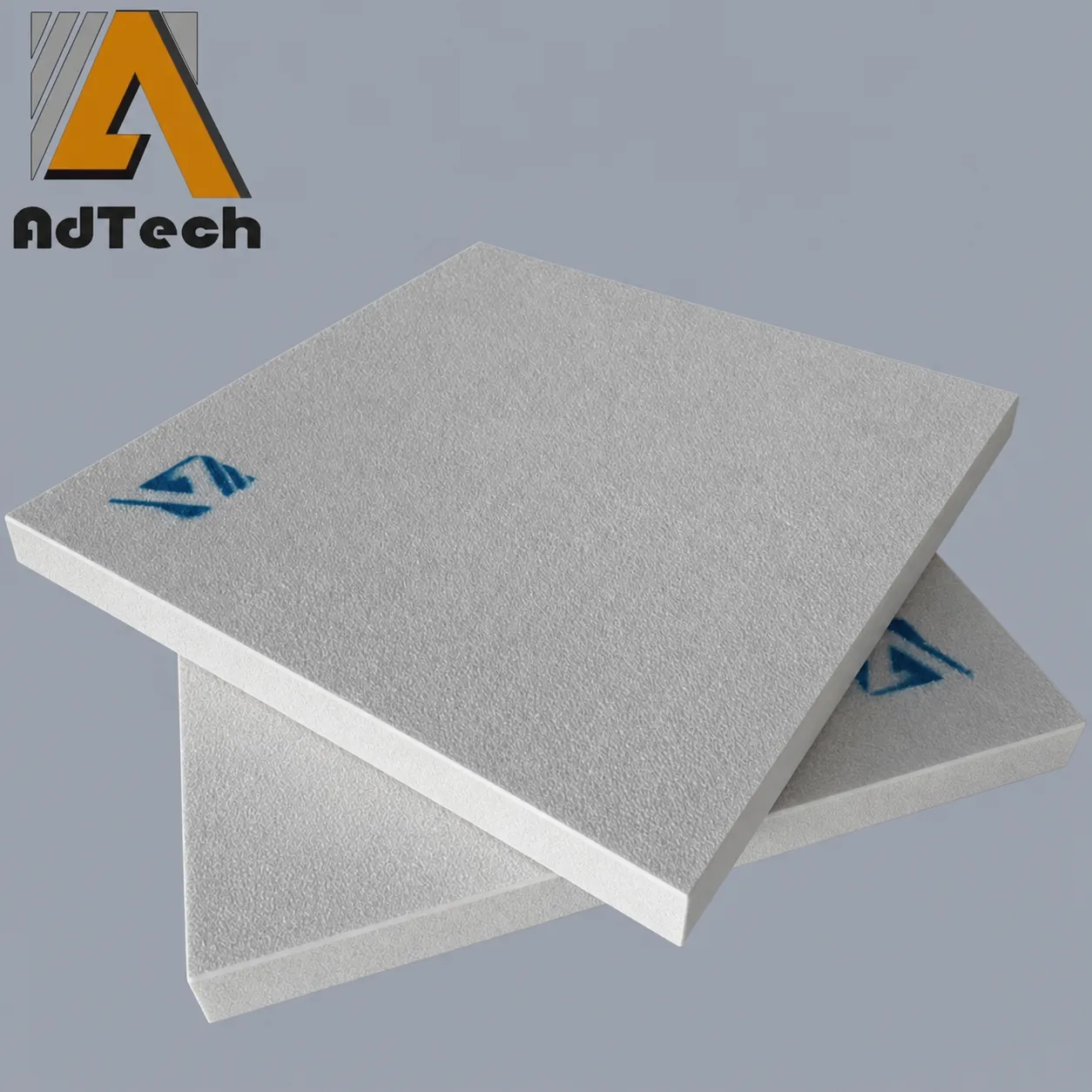
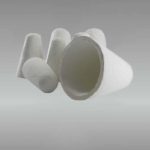
مرشح رغوي خزفي من AdTech مزود بحشية مانعة للتسرب قابلة للتمديد
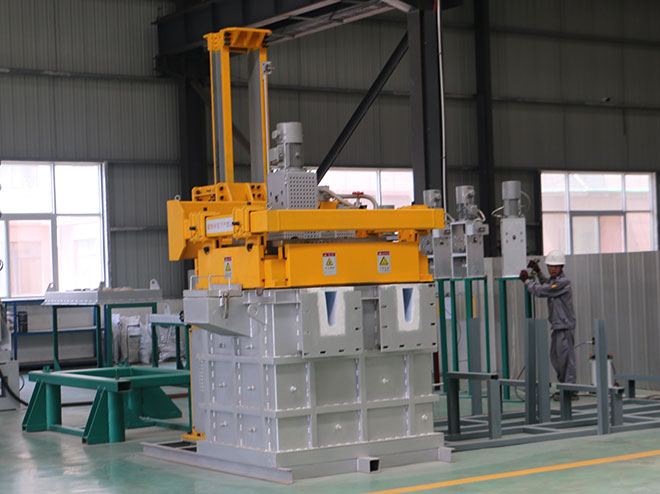
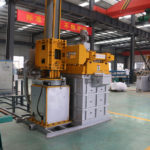
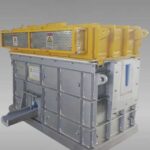
معدات إزالة الغاز عبر الإنترنت



[…] ويُستخدم بشكل أساسي في ترشيح السوائل الحمضية والقلوية في الصناعة الكيميائية، وترشيح المعادن المنصهرة في صناعة المعادن، وكيروسين الطيران في الصناعة البتروكيماوية، ووقود الديزل […]
[…] يُعد ترشيح سائل الألومنيوم الطريقة الأكثر فعالية لإزالة الخبث غير المعدني من سائل الألومنيوم. وفي عملية صب سبائك الألومنيوم 6063، يتم ترشيح السائل عادةً باستخدام قماش سلكي زجاجي متعدد الطبقات أو لوح ترشيح من الرغوة الخزفية. ولضمان إمكانية ترشيح سائل الألومنيوم بشكل طبيعي، يجب إزالة الرغوة السطحية من سائل الألومنيوم قبل الترشيح. وذلك لأن الرغوة السطحية تسد بسهولة شبكة مادة الترشيح، مما يمنع إجراء عملية الترشيح بشكل طبيعي. وأبسط طريقة لذلك هي تركيب صفيحة مانعة للخبث في قناة التصريف. […]
[…] يُعد ترشيح سائل الألومنيوم الطريقة الأكثر فعالية لإزالة الخبث غير المعدني من سائل الألومنيوم. وفي عملية صب سبائك الألومنيوم 6063، يتم ترشيح السائل عادةً باستخدام شبكة سلكية زجاجية متعددة الطبقات أو لوح ترشيح من الرغوة الخزفية. ولضمان إمكانية ترشيح سائل الألومنيوم بشكل طبيعي، يجب إزالة الرغوة السطحية من سائل الألومنيوم قبل الترشيح. وذلك لأن الرغوة السطحية تسد بسهولة شبكة مادة الترشيح، مما يمنع إجراء عملية الترشيح بشكل طبيعي. وأبسط طريقة لذلك هي تركيب لوح مانع للخبث في قناة التصريف. […]