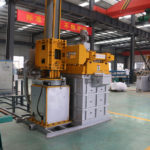
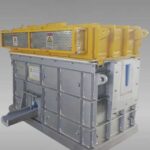
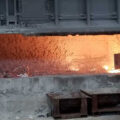
The aluminum degassing process removes dissolved hydrogen from molten aluminum before casting. Hydrogen can cause porosity and other internal defects when its solubility drops during solidification. In industrial aluminum processing, nitrogen or argon is introduced into the melt to form fine gas bubbles, providing surfaces for dissolved hydrogen to transfer into and escape.
How Does Hydrogen Removal Occur in Aluminum?
Hydrogen removal can be understood through three basic stages:
- Bubble formation
- Hydrogen transfer and bubble growth
- Bubble flotation and escape
When the hydrogen concentration in molten aluminum is high enough, hydrogen bubbles can nucleate if the pressure inside the bubble can overcome the surrounding pressure.
However, as the hydrogen content decreases, spontaneous bubble nucleation becomes increasingly difficult. Industrial degassing therefore introduces externally generated nitrogen or argon bubbles into the melt to provide a controlled gas-liquid interface for hydrogen removal.
How Does Hydrogen Enter the Gas Bubbles?
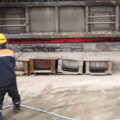
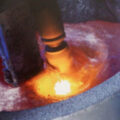
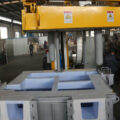
During rotary degassing, nitrogen or argon is dispersed into molten aluminum through a rotating rotor. The process can be simplified as follows:
Dissolved hydrogen → diffusion to bubble surface → transfer into gas bubble → bubble rises → gas escapes
Hydrogen moves from the molten aluminum toward the gas-liquid interface through convection and diffusion. It then transfers into the inert-gas bubble. As the bubble rises, hydrogen continues to enter the bubble, while the surrounding pressure gradually decreases.
When the hydrogen-rich bubble reaches the melt surface, the gas escapes from the aluminum.
Why Do Fine Gas Bubbles Improve Degassing?
Fine bubbles provide a larger total gas-liquid interfacial area than large bubbles for the same amount of injected gas. This increases the available area for hydrogen transfer.
However, bubble size is only one factor affecting degassing performance. Gas flow rate, rotor speed, rotor design, melt temperature, treatment time, melt depth, and hydrogen concentration all influence the final hydrogen level.
| العامل | Effect on Degassing |
|---|---|
| حجم الفقاعة | Affects gas-liquid surface area |
| معدل تدفق الغاز | Affects bubble dispersion |
| سرعة الدوار | Affects mixing and bubble breakup |
| Melt temperature | Affects hydrogen solubility |
| مدة العلاج | Affects hydrogen removal |
| Initial hydrogen level | Determines the required treatment intensity |
Why Does Hydrogen Cause Porosity in Aluminum?
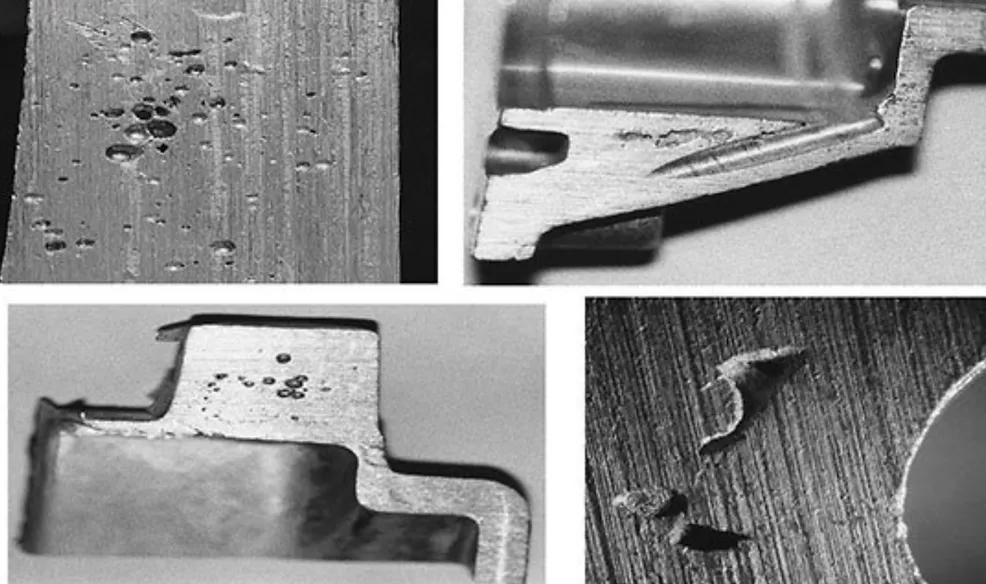
aluminum casting defects
Hydrogen is much more soluble in liquid aluminum than in solid aluminum. During solidification, hydrogen solubility decreases significantly. Excess hydrogen can therefore form pores inside the casting.
This is why hydrogen control is an important part of molten aluminum treatment before casting.
Degassing vs. Filtration
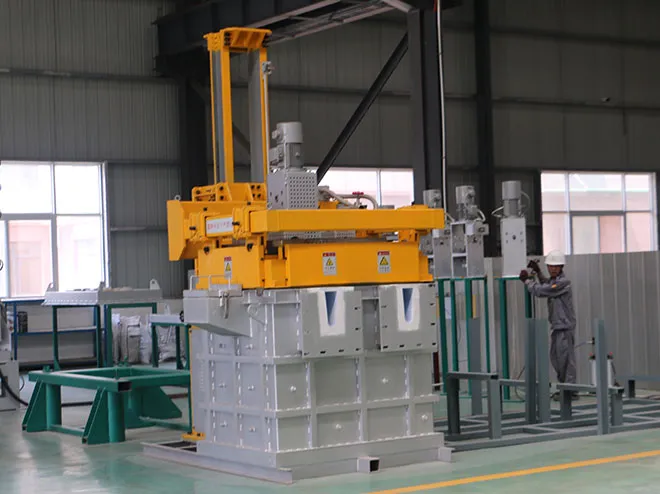
معدات إزالة الغاز عبر الإنترنت
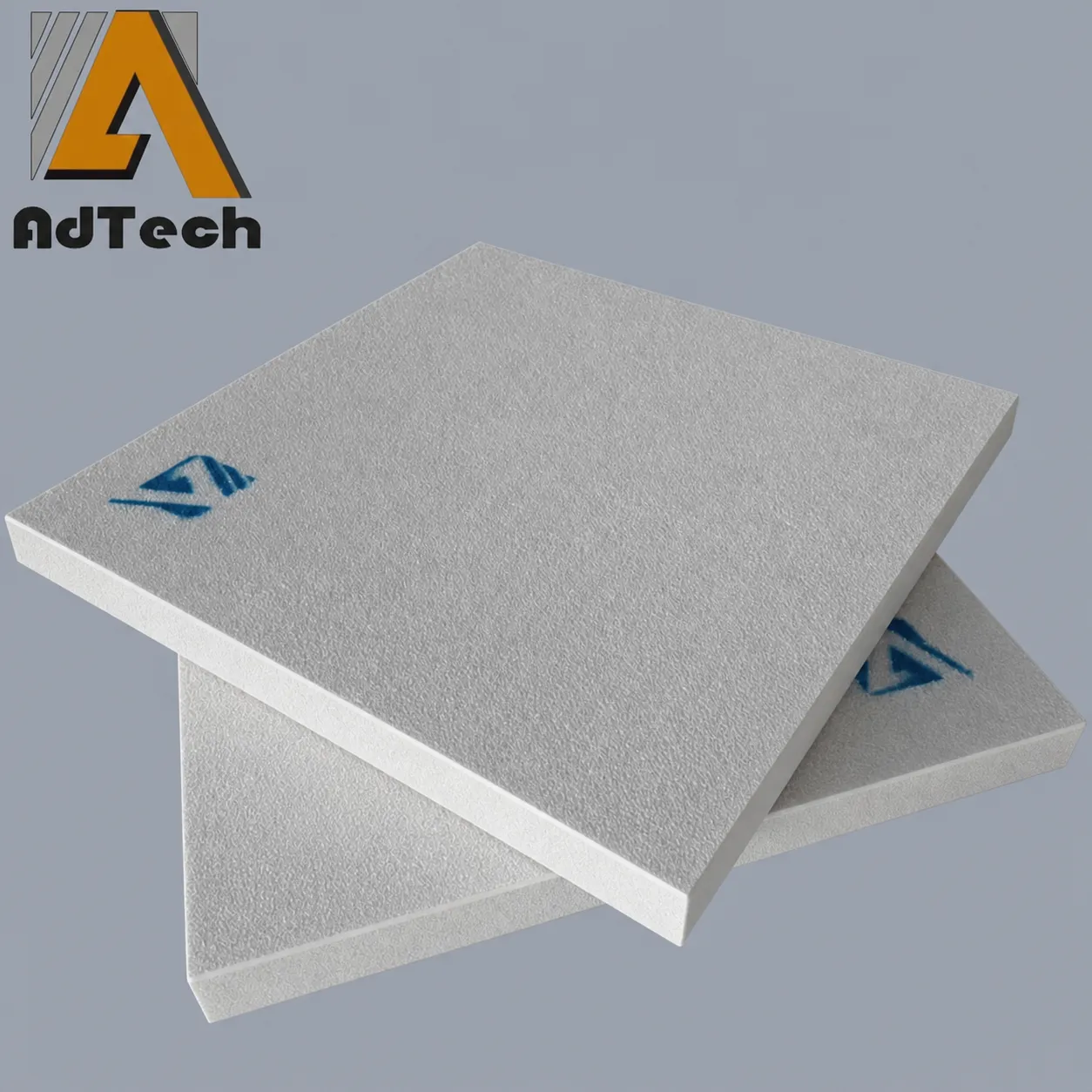
ceramic foam filter for filtration
Degassing and filtration solve different melt-quality problems.
| العملية | Main Purpose | Typical Method |
|---|---|---|
| إزالة الغازات | إزالة الهيدروجين المذاب | Nitrogen or argon bubbles |
| الترشيح | Remove non-metallic inclusions | Ceramic foam filter, plate filter, cartridge filter |
A typical aluminum casting process may therefore use:
Melting → Holding → Refining → Degassing → Filtration → Casting
Degassing reduces dissolved hydrogen, while filtration removes suspended inclusions. Both processes can be combined to improve molten aluminum cleanliness before casting.
Learn More About Our Molten-Aluminum Treatment
الأسئلة الشائعة
1. What is the aluminum degassing process?
The aluminum degassing process removes dissolved hydrogen from molten aluminum before casting, mainly by introducing fine nitrogen or argon bubbles into the melt.
2. Why is hydrogen removed from molten aluminum?
Excess dissolved hydrogen can form pores during solidification, reducing the internal quality and mechanical properties of aluminum castings.
3. How does degassing remove hydrogen from aluminum?
Dissolved hydrogen moves to the gas-liquid interface, transfers into inert-gas bubbles, and escapes from the melt as the bubbles rise to the surface.
4. Why are nitrogen and argon used for aluminum degassing?
Nitrogen and argon provide inert gas bubbles that carry hydrogen out of the molten aluminum without intentionally reacting with the metal.
5. Does nitrogen react with hydrogen during degassing?
No. Nitrogen primarily acts as a carrier gas. Hydrogen is removed through mass transfer from the molten aluminum into the gas bubbles.
6. Why are fine bubbles used in aluminum degassing?
Fine bubbles provide a larger gas-liquid interfacial area, creating more surface area for dissolved hydrogen to transfer into the gas phase.
7. What factors affect aluminum degassing efficiency?
Important factors include bubble size, gas flow rate, rotor speed, rotor design, melt temperature, treatment time, melt depth, and initial hydrogen concentration.
8. Does aluminum degassing remove non-metallic inclusions?
Degassing mainly removes dissolved hydrogen. Non-metallic inclusions are primarily removed through filtration, such as ceramic foam filters or other molten aluminum filtration systems.
9. What is the difference between degassing and filtration?
Degassing reduces dissolved hydrogen, while filtration removes suspended non-metallic inclusions. They are complementary melt-treatment processes.
10. Can aluminum degassing remove all dissolved hydrogen?
No. The achievable hydrogen level depends on the alloy, initial hydrogen content, equipment design, gas flow, rotor conditions, melt temperature, and treatment time.
مقالات ذات صلة:
 آلة إزالة الغازات من الألومنيوم
 تنقية سائل الألومنيوم
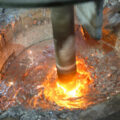 إزالة الغازات بالدوران
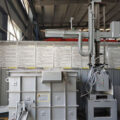 معدات إزالة الغازات من الألومنيوم المنصهر
 إزالة الغازات من الألومنيوم بالطريقة الدوارة
 عملية إزالة الغازات من الألومنيوم
 تقنية إزالة الغازات
 إزالة الغازات باستخدام النيتروجين
 إزالة غازات النيتروجين من الألومنيوم
 طرق إزالة الغازات في مصانع الصب
 عملية تكرير الألومنيوم المنصهر
 معدات إزالة الغازات الدوارة
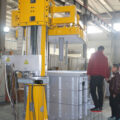 وحدة إزالة الغازات الدوارة
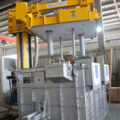 إزالة الغازات من المعادن باستخدام النيتروجين
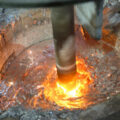 إزالة الغازات من المعادن