A ceramic foam filter becomes clogged when solid inclusions accumulate within its interconnected pores or form a deposit on the filter surface, restricting molten aluminum flow. Common causes include a high inclusion load in the incoming metal, excessive oxide particles, unsuitable filter permeability, and insufficient filtration area for the required flow rate. However, slow metal flow does not always mean the filter is clogged. Inadequate preheating and insufficient metal head can also prevent proper filter priming.
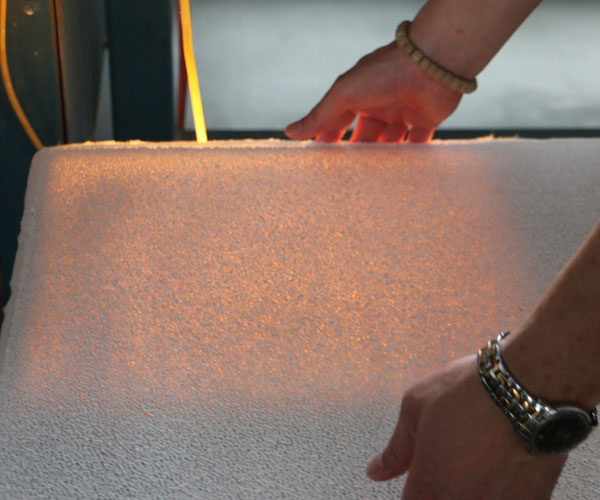
Aluminum Filtration-Ceramic Foam Filters
How Does a Ceramic Foam Filter Become Clogged?
A ceramic foam filter removes solid inclusions as molten aluminum passes through its three-dimensional porous structure. Some particles become attached to the internal ceramic surfaces, while others accumulate near the filter entrance or within the pore channels.
As filtration continues, the captured material occupies part of the available flow passages. The remaining openings become more restricted, increasing flow resistance and the pressure required to maintain metal flow.
There are two important ways this accumulation can occur:
Depth filtration: Smaller inclusions enter the porous structure and become attached to internal ceramic surfaces. Material gradually accumulates inside the filter.
Surface or cake filtration: Larger particles, oxide clusters, or a high concentration of inclusions accumulate near the upstream surface, forming a deposit that restricts the entrance to the filter.
Both mechanisms can occur during the same filtration process. A filter with a high incoming inclusion load may experience premature flow restriction even when its original pore structure and dimensions are suitable.
5 Common Reasons Why Ceramic Foam Filters Clog
1. Excessive Inclusion Content in the Incoming Aluminum
One of the most important causes of premature filter blockage is a high concentration of solid inclusions entering the filter.
Oxide films, oxide clusters, refractory fragments, and other non-metallic particles can originate during melting, alloying, furnace holding, and metal transfer.
When a large amount of these materials reaches the ceramic foam filter, its available filtration capacity is consumed more quickly.
For example, a filter used in a production line with relatively clean incoming metal may maintain stable flow throughout the required casting period. The same filter may become restricted much earlier when the incoming melt contains a substantially higher inclusion load.
What to check:
- Whether the incoming metal contains excessive oxide films or visible solid contamination.
- Whether upstream melting and metal-transfer practices have changed.
- Whether filters are becoming blocked earlier after a change in charge materials or production conditions.
- Whether suitable upstream melt-cleaning practices are being maintained.
A ceramic foam filter is a final filtration stage, not a substitute for controlling contamination throughout the melting and transfer process.
Excessively Fine or Low-Permeability Filter Structure
A finer pore structure can improve the opportunity to capture smaller inclusions, but it may also increase the resistance to molten aluminum flow.
This becomes important when the filter structure is too restrictive for the incoming metal condition and the required casting rate.
It is also important to distinguish nominal PPI from actual permeability. Filters with the same PPI rating can have different pore openings, pore uniformity, and hydraulic properties depending on their manufacturing process.
If the actual filter permeability is low relative to the required flow, the available pressure head may not be sufficient to maintain stable production, particularly as inclusions accumulate.
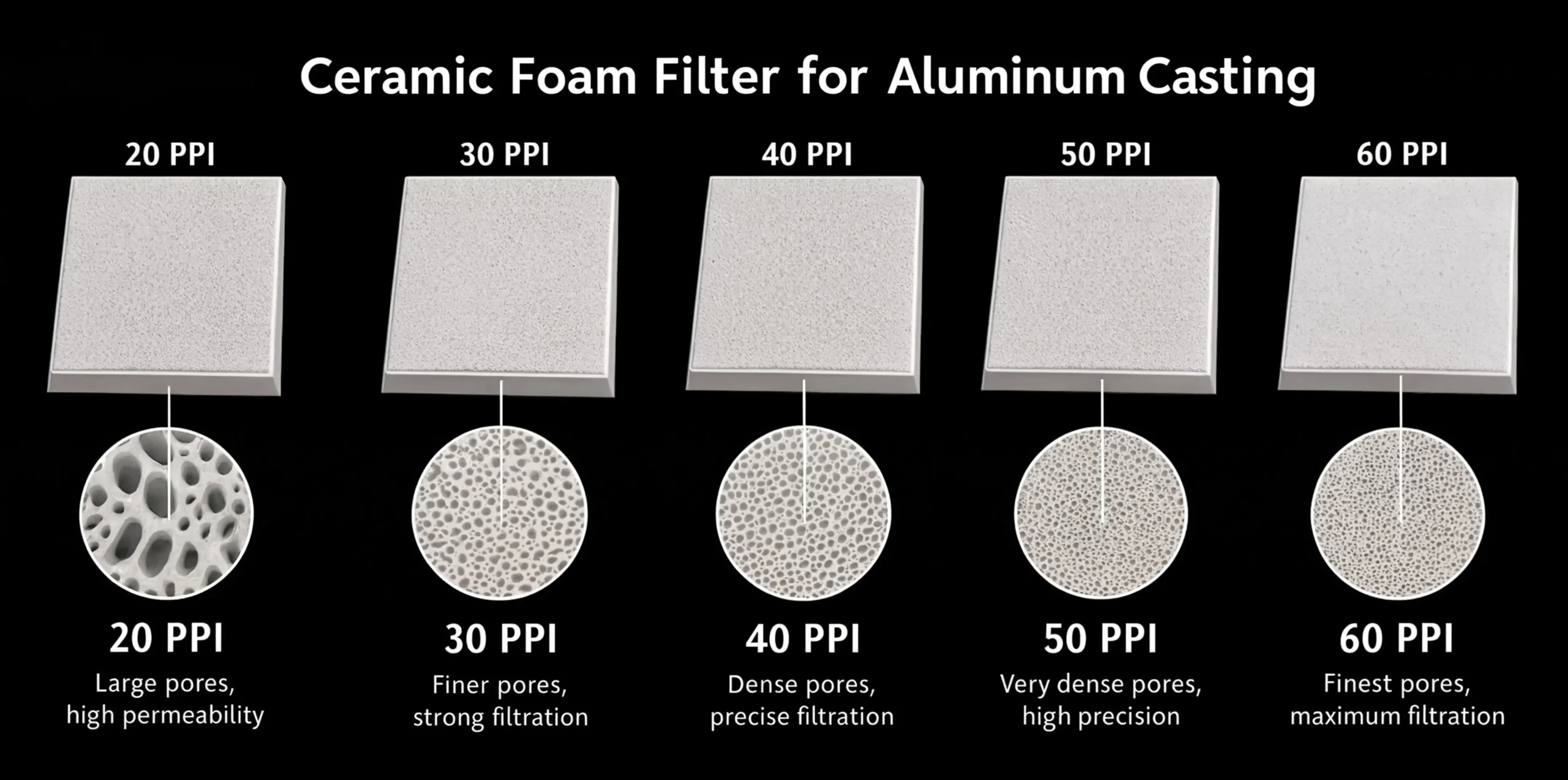
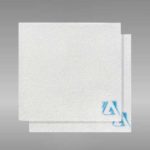
different ppi of CFF
What to check:
- Whether the selected filter has sufficient permeability for the application.
- Whether flow resistance increases significantly after changing filter suppliers.
- Whether the same nominal PPI from different manufacturers produces different flow behavior.
- Whether the incoming inclusion load is appropriate for the selected filter structure.
The solution is not necessarily to choose the lowest PPI. The filter must still capture the inclusions that matter to the finished product.
Insufficient Filtration Area for the Required Metal Flow
The amount of molten aluminum passing through a filter also affects its operating conditions.
When the metal flow rate is high relative to the effective filtration area, the average velocity through the active filter face increases. This can increase pressure drop and make flow more sensitive to pore restriction and inclusion accumulation.
For example, two production lines may use the same PPI grade but experience different filtration behavior because one has a larger effective filtration area or distributes the metal flow across several filters.
The filter grade alone does not determine its capacity.
What to check:
- Actual metal flow rate through each individual filter.
- Effective filtration area exposed to molten aluminum.
- Whether the filter surface is fully utilized or partly blocked by the supporting structure.
- Whether production throughput has increased without reviewing filtration capacity.
For a closer look at the relationship between filter dimensions, effective filtration area, and casting conditions, see our guide on How to Match Ceramic Foam Filter Specifications with Casting Requirements.
Poor Upstream Melt Treatment
When a filter receives a high concentration of inclusions, it has to retain more material during filtration.
If the melt contains excessive oxide clusters or solid contamination before reaching the filter, the filter may become restricted much sooner than expected.
This is why upstream melt handling and treatment should be considered when investigating repeated blockage.
Depending on the production process, appropriate measures may include controlling turbulence during metal transfer, using suitable refining treatments, and removing accumulated surface dross.
Rotary degassing primarily reduces dissolved hydrogen. It should not be assumed to remove all solid inclusions before they reach the ceramic foam filter.
What to check:
- Whether the melt is exposed to unnecessary turbulence during transfer.
- Whether surface oxide material is being carried into the filtration system.
- Whether upstream treatment is suitable for the alloy and contamination level.
- Whether the filter is receiving material that should have been separated earlier in the process.
Inappropriate Preheating and Filter Priming Conditions
Not every slow-flow problem is caused by inclusion accumulation.
Ceramic foam filters need to be properly preheated before contact with molten aluminum. If a filter is too cold, the metal may lose heat during initial infiltration and partially or completely solidify inside its pore structure.
Once aluminum freezes inside the filter, the available flow passages can become restricted. Increasing the casting time will not necessarily restore the original flow.
The filter also requires sufficient metal head to displace the air within its porous structure and establish initial metal flow.
What to check:
- Whether the filter reached the specified preheating temperature.
- Whether the preheating duration was sufficient.
- Whether the metal temperature was within the required casting range.
- Whether sufficient metal head was available to prime the filter.
- Whether the flow restriction appeared immediately at startup or developed gradually during filtration.
Follow the filter supplier’s and equipment manufacturer’s preheating requirements. A single preheating temperature should not be applied to every filter grade and installation.
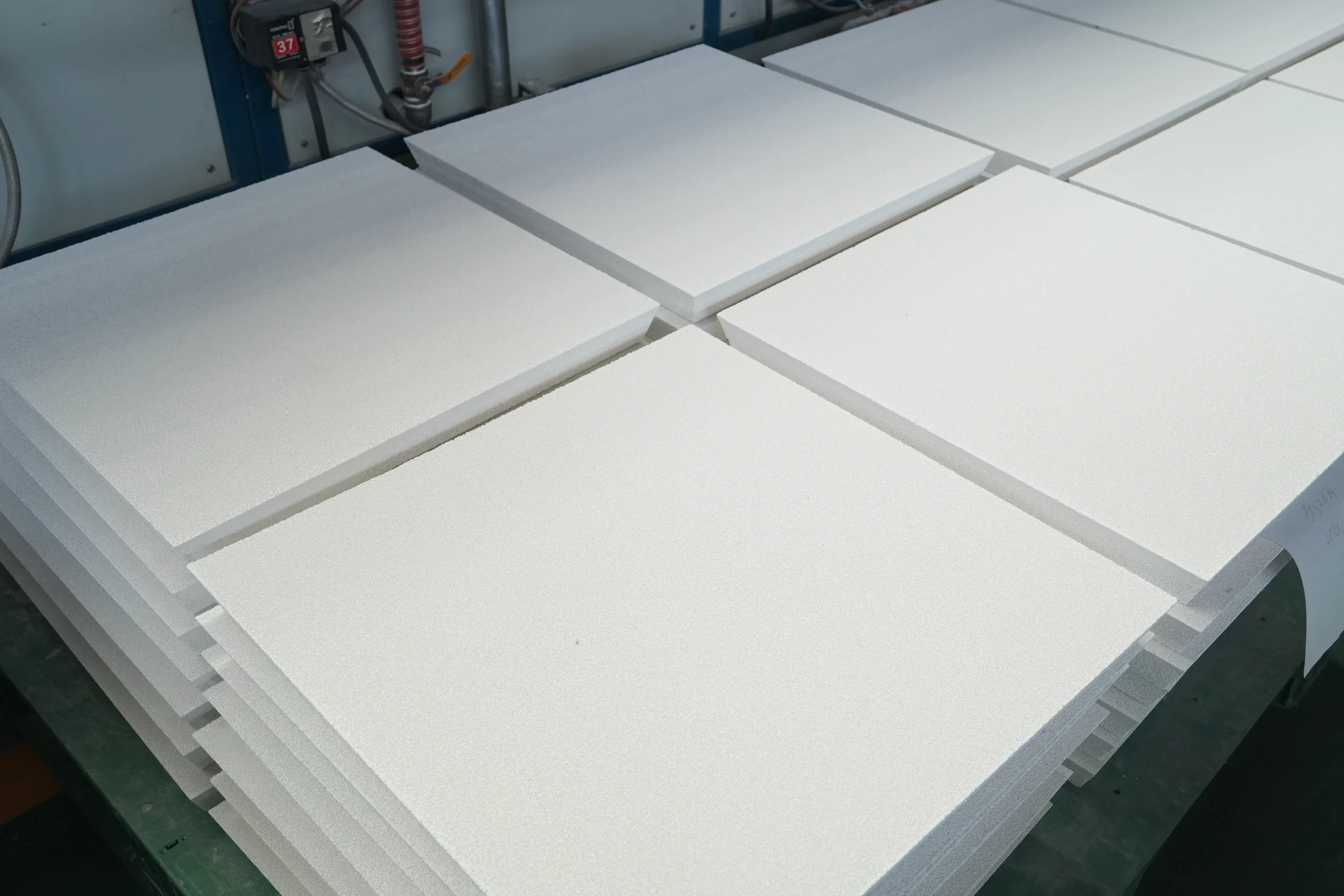
filter busa keramik
How to Tell Whether a Ceramic Foam Filter Is Actually Clogged
The timing of the flow problem provides an important diagnostic clue.
A filter that starts normally and gradually loses flow behaves differently from one that fails to start properly.
| Production Observation | Possible Cause | What to Investigate |
|---|---|---|
| Normal flow at startup, followed by gradual flow reduction | Inclusion accumulation within the filter | Incoming inclusion load, filter capacity, permeability |
| Metal flow becomes restricted shortly after starting | Premature solidification or rapid initial blockage | Preheating, metal temperature, incoming contamination |
| No metal flow or very slow flow from the beginning | Inadequate priming or insufficient metal head | Filter preheating, available metal head, filter permeability |
| Metal flows around the filter edges | Poor sealing or incorrect filter positioning | Filter dimensions, gasket, filter box seating |
| Flow decreases much earlier than in previous production runs | Change in melt cleanliness, throughput, or filter characteristics | Alloy, upstream processing, actual flow rate, replacement filter properties |
This distinction is important when troubleshooting.
For example, if the filter starts normally and its flow gradually decreases while the metal head remains comparable, progressive inclusion accumulation becomes a stronger possibility.
If the filter never establishes normal flow from the beginning, check preheating and priming conditions before concluding that the filter is clogged.
How Can Foundries Reduce Premature Filter Clogging?
Preventing premature blockage requires controlling both the incoming metal condition and the filtration setup.
| Control Area | Recommended Check | Tujuan |
|---|---|---|
| Incoming melt cleanliness | Review upstream inclusion control and metal handling | Reduce excessive inclusion loading |
| Filter permeability | Confirm the filter’s actual flow characteristics | Avoid unnecessarily high flow resistance |
| Effective filtration area | Match active area to the required metal flow | Distribute the metal flow appropriately |
| Pemanasan awal | Follow the specified preheating procedure | Prevent premature metal solidification |
| Metal head | Maintain sufficient pressure for filter priming and operation | Support stable metal flow |
| Production monitoring | Record flow behavior and the time when restriction begins | Identify premature blockage and changing operating conditions |
Do not immediately switch to a lower PPI filter whenever blockage occurs. A more open filter may improve flow capacity, but it may also reduce the filtration performance required by the casting application.
The better approach is to identify whether the problem comes from excessive inclusion loading, filter permeability, insufficient filtration area, or improper startup conditions.
AdTech Ceramic Foam Filters for Aluminum Filtration
AdTech supplies alumina ceramic foam filters in multiple PPI grades and customized dimensions for molten aluminum filtration.
When evaluating a filter that becomes clogged prematurely, the existing product specification is only one part of the investigation. The incoming melt condition, actual metal flow rate, effective filtration area, and preheating procedure should also be reviewed.
If you are experiencing early blockage, you can provide AdTech with:
- Current filter brand and PPI grade.
- Filter length, width, and thickness.
- Aluminum alloy and casting application.
- Approximate metal flow rate.
- How long the filter operates before flow restriction occurs.
- Whether the problem appears during startup or develops gradually.
Based on this information, AdTech can assess the existing specification and recommend a suitable filter for evaluation. Free samples can also be discussed for production testing before bulk purchasing.
A clogged filter and a damaged filter are two different problems. In our next guide, we will examine Why Do Ceramic Foam Filters Crack During Casting? and the operating conditions that can cause mechanical or thermal damage.
Pertanyaan yang Sering Diajukan
1.What causes a ceramic foam filter to become clogged during aluminum casting?
A ceramic foam filter becomes clogged when solid inclusions, such as oxide films, oxide clusters, and refractory particles, accumulate within its pores or on its upstream surface. A high inclusion load in the incoming molten aluminum can cause the filter to reach its filtration capacity sooner and restrict metal flow.
2.How can I tell if a ceramic foam filter is clogged?
A common sign of progressive clogging is a gradual decrease in molten aluminum flow after the filter has started operating normally. If flow decreases while the metal head and other operating conditions remain relatively stable, inclusion accumulation may be restricting the filter pores. Flow problems at startup require additional checks for preheating and filter priming.
3.Why does molten aluminum flow become slower during filtration?
Molten aluminum flow may slow down as captured inclusions accumulate inside the ceramic foam filter, increasing flow resistance. An insufficient filtration area, low filter permeability, or inadequate metal head can also contribute to reduced flow. These factors should be checked before attributing the problem solely to filter clogging.
4.Does a higher PPI ceramic foam filter clog faster?
Not necessarily, but a finer pore structure may be more sensitive to inclusion loading and can have higher flow resistance. Actual clogging behavior also depends on pore geometry, permeability, incoming inclusion concentration, and effective filtration area. PPI alone cannot predict how long a filter will maintain stable flow.
5.Can excessive oxide inclusions cause premature ceramic foam filter clogging?
Yes. High concentrations of oxide films and oxide clusters can occupy the available pore passages and restrict molten aluminum flow. Poor metal handling, excessive turbulence, and insufficient upstream inclusion control can increase the material reaching the filter.
6.Can insufficient preheating cause a ceramic foam filter to become blocked?
Yes. If a ceramic foam filter is not adequately preheated, molten aluminum may lose heat during initial infiltration and partially solidify inside its pores. This can restrict flow from the beginning of casting. Unlike progressive inclusion accumulation, this type of blockage is related to thermal conditions and filter startup.
7.Can aluminum degassing prevent ceramic foam filter clogging?
Not by itself. Rotary degassing primarily reduces dissolved hydrogen, while ceramic foam filters capture solid non-metallic inclusions. Although some inclusions may be carried toward the surface during gas treatment, degassing cannot guarantee that the incoming metal is free of particles that may accumulate inside the filter.
8.Does a larger ceramic foam filter help reduce clogging?
A larger effective filtration area can help distribute molten aluminum flow and reduce the average flow velocity through the filter face under comparable conditions. However, it does not eliminate clogging caused by excessive inclusion loading. Filter permeability, metal flow rate, and available metal head must also be considered.
9.What should I do if a ceramic foam filter becomes clogged during casting?
First, follow the foundry’s operating and safety procedures for abnormal metal flow. Do not force molten aluminum through a restricted filter or disturb the filter while metal is flowing. Record the metal flow behavior, metal head, casting conditions, and time when the restriction occurred. After the operation, inspect the used filter and review the incoming melt condition to identify the likely cause.
10.How can I prevent premature clogging of ceramic foam filters?
Reduce excessive inclusion loading before filtration, avoid unnecessary turbulence during metal transfer, select a filter with suitable permeability and effective filtration area, and follow the specified preheating procedure. Monitoring metal flow throughout casting also helps identify abnormal restriction before it significantly affects production.