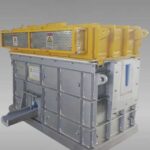
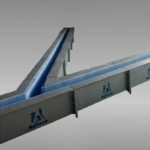
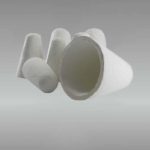
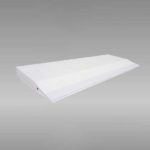
و insulated launder is a refractory channel used to transfer molten aluminum between furnaces, holding units, filtration equipment, and casting machines while limiting heat loss and protecting melt quality. AdTech manufactures precast refractory launders using proprietary high-nitrogen composite ceramic materials. The launders can be manufactured to customer-designed shapes and configurations, with properties such as low thermal conductivity, low thermal expansion, abrasion resistance, and low wettability with molten aluminum.
Compared with traditional castable-lined launders that require repeated on-site repair and cleaning, a precast insulated launder provides a more consistent refractory structure and can reduce maintenance requirements. AdTech can also integrate melt-treatment equipment into the launder layout when the process requires on-line degassing or filtration.
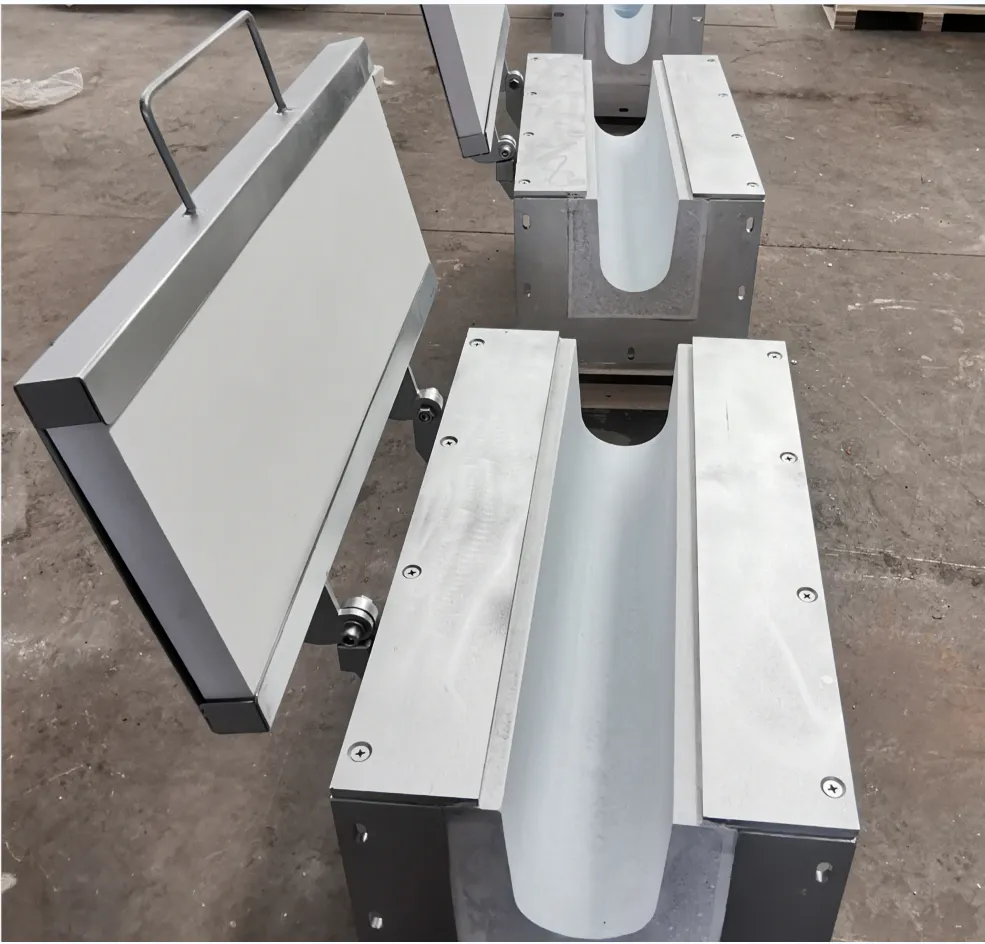
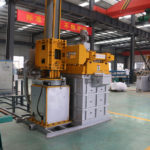
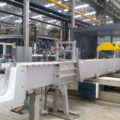
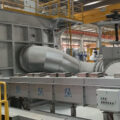
Intergrated Launder Equipment
What Is an Insulated Launder for Molten Aluminum?
Learn More About Our Molten-Aluminum Treatment
An insulated launder is a refractory-lined or precast channel designed to transfer molten aluminum while controlling heat loss and maintaining a stable flow path.
Depending on the casting line, a launder may connect:
Melting Furnace → Holding Furnace → Degassing → Filtration → Casting Machine
It can also be used between other process units where molten aluminum needs to be transferred over a specific distance.
The launder must withstand continuous contact with high-temperature aluminum while maintaining sufficient mechanical strength and dimensional stability. Its refractory material also needs to resist aluminum penetration, erosion, and unwanted metal adhesion.
What Is a Refractory Trough?
A حوض مقاوم للحرارة is another common term for a molten-metal transfer channel. In aluminum processing, the terms حوض مقاوم للحرارة, aluminum launder, ، و molten aluminum transfer launder may refer to similar equipment, depending on the plant’s terminology and configuration.
The main difference between a conventional site-built trough and a precast refractory launder is how the refractory structure is manufactured and installed.
| Conventional Site-Built Trough | Precast Refractory Launder |
|---|---|
| Refractory material installed on site | Refractory section manufactured in advance |
| Dimensions depend on site construction | Factory-controlled dimensions |
| Longer installation and repair work | Faster replacement or installation |
| Repeated patching may be required | Damaged sections can be replaced |
| Surface quality depends on site workmanship | Controlled during manufacturing |
| More maintenance work during service | Designed for lower maintenance requirements |
For aluminum casting applications, this difference can become significant when the launder operates continuously at high temperature.
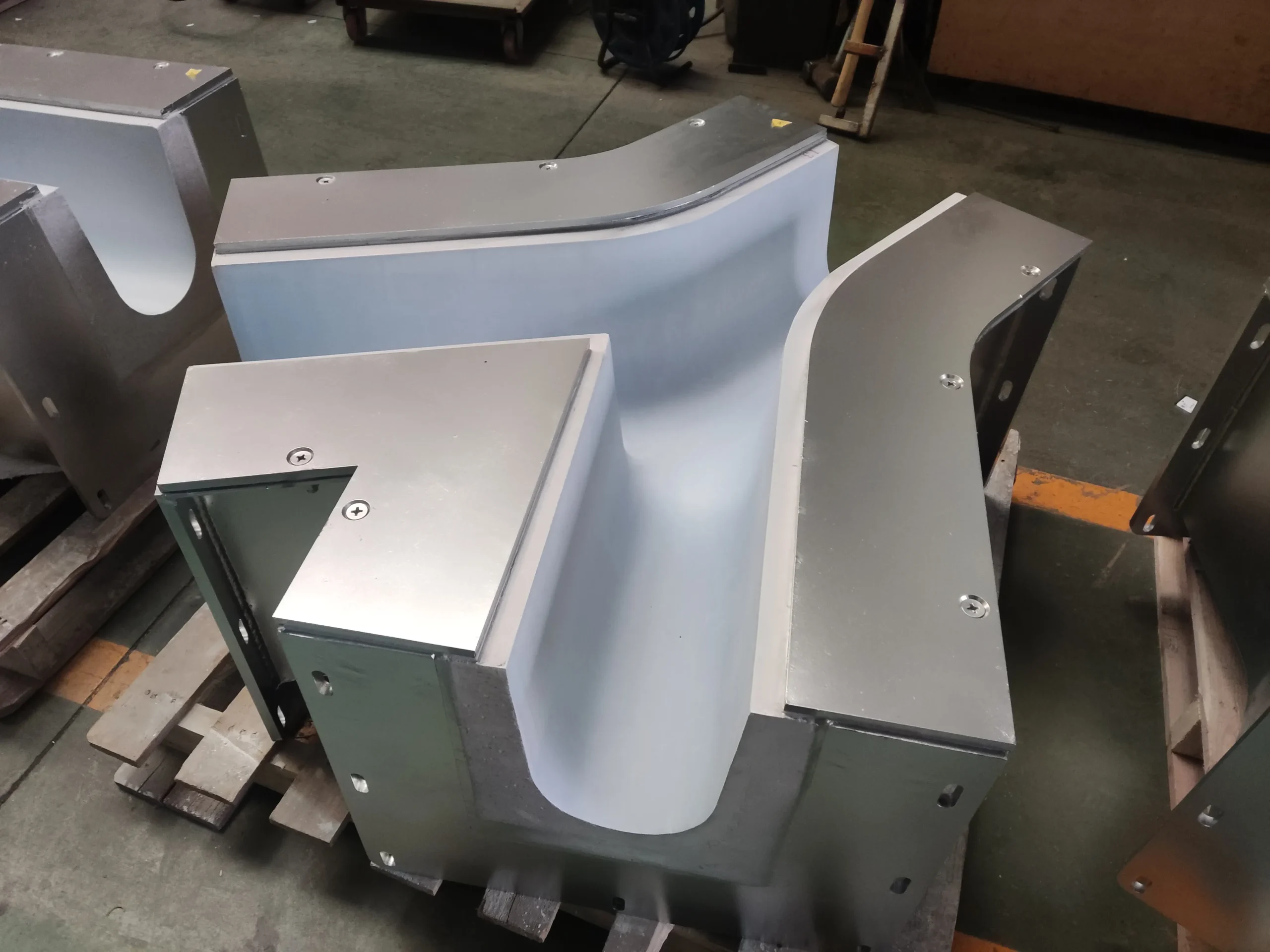
غسل
Why Do Traditional Launders Require Frequent Maintenance?
Traditional launders may be constructed by applying refractory castable or other refractory materials directly inside a steel shell.
During long-term operation, several problems can occur:
- Molten aluminum adheres to the refractory surface.
- Aluminum penetrates damaged or porous refractory areas.
- Thermal cycling causes cracking or deterioration.
- Refractory material can be damaged during cleaning.
- The steel shell may deform if molten aluminum penetrates through damaged refractory.
- Repeated repairs increase shutdown time and labor requirements.
Cleaning can also become a difficult maintenance operation. If aluminum buildup and refractory damage occur together, removing the buildup may further damage the refractory lining.
This creates a maintenance cycle of cleaning → refractory repair → shell correction → rebuilding → recommissioning.
For continuously operating aluminum plants, reducing this maintenance cycle can be as important as reducing the initial equipment cost.
How Does an Insulated Launder Reduce Heat Loss?
The refractory structure of an insulated launder acts as a thermal barrier between the molten aluminum and the surrounding environment.
Its thermal performance depends on factors including:
- Refractory material
- Wall thickness
- Launder length
- Ambient temperature
- Molten aluminum temperature
- Metal flow rate
- Insulation structure
- Surface condition
A well-designed insulated launder helps maintain molten aluminum temperature during transfer and reduces unnecessary heat loss.
The actual temperature drop should be evaluated under the operating conditions of the specific casting line rather than treated as a fixed value for every launder.
What Material Is Used for AdTech Insulated Launders?
AdTech manufactures its refractory launders using a high-nitrogen composite ceramic material developed and produced by the company.
The material is designed for demanding molten aluminum transfer applications, with properties including:
- العزل الحراري
- High-temperature stability
- Resistance to molten aluminum adhesion
- Resistance to thermal cycling
- القوة الميكانيكية
- Resistance to aluminum penetration
- Controlled thermal expansion
The internal surface can also be treated with a suitable high-temperature refractory coating to reduce aluminum adhesion and make accumulated dross easier to remove.
Material selection should be based on the actual alloy, temperature, flow rate, transfer distance, operating cycle, and installation conditions.
Why Is Low Wettability Important for an Aluminum Launder?
When molten aluminum wets the refractory surface easily, aluminum can adhere to the launder and form buildup during operation.
A refractory surface with low wettability to molten aluminum can help:
- Reduce aluminum adhesion
- Make dross and buildup easier to remove
- Maintain a more stable flow channel
- Reduce mechanical cleaning
- Reduce damage caused by repeated cleaning
Low wettability does not mean that no aluminum buildup will ever occur. The actual performance also depends on alloy composition, temperature, flow conditions, refractory condition, and cleaning practices.
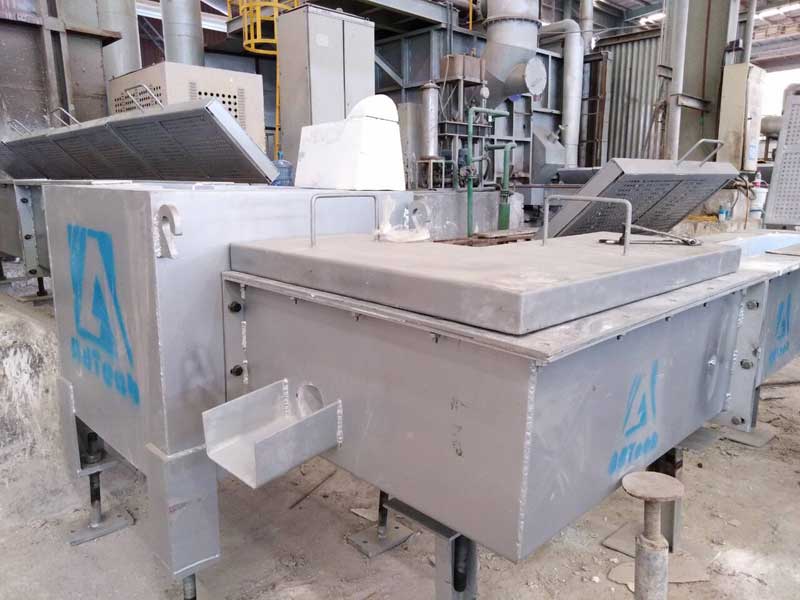
AdTech Insulated Launder Case Study
AdTech applied its insulated launder technology to a customer project involving the modification of the flow channels serving No. 1–6 mixing furnaces.
The project replaced the previous refractory arrangement with a prefabricated high-alumina-fiber-based launder structure and a high-temperature refractory coating on the internal surface.
The redesigned structure provided higher overall strength and density while improving the condition of the working surface.
What Problems Did the Original Launder Have?
Before the modification, the traditional refractory-lined flow channels required frequent cleaning and maintenance.
The main problems included:
- Aluminum buildup on the working surface
- Damage to refractory material during cleaning
- Molten aluminum penetration into damaged refractory
- Deformation risk to the steel shell
- Repeated refractory rebuilding
- High labor requirements
- Extended shutdown time
These problems increased both maintenance costs and operational workload.
What Was Changed?
AdTech redesigned the launder structure using prefabricated refractory components.
The internal working surface was coated with a high-temperature refractory coating designed to reduce aluminum adhesion.
The project also incorporated on-line degassing and filtration into the molten aluminum transfer route, allowing melt treatment to take place as part of the transfer process.
A heat exchanger was additionally used to recover waste heat from the exhaust gas, helping reduce overall energy consumption.
The resulting concept combined:
Molten Aluminum Transfer + Thermal Insulation + Melt Treatment + Waste Heat Recovery
rather than treating the launder as a simple transfer channel.
What Were the Results of the Insulated Launder Project?
According to the project data, the modified launder system achieved the following results:
| Performance Indicator | Project Result |
|---|---|
| استهلاك الطاقة | Reduced by approximately 30% |
| Hydrogen content | Reduced by approximately 35% |
| محتوى الإدماج | Reduced by approximately 60% |
| تكلفة التشغيل | Reduced by approximately 30–50% |
| Cleaning/shutdown time | Reduced by approximately 20 minutes |
| High-temperature service | No damage or cracking reported within 2 years under the project conditions |
These figures are project-specific results, not guaranteed performance values for every insulated launder installation. Actual results depend on the refractory design, process conditions, melt-treatment system, operating cycle, and plant layout.
The reported reduction in hydrogen and inclusions came from the integrated melt-treatment system, particularly the on-line degassing and filtration equipment, rather than from the refractory launder material itself.
How Can an Insulated Launder Improve Aluminum Plant Efficiency?
The benefits of an insulated launder extend beyond thermal insulation.
Energy Saving
Better thermal insulation can reduce heat loss during molten aluminum transfer and decrease the amount of additional heating required to maintain the target process temperature.
تكلفة صيانة أقل
A durable refractory structure with a low-wettability working surface can reduce aluminum buildup and refractory damage, lowering the frequency of repair and rebuilding.
Reduced Downtime
If cleaning and refractory maintenance take less time, the casting line can return to operation sooner.
Improved Working Conditions
Reducing manual refractory repair and intensive aluminum removal can lower the physical workload for operators.
More Stable Melt Transfer
A properly designed launder provides a consistent flow path between process units and helps maintain stable transfer conditions.
Can Degassing and Filtration Be Integrated Into an Aluminum Launder?
Yes. An insulated launder can be designed as part of an integrated molten aluminum treatment system.
على سبيل المثال:
Holding Furnace → Insulated Launder → On-Line Degassing → Ceramic Foam Filtration → Casting Machine
The exact arrangement depends on the plant layout and required treatment capacity.
Degassing and filtration have different functions:
| العملية | الوظيفة الرئيسية |
|---|---|
| On-line degassing | Reduce dissolved hydrogen |
| الترشيح باستخدام الرغوة الخزفية | Remove suspended non-metallic inclusions |
| Insulated launder | Transfer molten aluminum and limit heat loss |
Integrating these units can reduce unnecessary molten-metal transfer points and make the overall process layout more compact.
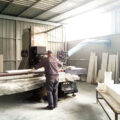
How Are AdTech Refractory Launders Manufactured?
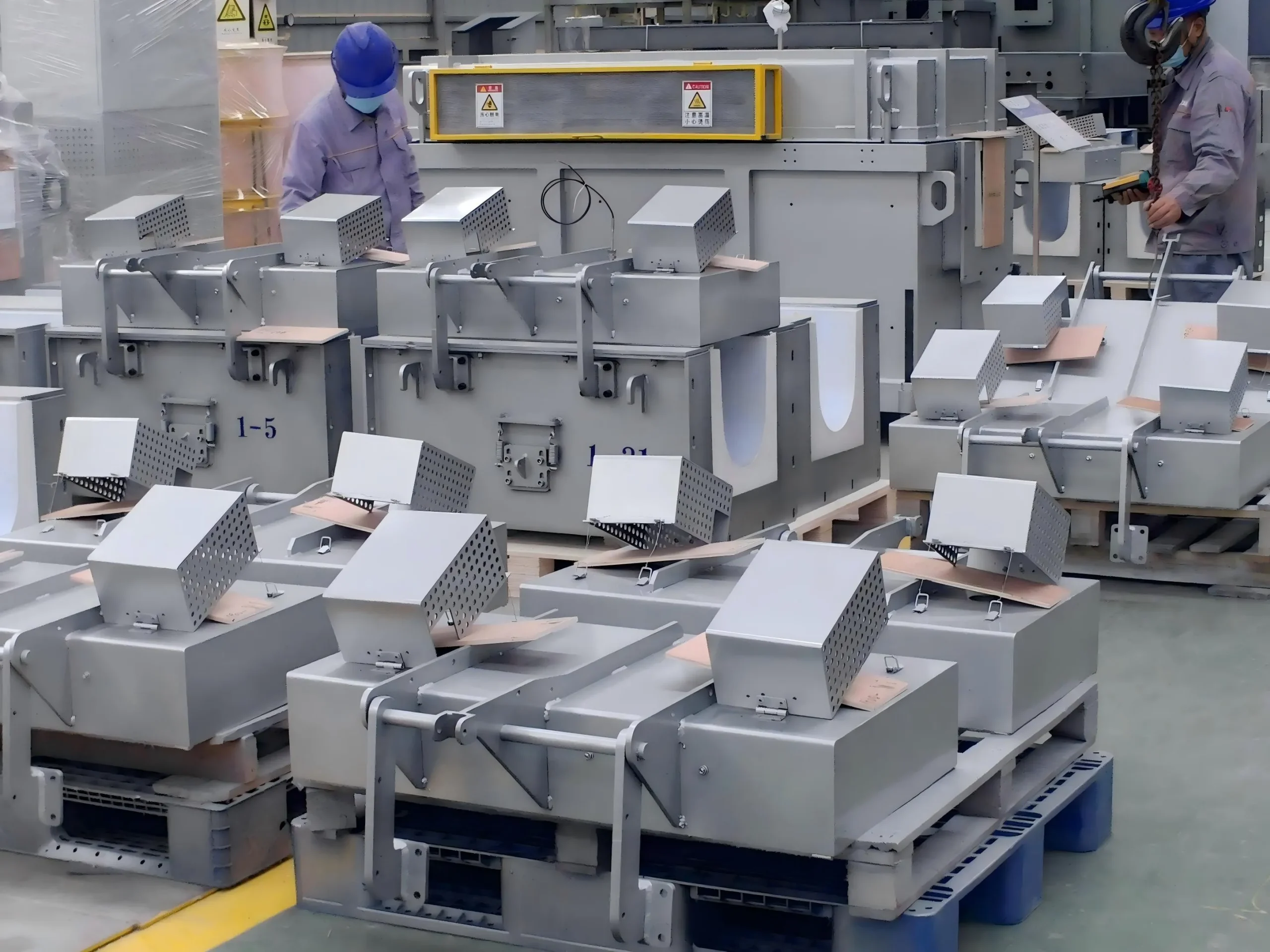
integrated launder system
Unlike a refractory channel that is built entirely on site, AdTech’s prefabricated launders are manufactured according to the required geometry before delivery.
The general process includes:
- Confirming the launder dimensions and connection points.
- Designing the mold according to the customer’s layout.
- Preparing the selected refractory material.
- Forming the refractory section.
- Controlled drying and firing.
- Machining or finishing where required.
- Applying the specified refractory coating.
- Inspecting the launder before and after firing.
- Final dimensional and visual inspection before delivery.
Factory production allows the shape, dimensions, material structure, and working surface to be controlled before the launder reaches the customer’s plant.
Can AdTech Make a Custom-Shaped Insulated Launder?
Yes. AdTech can manufacture refractory launders according to the customer’s required shape and installation layout.
Useful information for custom design includes:
- Furnace type and dimensions
- Molten aluminum flow rate
- Alloy grades
- Melt temperature
- Transfer distance
- Launder length and cross-section
- Connection dimensions
- Elevation difference
- Existing steel shell dimensions
- Required insulation performance
- Existing maintenance problems
- Required degassing or filtration position
Custom manufacturing is particularly useful when the new launder must fit an existing furnace or casting line rather than a standardized equipment layout.
Insulated Launder vs Traditional Refractory Trough
| Requirement | Traditional Refractory Trough | AdTech Insulated Launder |
|---|---|---|
| Manufacturing | Often site-built | Factory prefabricated |
| Shape accuracy | Depends on site construction | Controlled during manufacturing |
| العزل الحراري | Depends on refractory structure | Designed for thermal insulation |
| Aluminum adhesion | Depends on surface treatment | Low-wettability surface available |
| Maintenance | May require repeated patching | Designed for reduced maintenance |
| Custom geometry | Possible through site construction | Custom mold manufacturing |
| Melt treatment integration | Depends on layout | Can be incorporated into system design |
| Inspection | Mainly after installation | Inspected before and after firing |
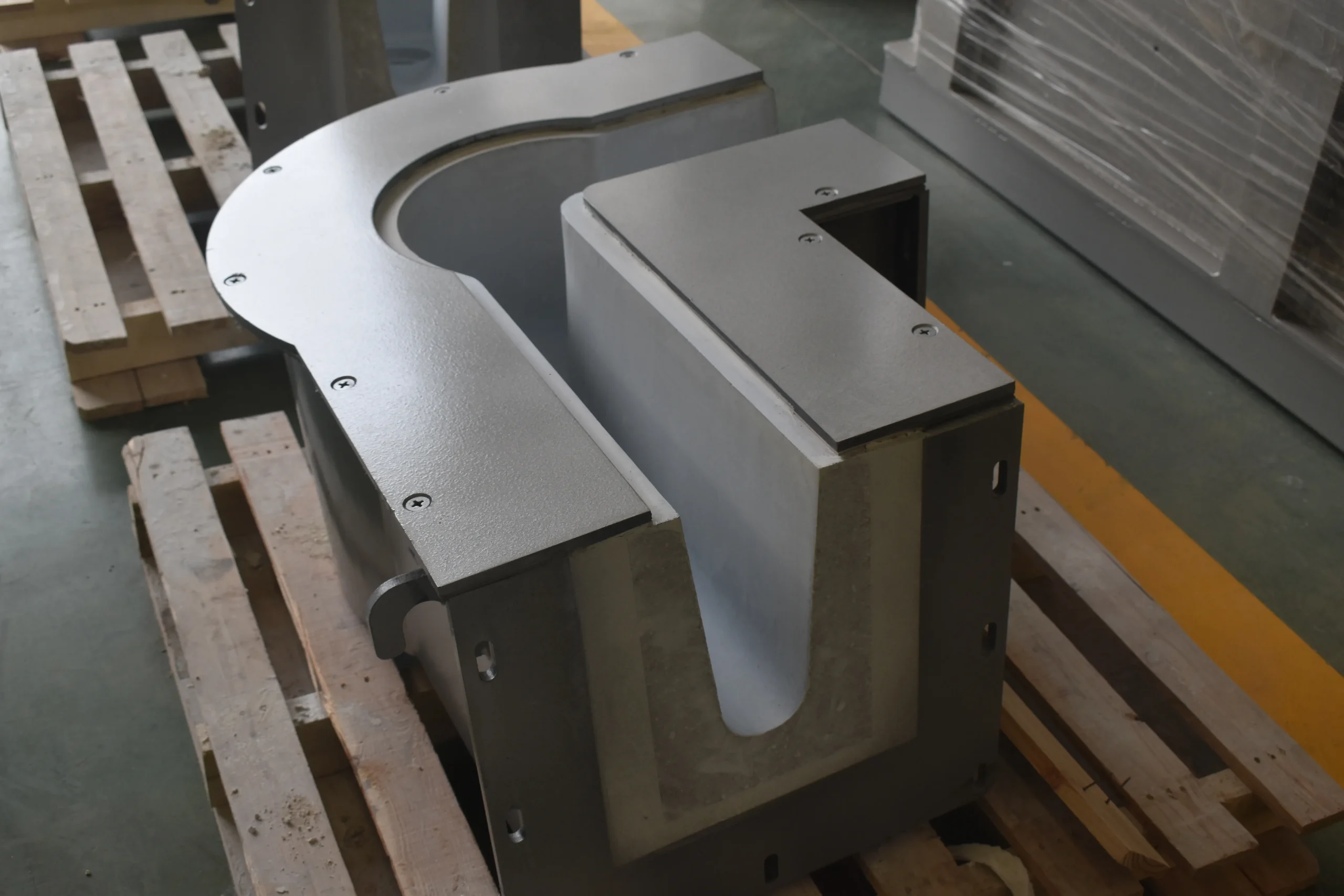
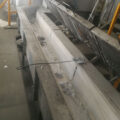
insulated launder
How to Select an Insulated Launder for Molten Aluminum
The launder should be selected according to the complete operating environment rather than by dimensions alone.
Consider:
1. Molten aluminum temperature
Higher temperatures increase the thermal and chemical requirements of the refractory.
2. Metal flow rate
The cross-section must provide sufficient flow capacity without creating undesirable flow conditions.
3. Transfer distance
Longer transfer distances generally increase the importance of thermal insulation.
4. Alloy composition
Different aluminum alloys can have different effects on refractory interaction and surface buildup.
5. Operating cycle
Continuous operation requires different durability considerations from intermittent use.
6. Cleaning method
The refractory surface should be compatible with the plant’s normal cleaning procedure.
7. Existing equipment layout
Connection points, elevation, furnace outlet position, and casting-machine position all affect the design.
8. Melt-treatment requirements
If degassing or filtration is required, the equipment position should be considered during launder design.
AdTech Insulated Launder for Aluminum Casting
شركات تصنيع تكنولوجيا الإعلانات precast refractory launders and insulated molten-metal transfer systems for aluminum melting, holding, melt treatment, and casting applications.
Our capabilities include:
- Proprietary refractory material production
- Custom mold design
- Prefabricated launder manufacturing
- High-temperature refractory coating
- فحص الأبعاد
- Pre- and post-firing inspection
- Molten aluminum transfer system design
- Integration with on-line degassing and filtration equipment
The launder can be designed according to the customer’s furnace configuration, metal flow rate, transfer distance, temperature requirements, and maintenance conditions.
الأسئلة الشائعة
1. What is an insulated launder?
An insulated launder is a refractory transfer channel designed to move molten aluminum while reducing heat loss and protecting the metal-transfer path.
2. What is another name for an insulated launder?
Depending on the application, terms such as refractory trough, aluminum launder, molten aluminum launder, and molten-metal transfer trough may be used.
3. What is the difference between a launder and a refractory trough?
In aluminum casting, the terms are often used interchangeably. A launder generally emphasizes the function of transferring molten metal, while refractory trough emphasizes the refractory structure of the channel.
4. Why use a precast refractory launder?
A precast launder is manufactured before installation, allowing better control of dimensions, material structure, and surface condition and reducing the amount of refractory construction required on site.
5. Can an insulated launder reduce aluminum temperature loss?
Yes. The refractory structure is designed to reduce heat transfer from molten aluminum to the surrounding environment. Actual temperature loss depends on the launder design and operating conditions.
6. Does an insulated launder remove hydrogen?
No. The launder itself does not remove dissolved hydrogen. Hydrogen reduction requires a dedicated melt-treatment process such as on-line rotary degassing.
7. Can filtration be installed in an aluminum launder system?
Yes. A ceramic foam filter or other filtration equipment can be incorporated into the molten aluminum transfer route when the process layout and filtration requirements allow it.
8. Can AdTech make a custom refractory trough?
Yes. AdTech can manufacture precast refractory launders according to customer-supplied dimensions, shapes, connection points, and installation requirements.
9. How long can an insulated launder last?
Service life depends on alloy, temperature, flow rate, thermal cycling, refractory material, surface condition, cleaning method, and operating practices. The two-year service result mentioned in the case study is specific to that project and operating conditions.
10. What information is needed for a custom aluminum launder?
The most useful information includes furnace dimensions, metal flow rate, alloy, temperature, transfer distance, launder dimensions, connection points, elevation, existing refractory structure, and any current problems such as aluminum buildup, heat loss, cracking, or frequent maintenance.
مقالات ذات صلة:
 حوض سائل من الألومنيوم
 الحوض والمجرى
 نظام قنوات السيراميك
 نظام قنوات تصريف المعادن المنصهرة
 شركة AdTech للعزل الحراري
 قناة صهر الألومنيوم المصنوعة من مادة مقاومة للحرارة
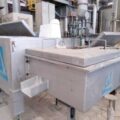 نظام قنوات نقل معدنية
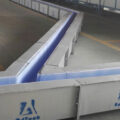 قطع الصب لصب الألومنيوم
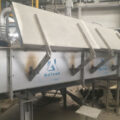 الغسل من أجل الصب
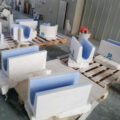 قناة ومجرى الألمنيوم المنصهر
 قناة صهر مقاومة للحرارة
 رأس صب من الألياف الخزفية
 نصائح حول صب سيليكات الألومنيوم
 قناة من سيليكات الألومنيوم
 نظام غسل الألومنيوم المنصهر