Molten aluminum purification is not a single-step process. No single treatment method can efficiently remove dissolved hydrogen, oxide films, and solid non-metallic inclusions at the same time. For most aluminum casting operations, a combination of furnace treatment, rotary degassing, and molten aluminum filtration provides a practical way to improve melt cleanliness and casting quality.
A commonly used treatment sequence is:
Furnace treatment → Rotary degassing → Settling/skimming → Ceramic foam filtration → Casting
For higher-quality aluminum products, the process may also include deep-bed filtration, flux treatment, grain refinement, or additional melt protection.
The right combination depends on the aluminum alloy, casting process, melt flow rate, hydrogen level, inclusion load, and required final metal quality.
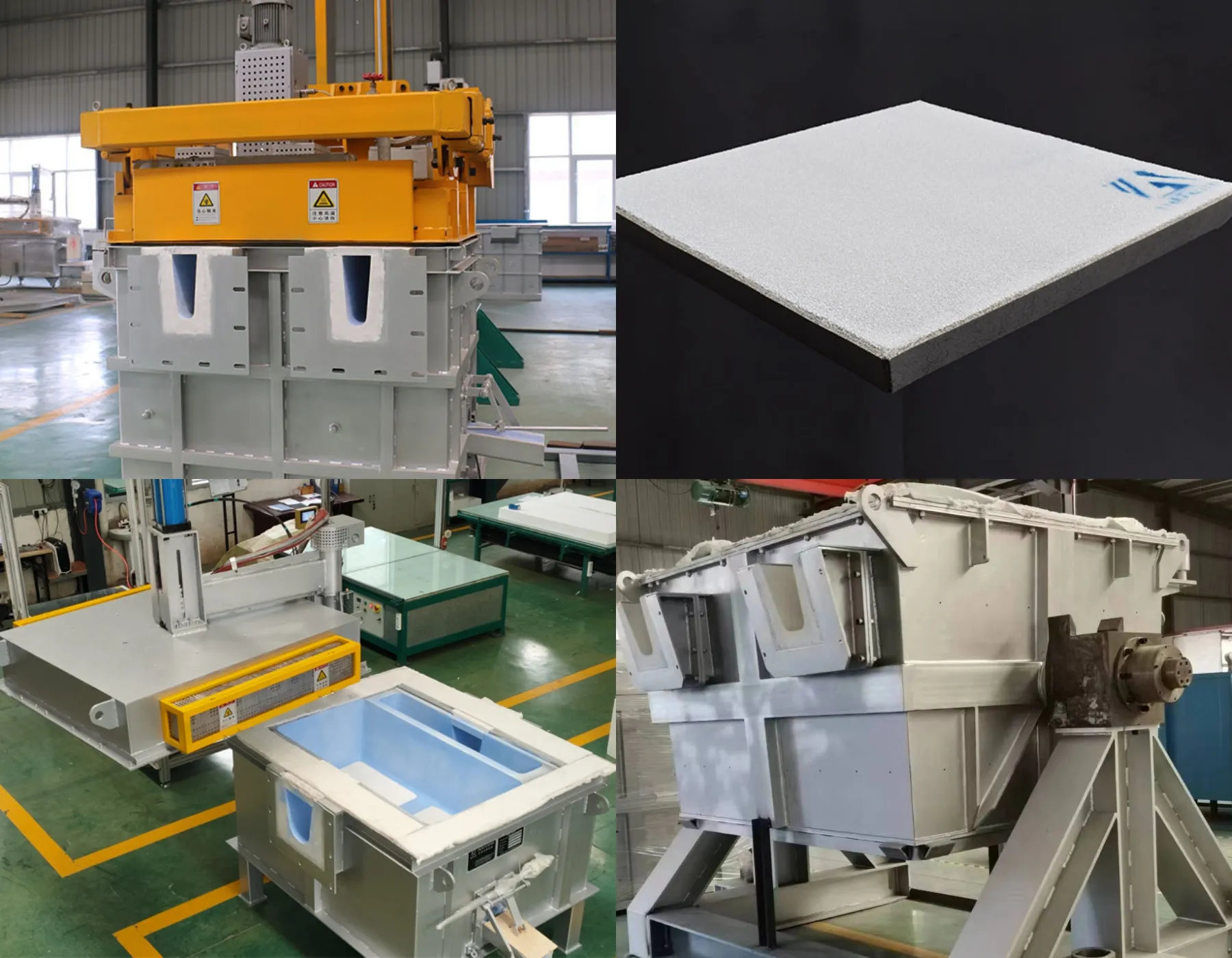
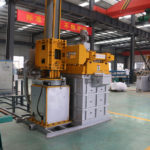
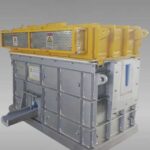
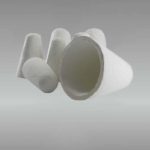
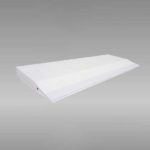
оборудование для дегазации, фильтр из керамической пены, фильтрующий блок и блок с глубоким слоем наполнителя
Why Does Molten Aluminum Need More Than One Purification Method?
The main reason is that different impurities require different removal mechanisms.
The two most important targets are dissolved hydrogen и non-metallic inclusions.
Hydrogen can dissolve into molten aluminum and later form gas porosity during solidification. Oxide films, refractory particles, dross and other inclusions can also remain suspended in the melt and become defects in the finished casting.
Rotary inert-gas degassing is primarily designed to reduce dissolved hydrogen. Ceramic foam filtration, on the other hand, physically captures non-metallic inclusions as molten aluminum passes through its three-dimensional porous structure. Reviews of aluminum melt purification identify rotary injection as an established industrial degassing method and ceramic filtration as an important method for inclusion removal.
This creates an important principle:
Degassing and filtration are complementary processes, not interchangeable ones.
A ceramic foam filter should not be selected as a substitute for proper degassing when hydrogen is the main problem. Likewise, degassing alone cannot provide the same level of physical inclusion removal as a properly selected filtration system.
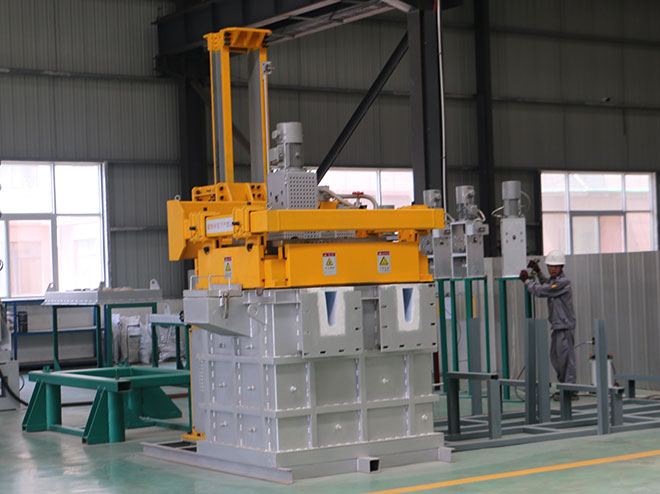
оборудование для дегазации в режиме онлайн
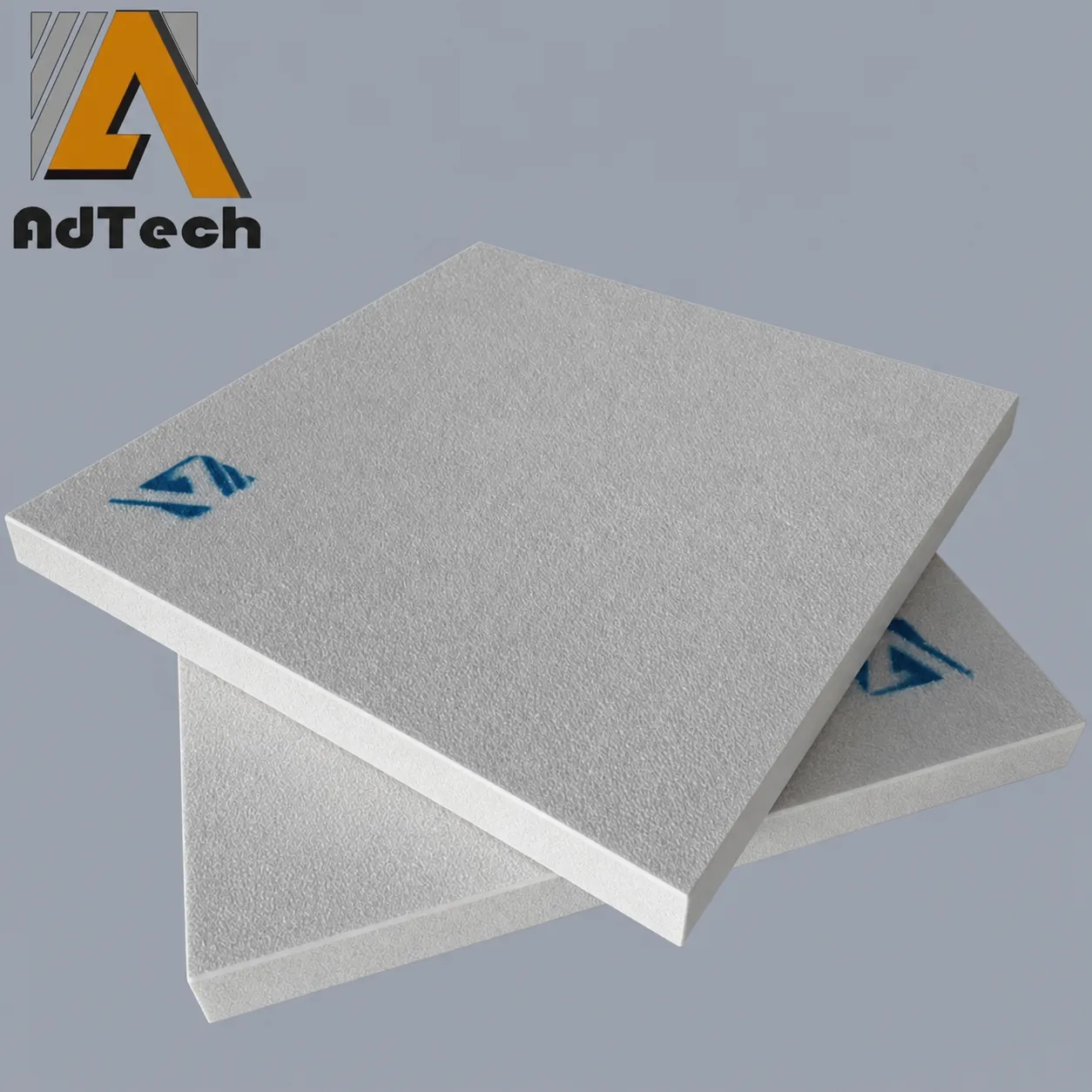
керамический пенофильтр компании AdTech с расширяющейся уплотнительной прокладкой
Contact Us to Learn More About Purification Methods
What Is the Most Common Combination for Molten Aluminum Purification?
For many conventional aluminum casting applications, a practical combination is:
Flux Treatment + Rotary Degassing + Ceramic Foam Filtration
Each stage has a different job.
| Treatment method | Main target | Typical role |
|---|---|---|
| Обработка флюсом | Oxides, dross, certain unwanted elements | Furnace-side melt preparation |
| Ротационная дегазация | Растворенный водород | Hydrogen removal and melt cleaning |
| Settling & skimming | Floated dross and inclusions | Remove material brought to the surface |
| Фильтрация с использованием керамической пены | Oxide films and non-metallic inclusions | Final melt filtration |
| Фильтрация в толстом слое | Мелкие включения | High-cleanliness applications |
| Grain refinement | Структура зерна | Контроль микроструктуры |
The important point is not simply adding more treatment steps. Each stage should reduce a specific type of contamination before the metal reaches the next stage.
For example, furnace treatment and skimming can reduce the amount of oxide and dross entering the downstream system. Rotary degassing then targets dissolved hydrogen and helps float some inclusions. A downstream ceramic foam filter captures remaining solid inclusions before the metal enters the casting process.
This sequential approach is also reflected in published industrial and technical descriptions of aluminum melt treatment.
Why Combine Rotary Degassing With Ceramic Foam Filtration?
This is one of the most important questions when designing an aluminum melt purification system.
Rotary degassing removes hydrogen
During rotary degassing, an inert gas such as argon or nitrogen is introduced into molten aluminum through a rotating rotor. The rotor disperses the gas into fine bubbles, increasing the gas-metal contact area.
Dissolved hydrogen can diffuse into the bubbles and then leave the melt as the bubbles rise to the surface.
The rotary injection method is widely studied because rotating gas injection produces smaller and more uniformly distributed bubbles than simpler gas-purging arrangements, improving gas-liquid contact and hydrogen removal.
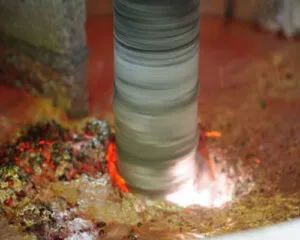
дегазация алюминия
Ceramic foam filtration removes inclusions
A ceramic foam filter uses an interconnected three-dimensional pore structure. As molten aluminum passes through the filter, inclusions can be captured through mechanisms including direct interception, adhesion and changes in flow direction.
This makes ceramic foam filtration particularly useful for removing:
- Оксидные пленки
- Non-metallic particles
- Dross-related inclusions
- Refractory particles
- Other suspended solid contaminants
Ceramic foam filters are widely used for molten-metal purification because their open-cell structure combines permeability with effective inclusion capture.
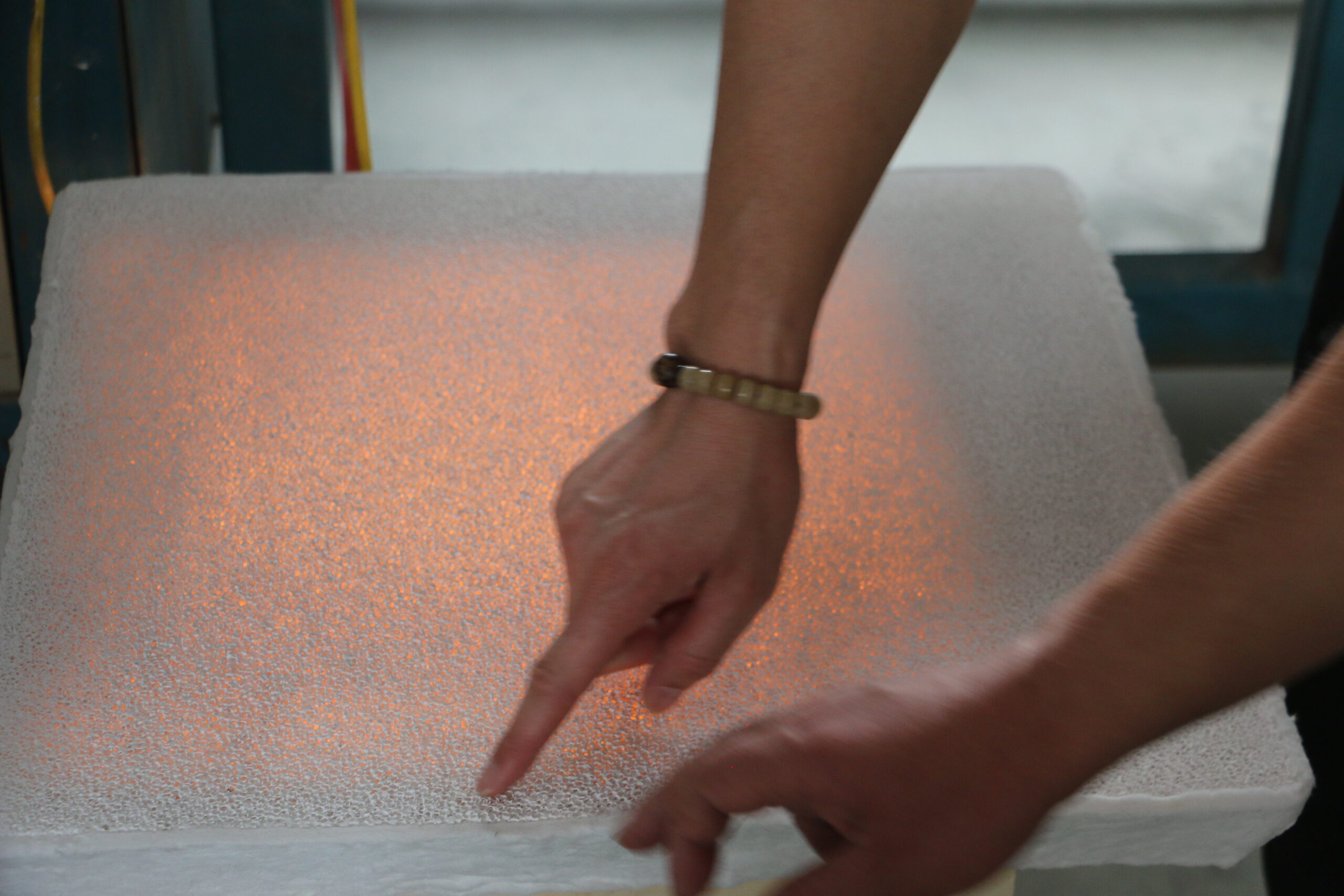
Крупный план керамической фильтрующей пластины с пенообразной структурой и равномерным распределением пор, предназначенной для эффективного удаления включений из расплавленного алюминия.
Therefore:
Rotary degassing → primarily controls hydrogen
Ceramic foam filtration → primarily controls solid inclusions
Using both addresses two different causes of poor molten aluminum quality.
Why Should Degassing Usually Come Before Final Filtration?
The sequence matters.
A practical arrangement is:
Furnace → Degassing → Filtration → Casting
rather than placing the final filter before the degassing stage.
Rotary degassing creates significant melt movement and gas bubbling. This treatment can also bring inclusions toward the surface or change the distribution of oxide particles in the melt. Placing the final filtration step downstream gives the filter an opportunity to capture residual inclusions before the metal reaches the mold or caster.
The exact arrangement depends on the equipment configuration, but the general principle is simple:
Use upstream treatments to reduce the impurity load, then use final filtration to protect the casting process from remaining inclusions.
This is particularly important for quality-sensitive products where even a relatively small number of inclusions can affect mechanical properties, surface quality or downstream processing.
Which Filtration Method Should Be Combined With Degassing?
Ceramic foam filtration is not the only option.
The appropriate filtration technology depends heavily on production scale and cleanliness requirements.
| Filtration method | Удаление включения | Typical use | Main consideration |
|---|---|---|---|
| Керамический пенопластовый фильтр | Высокий | General aluminum casting | Simple, flexible, consumable |
| Deep-bed filter | Очень высокий | High-volume, high-cleanliness casting | Larger system and higher investment |
| Ceramic tube/cartridge filtration | Высокий | Specialized filtration systems | Filter design and flow capacity |
| Settling chamber | Coarse separation | Upstream melt treatment | Limited fine-inclusion removal |
| Multi-stage filtration | Очень высокий | High-quality applications | More complex system |
A ceramic foam filter is often a practical choice when flexibility, installation space and operating cost are important.
Deep-bed filtration becomes more attractive when the operation requires continuous high-throughput filtration and very low inclusion levels, particularly in large primary aluminum casting operations.
The choice should therefore not be based simply on which filter has the finest pore structure.
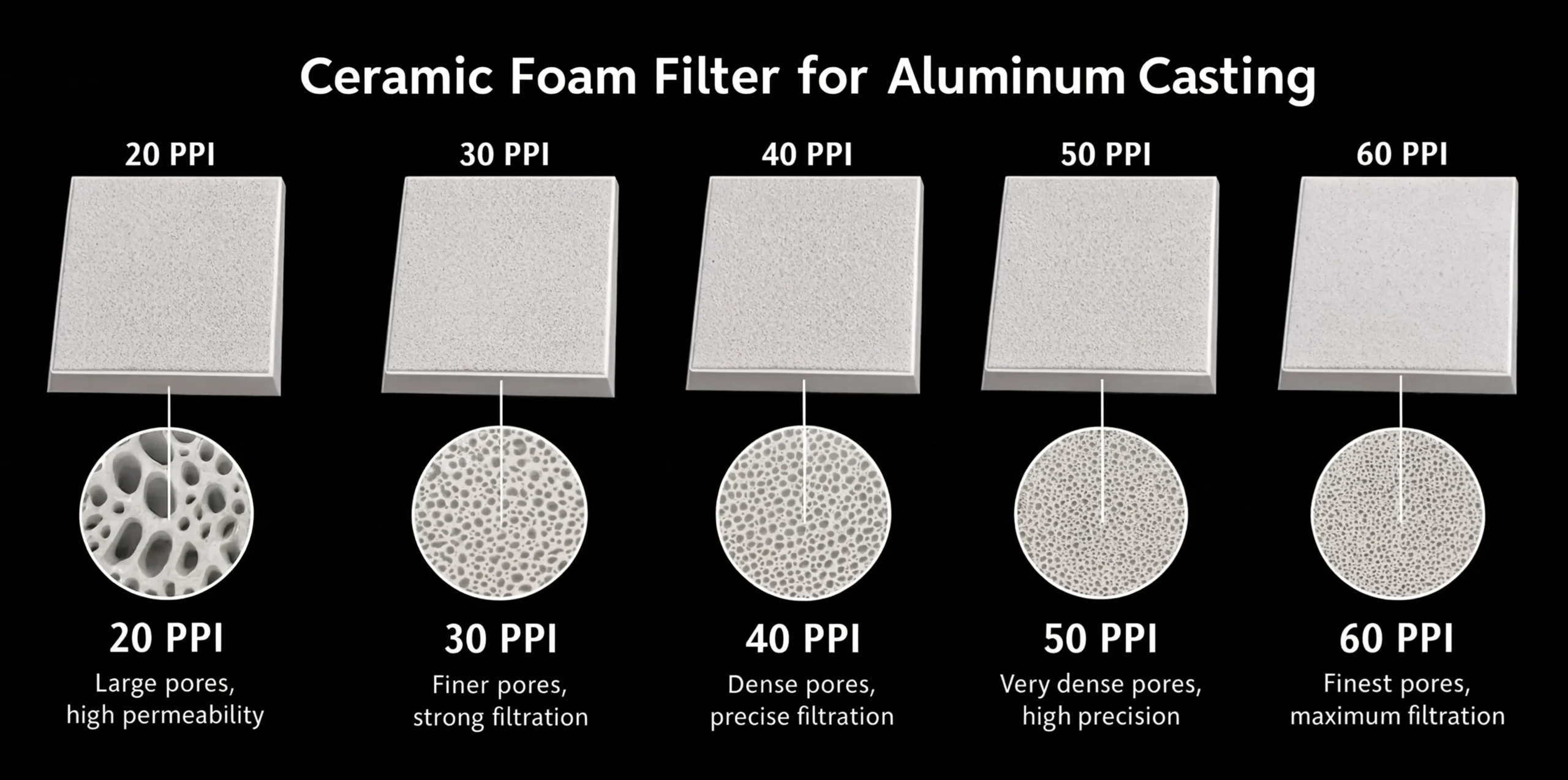
different ppi of CFF
Is a Higher PPI Ceramic Foam Filter Always Better?
No.
A higher PPI does not automatically mean a better filtration system.
PPI refers to pores per inch, and increasing PPI generally produces a finer pore structure. This can improve the capture of smaller inclusions, but it can also increase pressure drop and reduce permeability.
For this reason, filter selection needs to balance:
- Эффективность удаления включений
- Molten aluminum flow rate
- Required filtration precision
- Available filtration area
- Alloy characteristics
- Температура
- Pressure head
- Expected filter life
For example, a high-flow casting line may need a larger filter area rather than simply selecting a much finer filter.
In practical system design, filtration area and PPI should be considered together.
A recent technical review also emphasizes that ceramic foam filter performance depends on its porous structure, material properties and filtration behavior rather than on pore size alone.
What Is the Best Molten Aluminum Purification Combination for Different Applications?
There is no universal configuration. A more useful approach is to match the treatment system to the production requirements.
| Заявка | Typical purification combination | Main priority |
|---|---|---|
| General aluminum casting | Flux treatment + rotary degassing + CFF | Overall melt cleanliness |
| Die casting | Rotary degassing + CFF | Hydrogen and inclusions |
| Low-pressure casting | Rotary degassing + fine filtration | Porosity and inclusion control |
| Литье заготовок | In-line degassing + filtration | Consistent melt quality |
| Литье в слитки | In-line degassing + deep-bed filtration | High cleanliness and high throughput |
| Запас алюминиевой фольги | Intensive degassing + fine/deep-bed filtration | Extremely low inclusion levels |
| Высококачественная заготовка для экструзии | Degassing + deep-bed/CFF filtration | Inclusion and hydrogen control |
| High-inclusion recycled aluminum | Flux treatment + intensive degassing + staged filtration | High contaminant load |
These are starting configurations rather than fixed recipes. A casting operation processing clean primary aluminum may need a very different system from one melting a high proportion of recycled scrap.
Learn More About Our Molten-Aluminum Treatment
How Does Recycled Aluminum Change the Purification Strategy?
The charge material is one of the biggest factors affecting melt treatment.
Recycled aluminum can introduce a higher load of:
- Оксидные пленки
- Dross
- Refractory particles
- Coatings and contaminants
- Hydrogen
- Other unwanted elements
In this situation, relying on a single ceramic foam filter can overload the filter prematurely.
A better strategy is often to reduce the impurity load before the final filter.
Например:
Scrap preparation → Furnace melting → Flux treatment → Degassing → Settling/skimming → Filtration → Casting
The purpose of this sequence is not to make the ceramic filter do everything. Instead, upstream treatment removes or separates as much contamination as practical before the final filtration stage.
This can help maintain a more stable flow rate and extend effective filter service life.
What About Deep-Bed Filtration?
For large-scale aluminum production requiring very high cleanliness, ceramic foam filtration may be combined with or replaced by a deep-bed filtration system.
Unlike a thin ceramic foam filter, a deep-bed system forces the molten metal through a relatively thick filtration medium. The larger filtration bed provides more opportunities for inclusions to be captured.
Deep-bed filtration is therefore particularly relevant to:
- Primary aluminum
- Литье заготовок из DC
- Литье в слитки
- High-volume production
- High-quality rolling stock
- Applications with strict inclusion requirements
However, deep-bed systems generally require more equipment, refractory material and process control than a simple ceramic foam filter.
The best solution is therefore determined by the production requirements rather than by filtration efficiency alone.
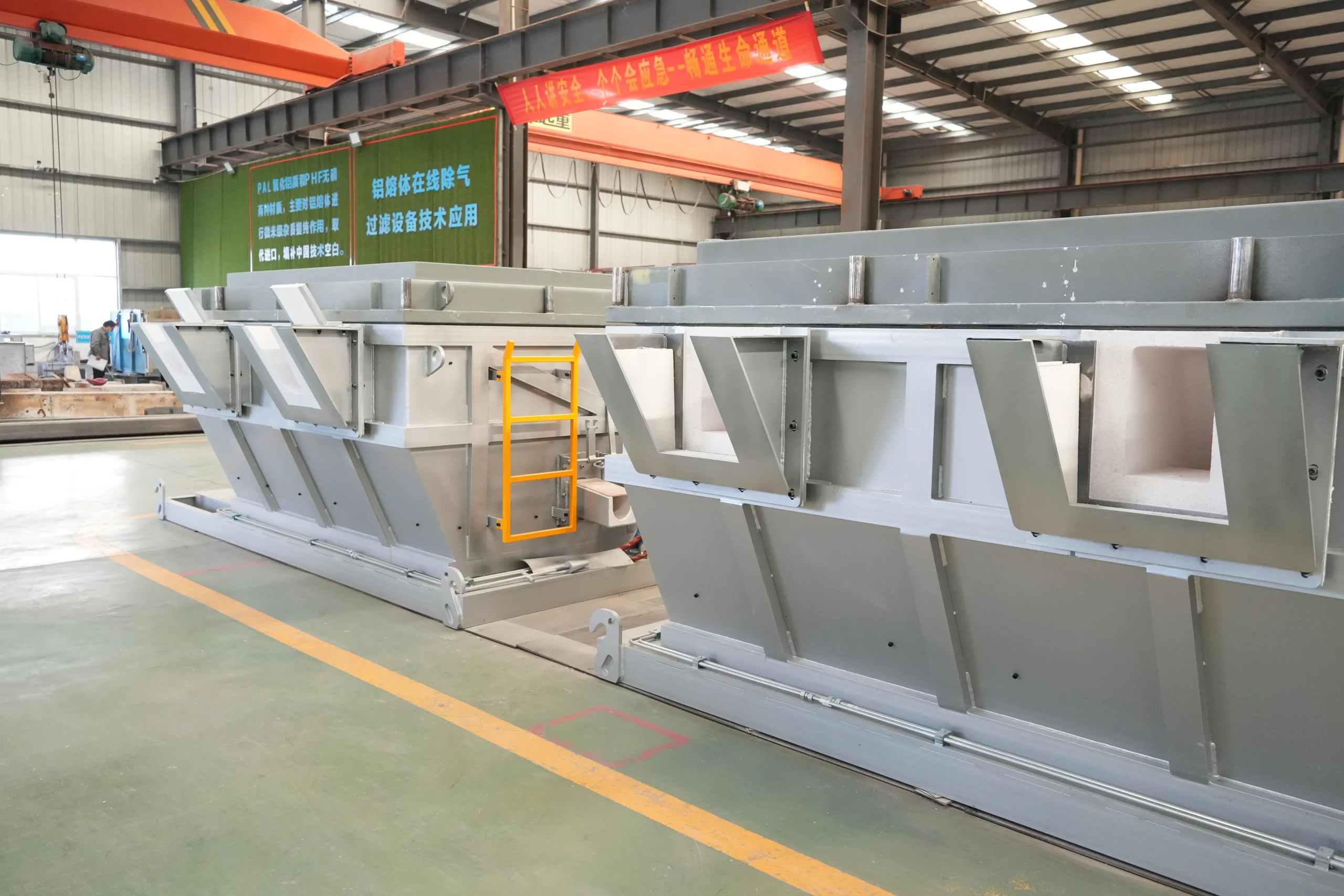
глубокая фильтрация
What Is the Recommended Process Sequence?
For a typical aluminum casting operation, a practical melt treatment train is:
1. Melt and control the charge
Use appropriate charge materials and minimize unnecessary exposure of the melt to moisture and turbulence.
2. Apply furnace-side treatment
Flux treatment can help modify or remove certain oxide and dross contaminants before downstream treatment.
3. Perform rotary degassing
Use an appropriately designed rotary degassing system to reduce dissolved hydrogen and assist inclusion flotation.
4. Allow separation and remove surface dross
Give floated contaminants an opportunity to separate before skimming where the process allows.
5. Filter the molten aluminum
Use a ceramic foam filter, deep-bed filter, or another suitable filtration system according to the required cleanliness and flow rate.
6. Protect the melt during transfer
Even a well-treated melt can become contaminated again through excessive turbulence, exposed transfer, dirty launders or unsuitable refractory materials.
7. Cast with controlled metal flow
Maintaining stable flow and minimizing turbulence are essential because melt treatment cannot compensate for severe re-oxidation downstream.
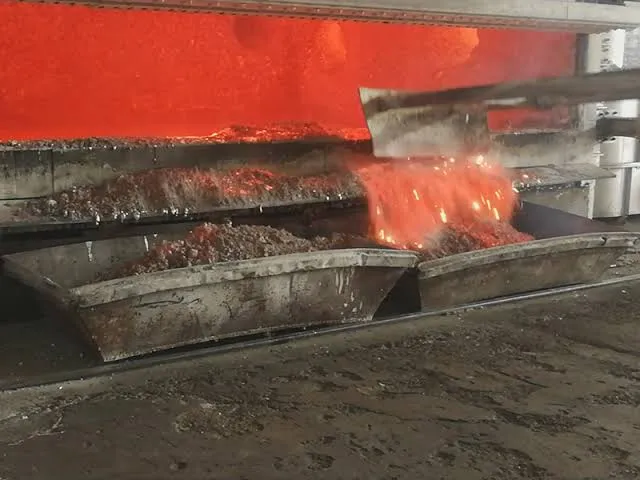
Flux treatment used in molten aluminum
How Do You Choose the Right Purification Combination?
Instead of asking “Which purification method is the best?”, ask four more useful questions:
1. Is hydrogen the main problem?
If the primary defect is gas porosity or elevated hydrogen, prioritize rotary or in-line degassing.
2. Are oxide inclusions the main problem?
If inclusion content is high, filtration becomes more important. A properly selected ceramic foam filter or deep-bed filter may be required.
3. Is the melt coming from a high-scrap charge?
If yes, upstream flux treatment, settling, skimming and staged filtration may be more important than simply selecting a finer filter.
4. What is the required casting quality?
A general foundry casting and aerospace-grade billet do not require the same purification system.
The higher the quality requirement and production volume, the more important it becomes to control the entire melt treatment chain rather than relying on one purification device.
What Is the Best Combination for Molten Aluminum Purification?
For many aluminum casting operations, a strong starting point is:
Furnace treatment + rotary degassing + ceramic foam filtration
For more demanding applications, the system may be expanded to:
Flux treatment + in-line rotary degassing + settling/skimming + deep-bed or ceramic foam filtration + controlled melt transfer
The key is that each treatment step performs a different function.
Rotary degassing is primarily used to control dissolved hydrogen. Ceramic foam filtration is primarily used to remove non-metallic inclusions. Deep-bed filtration provides a higher-capacity solution for demanding continuous casting applications, while furnace treatment helps reduce the contaminant load before the final filtration stage.
Therefore, the “best” molten aluminum purification system is not necessarily the system with the most treatment stages or the finest filter. It is the system that matches the alloy, melt quality, casting process, flow rate and final product requirements.
For most operations, the most important principle is simple:
Remove hydrogen with degassing, remove inclusions with filtration, and prevent the melt from becoming contaminated again before casting.
Часто задаваемые вопросы
1. What is the best combination for molten aluminum purification?
For many aluminum casting operations, a combination of furnace treatment, rotary degassing, and molten aluminum filtration is a practical choice. The exact combination depends on the alloy, melt quality, casting process, flow rate, and required metal cleanliness.
2. Why combine degassing and filtration for molten aluminum?
The two processes target different contaminants. Degassing primarily removes dissolved hydrogen, while filtration removes non-metallic inclusions such as oxide films and refractory particles. Using both provides more comprehensive melt treatment.
3. Does ceramic foam filtration remove hydrogen from molten aluminum?
No. Ceramic foam filters are primarily designed to remove solid non-metallic inclusions. When hydrogen removal is required, a rotary or in-line degassing process is normally used.
4. What does rotary degassing remove from molten aluminum?
Rotary degassing is mainly used to reduce dissolved hydrogen in molten aluminum. It can also promote the flotation of some inclusions, but it should not be considered a replacement for a dedicated filtration system.
5. Should molten aluminum be degassed before filtration?
In many casting systems, degassing is performed upstream of final filtration. This allows the filtration stage to capture residual inclusions after the melt has undergone degassing and other upstream treatments.
6. Is a ceramic foam filter enough to purify molten aluminum?
Not always. A ceramic foam filter can effectively reduce non-metallic inclusions, but it does not address every melt-quality problem. If dissolved hydrogen is high, degassing may also be required; heavily contaminated or high-quality melts may require additional treatment.
7. Is a higher PPI ceramic foam filter always better?
No. A higher PPI can improve the capture of finer inclusions, but it may also increase flow resistance. Filter PPI should be selected together with filter area, molten aluminum flow rate, inclusion load, and required cleanliness.
8. When should deep-bed filtration be used instead of a ceramic foam filter?
Deep-bed filtration is generally more suitable for high-volume continuous casting and applications requiring very high melt cleanliness. Ceramic foam filters are often more practical for flexible or lower-throughput filtration applications.
9. What is the typical molten aluminum purification process?
A typical process may include melting, furnace treatment, flux treatment, rotary degassing, settling and skimming, filtration, and casting. Not every operation requires every step, so the process should be adjusted to the alloy and casting requirements.
10. How do I choose the right molten aluminum purification system?
Start with the main melt-quality problems, such as hydrogen, oxide inclusions, or excessive dross. Then consider the alloy, casting method, melt flow rate, production volume, and required final quality to determine whether you need degassing, ceramic foam filtration, deep-bed filtration, or a combination of these methods.