Ceramic foam filters can crack during aluminum casting because of thermal shock, uneven preheating, mechanical damage, excessive installation stress, or unsuitable alloy compatibility. Although these filters are designed for contact with molten aluminum, their porous ceramic structure is relatively brittle and can be damaged by sudden temperature changes or concentrated mechanical forces. Identifying when the crack occurs is the first step toward finding the actual cause.
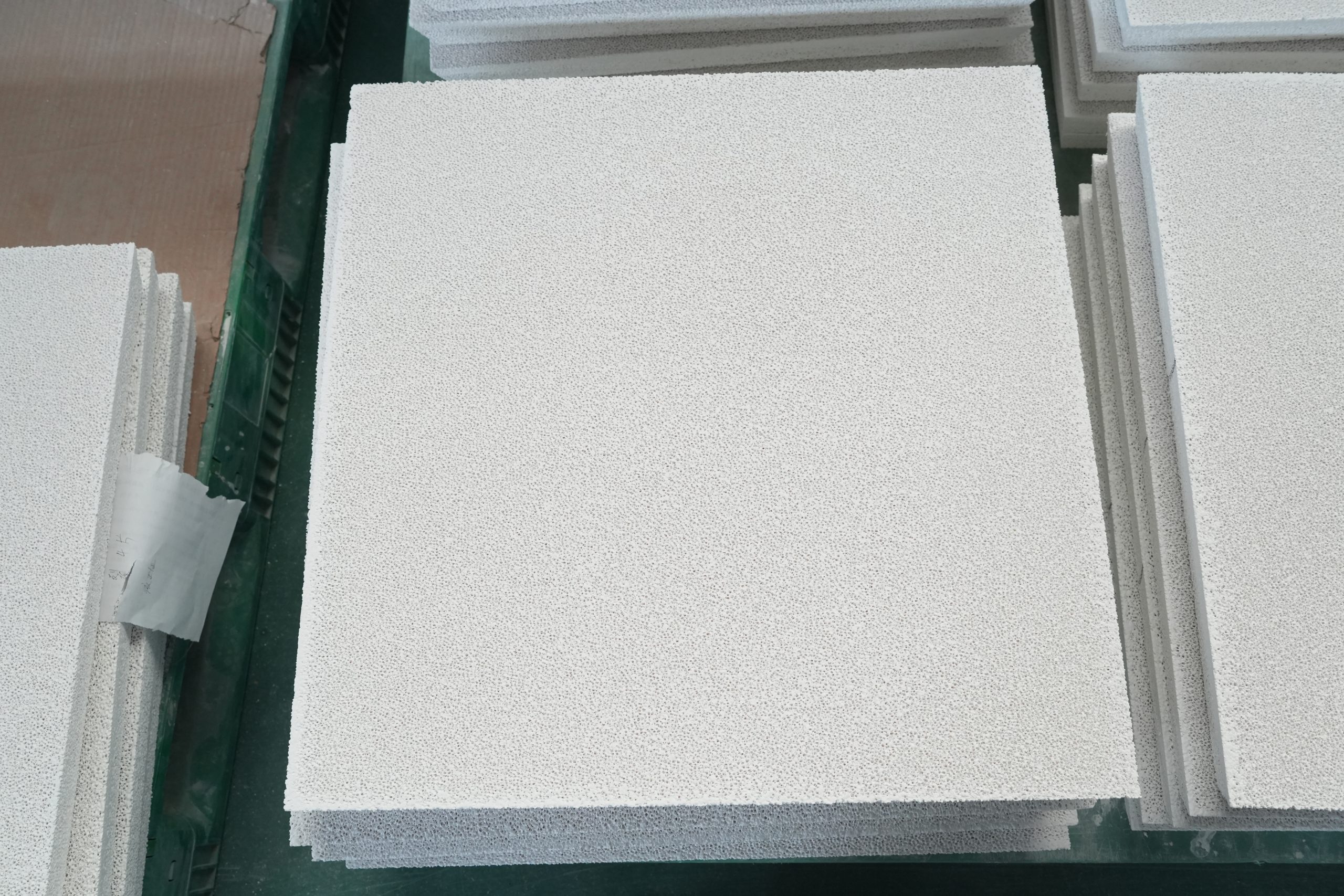
керамический пенопластовый фильтр
When Does a Ceramic Foam Filter Usually Crack?
The timing of filter damage provides useful clues about its possible cause. A filter that cracks before pouring requires a different investigation from one that breaks during initial metal contact or after operating for some time.
| When the Crack Appears | Возможная причина | What to Check |
|---|---|---|
| After unpacking or before installation | Transportation damage, impact, or pre-existing structural defects | Packaging, handling records, visible cracks |
| During installation | Uneven support, forced fitting, or excessive edge pressure | Filter dimensions, filter seat, gasket arrangement |
| Immediately after molten aluminum enters | Thermal shock or sudden metal impact | Preheating conditions, temperature distribution, pouring practice |
| During initial filter priming | Internal temperature differences or excessive mechanical loading | Preheating uniformity, filter support, metal head |
| After filtration has continued for some time | High-temperature structural weakening, chemical incompatibility, or sustained stress | Alloy composition, filter material, operating duration |
These are diagnostic clues rather than definitive conclusions. A cracked filter may have more than one contributing factor.
Common Reasons Why Ceramic Foam Filters Crack
Thermal Shock from Contact with Molten Aluminum
Thermal shock is one of the main causes of ceramic filter cracking.
A ceramic foam filter that is significantly colder than the molten aluminum experiences a rapid temperature increase when metal enters its pores. The exposed areas heat up faster than the inner structure, creating temperature differences across the ceramic material.
Because different parts of the filter expand at different rates during heating, internal thermal stresses develop. If these stresses exceed the material’s strength, cracks may form.
The risk is particularly important during initial metal contact and filter priming.
What to check:
- Was the filter adequately preheated before casting?
- Was the filter exposed to moisture during storage?
- Did the casting start before preheating was completed?
- Was the temperature difference between the filter surface and interior excessively large?
A ceramic foam filter should be stored in a dry environment and preheated according to the supplier’s application requirements. Do not allow a cold or damp filter to contact molten aluminum directly.
Uneven Preheating
Adequate preheating is important, but uniform heating is equally important.
A filter may reach the target surface temperature while its internal structure remains considerably colder. If molten aluminum enters the filter under these conditions, the temperature gradient can generate localized thermal stresses.
For example, if one side of the filter is heated directly while the opposite side receives insufficient heat, the two areas may expand differently when casting begins.
This uneven expansion can lead to internal cracking and, in severe cases, filter collapse during priming or operation.
What to check:
- Is the heating source distributed evenly across the filter?
- Are some areas directly exposed to concentrated heat?
- Is the entire filter heated according to the required procedure?
- Is the preheating duration appropriate for the filter size and installation?
The target preheating temperature and heating duration should follow the filter manufacturer’s specifications. Reaching a particular surface temperature does not necessarily mean that the entire filter has been heated uniformly.
Mechanical Damage During Transportation and Handling
Ceramic foam filters have an interconnected porous structure, which makes them effective filtration media but also means they should not be treated like solid refractory blocks.
Impacts, drops, excessive stacking pressure, or rough handling may create small cracks that are difficult to notice during routine inspection.
These defects can become more serious when the filter is exposed to thermal and mechanical stresses during casting.
Common handling risks include:
- Dropping filters during unloading or transfer.
- Striking the edges against hard surfaces.
- Applying uneven pressure when lifting or positioning the filter.
- Stacking filters without suitable protective packaging.
- Installing a filter that already has visible cracks or damaged edges.
Inspect each filter before installation. Pay particular attention to corners, edges, and the areas that will carry mechanical loads.
A filter with visible cracks, chipped edges, or structural damage should not be used in production.
Incorrect Installation and Excessive Mechanical Stress
A filter must fit properly within its filter box. However, a tight fit does not necessarily mean a secure installation.
If the filter is forced into an undersized seating area or clamped unevenly, concentrated mechanical stresses may develop along its edges.
Thermal expansion during preheating and casting can increase these stresses, particularly when the ceramic plate is restrained from expanding freely.
Uneven support can create another problem. If the filter rests on only a few points instead of being supported properly, the weight and pressure of molten aluminum may cause localized loading.
What to check:
| Installation Condition | Потенциальный риск |
|---|---|
| Filter dimensions exceed the available seating space | Compression along the edges |
| Filter box support is uneven | Localized mechanical stress |
| Filter is forced into position | Existing cracks or edge damage |
| Gasket is folded or positioned incorrectly | Uneven pressure around the filter |
| Filter is not properly supported | Excessive loading during metal flow |
Check the filter box dimensions, seating surfaces, gasket arrangement, and available expansion space before installation.
The filter should be properly positioned and supported without being forced into the chamber.
Direct Impact from Molten Aluminum During Pouring
The initial flow of molten aluminum can place mechanical stress on a ceramic foam filter.
If a high-velocity stream strikes one concentrated area of the filter, the resulting impact may create uneven loading. This is particularly concerning when the filter is poorly supported or already weakened by pre-existing cracks or thermal stress.
The objective is to establish a controlled and reasonably uniform metal flow rather than directing a concentrated jet onto a single point.
What to check:
- Does the incoming metal stream directly strike the filter?
- Is the flow excessively turbulent during initial pouring?
- Is the filter supported properly across its seating area?
- Does the pouring arrangement distribute metal across the filter face?
Review the pouring arrangement and filter box design if cracking occurs repeatedly at the same position.
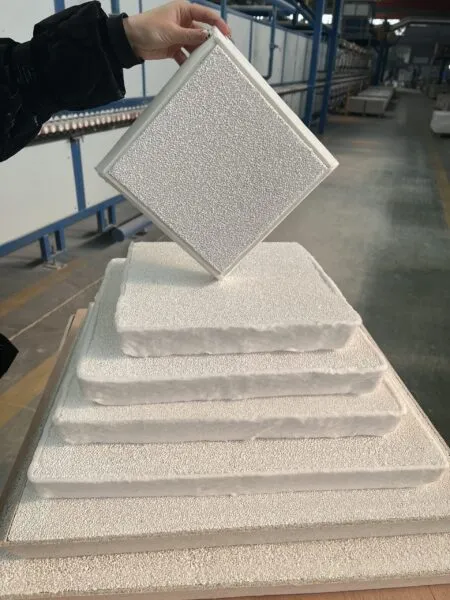
Chemical Incompatibility Between the Filter and Aluminum Alloy
Not all ceramic foam filters have the same chemical composition or bonding system. Their suitability depends partly on the alloy being filtered.
This is particularly important for certain phosphate-bonded alumina ceramic foam filters used with magnesium-containing aluminum alloys.
Research published in Metallurgical and Materials Transactions B found that phosphate-bonded Al₂O₃ filters reacted with magnesium in molten aluminum. The severity of degradation increased with magnesium concentration and exposure time. The researchers also observed broken filter struts, which could introduce additional material into the melt.
This does not mean that every alumina ceramic foam filter is unsuitable for magnesium-containing alloys. The reaction depends on the filter formulation and bonding system.
What to check:
- What is the ceramic composition of the filter?
- Does it use a phosphate-based binder?
- What is the magnesium content of the aluminum alloy?
- Has the filter supplier confirmed compatibility with the intended alloy?
- Does the filter show signs of structural deterioration after exposure?
For magnesium-containing alloys, confirm the chemical compatibility of the complete filter formulation rather than relying on the label “alumina ceramic foam filter” alone.
How to Prevent Ceramic Foam Filter Cracking During Casting
Preventing cracks requires attention to the entire process, from transportation and storage to installation and molten metal contact.
| Control Area | Recommended Practice | Problem to Prevent |
|---|---|---|
| Transportation | Use protective packaging and avoid impact | Механические повреждения |
| Storage | Keep filters dry and protected from moisture | Moisture-related and thermal problems |
| Предварительный нагрев | Follow the specified temperature and duration with uniform heating | Thermal shock and temperature gradients |
| Установка | Check dimensions, flat support, and gasket position | Excessive compression and uneven loading |
| Pouring | Avoid concentrated, high-velocity metal impact | Dynamic mechanical stress |
| Alloy compatibility | Confirm the ceramic formulation is suitable for the alloy | Chemical degradation |
| Inspection | Check for cracks and damaged edges before installation | Failure of already damaged filters |
It is also important to investigate recurring failures rather than simply replacing broken filters with new ones.
If several filters crack at the same position in the same filter box, for example, the supporting structure or installation arrangement deserves attention. If cracking occurs across different filter positions immediately after pouring begins, preheating and metal-flow conditions should also be reviewed.
What Should You Do If a Ceramic Foam Filter Cracks During Production?
A cracked filter may allow unfiltered molten aluminum to bypass the ceramic structure. In more severe cases, broken ceramic fragments may enter the metal stream and become additional inclusions.
When a crack or breakage is suspected:
- Follow the foundry’s operating and safety procedures for abnormal filtration conditions.
- Record when the crack was first noticed: before pouring, during priming, or during ongoing casting.
- Document the filter position, visible crack location, and surrounding installation condition.
- Inspect the used filter and filter box after the operation, following appropriate cooling and safety procedures.
- Review the preheating record, alloy composition, pouring conditions, and filter specification before selecting a replacement.
Do not assume that every broken filter is a manufacturing defect. A technically suitable filter can still fail when exposed to improper handling, excessive installation stress, or unsuitable operating conditions.
AdTech Ceramic Foam Filters for Aluminum Casting
AdTech supplies alumina ceramic foam filters in different PPI grades and customized dimensions for molten aluminum filtration.
When evaluating filter cracking, the PPI rating alone is not enough. The ceramic formulation, mechanical strength, thermal shock resistance, dimensions, and compatibility with the aluminum alloy should all be considered.
If you are experiencing repeated filter breakage, you can share the following information with AdTech:
- Current filter brand and PPI grade.
- Filter dimensions and thickness.
- Aluminum alloy and magnesium content, where applicable.
- Preheating temperature and duration.
- Filter box drawing or installation photographs.
- When and where the crack occurs during production.
This information helps identify whether the problem is more likely related to the filter material, installation, preheating, or casting conditions. AdTech can then assess a suitable filter specification and discuss samples for production evaluation.
Filter cracking and normal filter wear are different issues. In our next guide, we will look at How Long Does a Ceramic Foam Filter Last? and the factors that determine its service life under actual casting conditions.
Часто задаваемые вопросы
1.Why do ceramic foam filters crack during aluminum casting?
Ceramic foam filters may crack due to thermal shock, uneven preheating, mechanical damage, excessive installation stress, or chemical incompatibility with certain aluminum alloys. Identifying when the crack occurs helps determine the most likely cause.
2.Can thermal shock cause a ceramic foam filter to break?
Yes. When a cold ceramic foam filter contacts molten aluminum, its surface heats and expands faster than its internal structure. This temperature difference creates thermal stress, which may cause cracking if it exceeds the material’s strength. Proper preheating helps reduce this risk.
3.Does insufficient preheating cause ceramic foam filter cracking?
Yes. Insufficient preheating can create large temperature differences between the filter surface and interior when molten aluminum enters its pores. This uneven heating may cause thermal shock and structural damage. Follow the filter manufacturer’s recommended preheating temperature and duration.
4.Can uneven preheating damage a ceramic foam filter?
Yes. If one area of the filter heats much faster than another, uneven thermal expansion can generate localized stress. Use a suitable heating arrangement that distributes heat evenly across the filter and allows sufficient time for the ceramic structure to warm up.
5.Can ceramic foam filters crack during transportation or installation?
Yes. Ceramic foam filters have a porous structure and can be damaged by dropping, impact, excessive stacking pressure, or rough handling. During installation, forcing an oversized filter into the filter box or applying uneven pressure along its edges can also create cracks.
6.Can excessive molten aluminum flow break a ceramic foam filter?
A concentrated, high-velocity metal stream can create localized impact and mechanical stress, particularly when the filter is poorly supported or already damaged. The pouring arrangement should promote reasonably uniform metal distribution and avoid direct impact on one concentrated area of the filter.
7.Can magnesium-containing aluminum alloys damage ceramic foam filters?
Certain filter formulations may be chemically incompatible with magnesium-containing aluminum melts. For example, magnesium can react with phosphate binders in some phosphate-bonded alumina filters, potentially weakening the ceramic structure. Confirm the filter’s complete material formulation and alloy compatibility before use.
8.How can I tell whether a ceramic foam filter is cracked before installation?
Inspect the filter under good lighting, paying particular attention to its corners, edges, and overall surface. Look for visible cracks, chipped sections, broken struts, and damaged edges. Filters with visible structural damage should not be installed because existing defects may worsen during preheating and casting.
9.What should I do if a ceramic foam filter cracks during casting?
Follow the foundry’s operating and safety procedures for abnormal filtration conditions. Record when and where the crack occurred, and avoid disturbing the filter while molten metal is flowing. After the operation and appropriate cooling, inspect the filter, gasket, and supporting structure to identify possible causes before installing a replacement.
10.How can I prevent ceramic foam filters from cracking during casting?
Use filters compatible with the aluminum alloy, store them in dry conditions, handle them carefully, and follow the specified preheating procedure. Check filter dimensions, edge sealing, and supporting surfaces before installation. During pouring, avoid concentrated metal impact and unnecessary mechanical disturbance.