Ceramic foam filters and deep bed filters both remove non-metallic inclusions from molten aluminum, but they use different filtration structures and equipment configurations. Ceramic foam filters are porous ceramic plates installed in filter boxes, while deep bed filters pass molten metal through a packed bed of granular filtration media. The better option depends on production capacity, cleanliness requirements, available space, operating costs, and how the casting line is run.
What Is the Difference Between a Ceramic Foam Filter and a Deep Bed Filter?
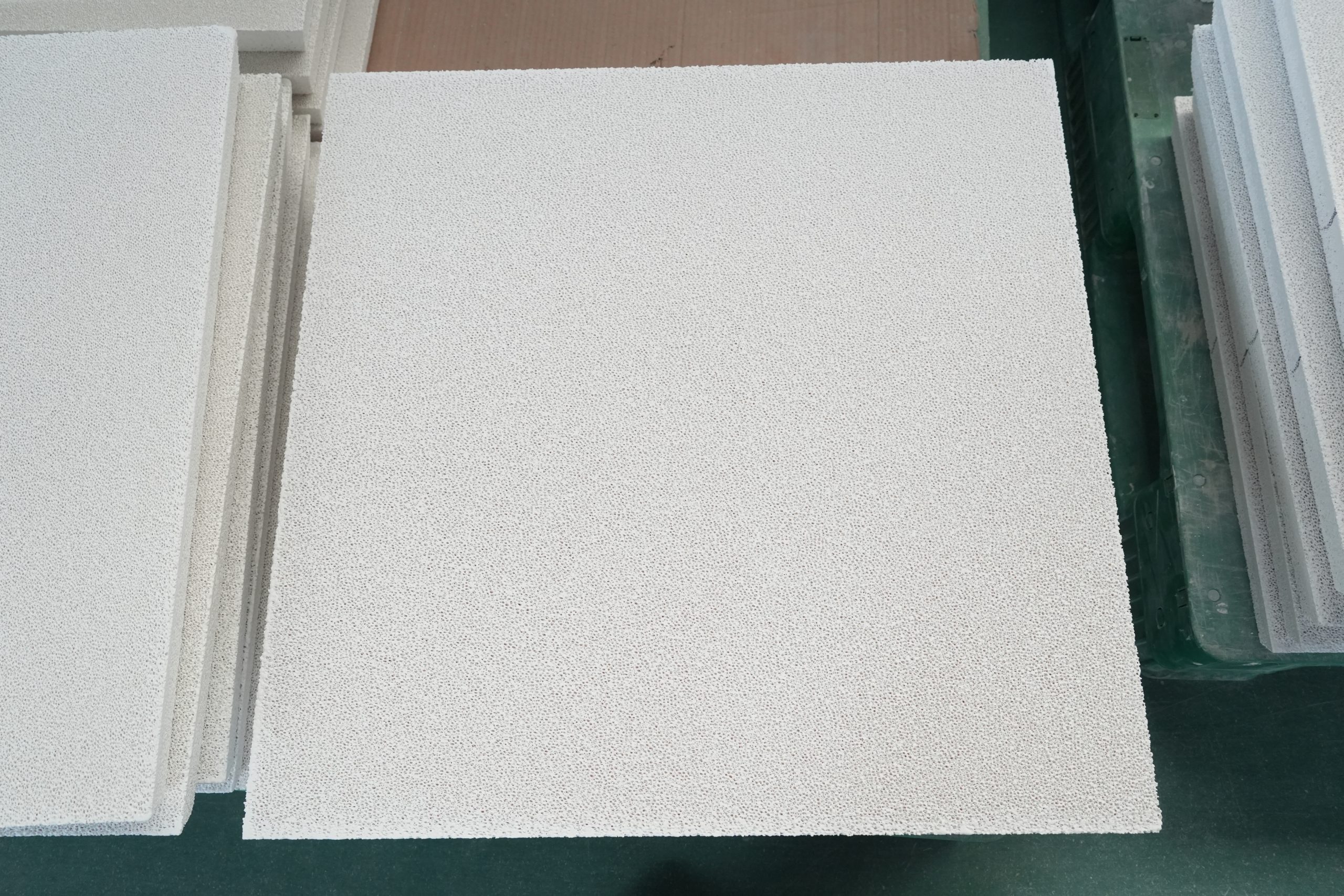
seramik köpük filtreler
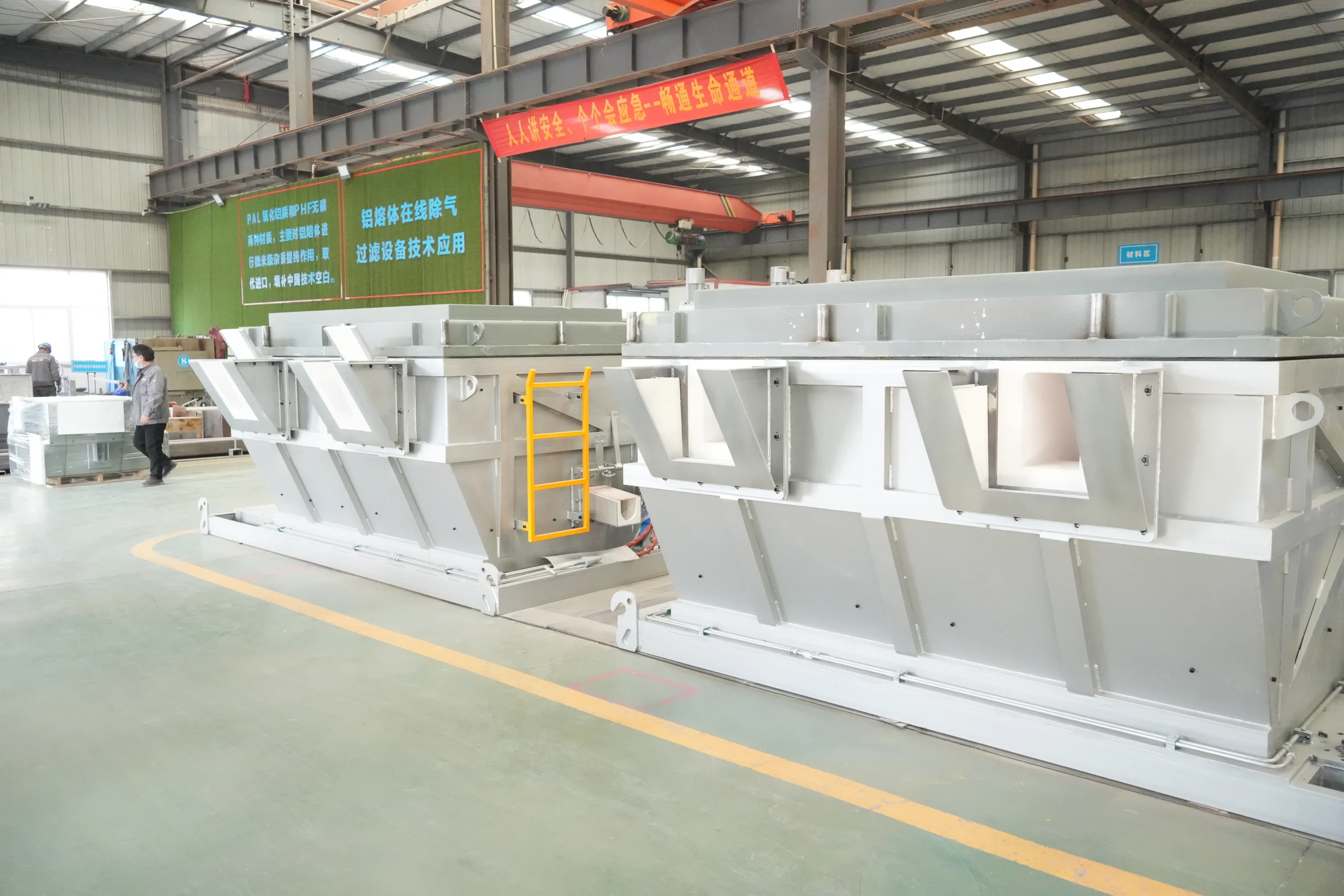
derin yataklı filtre
The main difference lies in the filtration medium and the way the filtration system is configured.
A ceramic foam filter uses a rigid, interconnected porous ceramic structure. Molten aluminum passes through the pores, where inclusions can be captured by interception, inertial impaction, and attachment to the internal pore surfaces. The tortuous flow paths also help reduce turbulence.
A deep bed filter typically uses a packed bed of granular refractory media, often based on high-purity alumina. Molten aluminum passes through the spaces between the particles and along the filtration paths created by the packed bed. The media retain inclusions as the metal travels through the system.
It is important not to confuse the two terms. Ceramic foam filters can also remove fine inclusions within their internal pore structure. The distinction is that Derin Yataklı Filtre commonly refers to a dedicated filtration system using a packed bed of granular media, rather than a porous ceramic plate.
Ceramic Foam Filter vs. Deep Bed Filter: Quick Comparison
| Comparison factor | Seramik Köpük Filtre (CFF) | Deep Bed Filter (DBF) |
|---|---|---|
| Filtration medium | Porous ceramic foam plate | Packed bed of granular refractory media |
| Typical installation | Filter box or filtration chamber | Dedicated deep bed filtration vessel |
| Filtration mechanism | Inclusion capture throughout a porous structure | Inclusion capture throughout a packed media bed |
| Capacity considerations | Depends on filter area, PPI, and operating conditions | Depends on bed design, media configuration, and system capacity |
| Routine operation | Consumable filters are replaced after the intended casting run | Media condition and maintenance are managed according to the system design |
| Equipment requirements | Filter box, appropriate sealing, and preheating | Dedicated vessel, media bed, temperature management, and associated controls as required |
| Esneklik | Filter dimensions and grades can be selected for different casting requirements | Changes may involve bed configuration or wider equipment constraints |
| Best selection criterion | Balance between inclusion capture and required metal throughput | Suitability for sustained production, required cleanliness, and the economics of a dedicated system |
Neither technology is universally superior. A well-designed CFF system may meet the cleanliness requirements of a demanding casting line, while a properly configured deep bed system may be advantageous where its filtration capacity and operating characteristics justify the investment.
How Does a Ceramic Foam Filter Work in Aluminum Casting?
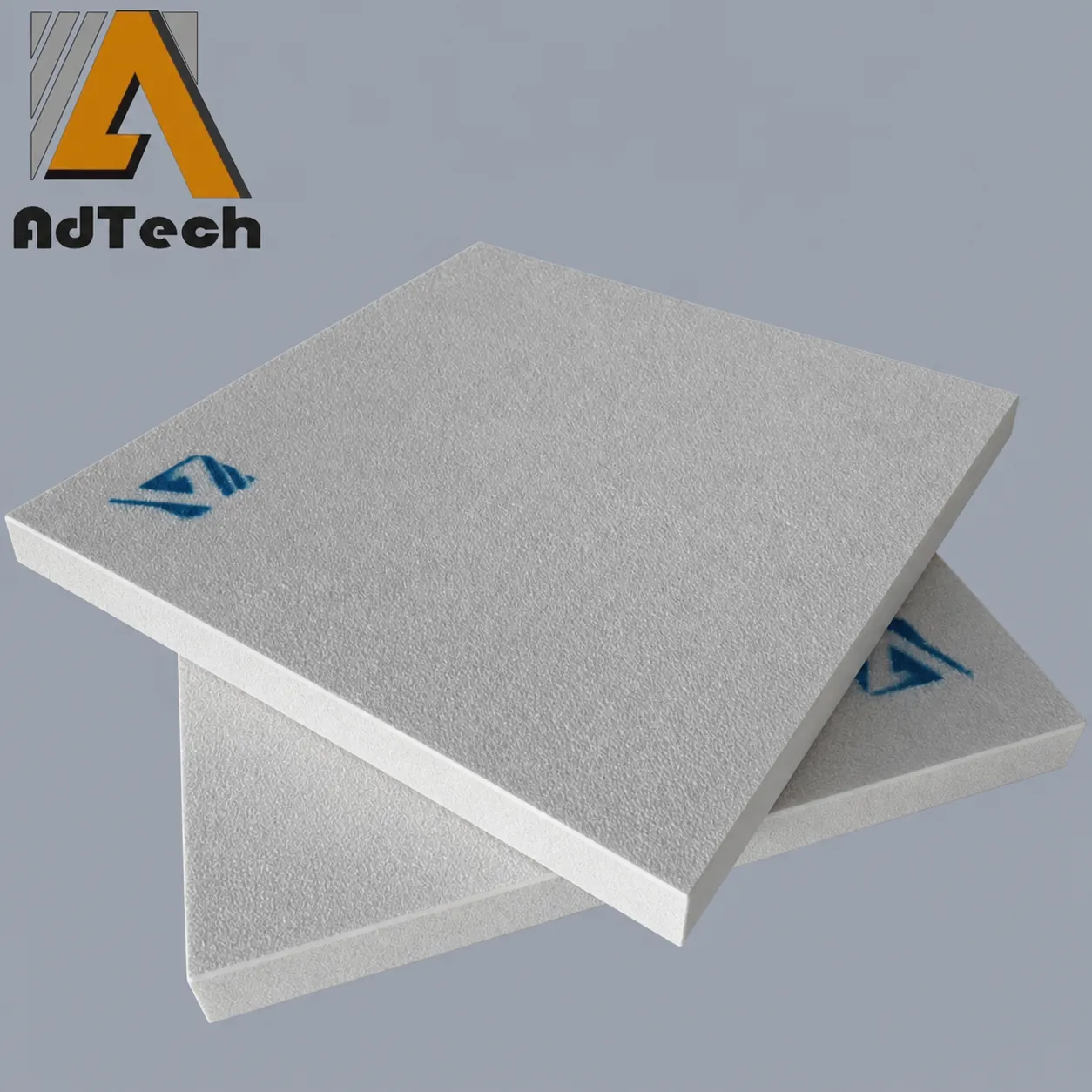
seramik köpük filtre
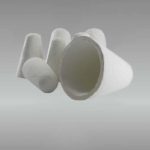
A ceramic foam filter is made from a three-dimensional network of interconnected pores. Its high internal surface area creates a longer, more complex path for molten aluminum than a simple screen would provide.
As the metal passes through this structure, inclusions can collide with the ceramic surfaces and become trapped. As filtration progresses, accumulated particles can also change the effective flow paths and influence subsequent capture.
CFF therefore does more than block particles larger than a particular opening. Its performance depends on the relationship between pore structure, inclusion characteristics, filter thickness, flow rate, and installation conditions.
What Are the Main Advantages of Ceramic Foam Filtration?
Straightforward installation and replacement. The filter is installed in a suitable filter box or filtration chamber. After the intended casting run, the used filter is replaced according to the operating procedure.
Flexible filtration grades. Different PPI options allow the user to balance filtration requirements against flow resistance.
Compact equipment arrangement. A CFF system can be incorporated into existing molten aluminum transfer arrangements, provided the filter box, available space, and required throughput are compatible.
Flow stabilization. The porous structure changes the movement of molten aluminum, helping reduce turbulence under suitable operating conditions.
Accessible consumable management. Filter size, pore density, dimensional accuracy, and sealing can be reviewed when selecting or replacing the product.
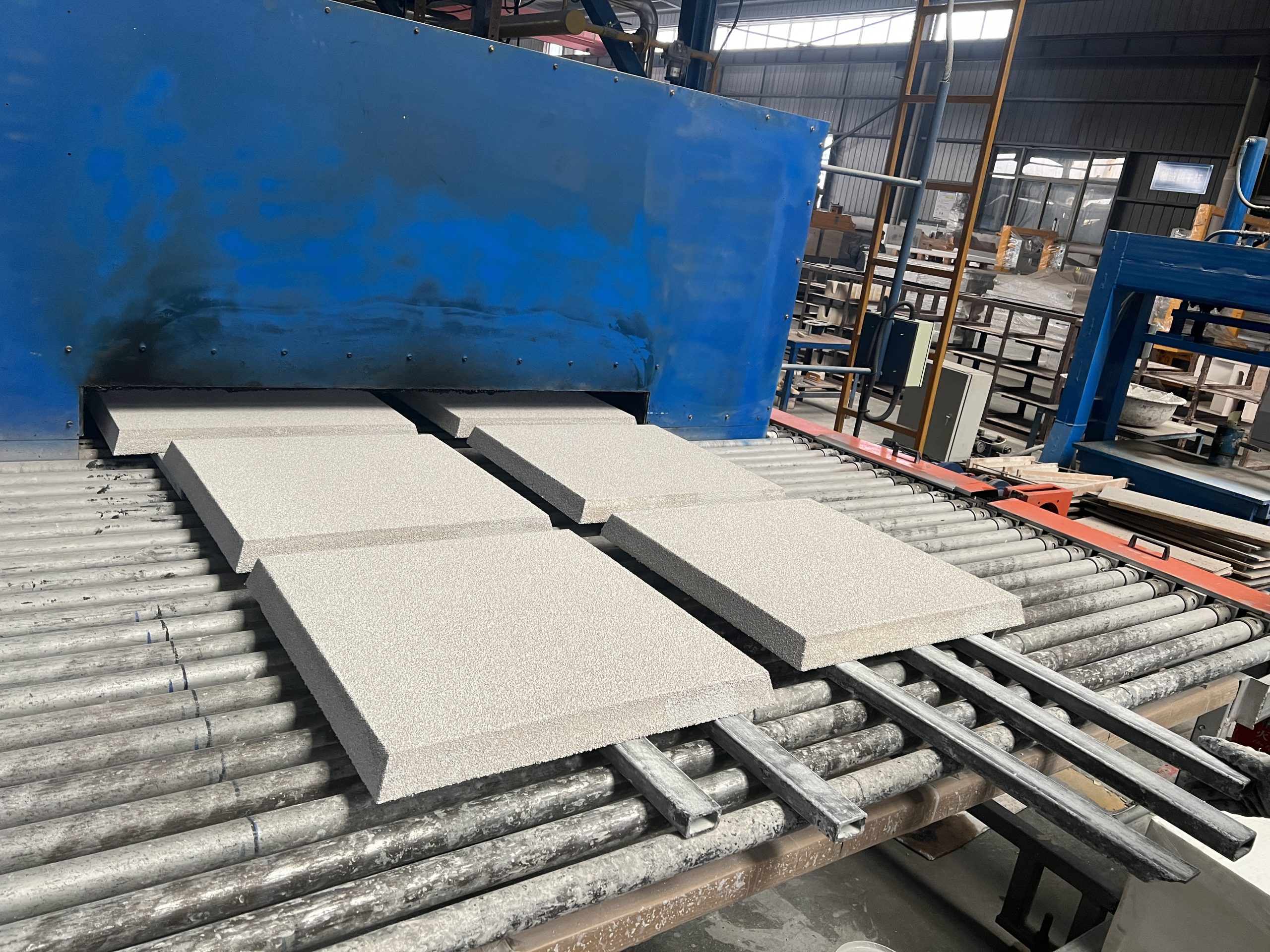
seramik köpük filtre
What Can Ceramic Foam Filters Not Do?
CFF is not a universal solution for every molten aluminum quality problem.
A filter can reduce suspended non-metallic inclusions, but it cannot independently correct excessive dissolved hydrogen, an incorrect alloy composition, or contamination generated after filtration.
A fine filter may also restrict flow if its effective area and pore structure are unsuitable for the casting conditions. Conversely, a filter with insufficient filtration precision may not meet the inclusion-control target.
For this reason, choosing CFF requires more than selecting the highest available PPI. The filtration grade, area, sealing arrangement, preheating procedure, and metal throughput must be considered together.
AdTech supplies ceramic foam filters for aluminum casting in multiple grades and sizes. The appropriate specification should be selected against the actual casting requirements rather than by PPI alone.
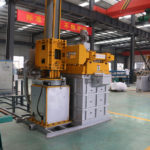
How Does a Deep Bed Filter Work?
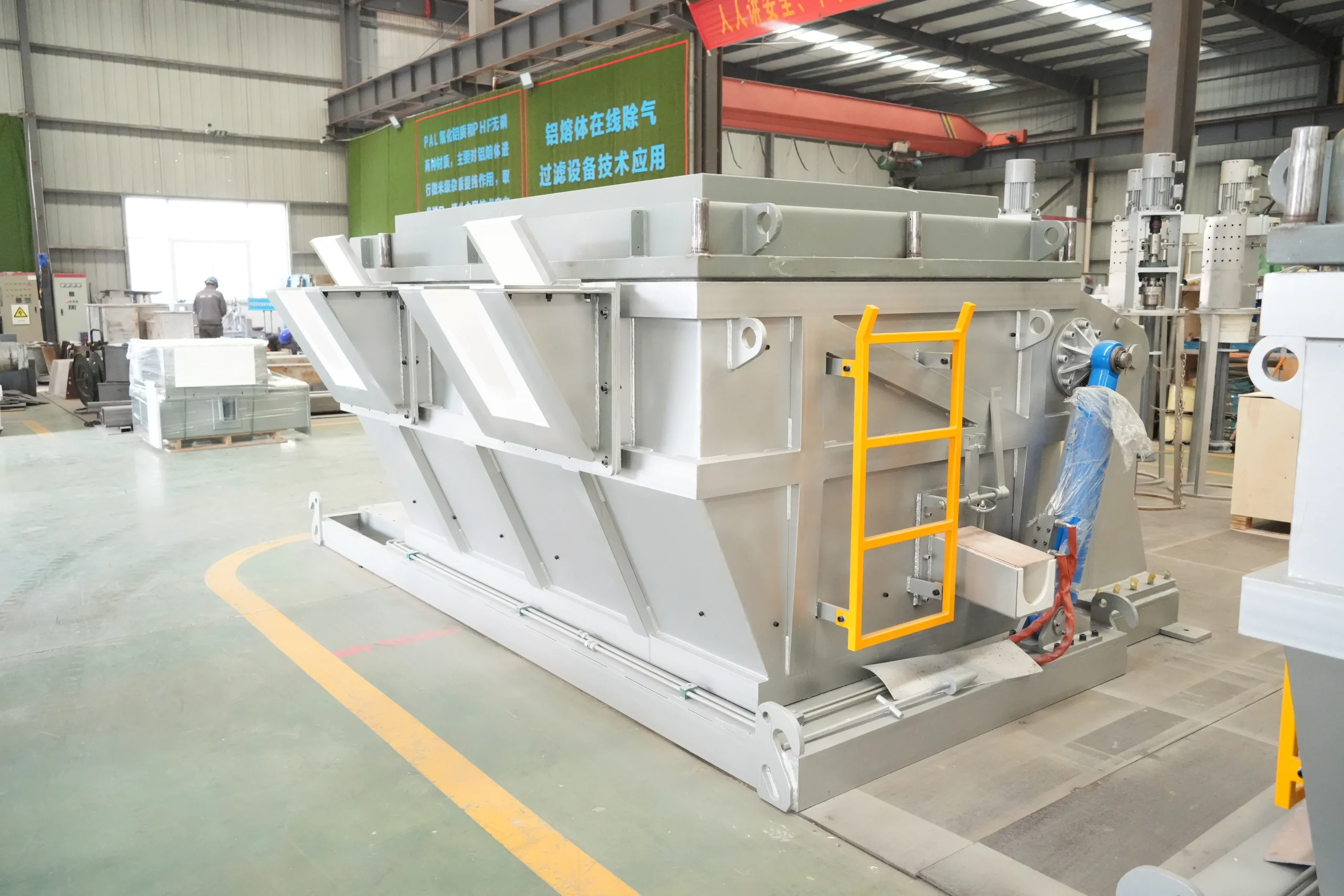
derin yataklı filtre
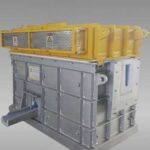
A deep bed filter uses a packed layer of refractory media to create a filtration path through a dedicated vessel. High-purity alumina balls and granular or crushed alumina media are common elements of conventional deep bed designs, although the precise configuration varies by manufacturer and application.
As molten aluminum passes through the bed, inclusions can be intercepted between particles or retained on media surfaces. The full depth of the bed contributes to the filtration process.
A deep bed system is not simply a larger version of a ceramic foam filter. Its vessel, media arrangement, metal level, thermal management, and operating procedure must be considered as an integrated system.
What Are the Potential Advantages of Deep Bed Filtration?
A large filtration bed. A dedicated bed provides substantial media volume through which the molten metal can pass.
Suitability for sustained production. Depending on its design, a deep bed system can be integrated into production arrangements that prioritize continuous or extended filtration campaigns.
A dedicated treatment stage. The vessel and media bed can form part of a larger melt-treatment arrangement designed around defined cleanliness and throughput requirements.
Potential for fine inclusion control. The performance of a suitably designed deep bed can be valuable in applications with stringent inclusion requirements. Actual results depend on media characteristics, bed design, flow conditions, and incoming melt quality.
What Should Buyers Consider Before Choosing a Deep Bed Filter?
A deep bed system generally requires more extensive equipment planning than installing a consumable ceramic foam filter in an existing filter box.
Important considerations include:
- The initial investment in the vessel and associated equipment.
- Installation space and connection to the existing casting line.
- Temperature management during start-up, operation, and idle periods.
- The design, loading, inspection, and eventual replacement or maintenance of the filtration media.
- Metal hold-up within the filtration system.
- The operating procedures needed to maintain stable filtration performance.
Not every plant will benefit from this added system complexity. The decision should be based on the production line’s measurable requirements, rather than an assumption that a larger or more elaborate filtration system will automatically produce better aluminum.
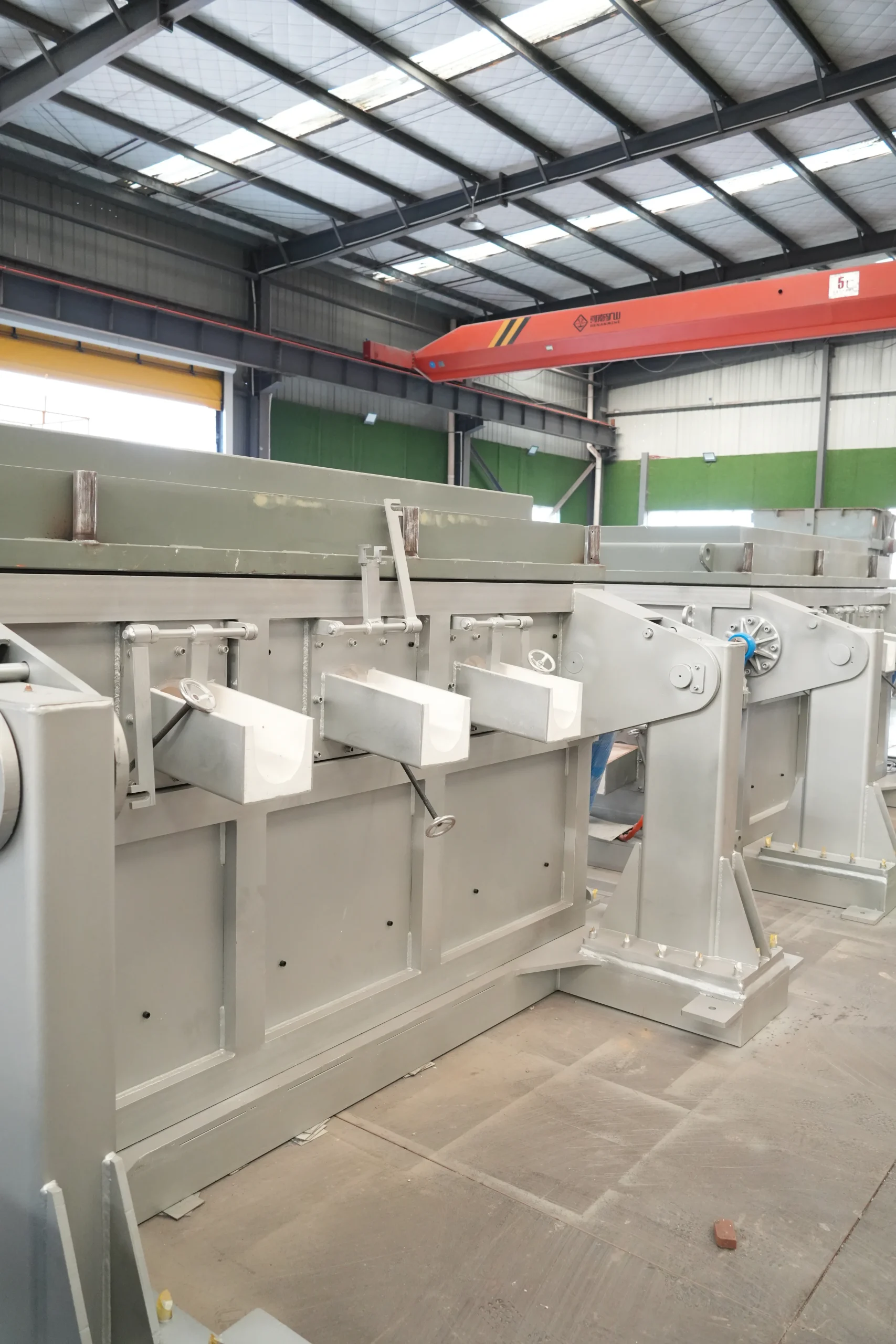
derin yataklı filtre
Which Filter Is Better for High-Volume Aluminum Production?
Production volume matters, but tonnage alone does not determine which technology is appropriate.
A high-volume casting line may be well served by CFF when the available filter area, PPI, filter box design, and replacement process satisfy the required throughput. A deep bed system may be worth evaluating when the line needs a dedicated high-capacity filtration stage and the expected cleanliness benefits justify the equipment and operating requirements.
The first task is to establish the actual operating demand.
Which Production Factors Should You Compare?
| Production factor | What to evaluate for CFF | What to evaluate for DBF |
|---|---|---|
| Required metal throughput | Filter area, PPI, and allowable flow resistance | Bed dimensions, media structure, and rated system capacity |
| Inclusion-control target | Filter grade and measured performance | Media selection and measured bed performance |
| Production schedule | Filter consumption and changeover procedure | Operating continuity and media maintenance requirements |
| Available space | Existing filter box and metal flow path | Dedicated vessel and associated equipment footprint |
| Sıcaklık kararlılığı | Preheating and heat loss around the filter box | Vessel heating, insulation, and temperature-control requirements |
| Cost per tonne | Filter consumption, downtime, and rejected product | Capital cost, energy, media maintenance, downtime, and rejected product |
Do not compare the two technologies using a single headline efficiency figure unless both figures were measured under comparable conditions. Differences in alloy, initial inclusion loading, sampling methods, and casting conditions can make apparently similar efficiency figures misleading.
Can CFF Support High-Quality Billet and Slab Production?
Yes. CFF is widely used in billet, slab, ingot, and other aluminum casting applications. The achievable cleanliness depends on the filter design and the process in which it operates.
A filter should be evaluated against the inclusion types and cleanliness targets relevant to the final product. For instance, extrusion-grade billet production may have stringent requirements for inclusions that later contribute to surface defects, but the appropriate solution also depends on alloy chemistry, melt handling, and downstream processing.
For applications with particular phosphorus-control requirements, AdTech also offers a phosphorus-free ceramic foam filter. Its suitability should be established from the alloy specification and product composition documentation; a phosphorus-free grade is not automatically necessary for every high-quality alloy.
Which Filtration System Has the Lower Operating Cost?
The correct comparison is not simply the purchase price of a filter plate against the price of a deep bed installation.
CFF is a consumable-based approach. Its operating cost is influenced by filter price, consumption per casting run, required replacement labor, downtime, and the effect of filtration on product quality.
Deep bed filtration requires evaluation of the full system cost, including the initial investment, thermal management, media handling and maintenance, operating energy, downtime, and any metal held within the vessel during operation.
How Can You Compare Cost per Tonne?
A useful comparison includes all costs associated with the filtration stage over a defined production period.
| Cost item | Seramik Köpük Filtre | Derin Yataklı Filtre |
|---|---|---|
| Initial equipment investment | Existing or new filter box and associated system | Dedicated vessel and associated equipment |
| Consumables | Filter plates and any specified sealing materials | Filtration media and replacement materials as required |
| Energy | Preheating and any system heating | Vessel heating and temperature maintenance where applicable |
| Labor | Filter installation and replacement | Media management, inspection, and system maintenance |
| Arıza süresi | Changeover or filter-related interruption | Start-up, maintenance, and media-related interruption |
| Product losses | Defects associated with inadequate filtration or process instability | Defects associated with inadequate filtration or process instability |
The cost comparison must use the same production basis and quality target. If one system achieves the required cleanliness while the other generates more rejected product, the difference in scrap and rework can outweigh a seemingly lower consumable cost.
For a meaningful decision, compare the total cost per tonne of acceptable product—not just the purchase price per filter or the equipment’s nominal capacity.
Can Deep Bed Filtration Replace Ceramic Foam Filtration Completely?
It depends on the production process and the required metal cleanliness.
In some systems, a dedicated deep bed filter may serve as the principal filtration stage. In others, CFF may be the preferred primary filtration method or part of a multi-stage arrangement.
It is not necessary to install both technologies in every casting line. Additional filtration stages should be justified by a defined quality requirement and validated process results.
When Might a Combined Arrangement Be Worth Evaluating?
A multi-stage arrangement may be considered when the casting operation requires different treatment functions at different points in the process. However, adding another filter also introduces additional flow resistance, equipment requirements, and potential operating costs.
Before combining the technologies, determine:
- Which inclusion types or size ranges remain problematic.
- Whether the existing filtration stage is correctly sized and sealed.
- Whether contamination is being reintroduced downstream.
- Whether a second stage delivers a measurable improvement in final product quality.
- Whether the additional pressure loss, temperature control, and maintenance requirements are acceptable.
Inclusion measurements before and after each stage can help determine whether the additional equipment is justified.
Does Either System Remove Hydrogen from Molten Aluminum?
Neither a conventional ceramic foam filter nor a granular alumina deep bed filter should be treated as a substitute for dedicated hydrogen-removal equipment.
Both systems primarily target solid non-metallic inclusions. Dissolved hydrogen requires a suitable degassing process.
Where hydrogen and inclusion control are both important, an online rotary degassing unit can be incorporated into the melt-treatment line alongside the selected filtration system.
The correct equipment arrangement depends on the line design, alloy, metal throughput, and treatment requirements. Filtration performance should not be judged using hydrogen measurements alone, just as effective degassing does not prove that solid-inclusion levels are acceptable.
How Should You Choose Between CFF and Deep Bed Filtration?
The most reliable way to choose is to establish the production requirement first, then evaluate the equipment against it.
1. Define the Required Cleanliness Level
Identify the relevant inclusion problem and the quality target for the final product. Use appropriate testing to establish a baseline rather than relying solely on visual inspection.
2. Establish Actual and Peak Flow Rates
Calculate the required metal throughput and consider fluctuations during casting. The filtration system must support the actual flow demand without unacceptable restriction.
3. Review the Existing Equipment Layout
Check the available filter box dimensions, space for a dedicated vessel, launder connections, and temperature-control arrangements.
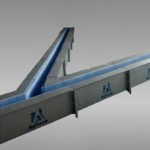
AdTech’s plate filtering unit and molten aluminum filtration equipment provide one route for evaluating a CFF-based filtration arrangement, with the equipment configuration matched to the intended production conditions.
4. Compare Operating Procedures and Total Cost
Include consumables, energy, labor, maintenance, downtime, metal hold-up, and product rejection in the comparison. Confirm how each system will be operated and maintained before making a final selection.
5. Validate Performance Under Representative Conditions
Where possible, compare inclusion levels and final product quality under comparable alloy, throughput, and operating conditions. A controlled trial or documented production comparison is more useful than a broad claim that one filtration technology is always better.
Which Filtration Solution Should You Choose for Your Aluminum Casting Line?
Choose CFF when a ceramic foam filter system can meet the required inclusion-control target and throughput, and when a consumable-based filtration process fits the line’s equipment layout and operating practices.
Evaluate deep bed filtration when the production requirements justify a dedicated packed-bed system and the expected benefits outweigh the added equipment, installation, and operating considerations.
Neither option should be selected solely because it is described as more advanced, more efficient, or suitable for high-end alloys. The relevant question is whether the system can deliver the required metal cleanliness reliably under the actual production conditions.
AdTech şunları sunar: ceramic foam filters for molten aluminum casting and related filtration equipment. To discuss a suitable configuration, share your alloy grade, required flow rate, current filter specification, filter box dimensions, and the main inclusion or casting-quality problem you need to address.
A well-matched filtration system should solve a defined production problem while maintaining reliable throughput and a clear operating-cost advantage.
Sık Sorulan Sorular
1. What is the main difference between a ceramic foam filter and a deep bed filter?
A ceramic foam filter uses a porous ceramic plate to capture non-metallic inclusions as molten aluminum passes through its interconnected pores. A deep bed filter uses a packed bed of granular filtration media to create a longer filtration path. The two systems differ in filtration structure, equipment configuration, maintenance requirements, and operating conditions.
2. Is a ceramic foam filter or deep bed filter more effective for molten aluminum filtration?
Neither technology is universally more effective. Performance depends on the inclusion characteristics, filtration media, metal flow rate, system design, and required cleanliness level. The appropriate choice should be based on measured results under comparable operating conditions rather than a general claim that one system is superior.
3. Which filtration system is better for aluminum billet casting?
Ceramic foam filters are widely used in billet casting because they can be installed in suitable filter boxes and selected according to the required PPI and throughput. Deep bed filtration may be appropriate for production lines that justify a dedicated granular-media filtration system. The decision depends on casting capacity, cleanliness targets, available space, and operating costs.
4. Can a deep bed filter replace a ceramic foam filter completely?
In some production systems, a deep bed filter can serve as the principal filtration stage. In others, ceramic foam filtration remains the preferred solution. Whether one system can replace the other depends on the required inclusion control, equipment configuration, and validated casting results. Additional filtration stages should be installed only when they provide a measurable benefit.
5. Can ceramic foam filters and deep bed filters be used together?
Yes. They can be considered as complementary stages when a production line requires additional inclusion control. However, a combined system also adds flow resistance, equipment requirements, and maintenance costs. Plants should verify that each stage contributes measurable improvements in metal cleanliness before investing in a multi-stage arrangement.
6. Which filtration system has a lower operating cost per tonne of aluminum?
The answer depends on filter consumption, equipment investment, energy use, labor, maintenance, downtime, and product rejection rates. Ceramic foam filtration involves consumable filter plates, while deep bed filtration requires consideration of the dedicated equipment and granular media management. A meaningful comparison should calculate the total cost per tonne of acceptable cast product.
7. What factors affect the filtration efficiency of a deep bed filter?
Important factors include media composition, particle size, bed depth, flow distribution, metal throughput, and incoming inclusion loading. Incorrect media configuration or unstable flow can reduce filtration performance. The filtration bed should therefore be designed around the casting process rather than selected solely according to alumina content.
8. Why can a ceramic foam filter restrict molten aluminum flow?
Flow restriction can result from an excessively fine PPI, insufficient filtration area, high inclusion loading, inadequate preheating, or an unsuitable filter box arrangement. Before selecting a coarser filter, investigate the actual flow requirement, filter condition, metal temperature, and available filtration area.
9. Do ceramic foam filters and deep bed filters remove hydrogen from molten aluminum?
Neither should be treated as a substitute for dedicated degassing equipment. Both filtration methods primarily target solid non-metallic inclusions, whereas dissolved hydrogen requires suitable melt treatment. Aluminum producers may combine filtration with rotary degassing when both inclusion control and hydrogen reduction are required.
10. What information is needed to select the right aluminum filtration system?
Provide the aluminum alloy grade, required metal throughput, target cleanliness level, existing equipment layout, current filtration method, and main casting-quality problem. Information about filter box dimensions, available installation space, operating schedule, and existing test results is also useful. These details help determine whether ceramic foam filtration, deep bed filtration, or a combined configuration is appropriate.