Hava Kaymalı Sıcak Üst Döküm
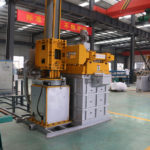
Air slip hot top casting is a continuous casting method that uses compressed air and lubricating oil around the hot top and mold interface to reduce direct contact between molten aluminum and the mold wall. The process helps control heat transfer and metal flow during solidification, making it suitable for aluminum rod and other high-quality aluminum casting applications. The performance of the hot top system also depends on the precision and condition of its graphite and refractory components.
What Is Air Slip Hot Top Casting?
Air slip casting, also known as gas-pressurized hot top casting, is a development of conventional hot top casting technology.
During casting, molten aluminum is fed through the hot top into the mold or crystallizer. Compressed air and lubricating oil are introduced around the casting interface to create a controlled air-oil layer between the molten metal and the mold wall.
This reduces direct metal-to-mold contact and changes the way heat is transferred from the molten aluminum to the cooling system.
The purpose is not simply to “keep the aluminum away from the mold.” The air and oil system must be controlled together with the mold geometry, cooling conditions, casting speed, and metal level to maintain a stable solidification process.
For aluminum rod production, the hot top and its graphite components are particularly important because they operate directly in the casting zone.
How Does Air Slip Hot Top Casting Work?
The basic process can be understood in four stages:
1. Molten aluminum enters the hot top
Molten aluminum is supplied to the hot top and distributed toward the mold or crystallizer.
2. Air and oil are introduced
Compressed air and lubricating oil are supplied at the hot top/mold interface according to the casting system requirements.
3. An air-oil layer is maintained
The controlled air pressure and lubrication reduce direct contact between the molten aluminum and mold wall.
4. Secondary cooling controls solidification
Cooling water removes heat from the solidifying aluminum, while the casting system controls the position and shape of the solidification front.
The final casting result depends on the interaction of these factors rather than on air pressure alone.
What Components Are Important in an Air Slip Hot Top System?
Air slip casting is a complete casting system, so the performance of individual components cannot be considered separately.
Important components may include:
| Bileşen | Function in the casting system |
|---|---|
| Hot top | Receives and distributes molten aluminum before solidification |
| Crystallizer / mold | Controls the initial shape of the cast product |
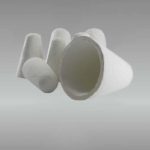
| Graphite ring | Forms part of the casting interface |
| Graphite sleeve | Provides a graphite working surface in the casting system |
| Adapter plate | Connects or positions related hot top components |
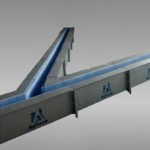
| Shunt plate | Helps distribute molten aluminum |
| Shunt groove | Provides a controlled flow path |
| Hot top cap | Forms part of the hot top assembly |
| Cooling system | Removes heat during solidification |
| Air and oil system | Provides the controlled air-oil interface |
The exact component arrangement varies with the casting machine and product.
Why Is Graphite Important in Air Slip Casting?
Graphite is widely used in hot top casting because it can provide a combination of high-temperature stability, machinability, low wettability with molten aluminum, and resistance to repeated thermal cycling.
In an air-slip system, graphite components can form part of the interface through which molten aluminum is guided during casting.
For this reason, the graphite component needs to maintain:
- Accurate dimensions
- A suitable working surface
- Stable geometry during casting
- Resistance to thermal cycling
- Appropriate interaction with molten aluminum
A graphite ring that is dimensionally incorrect may not fit the existing hot top assembly correctly, even if the graphite material itself is suitable.
For replacement parts, the equipment model, drawing, dimensions, or original component should therefore be confirmed before production.
What Is the Role of an Aluminum Rod Graphite Ring?
In aluminum rod hot top casting, the graphite ring is one of the components located in the casting zone.
Its geometry and surface condition can affect the interface between the casting system and the molten aluminum.
A suitable graphite ring should provide:
- Accurate geometry
- Consistent working surface
- Low wettability with molten aluminum
- İyi termal şok direnci
- Stable performance during repeated casting
AdTech üreticileri aluminum rod graphite rings from high-purity graphite and precision-machines them according to the required dimensions.
For customers replacing an existing ring, the original drawing or dimensions are particularly useful for confirming compatibility.
What Factors Affect Air Slip Hot Top Casting?
The air-oil system is important, but several other factors determine whether the casting process remains stable.
1. Crystallizer Precision
The crystallizer determines the geometry of the casting zone and strongly influences the solidification process.
Dimensional deviations can change the relationship between the molten metal, graphite components, air-oil layer, and cooling zone.
For this reason, the mold and related components need appropriate dimensional accuracy.
2. Crystallizer Geometry
The height and geometry of the crystallizer influence the initial solidification conditions.
The actual design should be matched to the casting equipment and product rather than assuming that a shorter or taller crystallizer is always better.
3. Secondary Cooling
In air-slip casting, secondary cooling plays an important role in removing heat from the solidifying aluminum.
Cooling water should be distributed consistently over the required area. Excessive or insufficient cooling can affect the solidification profile and casting stability.
4. Air Pressure and Oil Supply
The air and oil system is central to the air-slip process.
The required pressure and oil supply depend on the casting system, product, and operating conditions. They should be established according to the equipment design and process parameters rather than using one fixed value for every casting line.
5. Casting Speed
Casting speed affects metal flow, heat transfer, and solidification.
Changes in casting speed may require corresponding adjustments to cooling and air-oil conditions.
6. Molten Aluminum Temperature
The temperature of the aluminum entering the hot top affects the available superheat and the subsequent solidification behavior.
Stable temperature control is therefore important for maintaining consistent casting conditions.
What Happens When the Air Slip System Is Not Properly Controlled?
Air slip casting relies on several operating conditions working together.
Problems may occur when the air pressure, oil supply, cooling, casting speed, or component condition deviates significantly from the required range.
Possible results include:
- Unstable casting conditions
- Excessive aluminum contact with the mold
- Yüzey kusurları
- Irregular solidification
- Increased graphite wear
- Aluminum buildup
- More frequent component replacement
These problems should not automatically be attributed to the graphite ring or hot top component alone. Process parameters and equipment conditions should be checked together.
How Should Air Slip Hot Top Components Be Selected?
For replacement components, selecting a part based only on its material or general dimensions can lead to compatibility problems.
The following information is useful when purchasing air-slip hot top components:
| Information | Recommended details |
|---|---|
| Casting system | Manufacturer and model |
| Product | Aluminum rod, billet, or other cast product |
| Product diameter | Required casting dimension |
| Bileşen | Graphite ring, sleeve, plate, cap, etc. |
| Drawing | Dimensioned drawing if available |
| Malzeme | Existing graphite or refractory specification |
| Quantity | Required quantity |
| Photos | Photos of the original component and installation |
For a replacement graphite ring, an existing part can also be used as a reference for dimensional confirmation.
AdTech Air Slip Hot Top Casting Components
AdTech has manufactured hot top casting products since 2012, with a product range covering components used in aluminum casting equipment.
These include:
- Aluminum rod graphite rings
- High-purity graphite rings
- Sleeves
- Adapter plates
- Shunt plates
- Hot top caps
- Shunt grooves
- Other hot top casting components
The products can be manufactured according to the required dimensions and casting-system configuration.
For customers using or maintaining an air-slip hot top system, AdTech can evaluate the required component based on the equipment model, drawing, dimensions, or existing part.
The goal is not to change the customer’s casting process unnecessarily, but to provide a component that fits the existing system and operating requirements.
When Should an Air Slip Hot Top Component Be Replaced?
Replacement is normally considered when a component shows significant wear, dimensional changes, cracking, surface damage, or other conditions that affect casting operation.
For graphite components, regular inspection can help identify:
- Changes in critical dimensions
- Surface wear
- Cracks or damage
- Aluminum buildup
- Abnormal casting marks
- Changes in casting stability
A component does not necessarily need to be replaced simply because it has reached a certain number of casting cycles. Actual replacement requirements depend on the component, casting conditions, and observed condition.
Sık Sorulan Sorular
1. What is air slip hot top casting?
It is a hot top casting method that uses compressed air and lubricating oil at the mold interface to reduce direct contact between molten aluminum and the mold wall.
2. Is air slip casting the same as hot top casting?
Air slip casting is a type or development of hot top casting that uses a controlled air-oil system at the casting interface.
3. What is the purpose of compressed air in air slip casting?
Compressed air helps create the controlled gas layer between the molten aluminum and mold surface. Its pressure and flow must be matched to the casting system.
4. What is the role of lubricating oil?
The oil contributes to lubrication at the casting interface and works together with the air system. The required oil supply depends on the specific equipment and process.
5. Why is graphite used in air slip hot top casting?
Graphite offers high-temperature stability, good machinability, and relatively low wettability with molten aluminum, making it suitable for various hot top casting components.
6. What is an aluminum rod graphite ring?
It is a precision-machined graphite component used in aluminum rod hot top casting systems, including air-slip casting applications.
7. Can AdTech supply graphite rings for Wagstaff systems?
AdTech supplies aluminum rod graphite rings for hot top casting applications. The specific dimensions should be confirmed against the customer’s Wagstaff or other casting-system configuration.
8. What information is needed to order an air slip graphite ring?
A drawing, dimensions, equipment model, product diameter, quantity, or photos of the existing component can be used to confirm the required specification.
9. What factors affect air slip casting quality?
Important factors include crystallizer geometry and precision, air and oil conditions, secondary cooling, casting speed, molten aluminum temperature, and the condition of the hot top components.
10. Does AdTech supply other air slip hot top components?
Yes. AdTech supplies graphite rings, sleeves, adapter plates, shunt plates, hot top caps, shunt grooves, and other hot top casting components.