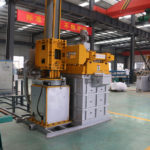
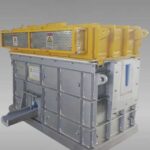
Magnesium removal is an important part of secondary aluminum melt treatment when the magnesium content of recycled aluminum is higher than the target alloy specification. Common approaches include oxidation, chlorine-based treatment, chloride-salt treatment, and flux-based methods using compounds such as cryolite. The appropriate method depends on the initial magnesium content, target composition, alloy, melt temperature, environmental requirements, and available melt-treatment equipment.
Why Does Magnesium Need to Be Removed from Aluminum Melt?
Magnesium is useful in many aluminum alloys, but excessive magnesium can be a problem when recycled aluminum needs to meet a specific alloy composition.
For secondary aluminum production, magnesium may enter the melt from:
- Mixed or improperly sorted scrap
- Aluminum alloys with different Mg contents
- Coated or contaminated scrap
- Recycled production returns
- Mixing different alloy grades during remelting
If the magnesium content is above the required range, simply adjusting other alloying elements will not solve the problem. A suitable melt-treatment process may be required to reduce Mg before the final alloy composition is established.
Common Mg Removal Methods
The main methods used for magnesium removal from molten aluminum include:
| Yöntem | Basic principle | Main consideration |
|---|---|---|
| Oksidasyon | Converts magnesium into magnesium-containing oxides | Can also increase oxidation losses |
| Chlorine treatment | Converts magnesium into magnesium chloride and related products | Requires strict gas-handling controls |
| Chloride-salt treatment | Uses chloride compounds to react with magnesium | Process efficiency depends on flux composition and operating conditions |
| Cryolite-based treatment | Uses fluoride-containing compounds to react with magnesium | Consumption and treatment conditions must be controlled |
| Specialized Mg-removal flux | Uses a formulated flux designed for magnesium removal | Practical choice depends on target Mg level and melt conditions |
The best method is not determined by magnesium content alone. The treatment should also consider metal loss, dross generation, safety, environmental requirements, treatment time, and the final alloy specification.
1. Magnesium Removal by Oxidation
Magnesium has a strong affinity for oxygen. When molten aluminum is exposed to oxygen, magnesium can oxidize and form magnesium-containing oxides.
These oxidation products can be incorporated into the surface dross and removed during skimming.
Mechanical stirring may increase contact between the melt and the atmosphere and accelerate oxidation. However, oxidation is not selective to magnesium.
Aluminum and other reactive elements can also oxidize during the process.
This can result in:
- Increased dross generation
- Aluminum loss
- Oxidation of alloying elements
- Additional skimming
- Less predictable magnesium removal
For these reasons, oxidation alone is generally not the preferred approach when accurate magnesium control is required.
2. Chlorine-Based Magnesium Removal
Chlorine can react with magnesium in molten aluminum to form magnesium chloride:
Mg + Cl₂ → MgCl₂
The resulting magnesium chloride can enter the salt or flux phase and be removed from the melt.
Chlorine-based treatment can provide effective magnesium removal, but it requires appropriate gas-handling equipment and operating controls because chlorine is hazardous to personnel and the environment.
For industrial aluminum recycling, the decision to use chlorine should therefore consider not only metallurgical performance but also:
- Gas-handling requirements
- Worker safety
- Emission control
- Regulatory requirements
- Equipment investment
- İşletme maliyeti
Where a chlorine-free treatment is suitable for the required magnesium reduction, a formulated flux can be considered as an alternative.
3. Chloride-Salt Magnesium Removal
Chloride-based fluxes can also be used to remove magnesium from molten aluminum.
Aluminum chloride is one of the compounds that can participate in magnesium-removal reactions. In industrial treatment, the chloride material is introduced into the melt through a suitable carrier or injection method.
The basic objective is to transfer magnesium from the aluminum melt into a reaction product or salt phase that can then be separated from the metal.
The actual magnesium-removal efficiency depends on factors such as:
- Initial magnesium concentration
- Flux composition
- Melt temperature
- Flux-to-metal ratio
- Contact between the flux and melt
- Tedavi süresi
- Mixing or injection method
- Final target magnesium content
Therefore, a fixed removal percentage should not be assumed for every aluminum recycling operation.
4. Cryolite-Based Magnesium Removal
Cryolite can react with magnesium in molten aluminum and form products that can be separated from the metal.
Cryolite-based treatment has been used in secondary aluminum processing because of the availability and relatively low cost of the material.
However, its practical performance depends strongly on the treatment conditions and the composition of the treatment mixture.
Factors that need to be considered include:
- Melt temperature
- Initial Mg concentration
- Cryolite addition
- Other salt components
- Mixing conditions
- Tedavi süresi
- Required final Mg concentration
Rather than applying a fixed cryolite consumption rate to every melt, the treatment quantity should be determined according to the actual melt composition and process requirements.
5. Magnesium Removal Flux
For aluminum recyclers that need to reduce excess magnesium without directly handling chlorine gas, a formulated magnesium-removal flux can be a practical option.
A dedicated Mg-removal flux is designed to promote the transfer of magnesium from the molten aluminum into the reaction/salt phase, which can then be separated during melt treatment and skimming.
Compared with using a single raw material, a formulated flux can be designed around the required treatment conditions.
The appropriate flux depends on:
- Initial Mg content
- Target Mg content
- Alüminyum alaşımı
- Melt temperature
- Melt quantity
- Treatment equipment
- Tedavi süresi
- Dross-handling requirements
For this reason, the flux should be selected according to the actual production line rather than simply by magnesium content.
How Do You Choose a Magnesium Removal Method?
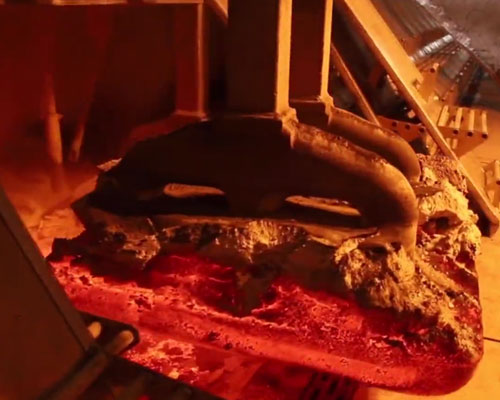
There is no single Mg-removal method that is suitable for every secondary aluminum operation.
A practical comparison should consider both metallurgical and production factors.
| Faktör | Oksidasyon | Chlorine treatment | Chloride salt | Akı işleme |
|---|---|---|---|---|
| Mg removal | Possible | Effective | Effective depending on process | Formulated for target application |
| Aluminum oxidation | Relatively high | Lower than direct oxidation, depending on process | Depends on treatment | Depends on formulation and operation |
| Gas handling | No chlorine system required | Required | Generally simpler | Generally simpler |
| Environmental considerations | Dross/oxide generation | Chlorine emissions must be controlled | Depends on flux | Depends on flux |
| Process control | Relatively simple | Requires controlled gas injection | Requires controlled addition | Requires controlled addition |
| Best application | Limited Mg adjustment | Processes equipped for chlorine treatment | Suitable salt-treatment systems | Dedicated Mg-control applications |
The final selection should be based on the required magnesium reduction rather than the treatment method alone.
What Should Be Checked Before Magnesium Removal?
Before selecting a treatment, determine the difference between the current and required magnesium content.
A useful starting point is:
Initial Mg content → Target Mg content → Required Mg reduction
For example, an aluminum recycling plant should first determine:
- What is the current magnesium concentration?
- What is the required final concentration?
- What alloy is being produced?
- How much molten aluminum is being treated?
- What treatment equipment is available?
- What temperature is maintained during treatment?
- What restrictions apply to chlorine or fluoride-containing materials?
These factors determine whether a conventional flux treatment, specialized Mg-removal flux, or another process is appropriate.
Magnesium Removal in Secondary Aluminum Recycling
Magnesium removal is particularly relevant when recycled aluminum streams contain mixed alloy compositions.
For example, scrap from different applications may have significantly different magnesium contents. After melting, the resulting composition may no longer meet the target alloy specification.
In this situation, the melt-treatment process needs to work together with:
Scrap sorting → Melting → Composition analysis → Magnesium removal → Refining → Filtration → Alloy adjustment → Casting
Magnesium removal should therefore be considered part of the overall secondary aluminum melt-treatment process rather than an isolated chemical operation.
AdTech Magnesium Removal Flux
AdTech supplies refining fluxes for aluminum melt treatment, including flux designed for magnesium removal.
The suitable product and treatment method depend on the customer’s actual production conditions.
For an Mg-removal recommendation, the following information is useful:
| Information | Example |
|---|---|
| Aluminum source | Secondary/recycled aluminum |
| Current Mg content | Laboratory analysis |
| Target Mg content | Required alloy specification |
| Melt quantity | Furnace or batch capacity |
| Alaşım kalitesi | Current or target alloy |
| Melt temperature | Actual operating temperature |
| Treatment method | Manual, rotary, injection, etc. |
| Required treatment frequency | Per batch or continuous |
Providing the current Mg content and target Mg content is particularly useful because the same flux treatment should not be assumed for every melt.
Sık Sorulan Sorular
1. Why is magnesium removed from molten aluminum?
Excess magnesium can cause the melt composition to fall outside the required alloy specification, particularly when mixed or recycled aluminum scrap is remelted.
2. What are the main Mg removal methods?
Common methods include oxidation, chlorine-based treatment, chloride-salt treatment, cryolite-based treatment, and formulated magnesium-removal fluxes.
3. How often does a porous ceramic filter need maintenance?
Yes, magnesium can oxidize during exposure to oxygen, but the process can also increase aluminum and alloying-element oxidation and dross formation.
4. Does chlorine remove magnesium from molten aluminum?
Yes. Chlorine can react with magnesium to form magnesium chloride. However, chlorine is hazardous and requires appropriate handling and emission controls.
5. What is magnesium removal flux?
It is a formulated melt-treatment material designed to promote magnesium removal from molten aluminum and transfer the reaction products into the salt/dross phase.
6. Is cryolite used for magnesium removal?
Yes. Cryolite-based treatment has been used for magnesium removal in secondary aluminum processing, although the practical treatment conditions depend on the melt and process.
7. How much Mg can be removed from aluminum melt?
There is no single removal percentage that applies to every process. The result depends on initial Mg content, target Mg level, flux composition, temperature, treatment method, and treatment time.
8. What information is needed to select an Mg-removal flux?
The most important information is the current Mg content, target Mg content, alloy, melt quantity, operating temperature, and available treatment equipment.
9. Is magnesium removal only used in secondary aluminum?
Replacement is usually necessary when the filter structure is damaged, when repeated cleaning can no longer restore acceptable flow or filtration performance, or when long-term use causes irreversible blockage or material degradation.
10. Can AdTech recommend a magnesium-removal flux based on our production line?
Yes. Providing your current Mg content, target Mg level, melt quantity, temperature, and treatment process allows the flux requirement to be evaluated more accurately.