40 PPI Ceramic Foam Filter for Molten Aluminum
A 40 PPI ceramic foam filter (CFF) is a porous ceramic filter used to remove suspended non-metallic inclusions from molten aluminum before casting. With approximately 40 pores per inch, it provides a finer filtration structure than lower-PPI filters and can be selected when the casting process requires improved melt cleanliness.
The filter is typically installed in a refractory filter box or filtration unit between upstream melt treatment and the casting machine. Proper selection depends on the aluminum alloy, metal flow rate, casting time, inclusion load, filter dimensions, and required metal cleanliness.
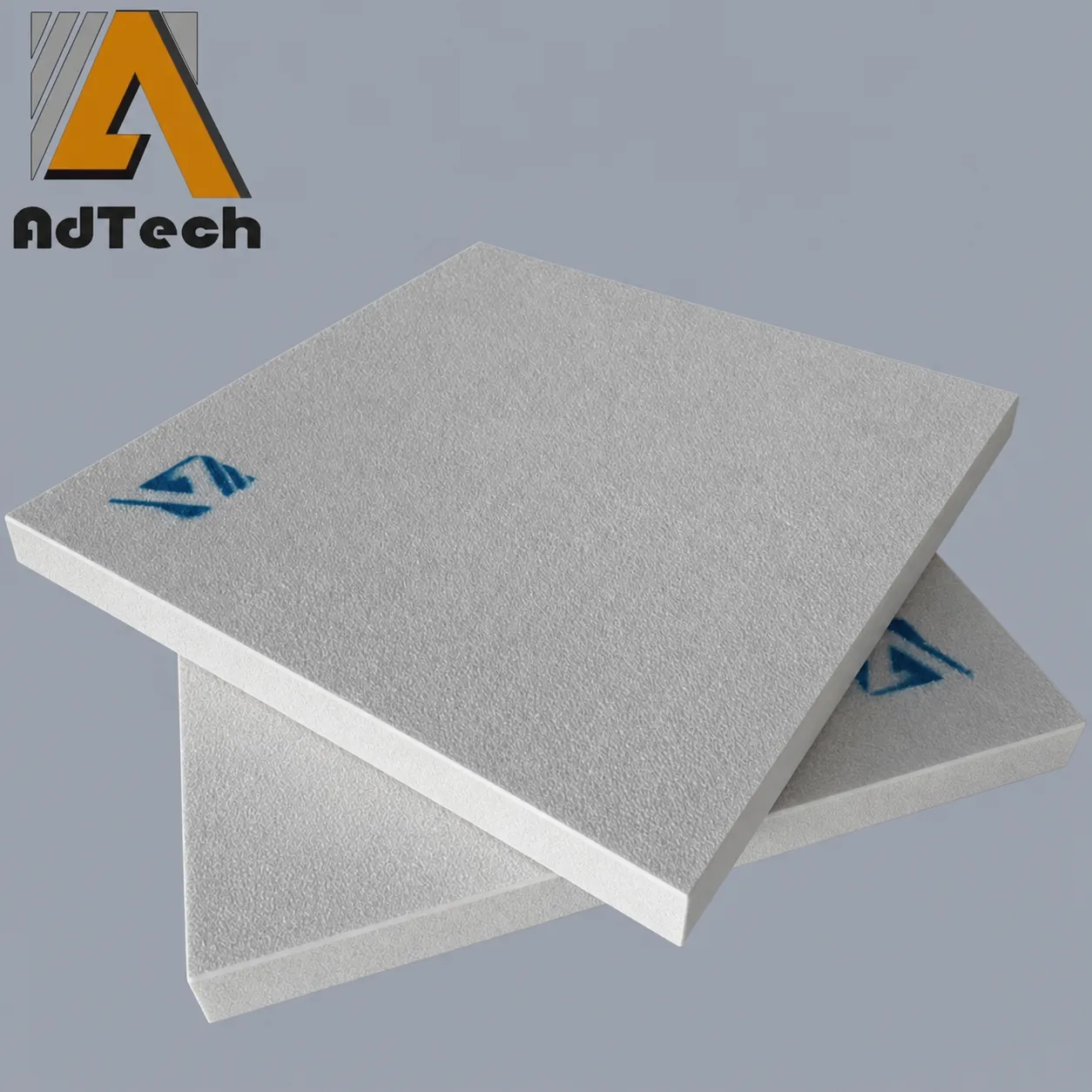
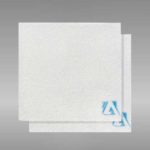
ceramic foam filter from AdTech with expandable sealing gasket
What Is a 40 PPI Ceramic Foam Filter?
A 40 PPI ceramic foam filter is a ceramic foam filtration medium with a nominal pore density of 40 pores per inch (PPI).
Unlike a conventional screen filter with straight openings, ceramic foam filters have a three-dimensional interconnected pore structure. Molten aluminum flows through the ceramic network while suspended non-metallic inclusions are captured through a combination of mechanisms such as interception, entrapment, and attachment within the filter structure.
For aluminum casting, the filter is normally placed in a controlled filtration chamber or filter box rather than simply exposed to the open atmosphere.
What Does a 40 PPI CFF Remove from Molten Aluminum?
The primary purpose of a ceramic foam filter is to remove non-metallic inclusions from molten aluminum.
Potential inclusions can originate from:
- Oxide films
- Dross and slag
- Eroded furnace or refractory materials
- Carbides
- Other insoluble particles generated during melting and handling
Removing these inclusions can help improve melt cleanliness and reduce the risk of inclusion-related defects in downstream casting and processing.
However, a ceramic foam filter should not be considered a substitute for all other melt-treatment processes.
| Melt Quality Problem | Typical Treatment |
|---|---|
| Non-metallic inclusions | Ceramic foam filtration |
| Dissolved hydrogen | Degassing |
| Magnesium above target | Magnesium-removal treatment |
| Oxide formation | Process control + melt cleaning |
| Grain structure | Grain refinement |
| Excess dross | Skimming / flux treatment |
How Does a 40 PPI Ceramic Foam Filter Work?
When molten aluminum enters the ceramic foam filter, the metal passes through the interconnected ceramic pores.
Non-metallic inclusions are retained within the filter structure instead of continuing downstream with the molten metal.
The filter therefore acts as a depth-type filtration medium, rather than simply allowing inclusions to accumulate on a flat screen surface.
The actual filtration performance depends on more than PPI alone. Important factors include:
- Filter pore structure
- Ceramic material
- Filter thickness
- Filter surface area
- Metal flow rate
- Melt temperature
- Inclusion concentration
- Inclusion size and morphology
- Filter installation
- Upstream melt cleanliness
What Does 40 PPI Mean?
PPI means pores per inch.
A 40 PPI ceramic foam filter has a nominal pore density of approximately 40 pores per linear inch.
PPI is commonly used to describe the relative fineness of a ceramic foam filter. In general, increasing PPI produces a finer pore structure.
However, PPI should not be treated as a direct measurement of filtration efficiency.
For example, a 60 PPI filter is not automatically better than a 40 PPI filter for every aluminum casting application. A finer filter can also create greater flow resistance and may have a shorter operating life if the melt contains a high inclusion load.
The filter must therefore be selected according to the complete casting process.
Why Choose a 40 PPI Ceramic Foam Filter?
40 PPI is often considered when a casting process requires a relatively fine filtration structure without automatically moving to the highest available PPI.
A 40 PPI filter may be appropriate when the plant needs a balance between:
- Inclusion removal
- Metal flow
- Filtration capacity
- Pressure drop
- Filter service life
- Required melt cleanliness
The correct choice depends on the application rather than a universal PPI recommendation.
Learn More About Our Molten-Aluminum Treatment
40 PPI vs 20 PPI vs 30 PPI Ceramic Foam Filters
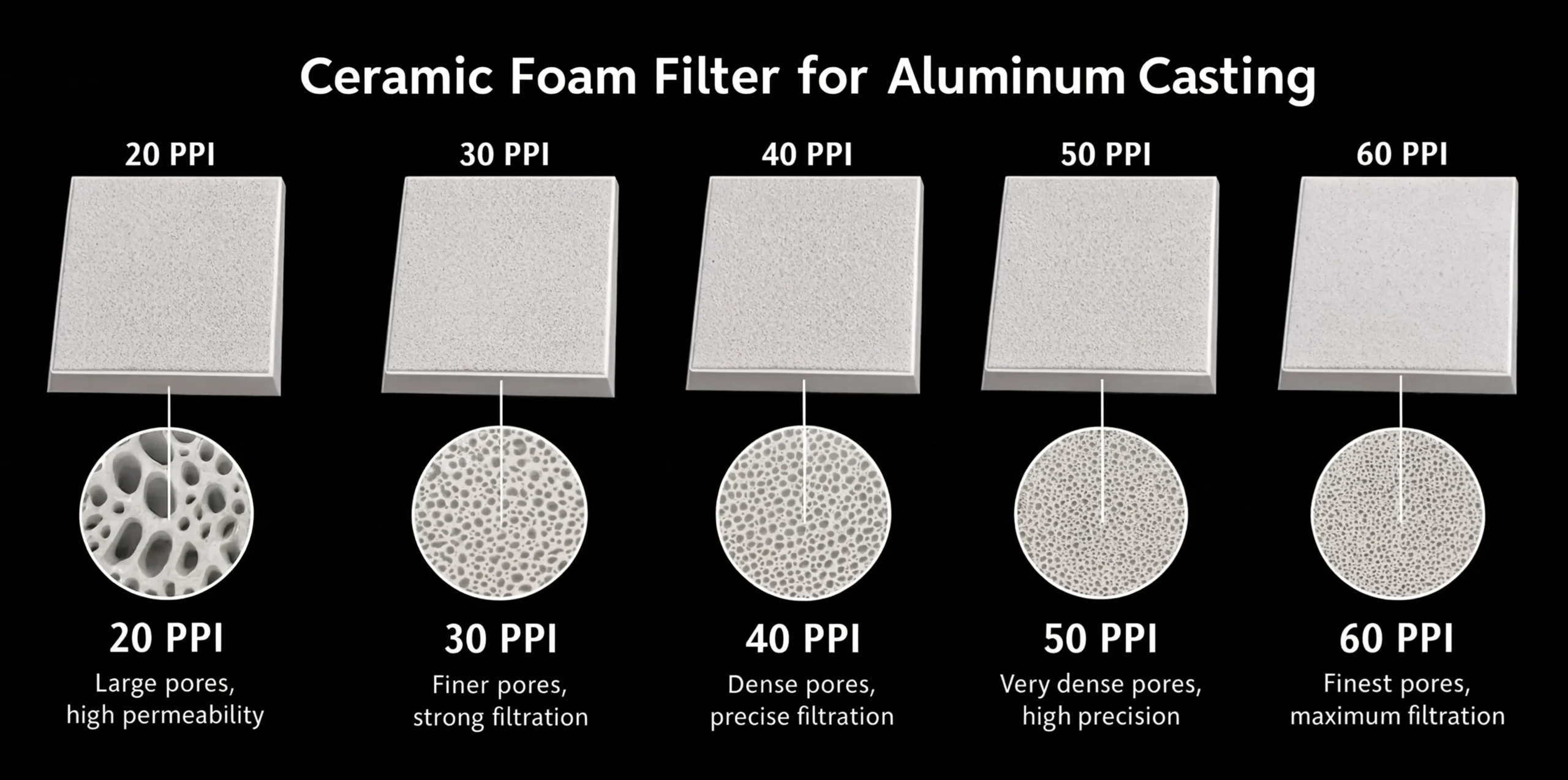
different ppi of CFF
Different PPI grades provide different pore structures and should be evaluated together with filter dimensions and operating conditions.
| Filter Grade | Relative Pore Structure | Typical Consideration |
|---|---|---|
| 20 PPI | Coarser | Higher flow capacity; suitable for applications with less demanding filtration requirements |
| 30 PPI | Medium | Balance between filtration and flow capacity |
| 40 PPI | Finer | Suitable when improved inclusion removal is required |
| 50–60 PPI | Finer still | Used where tighter filtration requirements justify greater flow resistance |
| 80 PPI | Very fine | Specialized applications requiring a fine filtration structure |
This table describes the relative filtration structure rather than guaranteeing a particular inclusion-removal rate.
The actual PPI selection should consider filter size, metal flow rate, casting duration, alloy, melt cleanliness, and allowable pressure drop.
How Do You Select the Right Size of 40 PPI CFF?
PPI is only one part of filter selection.
The filter dimensions and effective filtration area must be matched to the molten aluminum flow rate.
Important parameters include:
Metal Flow Rate
Higher flow rates generally require sufficient filter area to avoid excessive flow resistance.
Casting Duration
The filter must maintain acceptable performance throughout the required casting period.
Inclusion Load
A melt containing a high concentration of inclusions can block a fine-pore filter more quickly.
Filter Thickness
A thicker filter provides a longer filtration path but also affects flow resistance.
Filter Area
A larger effective filtration area can support higher throughput and longer service under appropriate conditions.
Filter Box Design
The filter must fit the filter chamber and be correctly sealed to prevent molten aluminum from bypassing the ceramic medium.
Where Is a 40 PPI Ceramic Foam Filter Used?
40 PPI CFF can be used in aluminum casting applications where molten-metal cleanliness is important.
Typical applications include:
- Aluminum billet casting
- Aluminum slab casting
- Continuous casting
- Aluminum rod production
- Aluminum alloy casting
- Foundry casting
- Recycled aluminum processing
- Other applications requiring non-metallic inclusion removal
The appropriate filter grade depends on the product specification and casting process.
Where Is the Ceramic Foam Filter Installed?
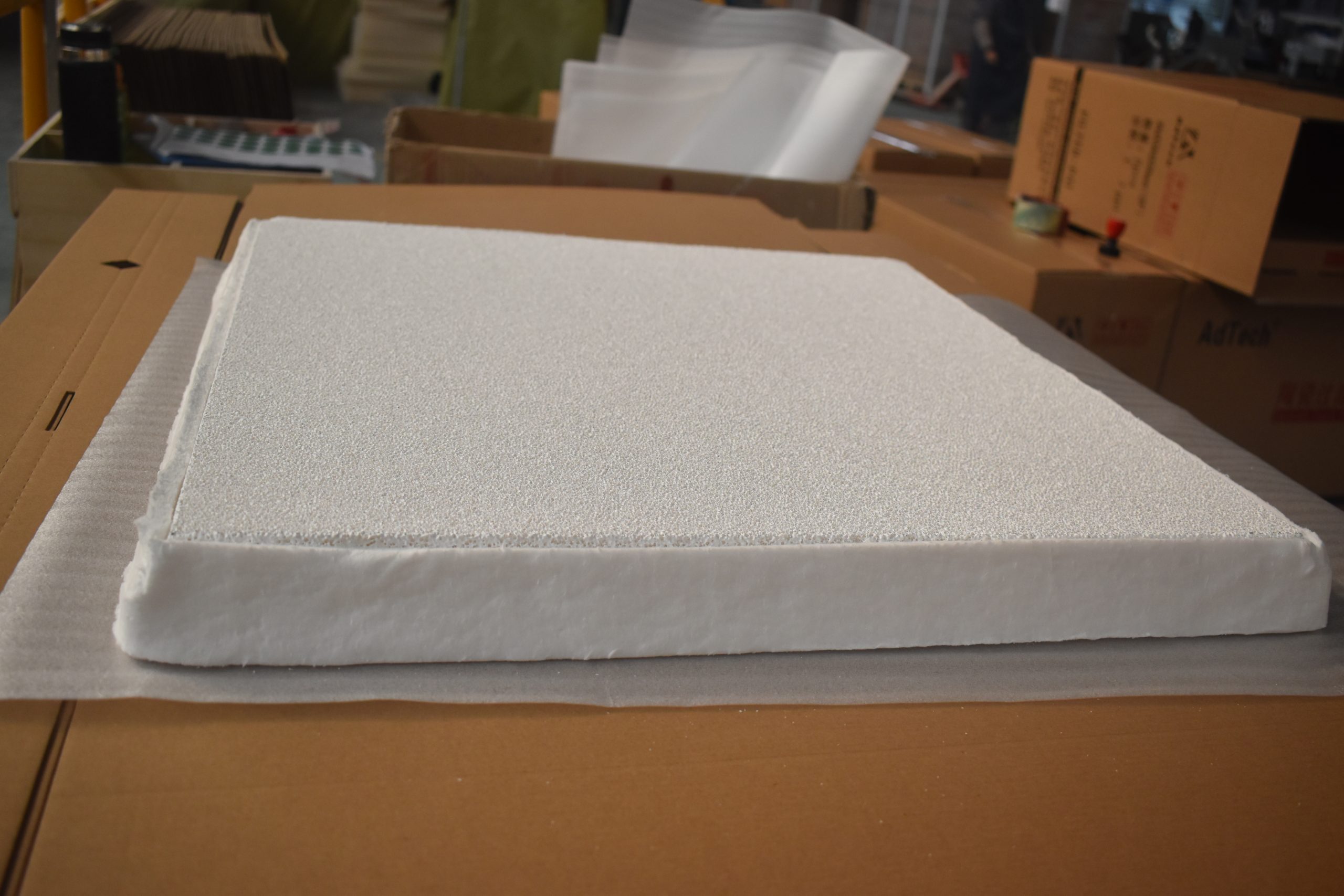
ceramic foam filter
A ceramic foam filter is normally installed downstream of major melt-treatment operations and before the casting point.
A typical process is:
Melting → Holding → Refining → Degassing → CFF Filtration → Launder → Casting
In some production lines, filtration may be combined with other filtration stages.
For example, an aluminum slab casting line may use:
Melting Furnace → Holding Furnace → On-Line Degassing → CFF Filter Box → Grain Refinement → LHC Casting
The exact sequence depends on the equipment configuration and metallurgical requirements.
Does a 40 PPI CFF Remove Hydrogen?
No.
A ceramic foam filter primarily removes suspended non-metallic inclusions. It does not directly remove dissolved hydrogen from molten aluminum.
Hydrogen is normally reduced through on-line rotary degassing, in which fine inert-gas bubbles provide a route for dissolved hydrogen to transfer out of the molten metal.
Therefore, when both hydrogen and inclusions are concerns, degassing and filtration should be considered as complementary treatments.
Can CFF Reduce Porosity in Aluminum Castings?
CFF can help reduce inclusion-related defects, but it should not be described as a direct solution for hydrogen porosity.
Hydrogen porosity is primarily associated with dissolved hydrogen and its reduced solubility during solidification.
A typical approach is:
Degassing → Reduce dissolved hydrogen
Filtration → Remove non-metallic inclusions
Controlling moisture, melt temperature, turbulence, and other process conditions is also important for controlling casting defects.
What Ceramic Material Is Used for a 40 PPI Filter?
The ceramic material should be selected according to the metal, operating temperature, chemical environment, and required filtration performance.
For molten aluminum applications, alumina-based ceramic foam filters are commonly used because of their high-temperature stability and compatibility with aluminum casting conditions.
AdTech supplies ceramic foam filters in different PPI grades and sizes for aluminum casting applications.
The actual material and specification should be selected according to the customer’s casting conditions.
How Should a 40 PPI Ceramic Foam Filter Be Installed?
Correct installation is important because molten aluminum must pass through the ceramic filter without bypassing it.
The basic requirements include:
- Select the correct filter size and PPI.
- Ensure the filter box is clean and in suitable condition.
- Preheat the filter and filtration chamber according to the supplier’s instructions.
- Position the filter correctly in the filter seat.
- Ensure the sealing system is properly installed.
- Avoid mechanical damage to the ceramic filter.
- Start molten-metal flow under controlled conditions.
The specific preheating temperature, heating rate, and installation procedure should follow the filter and filter-box manufacturer’s instructions.
What Causes a 40 PPI Ceramic Foam Filter to Block?
Filter blockage generally occurs when inclusions accumulate within the ceramic pore structure faster than the filter can maintain the required flow.
Common contributing factors include:
- High inclusion concentration
- Excessive dross carryover
- Poor upstream melt cleanliness
- Filter area that is too small
- Excessively fine PPI for the application
- Excessive casting flow rate
- Long casting duration
- Incorrect filter installation
If a 40 PPI filter blocks too quickly, simply switching to a lower PPI is not always the correct solution.
The plant should first determine whether the underlying problem is melt cleanliness, filter area, flow rate, filter specification, or upstream process control.
40 PPI Ceramic Foam Filter for Aluminum Casting
AdTech manufactures ceramic foam filters for molten aluminum filtration in different PPI grades and dimensions.
The filters can be supplied for use with AdTech filter boxes or compatible filtration systems.
Depending on the application, AdTech can provide:
- Different PPI grades
- Customized dimensions
- Alumina ceramic foam filters
- Filter gaskets and sealing materials
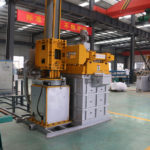
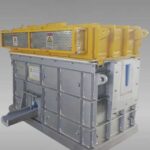
- Matching CFF filter boxes
- Filtration system recommendations
- Samples for evaluation
The filter should be selected according to the customer’s alloy, metal flow rate, casting process, required filtration level, and available filter-box dimensions.
What Information Is Needed to Select a 40 PPI CFF?
For filter selection, provide as much of the following information as possible:
| Required Information | Why It Matters |
|---|---|
| Aluminum alloy | Determines process conditions |
| Metal flow rate | Determines required filtration capacity |
| Casting time | Affects filter loading |
| Melt temperature | Determines thermal requirements |
| Current PPI | Helps evaluate the existing system |
| Filter dimensions | Determines compatibility |
| Filter-box dimensions | Ensures proper installation |
| Current filtration problems | Helps identify the cause |
| Inclusion level | Helps determine filtration requirements |
| Required metal cleanliness | Determines filtration target |
With this information, the 40 PPI filter can be evaluated against other PPI grades instead of being selected based only on the nominal pore number.
40 PPI Ceramic Foam Filter Manufacturer
40PPI Ceramic Foam Filter
AdTech manufactures ceramic foam filters for molten aluminum filtration, together with compatible filter boxes and other aluminum melt-treatment equipment.
Our ceramic foam filters are available in different pore grades and customized dimensions for aluminum casting applications.
For a 40 PPI CFF quotation, provide the required filter dimensions, aluminum alloy, metal flow rate, casting process, and existing filter-box information.
FAQ
1. What is a 40 PPI ceramic foam filter?
A 40 PPI ceramic foam filter is a porous ceramic filtration medium with a nominal pore density of 40 pores per inch, used primarily to remove non-metallic inclusions from molten aluminum.
2. What does 40 PPI mean?
PPI means pores per inch. It describes the relative pore density of the ceramic foam filter.
3. Is 40 PPI finer than 30 PPI?
Yes. In general, a 40 PPI filter has a finer pore structure than a 30 PPI filter.
4. Is 40 PPI better than 20 PPI?
Not necessarily. The appropriate PPI depends on metal flow rate, inclusion load, required cleanliness, filter area, and casting conditions.
5. Can a 40 PPI filter remove hydrogen?
No. Dissolved hydrogen is primarily reduced through degassing rather than ceramic foam filtration.
6. Can a 40 PPI CFF reduce aluminum casting defects?
It can help reduce defects associated with non-metallic inclusions. Other defects, such as hydrogen porosity, require additional process controls and melt treatment.
7. What aluminum products can use a 40 PPI CFF?
Applications can include aluminum billets, slabs, rods, continuous cast products, and other aluminum castings where inclusion removal is required.
8. Does a higher PPI always provide better filtration?
No. Higher PPI generally means a finer pore structure, but it can also increase flow resistance and may block more quickly when the melt has a high inclusion load.
9. Can the size of a 40 PPI CFF be customized?
Yes. Ceramic foam filters can be manufactured in different dimensions according to the filter box and casting system.
10. Can AdTech provide a filter box for a 40 PPI CFF?
Yes. AdTech can supply ceramic foam filters together with compatible CFF filter boxes and other molten aluminum filtration equipment.