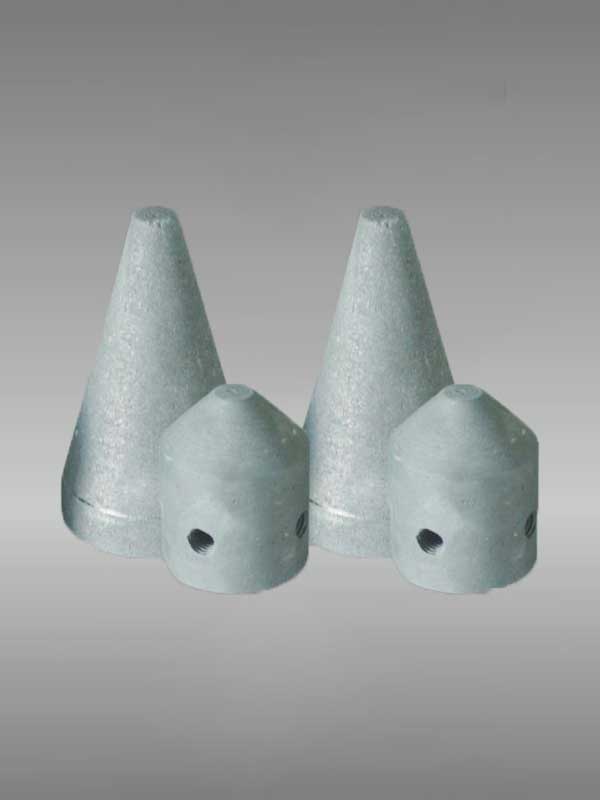
A graphite cone is a tapered carbon component engineered for high-temperature environments where thermal stability, chemical inertness, and low friction are critical. Manufactured from premium-grade graphite through precision CNC machining, our graphite cones serve as essential parts in metallurgical casting, semiconductor processing, chemical reactors, and glass production. With working temperatures exceeding 3,000°C in inert atmospheres and excellent self-lubricating properties, these components deliver reliable, long-lasting performance across demanding industrial operations.
Request A Quote
What Is a Graphite Cone Used For?
Graphite cones function as sealing elements, flow-control components, valve seats, and guide parts in systems that demand exceptional heat resistance and corrosion protection. Their tapered geometry allows for tight, precision fits in conical valve assemblies and molten metal pouring systems.
Industries rely on graphite cone components because they maintain dimensional accuracy under extreme thermal cycling. Unlike metal alternatives, graphite does not weld or bond to molten metals, making it the preferred material for aluminum degassing, continuous casting, and controlled-atmosphere furnace applications.
Common applications include:
- Conical plugs and stoppers for molten metal flow regulation
- Valve cone seats in chemical processing equipment
- Tapered sealing elements in high-temperature gas systems
- Guide cones in semiconductor crystal growing furnaces
- Nozzle inserts for aluminum and copper casting operations
- Taper cone fittings in vacuum furnace assemblies
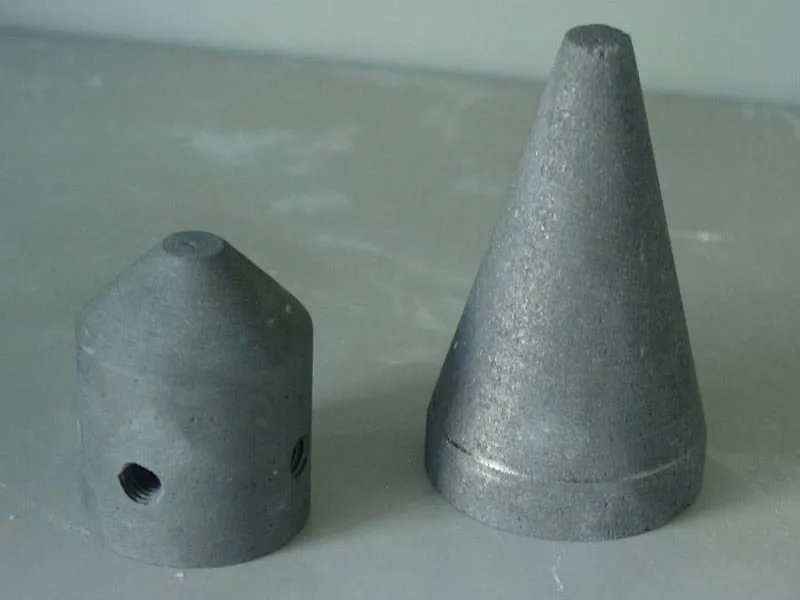
graphite cone
Why Choose Our Graphite Cone Products?
Superior Raw Material Selection
Every graphite cone we produce starts with fine-grain, isostatic-pressed graphite stock. This manufacturing approach yields a uniform microstructure with consistent density throughout the component, eliminating the weak points and directional property variations found in extruded or molded graphite grades.
What Grades of Graphite Are Available for Cone Components?
We offer multiple graphite grades to match your specific operating conditions:
| Grade | Density (g/cm³) | Flexural Strength (MPa) | Grain Size (μm) | Best Application |
|---|---|---|---|---|
| IG-15 | 1.85 | 85 | 10 | General industrial use |
| IG-11 | 1.77 | 70 | 20 | Metallurgical casting |
| GM-10 | 1.82 | 78 | 15 | Chemical processing |
| SG-20 | 1.90 | 92 | 5 | Semiconductor environments |
Precision CNC Machining for Tight Tolerances
Our graphite cone machining capabilities deliver tolerances as tight as ±0.02 mm. Each conical surface is finished to ensure proper mating with corresponding seats or housings, which is critical for leak-free sealing in high-temperature valve systems and molten metal stoppers.
What Are the Key Properties of a Graphite Cone?
The performance advantages of graphite cone components stem directly from the inherent properties of engineered carbon materials:
Thermal Performance
- Operating temperature: Up to 3,000°C in non-oxidizing atmospheres
- In oxidizing environments: Serviceable to approximately 450°C (or higher with anti-oxidation coatings)
- Thermal shock resistance: Withstands rapid temperature changes without cracking
- Low thermal expansion coefficient: 4.0–5.5 × 10⁻⁶/°C, maintaining dimensional stability during heating and cooling cycles
Mechanical Characteristics
- Compressive strength: 80–140 MPa depending on grade
- Excellent machinability: Complex taper angles and surface profiles can be achieved
- Self-lubricating surface: Reduces friction against mating metal surfaces without additional lubrication
- Lightweight construction: Approximately one-fifth the weight of equivalent steel components
Chemical Resistance
Graphite cones resist attack from most molten metals, acids, alkalis, and organic solvents. They do not react with aluminum, copper, zinc, or precious metal melts, which prevents contamination of the final product — a decisive advantage in foundry and refining operations.
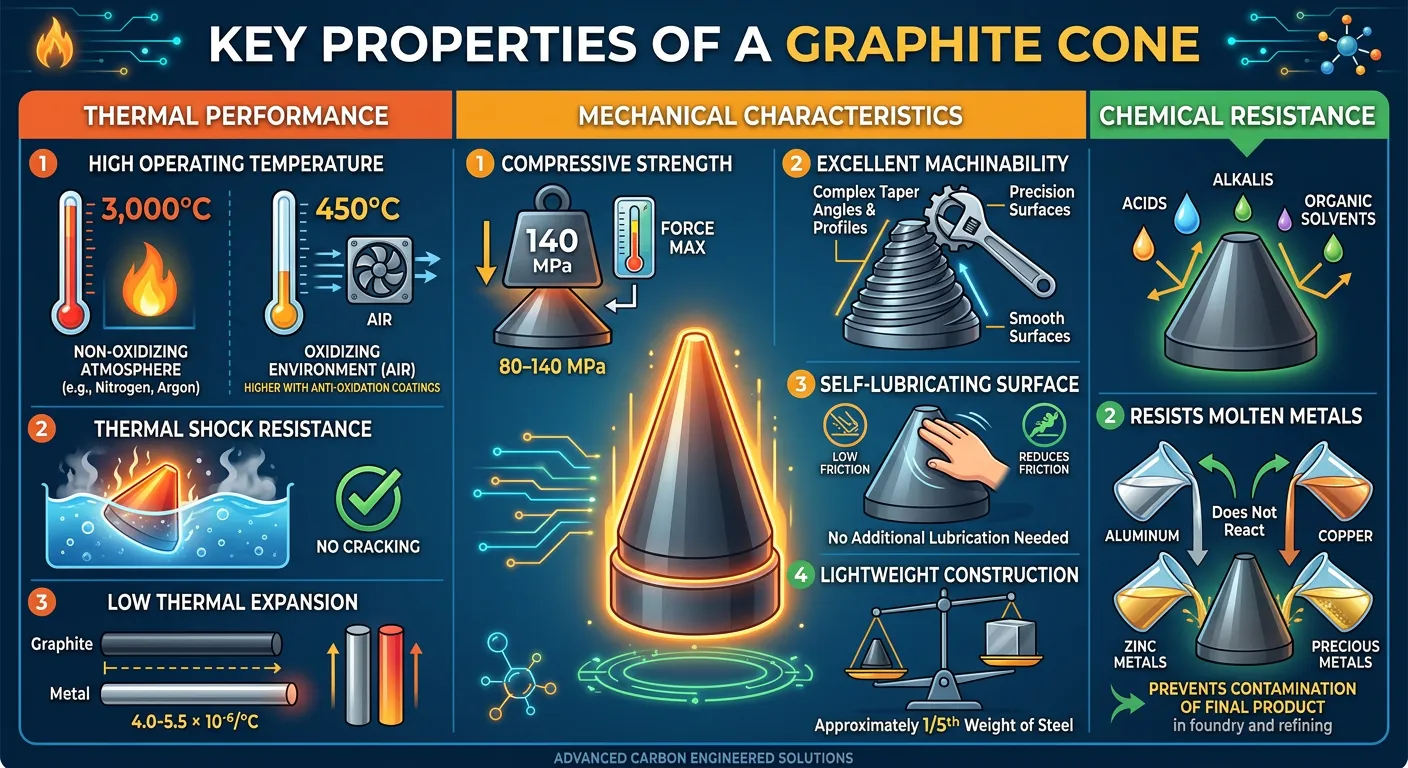
the Key Properties of a Graphite Cone
How Are Graphite Cones Manufactured?
Step 1: Material Preparation
Raw petroleum coke and coal tar pitch undergo calcination, milling, and blending to produce a homogeneous carbon mixture. For isostatic grades, this mixture is loaded into rubber molds and pressed under hydrostatic pressure exceeding 150 MPa.
Step 2: Baking and Graphitization
Green blanks are baked in oxygen-free kilns at temperatures around 1,000°C over several weeks. The graphitization process then heats the material to approximately 2,800–3,000°C, converting amorphous carbon into crystalline graphite with its characteristic layered molecular structure.
Step 3: CNC Machining to Final Dimensions
Graphitized blanks are mounted on multi-axis CNC lathes and milling centers. The conical taper, bore, outer diameter, and sealing surfaces are machined to specification. Surface roughness values of Ra 1.6 μm or finer are standard for sealing applications.
Step 4: Quality Inspection
Each graphite cone undergoes dimensional inspection using coordinate measuring machines (CMM). Density, porosity, and hardness tests verify material consistency. For critical applications, ultrasonic testing detects internal defects invisible to surface inspection.
What Sizes of Graphite Cones Can You Supply?
We manufacture custom graphite cones across a broad dimensional range:
- Outer diameter: 10 mm to 800 mm
- Length: 15 mm to 1,200 mm
- Taper angles: Custom angles from 1° to 60° per side
- Bore configurations: Solid, through-bore, or stepped internal profiles
Whether you need a small graphite cone plug for a laboratory reactor or a large-diameter conical stopper for a steel ladle, our production facility accommodates both prototype quantities and volume production runs.
Graphite Cone vs. Ceramic Cone: Which Material Performs Better?
Many engineers evaluate both graphite and ceramic options for high-temperature conical components. Here is a practical comparison:
| Property | Graphite Cone | Ceramic Cone |
|---|---|---|
| Max. service temperature | 3,000°C (inert) | 1,600–1,800°C |
| Thermal shock resistance | Excellent | Moderate to poor |
| Machinability | Easy to machine | Difficult, requires diamond tooling |
| Self-lubrication | Yes | No |
| Brittleness | Low | High |
| Chemical resistance to molten metal | Excellent | Good (material dependent) |
| Cost for custom shapes | Lower | Higher |
For applications involving rapid temperature changes, direct contact with molten metals, or the need for precision-machined taper surfaces, graphite cones consistently outperform ceramic alternatives.
Can Graphite Cones Be Coated for Oxidation Protection?
Yes. For service environments where oxygen exposure is unavoidable, we apply anti-oxidation coatings that extend the usable life of graphite cone components significantly. Coating options include:
- Silicon carbide (SiC) coating — protects to approximately 1,600°C in oxidizing atmospheres
- Pyrolytic carbon coating — reduces surface porosity and improves wear resistance
- Glaze-type oxidation barrier — economical protection for intermittent high-temperature exposure
Coated graphite cones are widely used in air-atmosphere heat treatment furnaces, glass industry tooling, and certain chemical reactor configurations where fully inert gas blanketing is impractical.
What Industries Use Graphite Cone Components?
Aluminum Foundry and Casting
Graphite conical stoppers and nozzle cones regulate the flow of molten aluminum in continuous casting machines and degassing units. The non-wetting behavior of graphite against aluminum melt eliminates sticking and reduces maintenance downtime.
Steel and Iron Making
Large-diameter graphite cones serve as ladle stoppers and tundish nozzle components. Their ability to withstand direct contact with steel at temperatures above 1,500°C without degradation makes them indispensable in steelmaking operations.
Semiconductor and Solar Industries
Ultra-fine grain graphite cones are used as crucible lids, guide components, and gas flow directors in Czochralski crystal pulling systems and chemical vapor deposition (CVD) reactors. The high purity of semiconductor-grade graphite (ash content below 5 ppm) prevents contamination of silicon wafers and other sensitive substrates.
Chemical Processing
Tapered graphite plugs and valve cones handle corrosive acids, alkalis, and halogen compounds in chemical reactors and scrubber systems. Their corrosion resistance and thermal stability outperform most metals and polymers in aggressive chemical environments.
Glass Manufacturing
Graphite cone tools shape and guide molten glass during forming operations. The self-lubricating surface of graphite prevents glass adhesion and produces smooth, defect-free surfaces on finished glass products.
How to Order Custom Graphite Cones
We streamline the process for custom graphite cone procurement:
- Submit your drawing or specifications — Include dimensions, tolerances, taper angle, graphite grade preference, and required quantity.
- Engineering review — Our technical team evaluates your requirements and recommends the optimal material grade and manufacturing approach.
- Quotation — You receive a detailed quote typically within 24–48 hours.
- Production — Standard lead time is 7–15 working days depending on complexity and quantity.
- Inspection and shipping — Full dimensional reports accompany every shipment. We ship worldwide via express freight, air, or sea.
For repeat orders, we maintain tooling records and material traceability to ensure batch-to-batch consistency.
Why Partner With Us for Graphite Cone Supply?
- 20+ years of carbon and graphite component manufacturing experience
- In-house graphitization — full control over material quality from raw stock to finished part
- 5-axis CNC machining capacity for complex conical geometries
- ISO 9001 certified quality management system
- Technical support from engineers who understand your application requirements
- Competitive pricing with no minimum order quantity for prototype and development parts
We have supplied graphite cones and related carbon components to foundries, semiconductor fabs, chemical plants, and research institutions across North America, Europe, and Asia.
FAQ
1. What is a Graphite Cone?
A Graphite Cone is a precision-machined graphite part with a tapered shape, used in high-temperature, corrosive, or molten metal environments.
2. What is a Graphite Cone used for?
Graphite Cone products are commonly used for sealing, guiding, flow control, and support in casting, furnace, chemical, and semiconductor applications.
3. Why choose graphite for cone components?
Graphite offers high temperature resistance, thermal shock stability, chemical resistance, low friction, and easy machinability.
4. What temperature can a Graphite Cone withstand?
A Graphite Cone can work up to about 3,000°C in inert or vacuum conditions, depending on the graphite grade and application.
5. Can a Graphite Cone be used with molten aluminum or copper?
Yes. Graphite Cone parts are widely used in molten aluminum, copper, and other non-ferrous metal processes because graphite is non-wetting and heat resistant.
6. Do you offer custom Graphite Cone sizes?
Yes. We can manufacture custom Graphite Cone parts based on your drawing, dimensions, tolerances, and material requirements.
7. What graphite grades are available for Graphite Cone machining?
We supply Graphite Cone components in isostatic graphite, fine-grain graphite, high-purity graphite, and other grades for different industries.
8. Can a Graphite Cone be coated for longer service life?
Yes. Anti-oxidation or SiC coatings can be added to improve oxidation resistance and extend the service life of the Graphite Cone.
9. How precise is your Graphite Cone machining?
Our Graphite Cone machining can achieve tight tolerances, depending on part size, geometry, and the selected graphite material.
10. How can I order a custom Graphite Cone?
Simply send us your drawing or application details, and we will recommend the right Graphite Cone material, size, and production solution.