Buoyage and flow duct components control molten aluminium flow during continuous casting and direct-chill (DC) casting operations. Our ceramic fiber float plates and flow pipes maintain stable metal levels, reduce turbulence, and prevent oxide inclusions — directly improving slab and billet surface quality. Built from high-purity aluminium silicate fiber with inorganic binders, every piece withstands temperatures up to 1200°C and resists non-wetting by molten aluminium. Below you’ll find full specifications, material options, and sizing data to match your casting system.
Request A Quote
Product Overview: What Are Buoyage and Flow Duct Components?
Buoyage systems (float plates) and flow ducts (flow pipes / transfer troughs) are essential consumables in aluminium casting lines. The float plate sits on the molten metal surface inside the casting mould, regulating metal level through buoyancy. The flow duct channels aluminium from the furnace or launder into the mould, controlling velocity and distribution.
Together, these components form the front line of melt flow management — and the quality of every ingot, slab, or billet you produce depends on them.
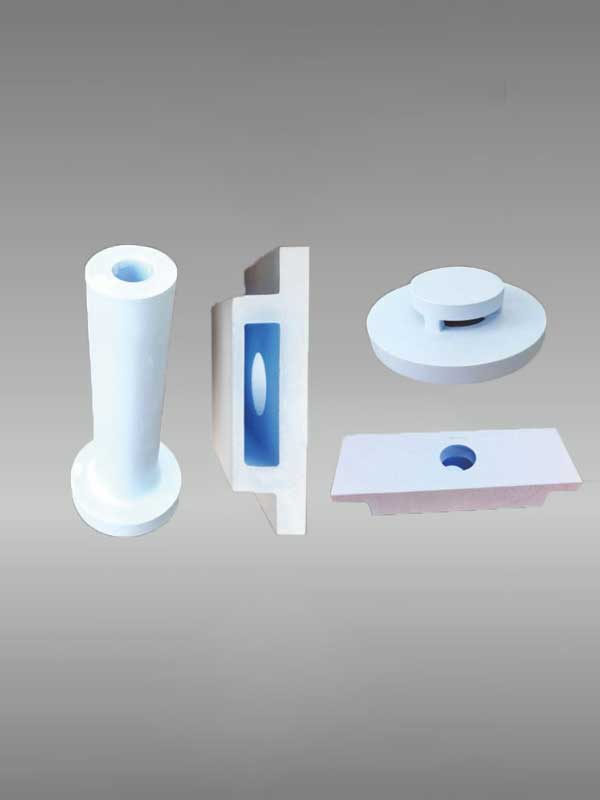
Buoyage & Flow duct
Key Specifications at a Glance
| Parameter | Float Plate | Flow Pipe / Flow Duct |
|---|---|---|
| Material | Aluminium silicate ceramic fiber | Aluminium silicate ceramic fiber |
| Binder System | Inorganic (nonite) | Inorganic (non-ite) |
| Max Service Temperature | 1100°C – 1200°C | 1100°C – 1200°C |
| Bulk Density | 0.5 – 0.8 g/cm³ | 0.6 – 1.0 g/cm³ |
| Porosity | Controlled micro-porous structure | Controlled micro-porous structure |
| Aluminium Non-Wetting | Yes | Yes |
| Thermal Shock Resistance | Excellent (>30 cycles) | Excellent (>30 cycles) |
| Standard Shapes | Round, rectangular, custom | Tubular, rectangular channel, custom |
| Surface Finish | Smooth, machined to tolerance | Smooth bore, machined ends |
| Custom Sizing | Available per drawing | Available per drawing |
Why Choose Our Ceramic Fiber Float Plates?
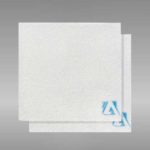
How Does a Float Plate Work in Aluminium Casting?
A float plate rides on the molten aluminium surface inside the casting mould. As metal level rises, the plate lifts and partially restricts inflow; as it drops, more metal enters. This passive, buoyancy-driven regulation keeps the meniscus stable — typically within ±2 mm — without sensors or actuators.
Our float plates deliver:
- Consistent buoyancy — Tightly controlled density (0.5–0.8 g/cm³) ensures predictable float behavior from the first cast to the last.
- Non-wetting surface — Molten aluminium does not bond to the plate, eliminating drag and sticking.
- Low thermal conductivity — Insulates the metal surface, reducing heat loss and skin formation at the meniscus.
- Zeroite or organic binder — No gas generation in contact with melt. Cleaner metal, fewer pinholes.
What Sizes Are Available for Casting Float Plates?
We manufacture float plates in all standard dimensions used across Wagstaff, Hycast, and other mainstream DC casting systems. Common configurations include:
- Round float plates: Ø100 mm – Ø500 mm
- Rectangular float plates: Up to 600 mm × 250 mm
- Thickness range: 15 mm – 50 mm
- Custom cutouts, chamfers, and centre holes: Available on request
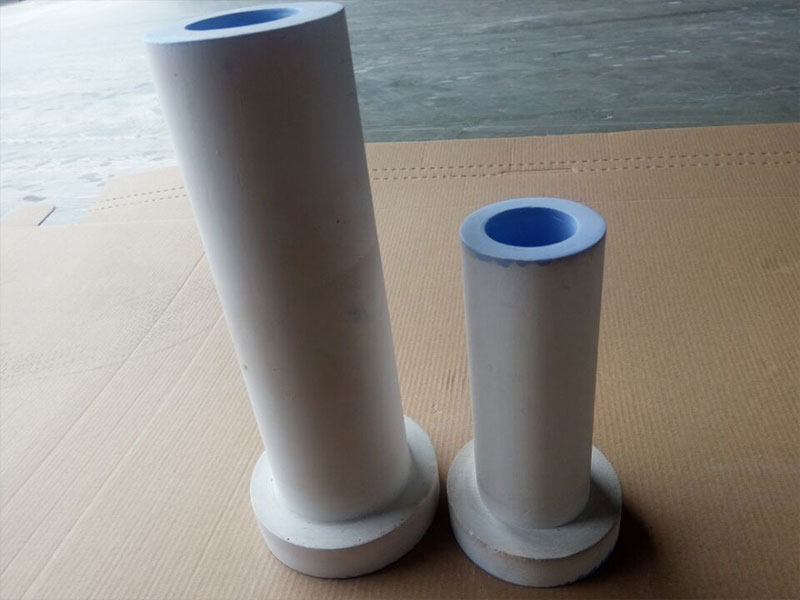
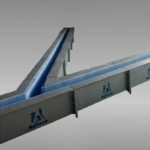
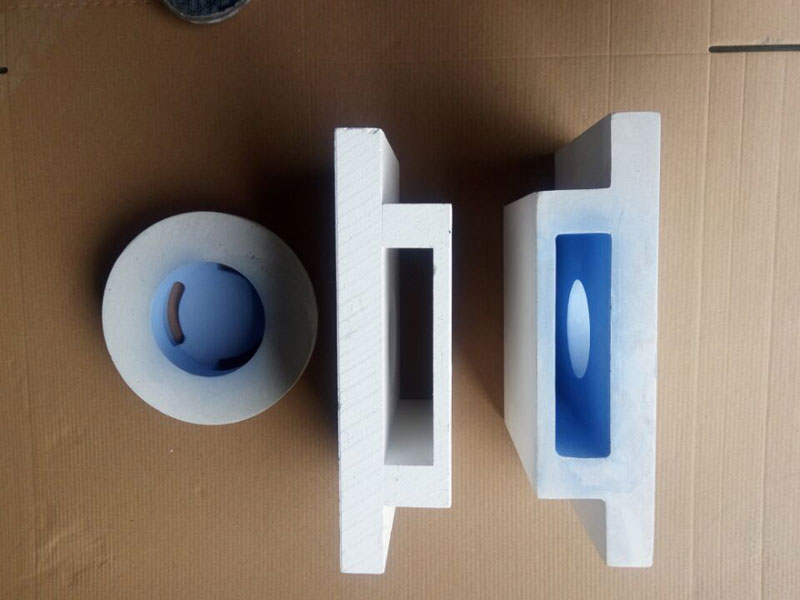
Flow-duct
Flow Pipe & Flow Duct Solutions
What Is a Flow Pipe Used For in Aluminium Casting?
The flow pipe (also called flow tube, transfer tube, or pouring tube) directs molten aluminium from the launder system into the casting mould. Its internal bore geometry controls metal velocity, reduces splashing, and minimizes oxide fold-in.
What Makes a Good Flow Duct for Molten Aluminium?
A high-performance flow duct must satisfy five requirements simultaneously:
- Thermal shock resistance — Survives immediate contact with 700°C+ aluminium without cracking.
- Non-wetting interior — Prevents aluminium buildup that would narrow the bore and alter flow dynamics.
- Dimensional accuracy — Bore diameter and wall thickness must be consistent to maintain designed flow rate.
- Mechanical strength — Handles installation, clamping, and minor impacts without fracturing.
- Low off-gassing — Binder system must not generate volatiles that contaminate the melt.
Our flow ducts check every box. We use vacuum-formed and press-moulded ceramic fiber composites with inorganic binder systems — purpose-engineered for contact with molten aluminium alloys including 1xxx, 3xxx, 5xxx, 6xxx, and 7xxx series.
Flow Pipe Dimensions & Configurations
| Type | Inner Diameter | Outer Diameter | Length | Wall Thickness |
|---|---|---|---|---|
| Standard round tube | 30 – 80 mm | 50 – 120 mm | 150 – 600 mm | 10 – 20 mm |
| Rectangular duct | Custom section | Custom section | Up to 800 mm | 10 – 25 mm |
| Flared-end tube | Stepped ID | Stepped OD | Per drawing | Variable |
| Combo float + tube | Integrated | Integrated | Per drawing | Variable |
Integrated float-and-tube assemblies — We bond float plates to flow pipes as single units, reducing installation steps and improving alignment accuracy.
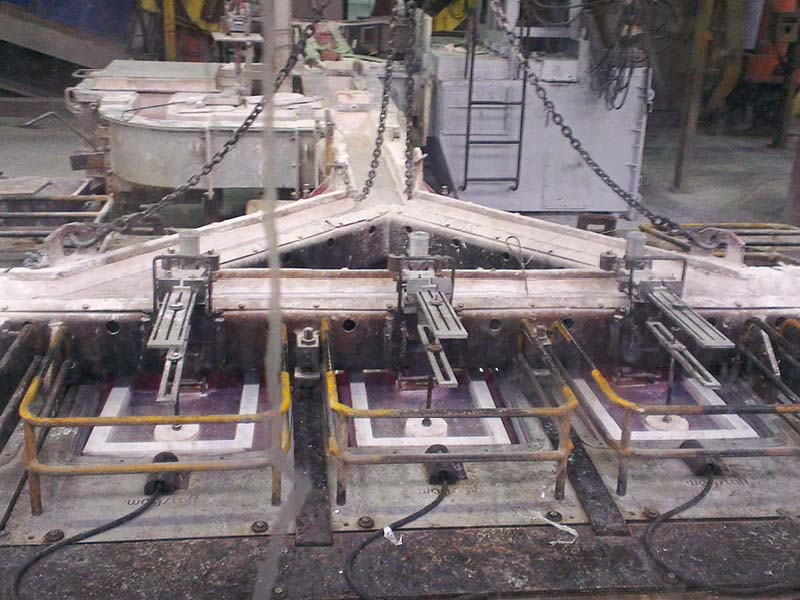
Aluminum Casting buoy
Material Technology: How Are These Components Made?
What Material Is Used for Aluminium Casting Float Plates and Flow Pipes?
Our buoyage and flow duct products are manufactured from high-purity aluminium silicate ceramic fiber (Al₂O₃ · SiO₂) using vacuum forming and precision machining processes.
Raw material composition (typical):
| Component | Content |
|---|---|
| Al₂O₃ | 46 – 52% |
| SiO₂ | 48 – 54% |
| Fe₂O₃ | < 0.5% |
| Na₂O + K₂O | < 0.3% |
Manufacturing steps:
- Ceramic fiber pulp preparation with inorganic binder
- Vacuum forming in precision moulds
- Controlled drying (removes >99% moisture)
- High-temperature curing (stabilizes binder matrix)
- CNC machining to final dimensions
- Inspection — dimensional, density, visual
Every batch undergoes density testing, dimensional verification, and visual inspection before shipment. We maintain full traceability from raw material lot to finished part.
Application Scenarios
Where Are Float Plates and Flow Ducts Used?
- DC casting (direct chill) of aluminium slabs, billets, and rounds
- Horizontal continuous casting of aluminium strip and bar
- Low-pressure die casting (LPDC) riser tubes and flow control
- Launder-to-mould transfer in multi-strand casting systems
- Combo casting systems requiring integrated flow + float assemblies
Quality Assurance & Certifications
- ISO 9001:2015 certified manufacturing facility
- Full incoming raw material inspection (fiber length, shot content, binder purity)
- In-process density monitoring (±0.02 g/cm³ tolerance)
- Final dimensional inspection (coordinate measuring)
- Batch traceability from raw material to delivery
- Packing designed for international freight — moisture-proof, shock-resistant
FAQ
1. What is a float plate in aluminium casting?
A float plate is a lightweight ceramic fiber component that floats on molten aluminium inside a casting mould. It regulates metal level through buoyancy, keeping the meniscus stable and reducing surface defects on the cast product.
2. What temperature can your flow pipes withstand?
Our ceramic fiber flow pipes are rated for continuous use up to 1200°C. For standard aluminium casting at 680–750°C, they provide a wide safety margin and excellent thermal shock resistance.
3. How many casts can one float plate last?
Service life depends on alloy, casting speed, and operating practice. Under typical DC casting conditions, our float plates last 1 to 3 full casting campaigns before replacement. Some customers achieve more than 50 individual drops per plate.
4. Do you offer integrated float plate and flow pipe assemblies?
Yes. We manufacture one-piece float-and-tube units where the flow pipe is bonded directly into the float plate. This eliminates alignment issues and speeds up mould setup time.
5. Can you match an existing float plate from another supplier?
Absolutely. Send us a sample, drawing, or dimensional sketch with density requirements. We reverse-engineer and produce equivalent or improved parts, often at lower cost with shorter lead times.
6. What is the difference between a flow pipe and a flow duct?
“Flow pipe” typically refers to a round tubular channel; “flow duct” may describe a rectangular or shaped channel section. Functionally both direct molten aluminium from the launder into the mould. We produce both configurations.
7. Are your products non-wetting to molten aluminium?
Yes. The aluminium silicate fiber matrix combined with our inorganic binder system provides inherent non-wetting properties. Molten aluminium does not stick to or penetrate the surface under normal casting conditions.
8. What is the minimum order quantity?
We accept small trial orders — even single pieces for qualification testing. No rigid MOQ. Once approved, we scale to whatever volume your operation needs.
9. How should I store ceramic fiber float plates and flow pipes?
Store in a dry, indoor environment away from moisture. Keep products in their original moisture-proof packaging until use. Shelf life exceeds 24 months under proper storage conditions.
10. Can your ceramic fiber components be used with recycled aluminium alloys?
Yes. Our products perform well with both primary and secondary (recycled) aluminium. For alloys with higher impurity levels or elevated magnesium content, we recommend our enhanced non-wetting grade — contact us for details.