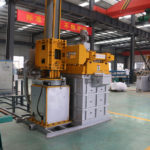
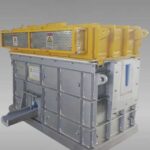
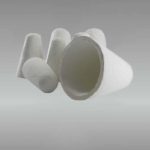
Alumina ceramic balls are widely used as support media and filtration bed materials in molten aluminum treatment systems. Their high alumina content, excellent thermal shock resistance, low impurity levels, and strong mechanical strength make them suitable for deep bed filtration units, filter chambers, and high-temperature metal processing environments. Properly selected alumina ceramic balls help improve metal cleanliness, extend filter bed life, reduce maintenance frequency, and support stable aluminum casting operations.
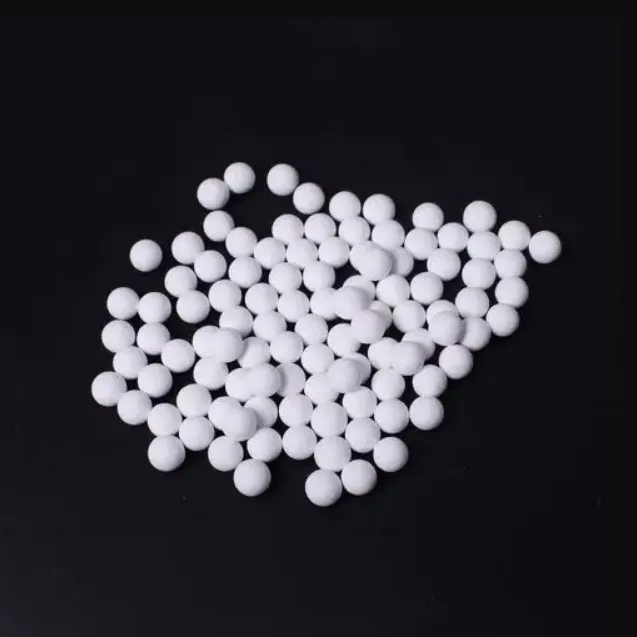
alumina ceramic balls
What Are Alumina Ceramic Balls?
Alumina ceramic balls are spherical refractory media manufactured from high-purity aluminum oxide (Al₂O₃). Depending on the application, they may function as:
- Deep bed filter media
- Support media for filtration systems
- Heat-resistant packing material
- Flow distribution material
- High-temperature refractory filler
In the aluminum industry, alumina ceramic balls are primarily used inside deep bed filtration equipment where they create a stable filtration layer that captures inclusions and improves molten metal cleanliness before casting.
Compared with conventional support media, alumina balls offer superior resistance to thermal shock, molten aluminum attack, and mechanical wear.
Contact us to get a trial order for your line.
Why Are Alumina Ceramic Balls Used in Molten Aluminum Filtration?
Molten aluminum contains various non-metallic inclusions generated during melting, alloying, transfer, and casting processes.
Common contaminants include:
- Oxide films
- Spinel particles
- Slag particles
- Refractory fragments
- Furnace-generated impurities
If these inclusions are not removed effectively, they can lead to:
- Surface defects
- Poor anodizing performance
- Reduced mechanical properties
- Increased scrap rates
- Casting instability
Alumina ceramic balls form a filtration bed that increases the contact path between molten aluminum and the filter medium, allowing suspended inclusions to be captured more effectively.
Benefits of Deep Bed Filtration
| Filtration Benefit | Result |
|---|---|
| Inclusion removal | Cleaner molten aluminum |
| Stable metal flow | Improved casting consistency |
| Reduced turbulence | Lower oxide generation |
| Better metal quality | Improved downstream processing |
| Longer equipment life | Reduced maintenance frequency |
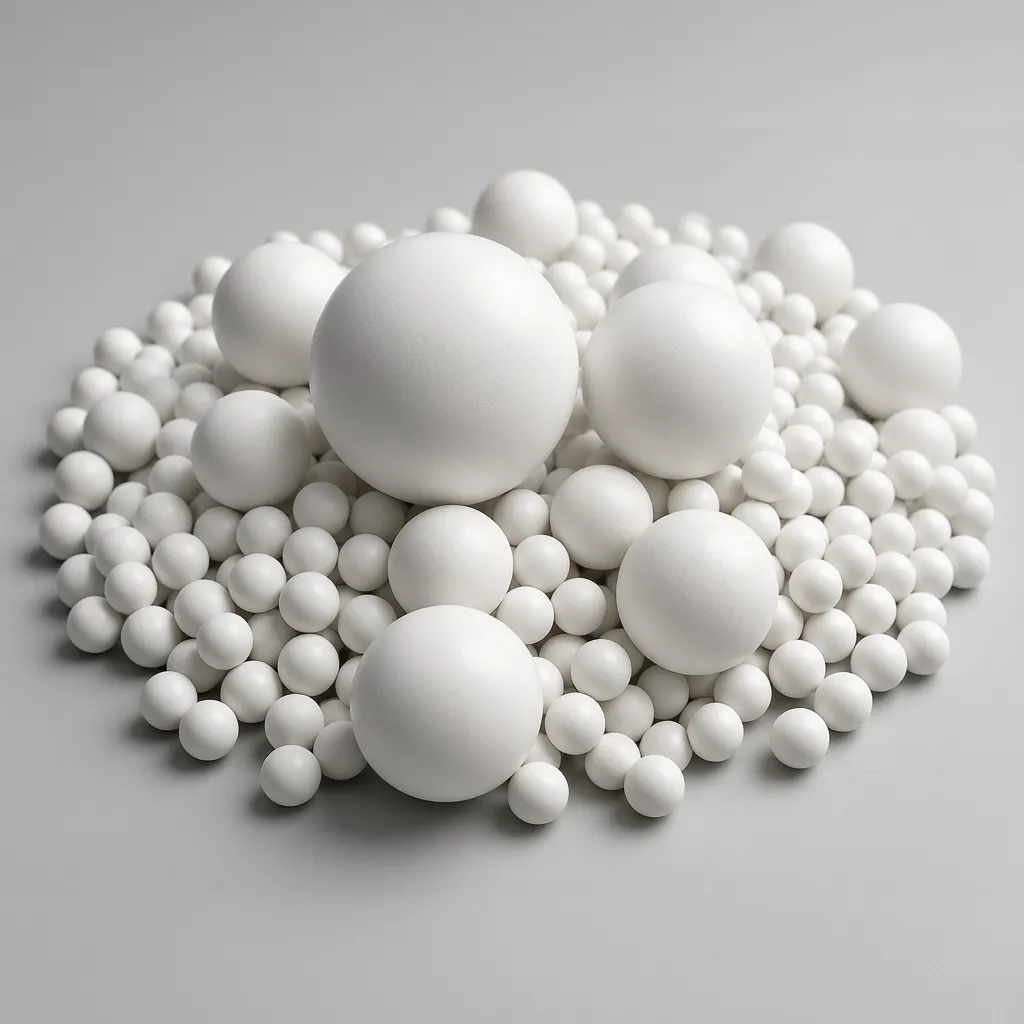
Alumina Ceramic Balls
Request A Quote
How Do Alumina Ceramic Balls Work?
Unlike ceramic foam filters that rely mainly on tortuous pore structures, alumina ceramic balls create a multi-layer filtration bed.
As molten aluminum passes through the packed bed:
- Large inclusions become trapped between ball layers.
- Smaller particles adhere to ball surfaces.
- Flow velocity decreases inside the filtration zone.
- Inclusion removal efficiency increases.
This combination of mechanical interception and surface adsorption makes deep bed filtration highly effective for high-volume aluminum casting operations.
What Are the Advantages of High-Alumina Ceramic Balls?
The performance of ceramic balls depends heavily on alumina content and manufacturing quality.
High-purity alumina ceramic balls offer several important advantages.
Excellent Thermal Shock Resistance
The material can withstand rapid temperature changes encountered during aluminum filtration operations.
High Mechanical Strength
The dense ceramic structure resists crushing and abrasion during long-term operation.
Low Impurity Content
High-purity raw materials help prevent contamination of molten aluminum.
Superior Corrosion Resistance
Alumina ceramic balls maintain stability under prolonged exposure to molten aluminum and aggressive process environments.
Long Service Life
The combination of thermal stability and wear resistance supports extended operating cycles.
Key Performance Comparison
| Property | Alumina Ceramic Balls | Ordinary Ceramic Media |
| Thermal Shock Resistance | Excellent | Moderate |
| Wear Resistance | Excellent | Good |
| Mechanical Strength | High | Medium |
| Service Life | Long | Shorter |
| Purity | High | Variable |
What Alumina Content Is Best for Filtration Applications?
Alumina content directly affects performance.
For molten aluminum filtration, alumina levels above 90% are generally preferred.
Higher alumina content provides:
- Better corrosion resistance
- Higher strength
- Improved thermal stability
- Lower impurity release
Typical Chemical Composition
| Component | Alumina Ball 1/2″ & 3/4″ |
| Al₂O₃ | 93–98% |
| SiO₂ | ≤5% |
| MgO | ≤1% |
| Fe₂O₃ | ≤1% |
For ultra-high-purity filtration systems:
| Component | Alumina Gravel 1# & 2# |
| Al₂O₃ | 98–99.8% |
| SiO₂ | ≤1% |
| MgO | ≤1% |
| Fe₂O₃ | ≤0.2% |
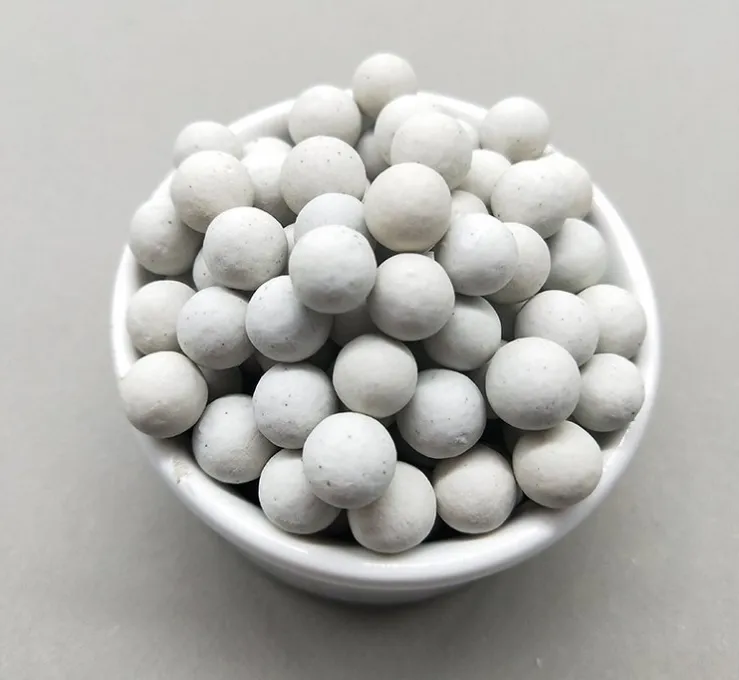
Alumina Ceramic Balls
What Sizes of Alumina Ceramic Balls Are Available?
Different filtration systems require different media sizes.
Standard Dimensions
| Category | Model | Dimension Deviation |
| Alumina Ball 1/2″ | Φ13 mm | ±1.0 mm |
| Alumina Ball 3/4″ | Φ19 mm | ±1.5 mm |
| Alumina Gravel 1# | 2–4 mm | — |
| Alumina Gravel 2# | 3–6 mm | — |
Ball size selection influences:
- Flow resistance
- Filtration efficiency
- Inclusion capture performance
- Metal throughput capacity
In many deep bed filtration systems, multiple media sizes are combined to optimize filtration performance.
Alumina Ceramic Balls vs Ceramic Foam Filters: Which Is Better?
This is one of the most common questions from aluminum producers.
The answer depends on process requirements.
Ceramic Foam Filters
Suitable for:
- Billet casting
- Ingot casting
- Continuous filtration
- General molten aluminum treatment
Alumina Ceramic Balls
Suitable for:
- Deep bed filtration systems
- High-volume metal treatment
- Long filtration paths
- High cleanliness requirements
Rather than competing technologies, they are often complementary.
Many advanced casting systems use alumina ball filtration together with ceramic foam filters for molten aluminum filtration to achieve higher metal cleanliness levels.
Where Are Alumina Ceramic Balls Used?
Alumina ceramic balls are widely used in:
Deep Bed Filter Equipment
Their primary application in molten aluminum treatment.
Billet Casting Plants
Supporting cleaner metal delivery to casting stations.
Rolling Slab Production
Improving inclusion control for high-quality flat products.
Automotive Alloy Manufacturing
Meeting stricter cleanliness requirements.
Aerospace Aluminum Production
Supporting demanding metallurgical standards.
Battery Foil and Electronic Materials
Where inclusion control becomes increasingly critical.
How Do Alumina Ceramic Balls Improve Casting Quality?
Clean molten aluminum is the foundation of high-quality casting.
Effective filtration can help reduce:
- Oxide inclusions
- Surface defects
- Internal contamination
- Machining rejection rates
- Quality variability
When used together with online rotary degassing equipment, alumina ceramic balls contribute to a comprehensive molten aluminum treatment process that improves both metal cleanliness and hydrogen control.
This integrated approach is widely adopted by modern aluminum producers seeking higher process stability and product quality.
How to Choose the Right Alumina Ceramic Balls?
Several factors should be evaluated.
Filtration Equipment Design
The media size must match the filtration chamber configuration.
Required Metal Throughput
Higher flow rates may require larger media sizes.
Alloy Type
Different alloys generate different inclusion characteristics.
Cleanliness Requirements
Higher-end applications generally require more efficient filtration systems.
Operating Temperature
Thermal stability requirements vary between processes.
Selection Guide
| Application | Recommended Media |
| Standard Casting | Φ13 mm Ball |
| High Throughput Systems | Φ19 mm Ball |
| Fine Filtration Layer | 2–4 mm Gravel |
| Precision Filtration | 3–6 mm Gravel |
FAQ
1. What are alumina ceramic balls used for?
They are primarily used as filtration and support media in molten aluminum treatment and deep bed filtration systems.
2. What is the alumina content of ceramic balls?
Depending on the grade, alumina content typically ranges from 93% to 99.8%.
3. Can alumina ceramic balls withstand molten aluminum?
Yes. Their high alumina content and thermal stability make them suitable for molten aluminum applications.
4. Are alumina ceramic balls reusable?
Service life depends on operating conditions, contamination levels, and filtration system design.
5. What size alumina ceramic ball is best?
The optimal size depends on filtration efficiency requirements and metal flow rate.
6. Do alumina ceramic balls remove hydrogen?
No. Hydrogen removal is normally achieved using dedicated degassing equipment. Alumina ceramic balls mainly remove inclusions.
7. Can alumina ceramic balls be used with ceramic foam filters?
Yes. Many filtration systems combine deep bed filtration media with ceramic foam filters to improve overall metal cleanliness.
8. Are alumina ceramic balls suitable for high-purity aluminum alloys?
Yes. High-alumina grades are commonly used in applications requiring strict cleanliness control.
9. Can Alumina Ceramic Balls Improve Aluminum Surface Quality?
Yes. By reducing non-metallic inclusions and suspended particles in molten aluminum, alumina ceramic balls help improve metal cleanliness. Cleaner molten aluminum can contribute to a better surface finish, reduced defect rates, and more consistent downstream processing such as extrusion, rolling, and anodizing.
10. What Is the Difference Between Alumina Ceramic Balls and Activated Alumina Balls?
Although both are alumina-based materials, they serve different purposes. Alumina ceramic balls are primarily used as filtration and support media in high-temperature industrial applications, including molten aluminum treatment. Activated alumina balls are porous adsorbents mainly used for drying, gas purification, and moisture removal rather than molten metal filtration.