Degassing aluminium is an essential molten metal treatment process used to remove dissolved hydrogen from aluminum and aluminum alloys before casting. Since hydrogen is the only gas with significant solubility in liquid aluminum, controlling hydrogen content is critical for preventing porosity defects and improving the mechanical properties of final products. In modern aluminum production, inert gas rotary degassing and online degassing systems are widely applied to achieve efficient hydrogen removal and maintain consistent melt quality.
During aluminum melting, hydrogen absorption is almost unavoidable. Moisture from raw materials, furnace atmosphere, tools, and refractory materials can react with molten aluminum and introduce hydrogen into the melt. Without proper degassing treatment, excessive dissolved hydrogen may remain trapped during solidification, causing internal pores, reduced strength, and casting defects.
Therefore, high-quality aluminum production requires not only careful melting control but also effective degassing refining before casting.
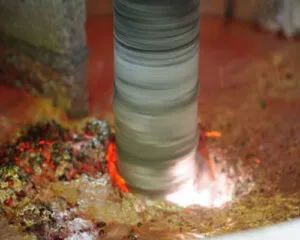
aluminum degassing
Why Is Degassing Aluminium Necessary in Aluminum Casting?
The solubility of hydrogen in aluminum changes significantly between liquid and solid states. Molten aluminum can dissolve a certain amount of hydrogen, but the solubility decreases sharply during solidification.
When the hydrogen concentration exceeds the solubility limit, the excess hydrogen cannot remain dissolved in the solid metal. Instead, it forms gas pores inside the aluminum product.
These pores can negatively affect:
- Tensile strength and elongation
- Fatigue resistance
- Surface quality
- Leak tightness
- Machining performance
For applications such as aluminum sheet, foil stock, extrusion billets, automotive components, and aerospace alloys, controlling hydrogen content is especially important.
To reduce hydrogen absorption and improve melt quality, aluminum producers usually adopt several preventive measures:
- Selecting and drying charge materials carefully
- Reducing unnecessary melt exposure time
- Controlling melting and holding temperature
- Using covering agents to reduce oxidation and moisture contact
- Performing effective degassing treatment before casting
Among these measures, degassing is the key process for removing hydrogen already dissolved in molten aluminum.
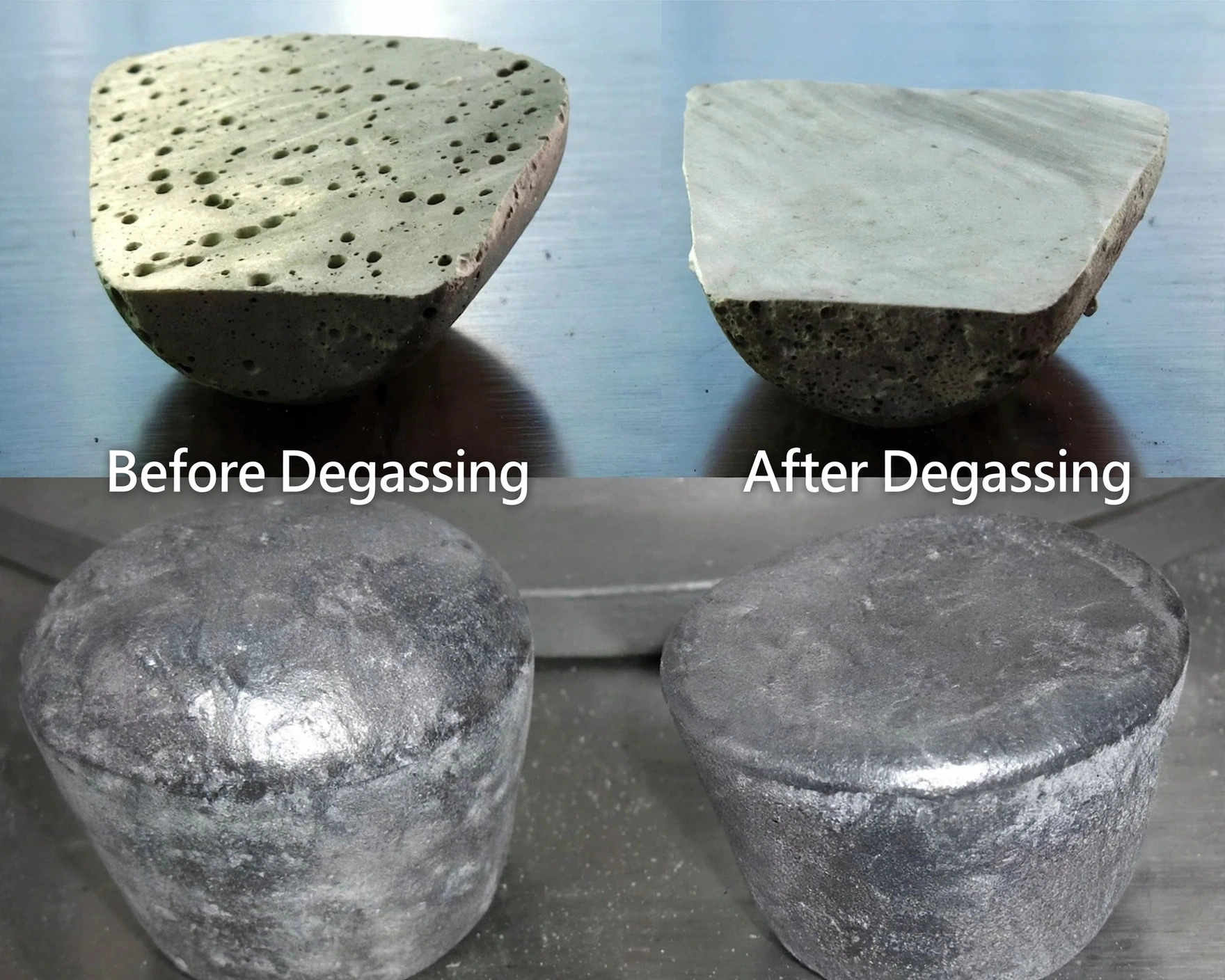
hydrogen in aluminum casting
Learn More About Our Degassing Equipment
What Is the Principle of Aluminium Degassing?
The most commonly used industrial aluminium degassing method is based on the partial pressure degassing principle.
When hydrogen is dissolved in molten aluminum, an equilibrium exists between the hydrogen concentration in the metal and the surrounding environment.
According to the principle of gas partial pressure, hydrogen will move from an area with higher hydrogen partial pressure to an area with lower hydrogen partial pressure.
During inert gas degassing, nitrogen or argon is introduced into the molten aluminum through a rotor or injection system. Because the inert gas bubbles contain almost no hydrogen, the hydrogen partial pressure inside the bubbles is close to zero.
This creates a driving force for hydrogen removal.
The process can be described as follows:
- Dissolved hydrogen atoms diffuse from molten aluminum toward the bubble surface.
- Hydrogen atoms combine into hydrogen molecules (H₂).
- Hydrogen molecules enter the inert gas bubbles.
- The bubbles rise through the melt and carry hydrogen out of the aluminum bath.
The efficiency of this process depends largely on the contact area between inert gas bubbles and molten aluminum.
Smaller and uniformly distributed bubbles provide:
- Larger gas-metal contact area
- Longer residence time in the melt
- Better hydrogen diffusion efficiency
Therefore, producing fine bubbles is one of the most important factors in improving degassing performance.
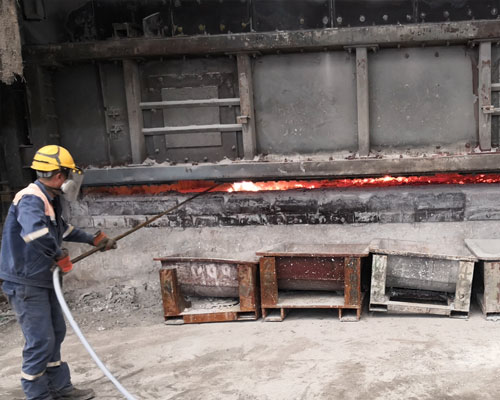
How Does Rotary Degassing Improve Hydrogen Removal?
In industrial aluminum casting, rotary degassing is one of the most widely used methods for molten aluminum treatment.
Unlike simple gas injection, rotary degassing uses a rotating impeller to disperse inert gas into fine bubbles throughout the melt.
The rotating action improves:
Bubble Dispersion
The impeller breaks large gas bubbles into smaller bubbles, increasing the contact area between gas and molten aluminum.
Hydrogen Transfer Efficiency
More contact area allows dissolved hydrogen to diffuse into the bubbles more efficiently.
Melt Circulation
The rotation creates controlled melt movement, helping distribute the treatment gas throughout the aluminum bath.
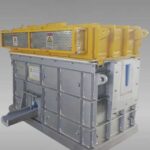
A typical rotary degassing system includes:
- Degassing chamber
- Graphite rotor
- Drive motor
- Gas control system
- Temperature monitoring system
The performance of rotary degassing depends on:
- Rotor design
- Rotor speed
- Gas flow rate
- Treatment time
- Melt temperature
- Alloy composition
Improper parameters may reduce hydrogen removal efficiency or introduce unnecessary oxidation.
What Gases Are Used for Aluminium Degassing?
The gases used for aluminium degassing mainly include inert gases and, in some cases, active gases or mixed gases.
Nitrogen (N₂)
Nitrogen is widely used because of its availability and cost advantage.
It is suitable for many conventional aluminum casting applications.
Argon (Ar)
Argon provides excellent inertness and is often selected for high-quality aluminum production where melt cleanliness requirements are higher.
Mixed Gas Treatment
Some processes use mixed gases or combine refining flux with gas treatment to improve overall melt purification performance.
The choice of gas depends on:
- Alloy type
- Product requirements
- Hydrogen level target
- Production process
What Are the Main Methods of Aluminium Degassing?
Inert Gas Injection Degassing
Inert gas injection is the basic principle behind most industrial degassing systems.
Gas is introduced into molten aluminum through:
- Ceramic tubes
- Porous plugs
- Graphite rotors
- Degassing units
The gas bubbles absorb dissolved hydrogen and transport it out of the melt.
Although simple gas injection can remove hydrogen, its efficiency depends strongly on bubble size and gas distribution.
Rotary Impeller Degassing
Rotary impeller degassing is currently one of the most effective industrial solutions.
The rotating rotor creates fine bubbles and improves gas-metal interaction, resulting in better hydrogen removal compared with conventional bubbling methods.
It is widely used in:
- Aluminum rolling industries
- Extrusion billet production
- Automotive casting
- High-quality alloy production
Flux-Assisted Degassing
Another method involves adding refining flux powder together with treatment gas.
Flux-assisted treatment can help:
- Remove hydrogen
- Separate oxide inclusions
- Improve aluminum melt cleanliness
However, flux selection must be based on alloy chemistry and production requirements because different flux systems provide different metallurgical effects.
What Is an Online Degassing Unit for Aluminium Casting?
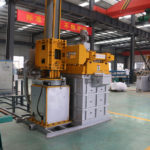
For continuous aluminum casting production, an online degassing unit provides continuous hydrogen removal during the melt transfer process.
Unlike batch treatment, where aluminum is treated separately before casting, online degassing integrates directly into the production line.
Advantages include:
- Stable degassing performance
- Continuous operation
- Reduced manual handling
- Better process consistency
- Improved casting quality
Online degassing systems are commonly installed before filtration units and casting equipment to ensure that aluminum melt enters the casting process with controlled hydrogen content and reduced impurities.
For demanding applications, online degassing is often combined with ceramic foam filtration to achieve both:
- Hydrogen removal
- Non-metallic inclusion removal
Together, these processes significantly improve molten aluminum cleanliness.
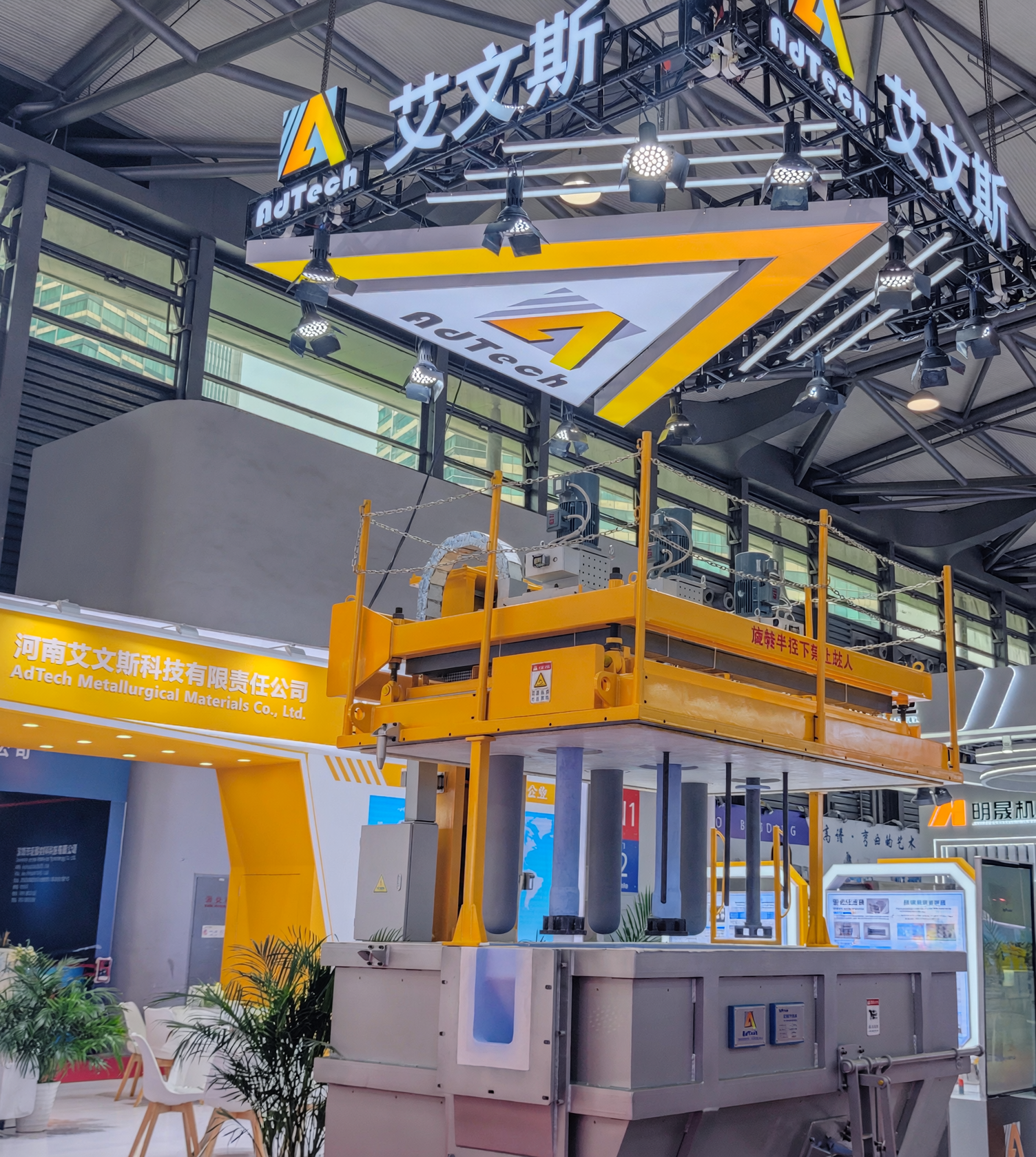
Adtech online degassing equipment in aluminum China2026
Learn More About Our Degassing Equipment
Factors Affecting Aluminium Degassing Efficiency
Although the principle of degassing is straightforward, actual industrial performance depends on multiple operating factors.
Bubble Size
Smaller bubbles provide a larger surface area for hydrogen transfer. Poor bubble dispersion reduces treatment efficiency.
Gas Flow Rate
Excessive gas flow may generate large bubbles and shorten residence time, while insufficient gas flow may lead to incomplete treatment.
Rotor Design
The rotor is a key component affecting bubble generation and melt circulation.
Treatment Time
Longer treatment generally improves hydrogen removal, but excessive treatment may increase oxidation and energy consumption.
Melt Temperature
Temperature affects hydrogen solubility and treatment efficiency. Maintaining the correct temperature range is essential.
Conclusion
Degassing aluminium is a fundamental step in aluminum melt purification. By applying the principle of partial pressure difference, inert gas treatment removes dissolved hydrogen from molten aluminum and reduces the risk of porosity defects during solidification.
Among available methods, rotary degassing and online degassing systems provide efficient and reliable solutions for modern aluminum production. Combined with proper melting practices and filtration technology, effective degassing helps aluminum producers achieve cleaner melt quality, improved casting performance, and more consistent final products.
FAQ
1. What is aluminium degassing?
Aluminium degassing is a molten metal treatment process used to remove dissolved hydrogen from liquid aluminum. It helps reduce porosity defects and improves the quality and mechanical properties of cast aluminum products.
2. Why is hydrogen removal important in aluminum casting?
Hydrogen has high solubility in molten aluminum but low solubility in solid aluminum. Excess hydrogen forms gas pores during solidification, which can reduce strength, fatigue resistance, and surface quality.
3. How does aluminium degassing work?
Aluminium degassing works by introducing inert gas bubbles into molten aluminum. Dissolved hydrogen diffuses into the bubbles and is removed from the melt when the bubbles rise to the surface.
4. What gases are used for aluminium degassing?
Nitrogen (N₂) and argon (Ar) are the most commonly used gases for aluminium degassing. Argon is often preferred for high-quality applications because of its higher inertness.
5. What is rotary degassing of aluminium?
Rotary degassing uses a rotating graphite rotor to disperse inert gas into fine bubbles inside molten aluminum. The smaller bubbles provide more gas-metal contact area, improving hydrogen removal efficiency.
6. What factors affect aluminium degassing efficiency?
The main factors include bubble size, gas flow rate, rotor design, treatment time, melt temperature, and alloy composition. Proper control of these parameters improves degassing performance.
7. What is the difference between rotary degassing and online degassing?
Rotary degassing is commonly used for batch treatment of molten aluminum, while online degassing is integrated into continuous casting lines to provide stable hydrogen removal during melt transfer.
8. Can aluminium degassing remove oxide inclusions?
Aluminium degassing mainly removes dissolved hydrogen. Oxide inclusions are usually removed through filtration systems such as ceramic foam filters, although some refining processes can help improve overall melt cleanliness.
9. How long does aluminium degassing take?
The required degassing time depends on melt volume, hydrogen level, rotor design, gas flow rate, and production requirements. Industrial treatment times are typically optimized according to specific casting conditions.
10. Should aluminium degassing be combined with filtration?
Yes. Degassing removes dissolved hydrogen, while filtration removes solid non-metallic inclusions. Combining both processes helps achieve cleaner aluminum melt and better casting quality.