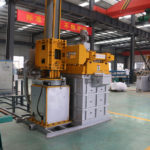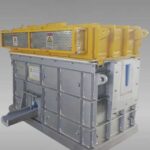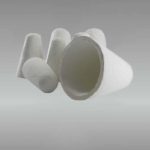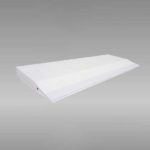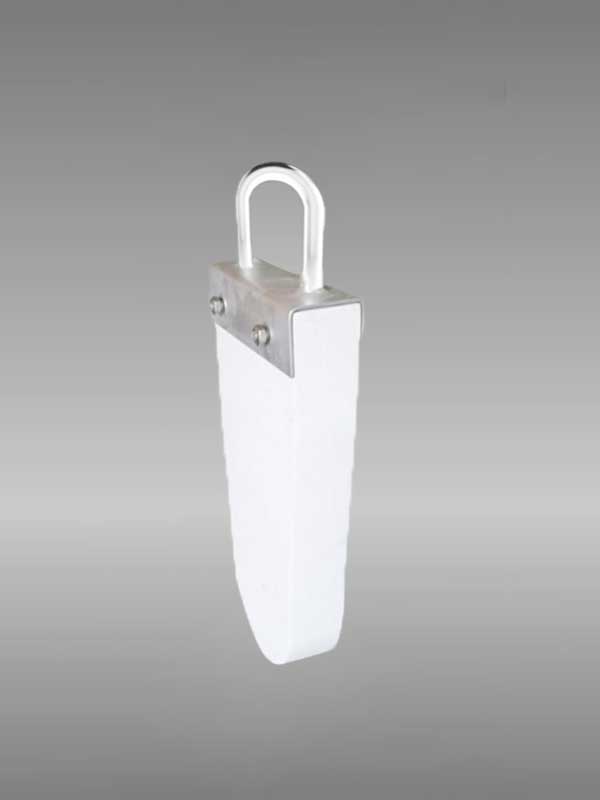
Launder Dam is a molten aluminum flow control device used in aluminum alloy casting systems. It is mainly installed inside the ceramic launder to control the circulation, retention, and discharge of molten aluminum during transfer and casting operations.
In modern aluminum casting production, molten aluminum flow stability directly affects:
- Temperature consistency
- Inclusion control
- Casting stability
- Product quality
The launder dam works together with the ceramic launder system to regulate molten aluminum movement and maintain stable casting conditions.
Request A Quote
Launder Dam Assemblies
| Component | Description |
|---|---|
| Liner Dam | Main molten aluminum flow control structure |
| Metal Accessories | Supporting structural components |
| Manual or Pneumatic Device | Used for aluminum liquid circulation control |
Why Is Molten Aluminum Flow Control Important?
Molten aluminum transfer is not simply “moving liquid metal.”
Inside the launder system, unstable flow may create:
- Turbulence
- Oxide entrainment
- Temperature fluctuation
- Air absorption
- Inclusion defects
A properly designed launder dam helps operators control molten aluminum circulation more precisely.
This is especially important in aluminum products requiring high cleanliness and stable metallurgical performance.
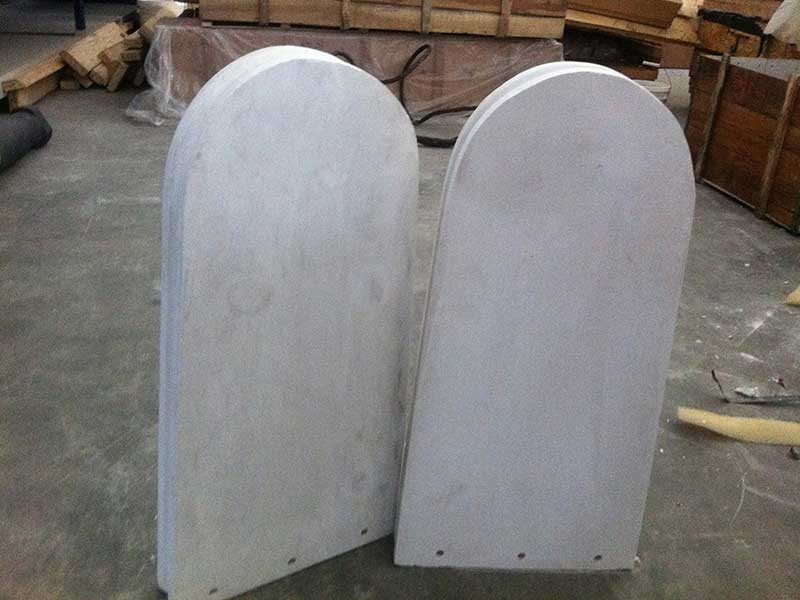
Refractory Dam
How Does a Launder Dam Work?
The launder dam acts like a controllable gate inside the molten aluminum transfer channel.
It helps:
- Retain molten aluminum temporarily
- Adjust molten metal flow rate
- Control aluminum liquid discharge
- Stabilize molten metal level inside the launder
This controlled flow behavior improves molten aluminum transfer stability before the metal enters downstream equipment such as:
- Degassing units
- Ceramic foam filters
- Casting platforms
- Crystallizers
If your project requires Launder Dam, contact us for a free quotation and technical support.
What Are the Advantages of AdTech Launder Dam?
Strong Erosion Resistance
Molten aluminum continuously impacts the launder system during production.
The launder dam adopts high-silicon molten material technology with excellent resistance against molten metal erosion and scouring.
Excellent Thermal Shock Resistance
During aluminum casting operations, rapid temperature changes are common.
The material structure offers strong thermal shock resistance, helping reduce cracking risk during heating and cooling cycles.
Smooth Surface and Non-Stick Aluminum Performance
The smooth surface structure helps reduce molten aluminum adhesion and buildup during operation.
When combined with boron nitride coating, the anti-sticking performance becomes even better.
Benefits include:
- Easier cleaning
- More stable molten metal flow
- Reduced maintenance
- Longer service life
Flexible Flow Control System
AdTech Launder Dam supports:
- Pneumatic gate systems
- Electric gate systems
- Manual control systems
Different control methods allow operators to match flow regulation requirements for different casting conditions.
No Pollution to Molten Aluminum
The refractory material structure is designed specifically for molten aluminum applications and does not contaminate the aluminum liquid during transfer.
This is especially important for high-value aluminum alloy production.
Why Does Boron Nitride Coating Improve Performance?
Boron nitride (BN) coating plays an important role in molten aluminum handling systems.
After BN coating treatment, the launder dam achieves:
- Better non-stick aluminum effect
- Reduced aluminum buildup
- Improved flow smoothness
- Longer operational life
Under standard production conditions, service life can typically reach approximately 30–90 days depending on alloy type and operating conditions.
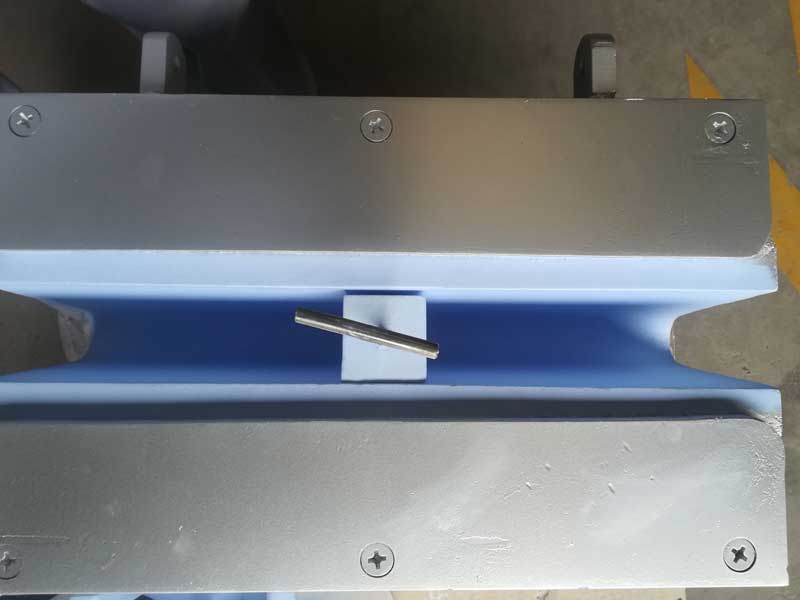
Launder Dam
Request A Quote
What Material Is Launder Dam Made Of?
The launder dam is formed using two different high-silicon molten materials with optimized density structures.
This multi-material design helps improve:
- Mechanical strength
- Thermal stability
- Corrosion resistance
- Impact resistance
Compared with traditional refractory structures, it provides more stable performance in continuous aluminum casting environments.
Where Is Launder Dam Used?
Launder dams are widely used in:
- Aluminum billet casting
- Aluminum rod casting
- Hot-top casting systems
- Continuous casting production lines
- Molten aluminum transfer launders
- Degassing and filtration systems
They are commonly installed together with ceramic launders in molten aluminum transfer systems.
How Does Launder Dam Improve Aluminum Casting Quality?
Stable molten aluminum flow is critical for reducing casting defects.
By controlling molten metal circulation more precisely, the launder dam helps reduce:
- Oxide inclusions
- Turbulence
- Air entrainment
- Temperature instability
- Surface defects
This improves overall molten aluminum cleanliness and casting consistency.
Why Is Long Service Life Important in Molten Aluminum Systems?
Frequent replacement of molten metal transfer components increases:
- Maintenance cost
- Downtime
- Labor intensity
- Production interruption risk
AdTech Launder Dam is designed for stable long-term operation under high-temperature aluminum casting conditions.
Its erosion-resistant and thermal shock-resistant structure helps reduce maintenance frequency and improve production continuity.
How Is Launder Dam Used with Ceramic Launder?
The launder dam is specifically designed to work together with ceramic launder systems.
The combination provides:
- Stable molten aluminum transfer
- Better temperature preservation
- Improved flow regulation
- Reduced turbulence
- Cleaner molten aluminum handling
This integrated system is widely used in modern aluminum melt treatment lines.
If your project requires Launder Dam, contact us for a free quotation and technical support.
Improve Molten Aluminum Flow Stability with AdTech Launder Dam
AdTech Launder Dam is designed for precise molten aluminum flow control in aluminum casting systems.
With strong erosion resistance, thermal shock resistance, flexible flow control options, and excellent non-stick aluminum performance, the system helps improve molten aluminum transfer stability and casting quality.
AdTech provides customized launder dam solutions for aluminum casting and molten metal transfer systems. Contact us for technical consultation and quotation.
FAQ
1. What is a launder dam used for?
A launder dam is used to control molten aluminum circulation and discharge inside a launder system during casting operations.
2. Why is launder dam important in aluminum casting?
It helps stabilize molten aluminum flow and reduce turbulence during transfer.
3. Can launder dam reduce casting defects?
Yes. Stable molten metal flow helps reduce oxide inclusions, air entrainment, and surface defects.
4. What material is launder dam made of?
It is formed using high-silicon molten refractory materials with strong corrosion resistance.
5. Does launder dam work with ceramic launder?
Yes. It is designed specifically for use together with ceramic launder systems.
6. What is the advantage of boron nitride coating?
BN coating improves non-stick aluminum performance and extends service life.
7. What control methods are available?
Manual, pneumatic, and electric control systems are available.
8. Is launder dam resistant to thermal shock?
Yes. It has excellent thermal shock resistance for high-temperature aluminum casting operations.
9. Does launder dam contaminate molten aluminum?
No. The material is designed to avoid pollution of molten aluminum during transfer.
10. How long does a launder dam last?
Depending on operating conditions and alloy type, service life typically ranges from 30–90 days.