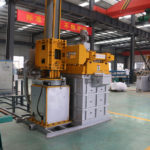
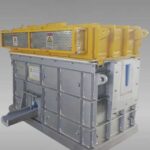
Molten aluminum absorbs hydrogen continuously during melting, transfer, and holding. Without effective degassing, dissolved hydrogen forms porosity, blistering, and internal defects during solidification. An aluminum degassing unit removes hydrogen and suspended inclusions from molten aluminum before casting, helping improve metal cleanliness, surface quality, and downstream mechanical performance. In modern billet casting and slab casting lines, inline rotary degassing systems have become a standard part of aluminum melt treatment because they provide more stable hydrogen control and cleaner molten metal transfer conditions.
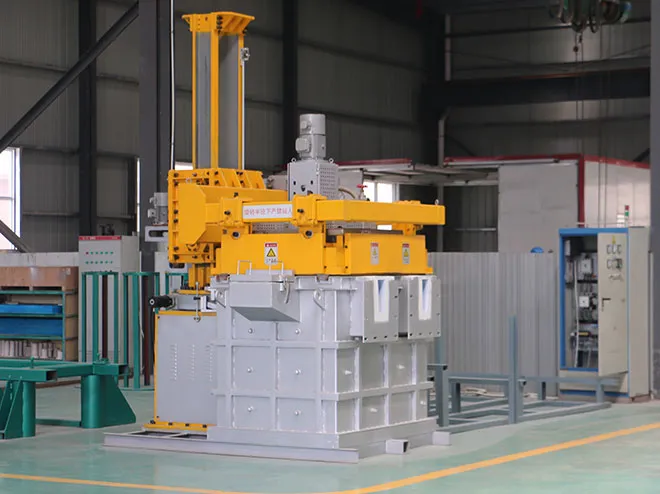
Online Degassing System
Request A Quote
What Is an Aluminum Degassing Unit?
An aluminum degassing unit is a molten metal treatment system used to remove dissolved hydrogen and non-metallic inclusions from molten aluminum before casting.
The system is typically installed between the holding furnace and the casting platform as part of a complete aluminum melt treatment line.
Modern rotary degassing systems inject inert gas into molten aluminum through a rotating rotor and shaft assembly. The gas disperses into fine bubbles, creating a large contact area that allows dissolved hydrogen to diffuse out of the melt efficiently.
At the same time, oxide inclusions and suspended particles attach to the gas bubbles and float toward the melt surface for removal.
This process significantly improves molten aluminum cleanliness and reduces casting defects.
Why Is Hydrogen Removal Important in Aluminum Casting?
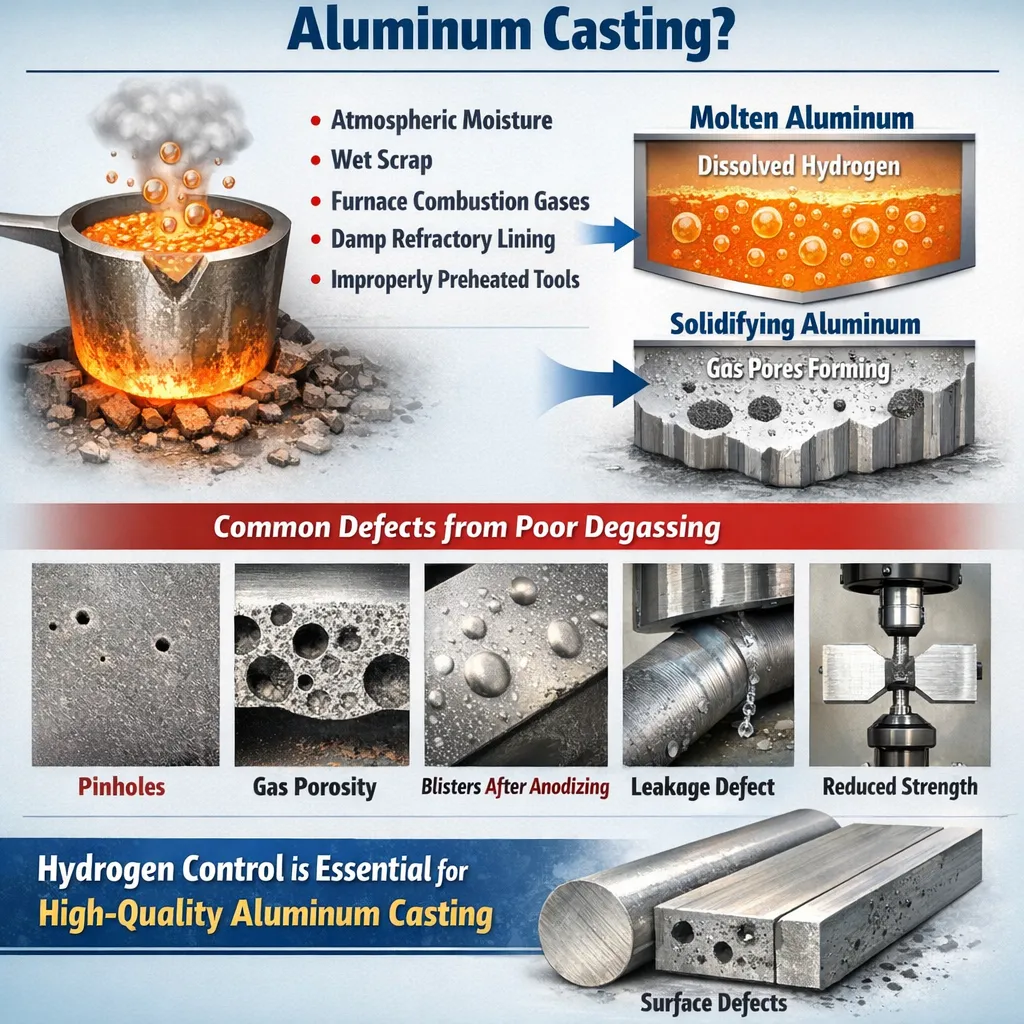
Hydrogen is the only gas with meaningful solubility in molten aluminum.
At casting temperature, molten aluminum can dissolve hydrogen generated from:
- Atmospheric moisture
- Wet scrap
- Furnace combustion gases
- Damp refractory lining
- Improperly preheated tools
As the aluminum solidifies, hydrogen solubility decreases sharply. Excess hydrogen forms gas pores inside the casting structure.
Typical defects caused by poor degassing include:
- Pinholes
- Gas porosity
- Blisters after anodizing
- Leakage defects
- Reduced tensile strength
- Surface defects in extrusion billet
For high-quality aluminum products, hydrogen control is one of the most important process parameters.
Why Is Hydrogen Removal Important in Aluminum Casting?
How Does a Rotary Aluminum Degassing Unit Work?
Rotary Degassing Principle
A rotary degassing unit uses a rotating graphite or silicon nitride rotor submerged inside molten aluminum.
Inert gas such as argon or nitrogen enters through the hollow shaft and disperses into fine bubbles under rotor rotation.
Smaller bubbles create larger gas-liquid contact area, improving hydrogen diffusion efficiency.
The process provides two simultaneous effects:
- Hydrogen removal from molten aluminum
- Inclusion flotation and purification
Compared with traditional lance degassing, rotary degassing produces more uniform gas distribution and significantly higher treatment efficiency.
What Is the Difference Between Online Degassing and Batch Degassing?
Inline Degassing System
Inline degassing treats molten aluminum continuously during transfer from furnace to casting station.
Advantages include:
- Stable hydrogen level
- Continuous treatment
- Reduced reabsorption risk
- Better process consistency
- Higher casting quality
This method is widely used in:
- Aluminum billet casting
- Slab casting
- Continuous casting production
Batch Degassing
Batch degassing treats molten aluminum inside a ladle or furnace.
Although simpler, batch treatment often allows hydrogen reabsorption during transfer and pouring.
For modern high-quality aluminum production, inline degassing systems are generally preferred.
What Gas Is Used for Molten Aluminum Degassing?
Nitrogen Degassing
Nitrogen is commonly used for standard aluminum alloys because of its lower operating cost.
Suitable for:
- 1xxx series
- 3xxx series
- 6xxx extrusion alloys
Argon Degassing
Argon provides higher chemical stability and is preferred for magnesium-containing alloys.
Suitable for:
- 5xxx alloys
- Aerospace alloys
- High-purity aluminum application
Recommended Degassing Parameters for Aluminum Alloys
| Alloy Type | Gas Type | Rotor Speed (RPM) | Gas Flow Rate (L/min) |
|---|---|---|---|
| 6063 Billet | Nitrogen | 450–520 | 12–18 |
| A356 Foundry Alloy | Nitrogen / Argon | 420–500 | 10–16 |
| 5083 Alloy | Argon | 480–550 | 15–22 |
| 7075 Aerospace Alloy | Argon | 500–550 | 18–25 |
Process parameters vary according to furnace capacity, melt temperature, and hydrogen content.
Why Does Rotor Design Affect Degassing Efficiency?
Rotor geometry directly influences bubble size and gas dispersion behavior.
Poor rotor design may create:
- Large bubbles
- Surface turbulence
- Oxide entrainment
- Incomplete hydrogen removal
High-quality rotary degassing units use optimized rotor structures to maintain stable bubble distribution while minimizing molten metal disturbance.
AdTech degassing systems utilize durable rotor assemblies designed for long-term molten aluminum operation and stable gas dispersion performance.
What Materials Are Used in Degassing Rotor Systems?
Rotor and shaft materials significantly affect maintenance frequency and operational stability.
| Material | Typical Service Life | Main Limitation |
| Standard Graphite | 1–3 months | Oxidation and erosion |
| High-Density Graphite | 3–6 months | Thermal cracking |
| Silicon Nitride (Si₃N₄) | 2–5 years | Higher initial cost |
Silicon nitride rotor systems provide stronger resistance against:
- Oxidation
- Thermal shock
- Aluminum corrosion
- Mechanical erosion
This reduces downtime and improves process consistency.
How Does Degassing Improve Aluminum Casting Quality?
Proper molten aluminum degassing improves both internal and surface quality.
Metallurgical Benefits
| Quality Indicator | Before Degassing | After Proper Degassing |
| Hydrogen Content | 0.25–0.35 ml/100g | <0.10 ml/100g |
| Density Index | 8–15% | 1–3% |
| Porosity Risk | High | Low |
| Surface Defect Rate | Unstable | Reduced |
Hydrogen reduction improves:
- Extrusion performance
- Machining behavior
- Pressure tightness
- Heat treatment stability
- Anodizing quality
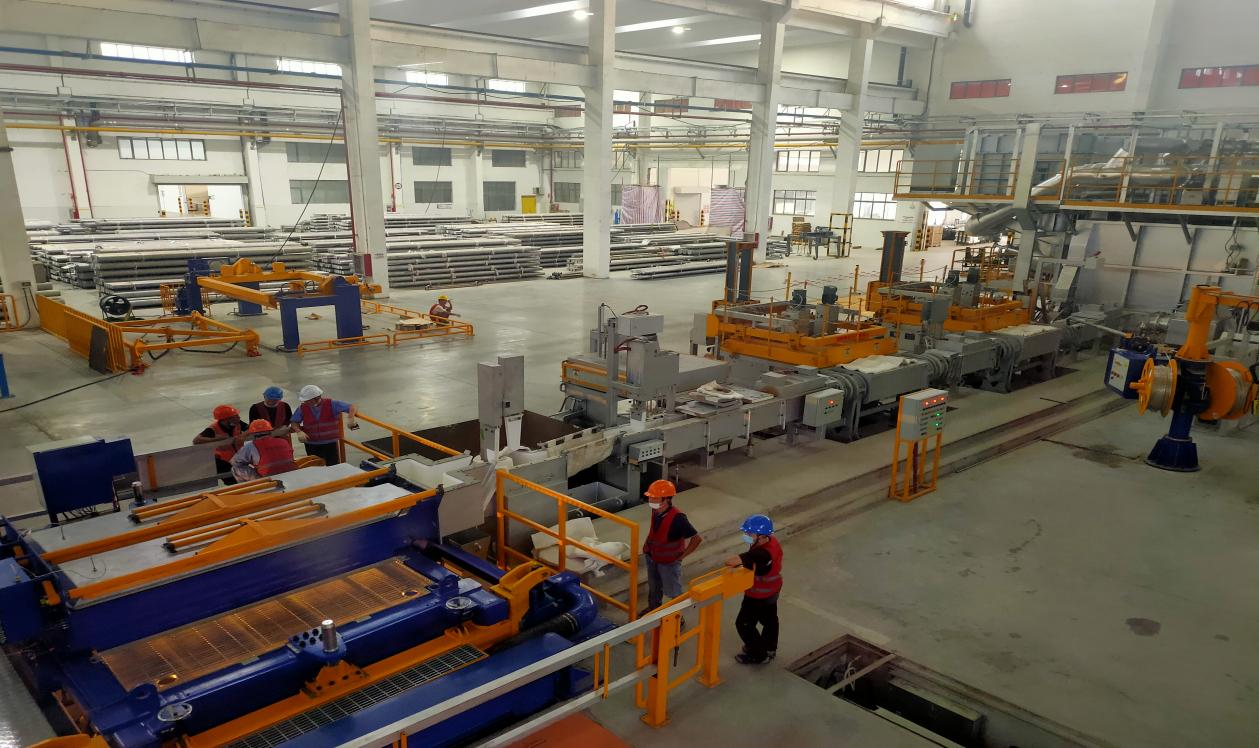
degassing equipment
Why Is Degassing Combined with Ceramic Foam Filtration?
Degassing removes dissolved gas efficiently, but filtration remains necessary for solid inclusion removal.
Modern aluminum melt treatment lines commonly combine:
- Inline degassing unit
- Ceramic foam filter box
- Ceramic launder system
- Launder dam
- Hot-top casting components
This integrated approach improves overall molten aluminum cleanliness.
For example, combining an inline degassing unit with a ceramic foam filtration system helps reduce oxide inclusions and stabilize casting quality further.
Which Aluminum Casting Processes Require Degassing?
Degassing systems are widely used in:
- DC billet casting
- Slab casting
- Foundry aluminum casting
- Continuous casting
- Aluminum wheel casting
- Aerospace aluminum alloy production
Applications requiring high internal quality generally rely on rotary degassing technology.
What Factors Affect Degassing Performance?
Melt Temperature
Excessive temperature increases hydrogen absorption.
Recommended treatment range:
| Process Stage | Recommended Temperature |
| Furnace Holding | 700–740℃ |
| Degassing Zone | 690–730℃ |
| Casting Transfer | 680–720℃ |
Gas Bubble Size
Smaller bubbles improve hydrogen diffusion efficiency.
Treatment Time
Insufficient residence time reduces hydrogen removal efficiency.
Launder Design
Stable molten metal flow improves treatment consistency.
Using an insulated ceramic launder system helps minimize temperature loss and secondary oxidation during transfer.
How to Choose the Right Aluminum Degassing Unit?
Selection depends on:
- Casting throughput
- Alloy type
- Hydrogen specification
- Production continuity
- Available installation space
Key considerations include:
- Rotor material
- Gas control accuracy
- Chamber insulation
- Maintenance accessibility
- Temperature stability
For high-volume billet casting operations, multi-rotor inline degassing systems generally provide better process stability.
Why Modern Aluminum Plants Use Integrated Melt Treatment Systems
Hydrogen control alone does not guarantee clean molten aluminum.
Modern aluminum casting lines increasingly integrate:
- Degassing
- Filtration
- Launder insulation
- Flow control
- Temperature stabilization
This reduces inclusion defects, minimizes porosity risk, and improves casting consistency.
AdTech provides integrated molten aluminum treatment solutions including aluminum degassing units, ceramic launders, filtration systems, and casting accessories for aluminum billet and slab casting applications.
If your project requires Degassing Unit, contact us for a free quotation and technical support.
FAQ
1. What does an aluminum degassing unit do?
It removes dissolved hydrogen and suspended inclusions from molten aluminum before casting.
2. Why is hydrogen harmful in molten aluminum?
Hydrogen forms gas porosity during solidification, reducing casting quality and mechanical properties.
3. What gas is used for aluminum degassing?
Nitrogen and argon are the most common degassing gases.
4. What is rotary degassing?
Rotary degassing uses a rotating rotor to disperse inert gas into fine bubbles for hydrogen removal.
5. Does degassing remove inclusions?
Partially. Degassing helps float inclusions, while ceramic foam filtration removes remaining particles.
6. What causes clogging in a porous ceramic filter?
Clogging usually occurs when particulate matter accumulates on the filter surface or inside the pore channels over time. High impurity concentration, insufficient cleaning, unsuitable pore size, or unstable operating conditions may accelerate blockage and increase filtration resistance.
7. What is the ideal hydrogen level after degassing?
High-quality billet casting typically targets below 0.10 ml/100g.
8. Why are inline degassing systems preferred?
They reduce hydrogen reabsorption and provide more stable continuous treatment.
9. What rotor material lasts longest?
Silicon nitride rotors generally provide the longest operational lifespan.
10. Is degassing necessary for billet casting?
Yes. Modern billet casting lines rely heavily on stable hydrogen control and molten aluminum purification.