Aluminum melt purification requirements vary with the final product, alloy specification, and downstream processing route. Thin-gauge battery foil demands strict control of inclusions and hydrogen-related defects. Aluminum sheet and strip require different cleanliness levels depending on their application, while standard extrusion billets and high-performance billets have different acceptance criteria. Selecting the right combination of degassing, filtration, and alloy chemistry control helps reduce casting defects without adding unnecessary treatment stages.
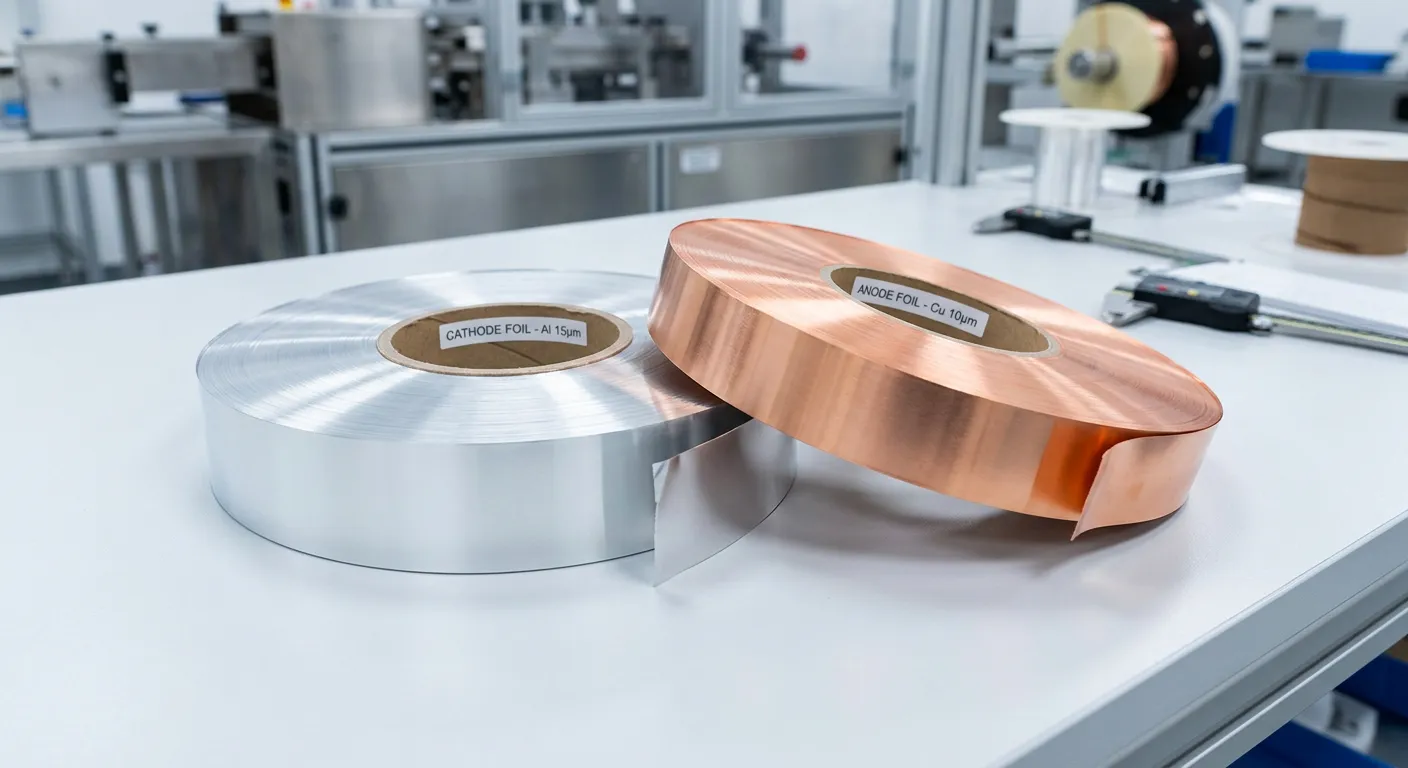
battery foil
Why Do Aluminum Products Require Different Melt Purification Levels?
The main difference is how defects affect the finished product and whether they can be removed during subsequent processing.
For battery foil, which may be rolled to approximately 10–15 μm depending on the specification, small inclusions can contribute to pinholes and strip breaks. Research on aluminum foil defects has also identified contamination from rolling media and the surrounding environment, showing that melt purification is essential but cannot prevent every downstream defect.
Aluminum sheet and strip cover a wide range of applications, from general building materials to automotive panels and can stock. Extrusion billets also vary considerably: a standard architectural profile does not necessarily require the same cleanliness controls as a billet intended for forging or high-quality anodized products.
| Product | Relative melt cleanliness requirement | Main quality concerns | Typical treatment approach |
|---|---|---|---|
| Battery foil stock | Very high | Pinholes, inclusions, strip breaks | Degassing, ceramic foam filtration, and additional filtration where required |
| General aluminum sheet and strip | Application-dependent | Porosity, inclusions, surface defects | Degassing and suitable ceramic foam filtration |
| High-end sheet and strip | High to very high | Surface quality, forming defects, inclusion-related defects | Tighter melt-quality control and application-specific filtration |
| Standard extrusion billets | Application-dependent | Gas porosity, inclusions, casting defects | Online degassing and ceramic foam filtration |
| High-performance extrusion billets | High to very high | Internal defects, surface appearance, downstream processing performance | Stricter melt treatment, inspection, and process control |
These categories are comparative guidelines, not universal cleanliness standards. The appropriate treatment level must be established from the alloy, casting method, and customer’s product specification.
What Melt Purification Equipment Is Suitable for Each Product?
Different products require different combinations of treatment equipment. The following configurations are starting points for selection rather than mandatory equipment packages.
| Product application | Recommended equipment | Main purpose |
|---|---|---|
| Battery foil stock | Online degassing equipment + ceramic foam filters | Reduce dissolved hydrogen and remove solid inclusions |
| Battery foil requiring additional inclusion control | Degassing + ceramic foam filtration, with deep-bed filtration or cartridge filtration where justified | Meet stricter cleanliness targets if validated by the process |
| General aluminum sheet and strip | Online degassing + plate-type filter equipment | Control hydrogen and reduce non-metallic inclusions |
| High-end sheet and strip | Degassing + filtration selected for the required cleanliness and flow rate | Support demanding surface and forming requirements |
| Standard extrusion billets | Online degassing + ceramic foam filtration | Control hydrogen-related porosity risk and solid inclusions |
| High-performance extrusion billets | Degassing + filtration with stricter process monitoring and inspection | Meet more demanding internal quality and downstream performance requirements |
Additional filtration stages are not automatically better. Filter area, metal throughput, pressure drop, and inclusion loading must be considered together before a multi-stage system is selected.
How Do Degassing and Filtration Address Different Defects?
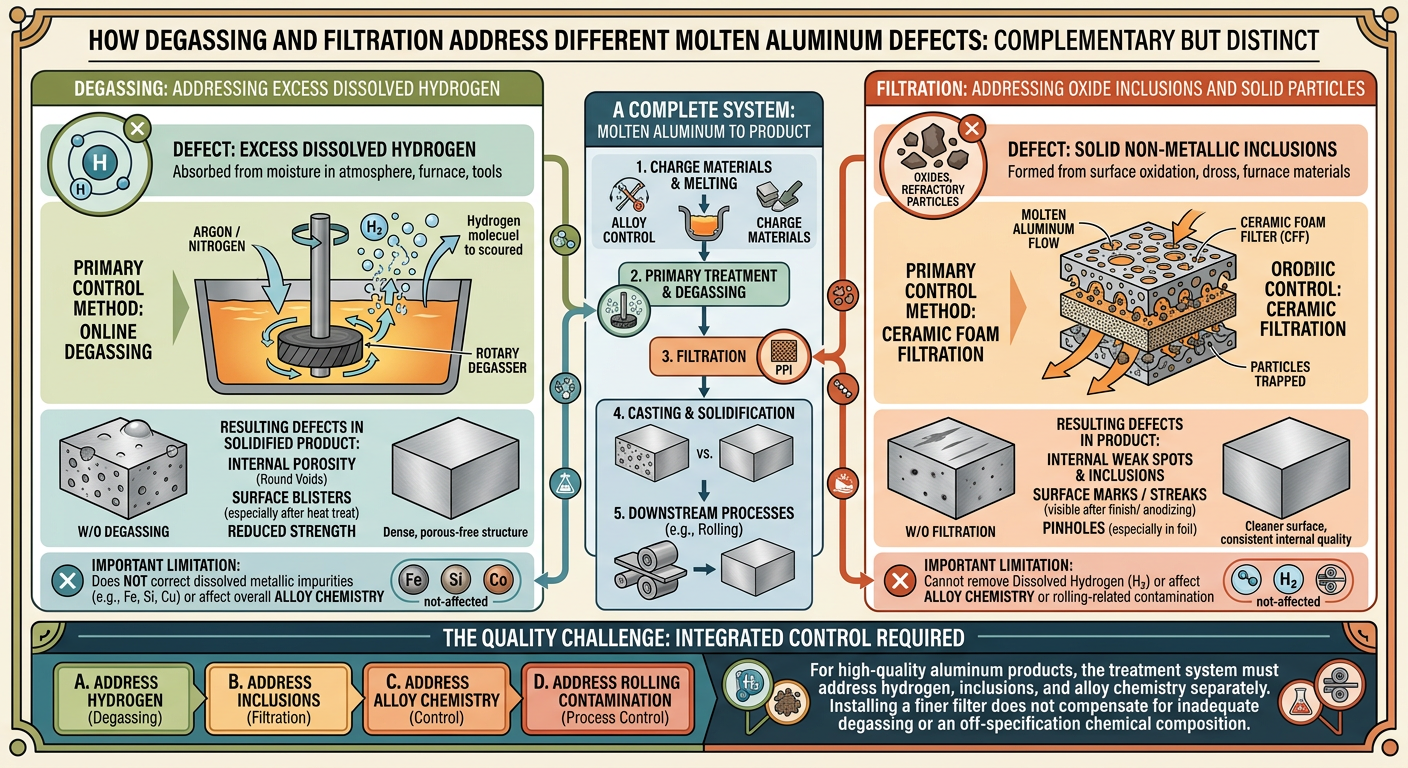
How Do Degassing and Filtration Address Different Defects
Degassing and filtration are complementary processes, but they do not solve the same problem.
Degassing primarily reduces dissolved hydrogen in molten aluminum. Ceramic foam filtration removes solid non-metallic inclusions as the metal passes through the filter’s porous structure.
| Quality issue | Primary control method | Important limitation |
|---|---|---|
| Excess dissolved hydrogen | Online degassing | Does not correct excessive dissolved metallic impurities |
| Oxide inclusions and solid particles | Ceramic foam filtration | Cannot remove every inclusion under all operating conditions |
| Off-specification Fe, Si, or Cu | Alloy chemistry and charge control | Standard degassing and filtration do not remove these dissolved elements |
| Restricted Na, Ca, or Li levels | Appropriate raw-material and chemistry control, with refining where applicable | The correct treatment depends on the element and alloy specification |
| Rolling-related contamination | Clean rolling media and downstream process control | Cannot be corrected solely by molten aluminum treatment |
For high-quality aluminum products, the treatment system must therefore address hydrogen, inclusions, and alloy chemistry separately. Installing a finer filter does not compensate for inadequate degassing or an off-specification chemical composition.
How Should You Select a Purification System for Your Aluminum Casting Line?
Begin with the final product specification and work backward to determine the required melt condition. The key is to identify critical defects and select equipment that addresses their actual causes.
Before choosing a system, confirm:
- Alloy grade and chemical composition limits.
- Required hydrogen level and inclusion-cleanliness target.
- Casting process and required metal throughput.
- Filter PPI, filtration area, and compatibility with the filter box.
- Whether additional filtration is supported by measured quality requirements.
- How melt quality will be verified before casting.
For battery foil stock, the focus is usually on strict inclusion and hydrogen control. For sheet and strip, requirements must be differentiated by the final application. For extrusion billets, standard profiles and high-performance products should not automatically be assigned the same purification specification.
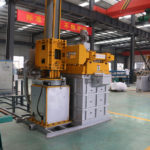
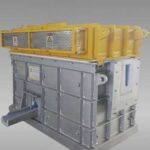
AdTech supplies aluminum degassing equipment, ceramic foam filters, and filtration systems for different aluminum casting applications. The appropriate configuration depends on the alloy, production capacity, casting conditions, and required product quality.
The guiding principle is straightforward: the more sensitive the final product is to defects, and the less effectively those defects can be removed downstream, the more rigorous the melt-quality controls generally need to be.
FAQ
1. Which aluminum products require the highest level of melt purification?
Battery foil stock generally requires particularly strict control of hydrogen and non-metallic inclusions because small defects can cause pinholes and strip breaks. High-end sheet and extrusion billets may also require stringent melt-quality control.
2. Why is molten aluminum cleanliness important for battery foil production?
Battery foil is rolled to extremely thin gauges, often around 10–15 μm. Inclusions and other defects in the cast stock can develop into pinholes, strip breaks, or downstream processing problems.
3. What filtration system is suitable for aluminum battery foil stock?
A typical starting point is online degassing combined with ceramic foam filtration. Deep-bed or cartridge filtration may be considered when additional inclusion control is required by the production process.
4. Do all aluminum sheet and strip products require the same filtration grade?
No. General building sheet, packaging stock, can stock, lithographic plate, and automotive outer panels have different quality requirements. Filter PPI and system capacity should be selected according to the alloy, casting process, and finished-product specification.
5. What melt purification equipment is commonly used for aluminum extrusion billets?
Online degassing and ceramic foam filtration are commonly used to reduce dissolved hydrogen and remove non-metallic inclusions before casting. The required configuration depends on the billet alloy and its intended application.
6. Do high-quality extrusion billets need additional filtration?
Some billets used for forging, aerospace, demanding structural applications, or high-quality anodized profiles require stricter inclusion control. Additional filtration may be appropriate when supported by the product specification and process requirements.
7. What is the difference between aluminum degassing and filtration?
Degassing primarily reduces dissolved hydrogen, while ceramic foam filtration removes solid non-metallic inclusions. They address different melt-quality problems and are often used together.
8. Can ceramic foam filters remove sodium, calcium, iron, or silicon from molten aluminum?
Conventional ceramic foam filters do not remove dissolved chemical elements. Their primary function is solid inclusion removal. Elemental concentrations must be controlled through appropriate charge selection, alloy chemistry management, and refining processes where applicable.
9. When should a multi-stage aluminum filtration system be considered?
Multi-stage filtration may be appropriate when a single filtration stage cannot meet the required cleanliness target. The decision should account for inclusion measurements, metal throughput, available filtration area, and flow resistance.
10. How do I select the right aluminum melt purification system for my production line?
Start with the alloy grade, finished-product requirements, hydrogen target, inclusion-cleanliness requirements, casting rate, and existing equipment layout. These details help determine the appropriate combination of degassing, ceramic foam filtration, and any additional treatment stages.