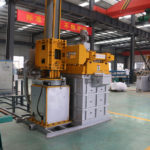
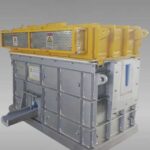
Molten aluminum carries oxide films, spinel particles, refractory fragments, and other non-metallic inclusions throughout melting and transfer. Without effective filtration, these contaminants enter the casting structure and reduce surface quality, mechanical properties, and downstream processing stability. A ceramic foam filter box removes suspended inclusions from molten aluminum before casting, improving melt cleanliness, reducing defect rates, and stabilizing billet and slab production in modern aluminum casting lines.
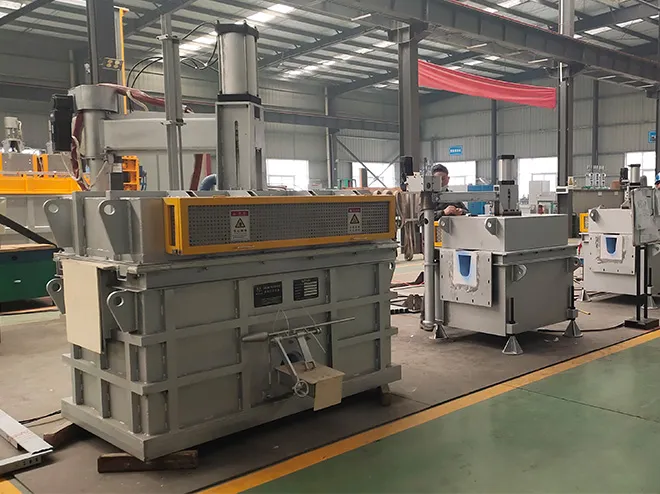
ceramic foam/plate type filter box
What Is a Ceramic Foam Filter Box?
A ceramic foam filter box is an online molten aluminum filtration system designed to remove non-metallic inclusions before the metal enters the casting platform.
The system typically contains:
- Insulated filter chamber
- Ceramic foam filter plate
- Molten aluminum flow channel
- Heating or thermal insulation structure
- Cover system for temperature retention
The filtration box is commonly installed between:
- Degassing unit
- Launder system
- Casting machine
Its primary function is to improve molten aluminum cleanliness and reduce casting defects caused by inclusions.
Why Is Molten Aluminum Filtration Necessary?
Molten aluminum continuously generates inclusions during:
- Melting
- Alloying
- Transfer
- Furnace holding
- Degassing
- Launder flow
Typical inclusions include:
| Inclusion Type | Main Source |
|---|---|
| Aluminum oxide films | Surface oxidation |
| Spinel particles | Mg-containing alloys |
| Carbides | Furnace contamination |
| Refractory fragments | Launder and lining erosion |
| Flux residues | Melt treatment process |
If these contaminants are not removed before solidification, they may cause:
- Cracks
- Surface streaks
- Sliver defects
- Porosity initiation
- Poor anodizing performance
- Reduced fatigue strength
For high-value aluminum products, filtration efficiency directly affects final product quality.
How Does a Ceramic Foam Filter Box Work?
What Happens Inside the Filter Box?
Molten aluminum enters the filter chamber and flows through a ceramic foam filter with controlled pore structure.
As the melt passes through the filter:
- Large inclusions are mechanically blocked
- Smaller particles adhere to the ceramic network
- Turbulence decreases
- Molten metal flow becomes more stable
The filtration process combines:
- Mechanical interception
- Deep-bed filtration
- Surface adsorption
This significantly improves molten aluminum cleanliness before casting.
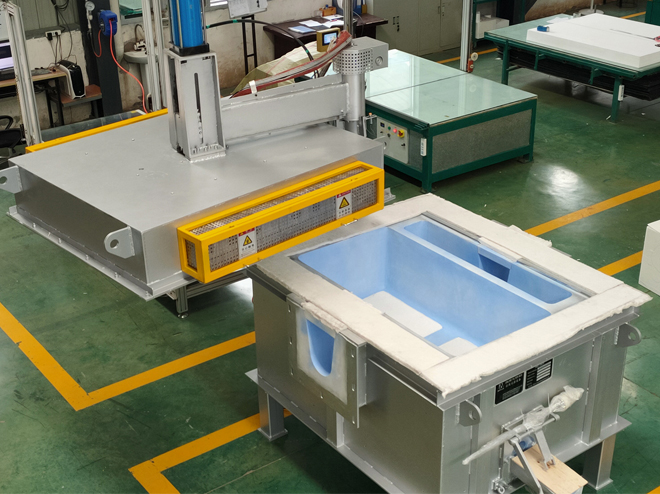
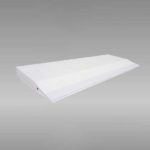
ceramic foam filter in the plate filter box
Why Is Flow Stability Important During Filtration?
Filtration efficiency depends not only on filter quality but also on molten aluminum flow conditions.
Excessive turbulence may:
- Break oxide films into smaller particles
- Increase air entrainment
- Destabilize flow
- Reduce filtration efficiency
A properly designed ceramic foam filter box stabilizes molten metal flow before and after filtration.
This is why modern filtration systems integrate:
- Flow control design
- Thermal insulation
- Stable launder geometry
- Controlled metal head pressure
What Are the Advantages of Ceramic Foam Filters?
High Inclusion Removal Efficiency
Ceramic foam filters remove both macro-inclusions and fine suspended particles from molten aluminum.
Typical filtration performance:
| Filter PPI | Main Application | Inclusion Removal Efficiency |
| 10 PPI | Heavy inclusion load | Large particles |
| 20 PPI | Standard billet casting | Medium inclusions |
| 30 PPI | High-cleanliness extrusion billet | Fine inclusions |
| 50 PPI | Aerospace / foil stock | Ultra-fine inclusions |
Higher PPI filters capture finer inclusions but require more stable flow conditions.
You can visit our ceramic filter plate page for more details.
Improved Surface Quality
Cleaner molten aluminum improves:
- Billet surface finish
- Extrusion stability
- Rolling performance
- Machining behavior
- Anodizing consistency
Filtration is particularly important for:
- Aluminum foil stock
- Can stock
- Aerospace alloys
- Precision extrusion billet
Reduced Defect Rate
A stable filtration system helps reduce:
- Inclusion streaks
- Surface cracks
- Black lines
- Slivers
- Oxide defects
This improves production yield and reduces downstream rejection.
Why Is Ceramic Foam Filter Box Used Together with Degassing?
Degassing and filtration solve different metallurgical problems.
| Process | Main Function |
| Degassing | Remove dissolved hydrogen |
| Filtration | Remove solid inclusions |
A degassing unit reduces gas-related defects, while the ceramic foam filter box removes suspended particles.
Modern aluminum melt treatment systems typically combine both technologies.
For example, integrating an inline aluminum degassing unit with ceramic foam filtration significantly improves overall molten metal cleanliness.
What Materials Are Used in Ceramic Foam Filters?
Ceramic foam filters are generally manufactured from:
- Alumina
- Silicon carbide
- Zirconia
Material selection depends on:
- Alloy type
- Casting temperature
- Inclusion characteristics
- Process requirements
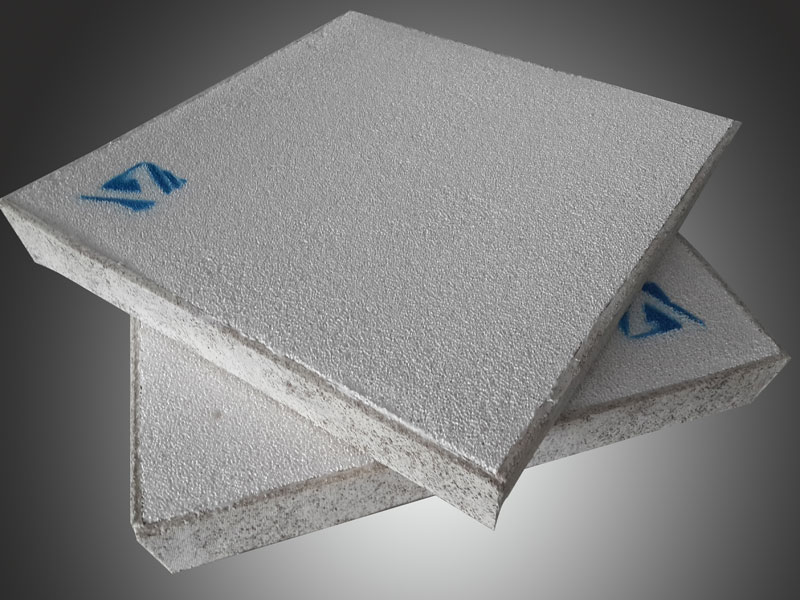
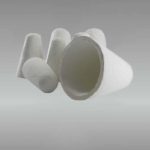
ceramic foam filter
Why Is Thermal Insulation Important in Filter Boxes?
Temperature loss during filtration can destabilize casting conditions.
A properly insulated filter box helps:
- Maintain molten aluminum fluidity
- Reduce premature solidification risk
- Stabilize filtration efficiency
- Improve process consistency
Modern systems use:
- Ceramic fiber insulation
- Preheating systems
- Insulated covers
- High-performance refractory lining
For stable molten metal transfer, filtration systems are commonly integrated with an insulated ceramic launder system.
Recommended Filtration Parameters for Aluminum Casting
| Casting Process | Recommended Filter PPI | Typical Flow Stability Requirement |
| Standard Billet Casting | 20–30 PPI | Medium |
| High-End Extrusion Billet | 30–50 PPI | High |
| Foil Stock Production | 40–50 PPI | Very High |
| Foundry Aluminum Casting | 10–20 PPI | Medium |
Filter selection should balance:
- Inclusion removal efficiency
- Flow rate
- Pressure stability
- Throughput requirement
Why Does Filter Box Design Affect Casting Quality?
The filter itself is only one part of the system.
Poor box design may create:
- Uneven molten metal distribution
- Dead flow zones
- Excessive turbulence
- Secondary oxidation
A high-quality ceramic foam filter box should provide:
- Stable molten aluminum head pressure
- Smooth flow transition
- Efficient thermal insulation
- Easy filter replacement
- Reliable sealing performance
How Does Filtration Improve Billet Casting Performance?
Cleaner molten aluminum improves downstream processing stability.
Typical Improvements After Effective Filtration
| Quality Indicator | Before Filtration | After Filtration |
| Inclusion Defects | Frequent | Reduced |
| Billet Surface Streaks | Visible | Minimized |
| Extrusion Breakage | Higher risk | Reduced |
| Anodizing Consistency | Unstable | Improved |
| Rolling Surface Quality | Variable | Stable |
In high-speed extrusion lines, inclusion control directly affects die life and extrusion continuity.
Which Aluminum Alloys Require High-Efficiency Filtration?
High-cleanliness filtration is especially important for:
- 6xxx extrusion alloys
- 5xxx magnesium alloys
- Aerospace aluminum alloys
- Can stock alloys
- Electronic aluminum materials
These products require stable metallurgical quality and low inclusion content.
Why Are Online Filtration Systems Preferred?
Inline filtration systems provide several advantages compared with manual or batch filtration methods:
- Continuous treatment
- Stable molten aluminum flow
- Lower contamination risk
- Better process consistency
- Reduced operator variability
Modern aluminum plants increasingly integrate:
- Degassing
- Filtration
- Launder insulation
- Flow control
into one complete molten aluminum treatment system.
How to Choose the Right Ceramic Foam Filter Box?
Selection depends on:
- Casting capacity
- Alloy type
- Target cleanliness level
- Flow rate
- Casting speed
Key considerations include:
| Selection Factor | Importance |
| Thermal insulation performance | High |
| Flow stability | High |
| Filter compatibility | High |
| Maintenance accessibility | Medium |
| Structural durability | High |
For continuous casting operations, long-term stability is usually more important than initial equipment cost.
Why Modern Aluminum Plants Focus on Melt Cleanliness
As aluminum applications move toward:
- Thin-wall extrusion
- Automotive lightweighting
- Aerospace components
- High-speed rolling
- Precision machining
molten aluminum cleanliness requirements continue increasing.
Inclusion control is no longer treated as a secondary process parameter. It directly affects productivity, defect rate, and downstream processing reliability.
A properly designed ceramic foam filter box has become a standard component in modern aluminum melt treatment systems.
AdTech provides integrated molten aluminum filtration solutions including ceramic foam filters, filter boxes, launders, and degassing systems for billet casting and slab casting production lines.
FAQ
1. What does a ceramic foam filter box do?
It removes non-metallic inclusions from molten aluminum before casting.
2. Why is molten aluminum filtration important?
Filtration improves molten aluminum cleanliness and reduces casting defects.
3. What inclusions can ceramic foam filters remove?
They remove oxide films, spinel particles, refractory fragments, and suspended contaminants.
4. What does PPI mean in ceramic foam filters?
PPI refers to pores per inch and indicates filter pore density.
5. Which filter PPI is best for billet casting?
20–30 PPI is commonly used for standard billet casting applications.
6. Can filtration remove hydrogen from molten aluminum?
No. Hydrogen removal requires a degassing system.
7. Why is filtration combined with degassing?
Degassing removes dissolved gas, while filtration removes solid inclusions.
8. Does filtration improve anodizing quality?
Yes. Cleaner molten aluminum reduces surface defects and streaking.
9. What materials are ceramic foam filters made from?
Common materials include alumina, silicon carbide, and zirconia.
10. Is online filtration better than batch filtration?
Yes. Online systems provide more stable continuous molten aluminum treatment.