Global primary aluminum production reached approximately 72 million metric tons in 2025, with the top 10 aluminum companies controlling over 43% of total output. This ranking evaluates the world’s largest aluminium producers using verified annual smelting capacity, FY2025 revenue data, vertical integration depth, and downstream manufacturing reach.
Aluminum is the second most consumed metal after steel, with demand accelerating across electric vehicles, renewable energy infrastructure, aerospace, packaging, and data center construction. Choosing a reliable aluminum supplier — for structural extrusion profiles, coil stock, high-purity ingots, or automotive sheet — requires a clear understanding of each producer’s operational strengths, cost position, carbon profile, and geographic logistics.
This guide reflects production figures through Q1 2026, publicly reported FY2025 financials, and operational capacity updates across bauxite mining, alumina refining, and primary smelting.
For more knowledge about the aluminum purification industry, visit our website.
Quick Comparison: World’s Largest Aluminum Producers (2025–2026)
| Rank | Company | Headquarters | Primary Al Capacity (MT/year) | Est. Revenue (FY2025) | Core Advantage |
|---|---|---|---|---|---|
| 1 | China Hongqiao Group | Shandong, China | ~6.7 million | $34B+ | Largest single producer globally |
| 2 | Aluminum Corp. of China (Chalco) | Beijing, China | ~6.2 million | $31B+ | Full state-backed value chain |
| 3 | Rusal (EN+ Group) | Moscow, Russia | ~3.9 million | $13.5B+ | 90%+ hydropower, lowest carbon top-5 |
| 4 | Rio Tinto Aluminium | Melbourne, Australia | ~3.2 million | $12B+ | ELYSIS inert anode technology co-developer |
| 5 | Alcoa Corporation | Pittsburgh, USA | ~2.7 million | $11.2B+ | Hall-Héroult process originator |
| 6 | Emirates Global Aluminium (EGA) | Abu Dhabi, UAE | ~2.7 million | $8B+ | Proprietary DX+ Ultra smelting tech |
| 7 | Hindalco Industries (Novelis) | Mumbai, India | ~1.5M primary + 4.3M rolled | $25B+ | World’s #1 aluminum rolling & recycling |
| 8 | Norsk Hydro | Oslo, Norway | ~2.2 million | $17B+ | Global sustainability benchmark, extrusion leader |
| 9 | Vedanta Aluminium | New Delhi, India | ~2.4 million | $7B+ (Al segment) | India’s largest, single-site smelter record |
| 10 | South32 | Perth, Australia | ~5.2M alumina (upstream focus) | $8.2B+ | Critical alumina feedstock supplier |
Note: Revenue figures reflect total corporate or segment revenue where aluminum constitutes the primary business. MT = metric tons.
10 top aluminum around the world
1. China Hongqiao Group — The World’s Largest Aluminum Producer
Headquarters: Zouping, Shandong Province, China
Founded: 1994
Primary Aluminum Output (2025): ~6.7 million metric tons
Employees: 82,000+
China Hongqiao Group has held the title of the single largest aluminum manufacturer in the world by primary production volume since 2015, when it surpassed Rusal. In 2025, the company widened this lead further through continued capacity ramp-up at its Yunnan Province hydropower-linked smelters.
Operational Model
Hongqiao’s dominance rests on a vertically integrated structure that controls captive power generation, alumina refining (through subsidiary Weiqiao Alumina & Power), carbon anode production, and primary smelting. This integration delivers a production cost estimated at $1,400–$1,550 per ton of primary aluminum — among the lowest globally, compared to the industry average of approximately $1,850–$2,050/ton in 2025.
The Yunnan Transition
The most strategically significant development in Hongqiao’s recent history is its ongoing smelter relocation from coal-intensive Shandong Province to Yunnan Province, where abundant hydroelectric resources enable substantially lower carbon emissions per ton. By end of 2025, Hongqiao had relocated or newly commissioned approximately 2.0 million MT of annual capacity in Yunnan, reducing the company’s overall carbon intensity by an estimated 18–22% compared to 2020 levels.
This transition directly responds to:
- Chinese central government carbon neutrality mandates (targeting peak emissions before 2030)
- EU Carbon Border Adjustment Mechanism (CBAM) pricing, which entered its definitive phase in January 2026
- Increasing procurement requirements from multinational buyers specifying carbon thresholds
Product Portfolio
- Primary aluminum ingots (A00 grade, 99.7% purity)
- Aluminum alloy ingots for automotive and die-casting applications
- Alumina (Weiqiao subsidiary)
- Aluminum billets and slab ingots for downstream processors
Procurement Perspective
Hongqiao offers unmatched volume and cost competitiveness. However, its coal-power legacy (still approximately 60–65% of total smelting energy in 2025) creates CBAM exposure for European importers and ESG compliance complexity for multinational buyers with Scope 3 reporting obligations. For volume-driven procurement with less emphasis on verified low-carbon credentials, Hongqiao remains the default option at global scale.
2. Aluminum Corporation of China (Chalco)
Headquarters: Beijing, China
Founded: 2001 (listed entity; parent Chinalco established 1999)
Primary Aluminum Output (2025): ~6.2 million metric tons (consolidated group)
Chalco, the publicly listed subsidiary of state-owned Chinalco, functions as the second-largest aluminum company globally and the largest state-controlled aluminum enterprise. Its competitive position derives from state-directed resource access, subsidized energy inputs, and strategic bauxite concessions spanning three continents.
Full Value Chain Integration
Chalco controls every stage of the aluminum supply chain:
- Bauxite mining: Domestic operations in Shanxi, Henan, and Guizhou provinces, plus major stakes in Guinea’s Boffa project (estimated 1 billion+ ton reserves)
- Alumina refining: Over 19 million MT annual alumina capacity (2025), making it one of the world’s top two alumina producers
- Primary smelting: Distributed across multiple Chinese provinces with increasing hydro-powered allocation in Yunnan and Guizhou
- Fabrication: Flat-rolled products, foil, and industrial-grade aluminum sheet through Chalco Aluminum Fabrication subsidiaries
Guinea: The Bauxite Security Play
As domestic Chinese bauxite ore grades continue to decline (average Al₂O₃ content of Chinese bauxite is approximately 55–60%, versus 45–50% for Guinean lateritic bauxite, which offers simpler processing despite lower headline grades), Guinea’s reserves — the world’s largest at an estimated 7.4 billion metric tons — have become central to China’s aluminum raw material strategy.
Chalco’s Boffa project, combined with affiliated infrastructure investments in rail and port facilities, positions the company to secure long-term alumina feedstock independent of domestic resource depletion or import-price volatility.
Assessment
For institutional buyers and sovereign procurement entities requiring state-backed counterparty reliability and large-volume alumina or primary aluminum supply, Chalco provides a level of scale and institutional backing that privately held producers cannot replicate.
3. Rusal
Headquarters: Moscow, Russia
Founded: 2000 (merged to form UC Rusal in 2007)
Primary Aluminum Output (2025): ~3.9 million metric tons
Parent Company: EN+ Group (majority shareholder)
Rusal remains the largest aluminum producer outside of China and the third-largest globally. The company operates smelters across Siberia (Krasnoyarsk, Bratsk, Sayanogorsk, Irkutsk, Novokuznetsk), with additional international operations in Sweden (Kubal), Nigeria (Alscon), and Ireland (Aughinish Alumina refinery).
The Hydropower Distinction
Rusal’s single most important competitive attribute is its power source profile: approximately 90% of its primary aluminum is produced using hydroelectric power from massive Siberian installations on the Angara and Yenisei river systems. This yields a carbon footprint of approximately 2.3 tons CO₂ per ton of aluminum — among the lowest in the world, and roughly 5–7x lower than the average Chinese coal-powered smelter.
The company commercializes this advantage through its ALLOW brand, a certified low-carbon aluminum product with verified carbon intensity below 4.0 t CO₂/t Al. ALLOW aluminum has gained acceptance among European automotive OEMs, beverage can producers, and building products manufacturers seeking verified Scope 3 emissions reductions.
Geopolitical Complexity (2025–2026 Status)
The geopolitical situation continues to shape Rusal’s market access. As of Q1 2026:
- Rusal itself remains not directly sanctioned by the EU or United States, though its parent EN+ Group and associated individuals face various restrictions
- The LME continues to accept Rusal-brand aluminum for warrant, though Russian-origin metal constitutes a disproportionate share of LME warehouse stocks as many Western buyers voluntarily avoid it
- The CME Group (COMEX) imposed delivery restrictions on Russian-origin aluminum beginning in 2024
- The UK imposed a 35% import tariff on Russian-origin aluminum in 2024, and the EU is considering similar measures
For procurement organizations: Rusal aluminum offers an exceptional price-to-carbon-footprint ratio, but sourcing it requires careful navigation of evolving sanctions, reputational considerations, and customer-facing ESG commitments. Many European and North American buyers have shifted to alternative low-carbon sources (Hydro, Rio Tinto, Alcoa) despite the price premium.
Product Range
- Primary aluminum (ingots, T-bars, slabs)
- Aluminum wire rod for electrical conductors
- Foundry alloys and automotive alloys
- Alumina (Aughinish, Ireland; WINDALCO, Jamaica; Nikolaev, Ukraine — currently non-operational)
- ALLOW low-carbon aluminum (<4t CO₂/t Al)
4. Rio Tinto Aluminium
Headquarters: Melbourne, Australia (dual-listed entity: London/Melbourne)
Founded: 1902 (aluminum division primarily via 2007 Alcan acquisition)
Primary Aluminum Output (2025): ~3.2 million metric tons
Revenue (Al segment FY2025): ~$12 billion
Rio Tinto’s aluminum business — constructed largely through its $38 billion acquisition of Alcan in 2007 — operates one of the most geographically diversified smelting portfolios globally. Major smelting operations include:
- Kitimat (British Columbia, Canada) — 420,000 MT/year, powered by Kemano hydroelectric facility
- Arvida, Alma, Laterrière, Grande-Baie (Quebec, Canada) — combined ~1.0 million MT/year, 100% hydropower
- Dunkerque (France) — 280,000 MT/year, one of Europe’s largest smelters
- ISAL (Iceland) — 210,000 MT/year, geothermal/hydropower
- Tiwai Point (New Zealand) — 350,000 MT/year (extended to 2030 after review)
- Tomago (Australia) — 280,000 MT/year (52% stake)
- Boyne Island (Australia) — 270,000 MT/year (59% stake)
ELYSIS: The Decarbonization Breakthrough
Rio Tinto, in joint venture with Alcoa (through their ELYSIS partnership, backed by Apple and the Governments of Canada and Quebec), is developing inert anode smelting technology that eliminates direct CO₂ emissions from the electrolytic reduction process entirely, replacing carbon dioxide output with pure oxygen.
As of 2025, ELYSIS has operated commercial-scale prototype cells at the Alma smelter in Quebec and has commenced construction of an industrial demonstration facility targeting commissioning in 2027. If successfully commercialized at scale, this technology represents the most significant advancement in aluminum smelting since Charles Martin Hall and Paul Héroult independently developed the electrolytic process in 1886.
Rio Tinto has announced that ELYSIS technology will be retrofitted into existing smelters, potentially offering a decarbonization pathway that does not require greenfield construction.
Bauxite and Alumina
Rio Tinto operates the world’s largest bauxite mine at Weipa (Queensland, Australia, ~35 million MT/year), plus operations at Gove (Australia) and through the CBG consortium in Guinea. Alumina refineries at Yarwun (Queensland) and Vaudreuil (Quebec) supply both captive and merchant markets.
Buyer Assessment
Rio Tinto Aluminium is a primary choice for organizations that require:
- Investment-grade counterparty reliability
- Low-carbon aluminum from predominantly hydro-powered smelters
- Premium aluminum slab for automotive body sheet and can stock applications
- Full supply chain traceability and ASI (Aluminium Stewardship Initiative) certification
5. Alcoa Corporation
Headquarters: Pittsburgh, Pennsylvania, USA
Founded: 1888 (as The Pittsburgh Reduction Company)
Primary Aluminum Output (2025): ~2.7 million metric tons
Revenue (FY2025): ~$11.2 billion
Alcoa occupies a singular position in the aluminum industry: it is the company that created the commercial aluminum industry itself. Charles Martin Hall’s 1886 electrolytic reduction patent — filed just two months before Paul Héroult’s identical discovery in France — became the foundation of The Pittsburgh Reduction Company, later renamed Alcoa (Aluminum Company of America).
Portfolio After the 2016 Separation
Following its 2016 separation into Alcoa Corporation (upstream: mining, refining, smelting) and Arconic (downstream), the current Alcoa focuses on the upstream value chain. Key assets in 2025–2026:
Bauxite:
- Juruti (Pará, Brazil)
- Huntly and Willowdale (Western Australia) — operated via AWAC (Alcoa World Alumina and Chemicals, 60% Alcoa / 40% Alumina Limited)
Alumina:
- Kwinana and Wagerup (Western Australia)
- San Ciprián (Spain) — restarted in 2024 after curtailment
Primary Smelting:
- Fjardaál (Iceland) — 100% hydropower/geothermal
- Lista and Mosjøen (Norway) — 100% hydropower
- Bécancour and Deschambault (Quebec, Canada) — 100% hydropower
- Alumar (São Luís, Brazil) — restarted 2022, ~80% hydropower
Sustana and EcoSource Brands
Alcoa has developed branded product tiers:
- Sustana™: Low-carbon primary aluminum with certified carbon footprint ≤2.5 t CO₂/t Al (from hydro-powered smelters) — currently the lowest branded carbon threshold among major producers
- EcoSource™: Alumina produced using process improvements including mechanical vapor recompression (MVR), reducing refining-stage carbon intensity
Cost Position and Competitiveness
Alcoa has undergone aggressive portfolio rationalization over the past decade, closing or curtailing high-cost operations (Intalco, Washington; Point Henry, Australia; Poços de Caldas, Brazil; San Ciprián smelter, Spain). Its 2024 acquisition of Alumina Limited (the 40% AWAC partner) for ~$2.2 billion consolidated full ownership of its Australian bauxite and alumina assets, improving margin capture.
Current estimated all-in production cost: approximately $1,700–$1,900/ton, placing Alcoa in the second quartile of the global cost curve. Not the cheapest producer, but competitive among Western, hydro-powered smelters.
Procurement Relevance
For North American buyers prioritizing supply chain resilience, allied-nation sourcing (relevant under friend-shoring and critical minerals policy frameworks), and verified low-carbon credentials, Alcoa is a primary option. Its Sustana brand at ≤2.5 t CO₂/t Al currently offers the most stringent verified carbon standard available at commercial scale.
6. Emirates Global Aluminium (EGA)
Headquarters: Abu Dhabi, United Arab Emirates
Founded: 2014 (merger of DUBAL and EMAL)
Primary Aluminum Output (2025): ~2.7 million metric tons
EGA is the largest industrial company in the UAE outside of oil and gas, and by some measures the world’s largest “premium aluminium” producer — over 70% of its output is sold as value-added foundry alloys, extrusion billets, and rolling ingots rather than standard P1020 commodity ingots.
Proprietary Smelting Technology
EGA is one of very few aluminum producers that developed its own reduction cell technology rather than licensing from established providers. The company’s DX+ Ultra technology, operating at approximately 460 kA line current, achieves:
- Current efficiency above 95.5%
- Specific energy consumption below 12,900 kWh/ton
- Anode effect frequency among the lowest in the industry
This technology has been licensed to Ma’aden Aluminium in Saudi Arabia for its 740,000 MT/year smelter — a notable case of Middle Eastern industrial technology export.
In 2025, EGA announced development of its next-generation DX+ Ultra+ cells targeting 500 kA operation with further energy efficiency gains.
Al Taweelah Alumina Refinery and Guinea Mine
EGA operates a fully integrated mine-to-metal value chain:
- Guinea Alumina Corporation (GAC): Bauxite mine in Boké region, Guinea, producing ~12 million MT/year of export-grade bauxite
- Al Taweelah Alumina Refinery: 2 million MT/year capacity, located adjacent to the Khalifa Industrial Zone in Abu Dhabi, processing GAC bauxite into smelter-grade alumina
This vertical integration — rare among non-Chinese producers — provides EGA with raw material cost security and supply chain independence.
Solar Aluminum Initiative
In 2021, EGA became the first company in the world to produce commercial aluminum using solar energy — a pilot at its Jebel Ali smelter powered by the Mohammed bin Rashid Al Maktoum Solar Park. By 2025, EGA’s CelestiAL solar aluminum brand had expanded, with the company targeting 40%+ renewable energy share in its power mix by 2030.
Buyer Relevance
EGA is particularly competitive for buyers in:
- Middle East, South Asia, Southeast Asia, and East Africa (logistics advantage)
- Markets requiring high-quality aluminum extrusion billet (EGA billets are widely regarded among extruders as top-tier in surface quality and extrudability)
7. Hindalco Industries (Aditya Birla Group / Novelis)
Headquarters: Mumbai, India
Founded: 1958
Primary Aluminum Output (India, 2025): ~1.5 million metric tons
Novelis FRP Capacity: ~4.3 million metric tons
Consolidated Revenue (FY2025): ~$25 billion
Hindalco Industries presents a dual identity unmatched in the aluminum sector. Its Indian upstream operations constitute a major primary aluminum producer, while its wholly-owned subsidiary Novelis Inc. (acquired in 2007 for $6 billion) is the world’s largest aluminum flat-rolled products (FRP) company and the world’s largest aluminum recycler.
Novelis: Downstream Dominance
Novelis, headquartered in Atlanta, Georgia, operates rolling mills across four continents:
- North America: Oswego (NY), Logan (KY), Terre Haute (IN), Pinda (Brazil — South America operations hub)
- Europe: Nachterstedt (Germany), Latchford (UK), Sierre (Switzerland)
- Asia: Ulsan (South Korea), Changzhou (China)
Key market positions (2025):
- Beverage can sheet: ~60% of North American market, ~40% of global market
- Automotive body sheet (ABS): Supplier to Ford, GM, BMW, Jaguar Land Rover, Audi, multiple EV manufacturers including Rivian and Lucid
- Specialty products: High-specification aluminum coil for building facades, electronics enclosures, industrial heat exchangers
Novelis’s recycled content averaged approximately 63% across its product portfolio in FY2025, with a stated target of 80% by 2030. The company operates dedicated recycling centers that process used beverage cans (UBCs) and automotive scrap back into rolling ingot — a genuine closed-loop system.
Novelis Bay Minette: The $4.1 Billion Bet
Novelis’s most significant current investment is its Bay Minette, Alabama greenfield rolling mill — a $4.1 billion project announced in 2022 and expected to begin production in 2026. This facility will add approximately 600,000 MT/year of rolling capacity, primarily serving beverage can and automotive markets in North America.
This investment signals Novelis’s conviction that North American aluminum demand will continue to grow substantially, driven by lightweighting mandates, EV adoption, and sustainability-driven packaging shifts from plastic to aluminum.
India Operations
Hindalco’s Indian smelters (Renukoot, Hirakud, Aditya Aluminium in Odisha) operate with captive thermal power, providing cost insulation. The company also holds significant copper operations (Birla Copper) and a growing specialty chemicals portfolio.
Strategic Position
Hindalco/Novelis is the only company on this list where downstream processing and recycling capacity vastly exceed upstream smelting volume. For buyers whose primary need is precision-rolled aluminum sheet or coil rather than primary ingot, Novelis is frequently the default global supplier.
8. Norsk Hydro ASA
Headquarters: Oslo, Norway
Founded: 1905
Primary Aluminum Output (2025): ~2.2 million metric tons (including equity-accounted positions)
Revenue (FY2025): ~$17 billion
Listed on: Oslo Børs (NHY), OTC Markets (NHYDY)
Norsk Hydro — commonly referred to as Hydro — is widely considered the global benchmark for sustainable aluminum production and the most fully integrated aluminum company among Western producers. Originally established as a fertilizer and hydroelectric power company, Hydro has evolved into a comprehensive aluminum value chain operator with significant energy assets.
Business Architecture (2025)
Hydro operates through five principal business areas:
- Hydro Bauxite & Alumina
- Paragominas bauxite mine (Brazil) — ~10 million MT/year
- Alunorte alumina refinery (Barcarena, Brazil) — approximately 6.4 million MT/year, the largest alumina refinery outside China and among the top three globally
- Hydro Aluminium Metal
- Norwegian smelters: Sunndal (primary, ~400K MT), Karmøy (~180K MT + technology pilot), Husnes, Høyanger, Årdal — all 100% hydropower
- Qatalum (Qatar, 50% JV) — 625,000 MT/year, gas-powered
- Equity positions in Albras (Brazil, 51%), Alouette (Canada, 20%), Tomago (Australia, 12.4%)
- Hydro Metal Markets
- Global aluminum trading, sourcing, and recycling operations
- Remelting facilities processing post-consumer scrap
- Hydro Extrusions
- The world’s largest aluminum extrusion company (acquired through 2017 Sapa merger)
- Over 100 extrusion plants in 40 countries
- Products: architectural systems, automotive structural components, precision tubing, industrial profiles
- Hydro Energy
- ~10 TWh/year proprietary hydropower generation in Norway
- Provides cost-stable, zero-carbon electricity to Norwegian smelters
Branded Product Lines
Hydro’s product branding is among the most developed in the industry:
- REDUXA 4.0: Primary aluminum with certified carbon footprint ≤4.0 kg CO₂e/kg Al
- CIRCAL 75R: Post-consumer recycled aluminum containing minimum 75% post-consumer scrap — one of the highest verified recycled-content products available
- CIRCAL 100R: 100% post-consumer recycled content (limited volumes, launched 2024)
Karmøy Technology Pilot
The Karmøy Technology Pilot in Norway operates full-scale HAL4e reduction cells achieving energy consumption of approximately 12,300 kWh/ton — the lowest verified specific energy consumption of any industrial-scale aluminum smelting operation worldwide. This technology is being prepared for deployment across Hydro’s Norwegian smelter fleet.
Assessment
For procurement organizations requiring custom aluminum extrusion profiles with full traceability, verified carbon data, and a supplier capable of managing complex multi-site architectural or automotive programs, Hydro represents the reference standard globally.
9. Vedanta Aluminium (Vedanta Limited)
Headquarters: New Delhi, India
Founded: Vedanta Limited established 1976; aluminum operations scaled from 2001
Primary Aluminum Output (2025): ~2.4 million metric tons
Parent: Vedanta Resources Limited (London-based, Anil Agarwal family)
Vedanta Aluminium, a division of Vedanta Limited, has emerged as India’s largest aluminum producer and a significant global player. Its inclusion in this ranking — replacing some lists’ inclusion of smaller European or North American producers — reflects the company’s rapid capacity expansion over the past decade.
BALCO and Jharsuguda
Vedanta’s aluminum operations center on two primary smelting complexes:
- Jharsuguda Smelter (Odisha): Approximately 1.8 million MT/year capacity, making it one of the largest single-location aluminum smelters in the world. The plant operates with captive thermal power (coal-based) from the 3,600 MW Jharsuguda power plant.
- BALCO (Bharat Aluminium Company, Korba, Chhattisgarh): ~575,000 MT/year capacity with captive power. Vedanta holds a 51% stake (Government of India holds 49%).
The combined complex positions Vedanta as a top-10 global producer by volume — a status that would have been unthinkable for an Indian producer a decade ago.
Alumina: Lanjigarh Refinery Expansion
Vedanta’s Lanjigarh alumina refinery in Odisha is undergoing expansion from 2 million MT/year to 5 million MT/year, targeting self-sufficiency in alumina feedstock. Historically, the company has been a significant alumina importer, and this expansion — if completed on schedule (targeted 2026) — would materially improve cost positioning and supply chain resilience.
Value-Added Products
Vedanta has invested in downstream capability:
- Aluminum billets (extrusion-grade)
- Wire rod for electrical conductors
- Flat-rolled products (through partnerships)
- Alloy ingots for die-casting — growing emphasis on automotive sector
Sustainability Challenge
Vedanta’s primary sustainability challenge is its near-total reliance on coal-fired power. The Jharsuguda complex, while operationally efficient, carries a carbon intensity of approximately 14–16 t CO₂/t Al — among the highest in the global industry. The company has announced renewable energy procurement targets (including a 2,000 MW solar commitment), but meaningful carbon intensity reduction at existing smelters will require either fuel switching or carbon capture — both capital-intensive propositions.
For Indian domestic market buyers and South Asian regional procurement, Vedanta offers competitive pricing and logistics advantages. For carbon-sensitive international markets, the high carbon intensity remains a significant limitation.
10. South32 Limited
Headquarters: Perth, Western Australia
Founded: 2015 (demerged from BHP)
Alumina Production (2025): ~5.2 million metric tons
Revenue (FY2025): ~$8.2 billion
Listed on: ASX (S32), LSE, JSE
South32’s inclusion requires contextual framing. The company is not primarily a metal smelter — it divested its Mozal smelter stake (Mozambique) and its economic interest in Hillside Aluminium (South Africa). However, South32 remains one of the world’s most important alumina producers, and alumina is the essential intermediate feedstock without which primary aluminum production is impossible.
Core Aluminium Value Chain Assets
- Worsley Alumina (Western Australia): 86% ownership, ~4.6 million MT/year capacity. Worsley consistently ranks in the first quartile of the global alumina cost curve, benefiting from high-grade bauxite feed, efficient refinery operations, and proximity to port.
- MRN Bauxite (Brazil): Minority stake in Mineração Rio do Norte, one of Brazil’s largest bauxite mining operations.
- Hillside Aluminium (South Africa): While South32 divested its direct economic interest, it maintains management and operational oversight of this 720,000 MT/year smelter.
Why Alumina Producers Matter
The global alumina market is structurally distinct from the aluminum metal market and frequently experiences independent supply tightness. In 2024–2025, alumina prices surged above $700/ton (FOB Australia) — more than double 2023 levels — driven by refinery disruptions in Australia, export restrictions from Indonesia, and Chinese refinery maintenance. These price spikes directly impact smelter profitability globally, as alumina constitutes approximately 30–35% of primary aluminum production cost.
South32’s Worsley operation, with its low-cost positioning and estimated 50+ year reserve life, provides critical supply security for smelters in Asia, the Middle East, and globally that depend on merchant alumina.
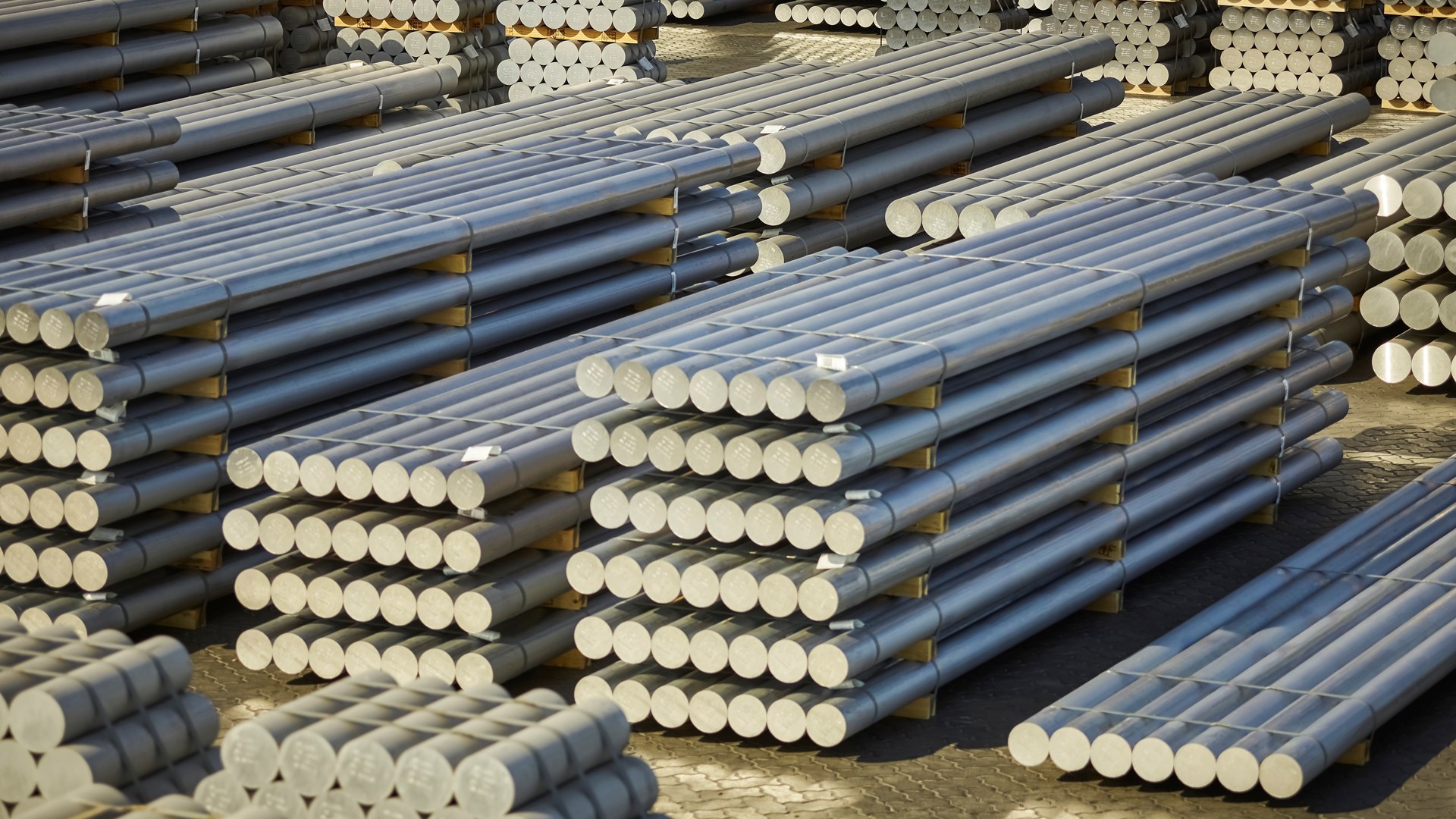
aluminum billets
Industry Trends Reshaping the Top Aluminum Companies (2025–2030)
Decarbonization Under CBAM
The EU’s Carbon Border Adjustment Mechanism entered its definitive phase on January 1, 2026, requiring importers of aluminum into the EU to purchase CBAM certificates at the EU Emissions Trading System (ETS) carbon price — approximately €70–€90/ton CO₂ in early 2026. For aluminum produced with coal-fired power (carbon intensity ~15 t CO₂/t Al), this adds an estimated €1,050–€1,350 per ton of aluminum to the landed cost in Europe.
This regulatory shift structurally advantages hydro-powered producers (Hydro, Rusal, Rio Tinto, Alcoa’s Nordic operations, EGA’s solar-linked production) and creates a two-tier global aluminum market: low-carbon aluminum trading at a premium in regulated markets, and high-carbon aluminum flowing to unregulated markets at discount.
Recycled Aluminum Demand
Secondary aluminum requires only ~5% of the energy of primary production. Companies investing in closed-loop recycling systems — Novelis, Hydro, Alcoa, and Real Alloy (independent recycler) — are positioned to capture the growing “recycled content premium” as more OEMs specify minimum recycled content percentages. Novelis targets 80% recycled content by 2030; Hydro’s CIRCAL 75R already demonstrates commercial viability at 75%+ post-consumer content.
Electric Vehicle Lightweighting
The International Aluminium Institute projects automotive aluminum demand will grow over 40% between 2025 and 2030, driven almost entirely by EV adoption. Battery enclosures, body-in-white structures, motor housings, and structural crash management systems increasingly use automotive-grade aluminum sheet and extrusions. This demand disproportionately benefits flat-rolled specialists (Novelis, Hydro, Constellium) and high-quality billet producers (EGA, Hydro Extrusions).
Supply Chain Regionalization and Friend-Shoring
Geopolitical fragmentation has accelerated supply chain regionalization. The US Inflation Reduction Act (IRA), EU Critical Raw Materials Act, and various bilateral trade agreements increasingly incentivize sourcing from allied nations. This trend benefits:
- North America: Alcoa, Rio Tinto (Canada operations), Novelis (US rolling mills)
- Europe: Hydro, Rio Tinto (France, Iceland), Alcoa (Norway, Iceland)
- Middle East/India: EGA, Hindalco, Vedanta
Chinese and Russian producers face increasing access friction in Western markets, though they remain dominant in Asian and developing-market trade flows.
Data Center and AI Infrastructure
An emerging demand driver: the rapid global buildout of data centers and AI computing infrastructure requires substantial aluminum for heat exchangers, server rack structures, cable management systems, and building cladding. While not yet matching automotive or packaging volumes, this sector represents a high-growth, specification-intensive demand segment where premium-quality aluminum extrusions and thermal management products command strong margins.
How to Select the Right Global Aluminum Supplier
Effective aluminum procurement at industrial scale involves evaluation across multiple dimensions:
1. Volume and Contract Structure
For annual requirements below ~5,000 MT, direct procurement from the top-10 producers is generally impractical — authorized distributors, trading houses (Glencore, Trafigura, Marubeni), and regional stockists are more appropriate channels. Above 10,000 MT annually, direct supply agreements with producers become standard, often structured as annual contracts with LME-linked pricing plus geographic premium plus product premium.
2. Product Specification
Commodity-grade P1020 ingot (99.7% Al) is available from virtually all major producers. Differentiation increases sharply for:
- Specific alloy compositions (e.g., 6061-T6 or 7075 aerospace alloys)
- Tight gauge tolerance coil for automotive stamping
- High-surface-quality extrusion billet
- Conductor-grade wire rod (EC grade, 99.6%+ Al)
3. Carbon Footprint
If your organization faces CBAM obligations, Scope 3 reporting requirements (GHG Protocol), or customer-mandated carbon thresholds, verified low-carbon aluminum becomes a procurement criterion rather than an option. Available options ranked by certified carbon intensity:
| Brand | Producer | Certified Carbon Intensity |
|---|---|---|
| Sustana | Alcoa | ≤2.5 t CO₂/t Al |
| ALLOW | Rusal | <4.0 t CO₂/t Al |
| REDUXA 4.0 | Hydro | ≤4.0 t CO₂/t Al |
| RenewAl | Rio Tinto | <8.0 t CO₂/t Al (varies by smelter) |
| CelestiAL | EGA | Solar-powered production (emerging) |
4. Logistics and Lead Time
Ocean freight costs for aluminum typically range $40–$120/ton depending on route, and transit times of 3–6 weeks are common for intercontinental shipments. Regional supplier selection can yield meaningful cost and working capital advantages.
5. Counterparty Risk
Long-term supply agreements (3–5 years) require evaluation of producer financial stability, sovereign risk, and sanctions exposure. Investment-grade, publicly listed companies (Rio Tinto, Alcoa, Hydro, Hindalco) offer the strongest contractual security.
Frequently Asked Questions
1. Which is the No. 1 aluminum company in the world in 2025?
China Hongqiao Group is the world’s largest aluminum producer by primary production volume, with approximately 6.7 million metric tons of annual output in 2025. By consolidated revenue including downstream operations, Hindalco Industries (incorporating Novelis) reports the highest total revenue among aluminum-focused companies.
2. What country produces the most aluminum?
China dominates global aluminum production, accounting for approximately 59–60% of total primary output (~42–43 million MT in 2025). India has risen to the second-largest producing country (approximately 4.2 million MT), followed by Russia, Canada, the United Arab Emirates, Australia, Bahrain, and Norway.
3. What is the difference between aluminum and aluminium?
No material difference exists. “Aluminum” is standard in American English; “aluminium” is used in British English and most international contexts. Both denote the same element (atomic number 13, symbol Al). IUPAC officially recognizes “aluminium” as the standard chemical name, while “aluminum” is accepted as an alternative.
4. Is recycled aluminum as good as primary aluminum?
Aluminum is infinitely recyclable without degradation of intrinsic properties. Once remelted and cast to a specified alloy composition — for example, 6063 architectural alloy or 3004 can body stock — recycled aluminum exhibits identical mechanical properties, corrosion resistance, and formability as primary aluminum of the same specification. The energy saving is approximately 95% compared to primary production.
5. What is green aluminum or low-carbon aluminum?
“Green aluminum” refers to primary aluminum produced predominantly with renewable energy sources (hydropower, solar, wind) rather than fossil fuels. While no universal regulatory standard exists, industry conventions classify aluminum as “low-carbon” when its production carbon footprint falls below 4.0 tons CO₂ per ton of aluminum. The global average carbon intensity is approximately 12–16 t CO₂/t Al, heavily influenced by the high proportion of coal-powered Chinese production.
6. How much does aluminum cost in 2025–2026?
LME aluminum prices fluctuated between approximately $2,400–$2,800 per metric ton through 2025 and into Q1 2026. Physical premiums (Midwest premium in the US, duty-paid premium in Europe, CIF Japan premium in Asia) add $100–$400/ton depending on region, product form, and market conditions. Low-carbon certified aluminum commands an additional premium of $20–$100/ton above standard product.
Conclusion
The global aluminum industry in 2025–2026 is defined by a convergence of structural forces: CBAM-driven decarbonization economics, supply chain regionalization, EV-driven demand growth, and circular economy adoption. The top 10 aluminum companies in the world each occupy distinct competitive positions within this shifting landscape — from Hongqiao’s unrivaled volume to Hydro’s sustainability leadership, from Novelis’s downstream recycling dominance to EGA’s technology self-sufficiency.
For procurement professionals, manufacturing engineers, and supply chain strategists, understanding these distinctions is no longer optional — it is a core competency. The right aluminum supplier selection increasingly involves trade-offs between cost, carbon compliance, supply security, and geopolitical risk that did not exist a decade ago.
Whether your requirement is high-purity aluminum ingot
for electrical conductors, automotive-grade flat-rolled coil, architectural extrusion profiles, or specification-critical aerospace plate, the producers profiled in this guide represent the primary global-scale options. Evaluate them not only on price per ton, but on total cost of ownership — including carbon costs, logistics, counterparty risk, and alignment with your organization’s stated sustainability commitments.