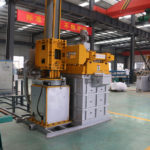
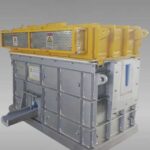
The LHC (Low Head Composite) casting system is a low-metal-level direct chill (DC) casting technology used to produce aluminum rolling ingots and slabs. By maintaining a relatively low metal level in the mold and using a graphite-lined mold interface with controlled cooling, LHC casting can improve ingot surface quality, reduce surface defects and segregation-related problems, and lower the amount of material removed during scalping and hot-rolling edge trimming.
For aluminum producers making large rolling slabs for hot and cold rolling, the quality of the molten aluminum entering the LHC mold is equally important. A typical process therefore combines alloy batching, melting, refining, on-line degassing, ceramic foam filtration, grain refinement, and automated LHC casting.
What Is an LHC Casting System?
LHC stands for Low Head Composite. It is a rolling-ingot casting technology developed for producing high-quality aluminum slabs with a lower metal head than conventional DC casting.
In conventional rolling-ingot DC casting, the metal level in the mold is relatively high. LHC technology uses a much lower metal level, together with a graphite-lined mold and controlled cooling system. Wagstaff, the original developer of LHC technology, describes the system as a rolling-ingot casting technology designed to improve ingot quality and recovery while reducing scalping and edge trimming.
The lower metal head, controlled solidification conditions, and graphite mold interface help produce a more stable casting surface and ingot geometry.
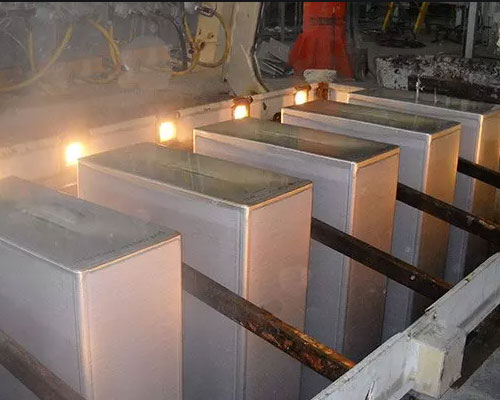
Aluminum ingot casting molds being preheated before molten aluminum casting
How Does LHC Casting Work?
The LHC process is not simply a different mold design. The quality of the final slab depends on the entire process from alloy preparation to solidification.
A typical aluminum rolling-ingot production route is:
Aluminum liquid / remelt ingot / return scrap → Alloy batching → Melting → Refining → Degassing → Filtration → Grain refinement → LHC casting → Sawing → Inspection → Storage
The exact process configuration depends on the alloy, casting equipment, plant layout, and required slab quality.
1. Alloy Batching and Melting
The charge materials are selected according to the required alloy composition. Depending on the plant, the charge may include:
- Electrolytic aluminum liquid
- Remelt aluminum ingots
- Return scrap
- Intermediate alloys
The materials are melted and adjusted to the target chemical composition.
For rolling alloys, chemical composition control is particularly important because defects or composition deviations introduced during melting and casting cannot simply be removed during subsequent rolling.
2. Melt Refining and Temperature Control
After melting, the aluminum is subjected to melt treatment to control hydrogen, non-metallic inclusions, and other impurities.
Typical operations include:
- Furnace refining
- Stirring and homogenization
- Dross removal
- Chemical composition sampling
- Temperature adjustment
- Degassing
- Filtration
The purpose of these operations is to deliver clean and compositionally stable molten aluminum to the casting system.
3. On-Line Grain Refinement
For alloys requiring grain refinement, an aluminum-titanium-boron grain refiner wire can be continuously introduced into the launder before casting.
The grain refiner promotes a finer and more uniform solidification structure, helping control the grain structure of the slab.
The addition rate should be matched to the alloy, casting conditions, melt flow rate, and required metallurgical performance rather than treated as a fixed value for every LHC line.
4. On-Line Degassing
Dissolved hydrogen is one of the main gas-related concerns in molten aluminum.
A rotary on-line degassing unit introduces fine inert-gas bubbles into the melt. Hydrogen transfers from the molten aluminum into these bubbles and is then removed with the gas.
Degassing is therefore an important step before LHC casting, particularly when slab quality requirements are high.
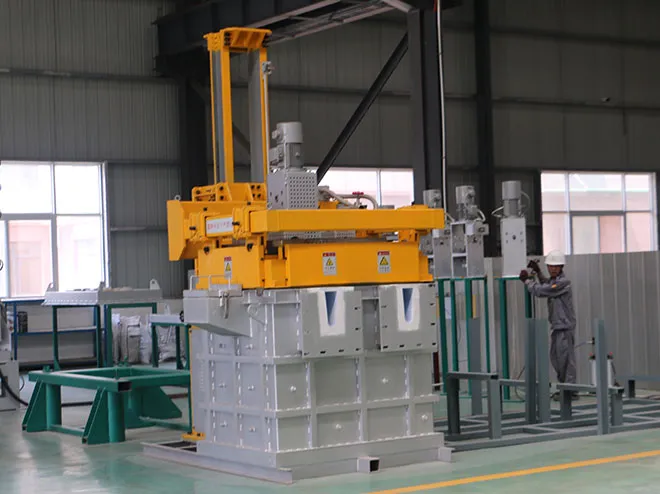
online degassing equipment
5. Ceramic Foam Filtration
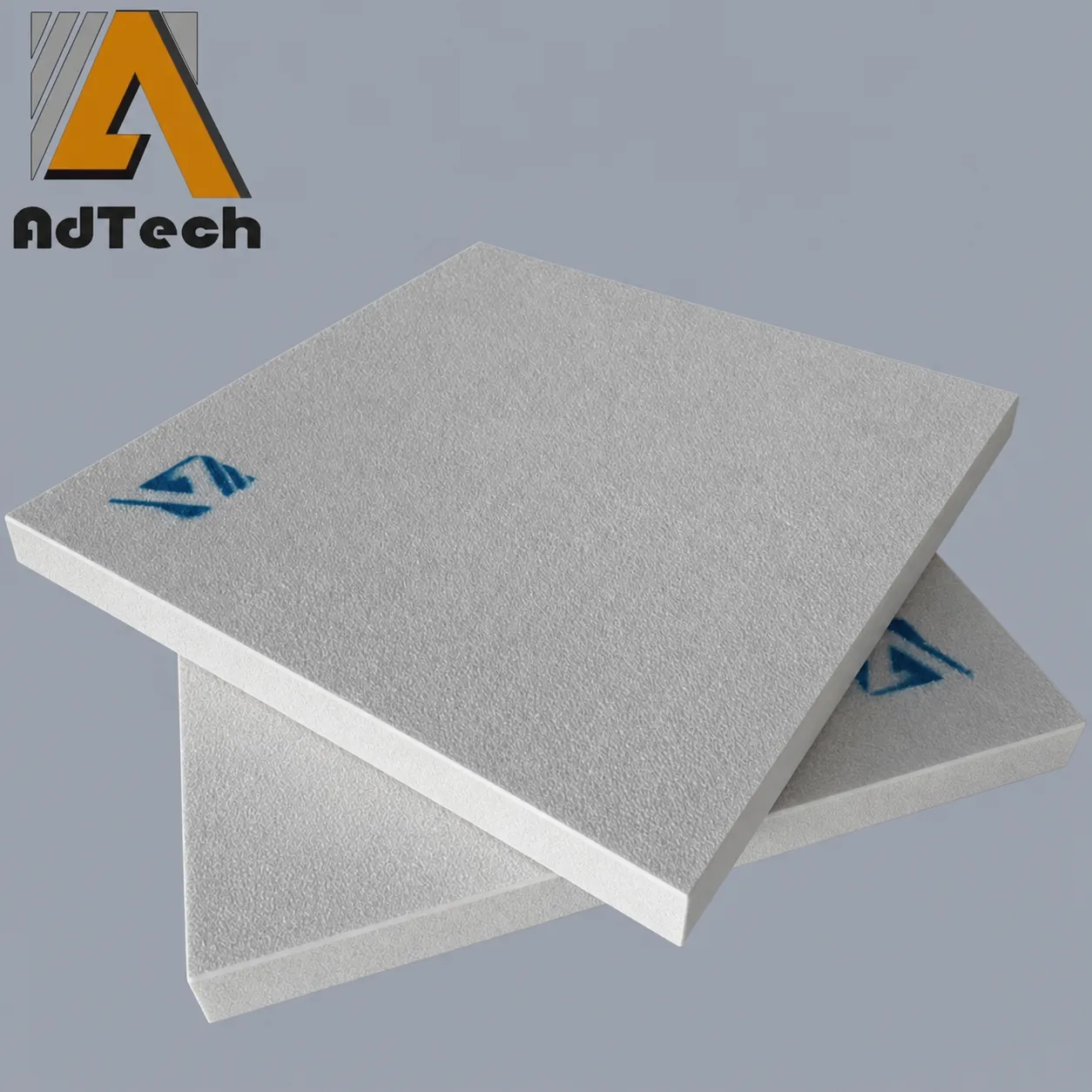
ceramic foam filter from AdTech with expandable sealing gasket
After degassing, the molten aluminum passes through a ceramic foam filter system to remove suspended non-metallic inclusions.
A two-stage CFF filtration arrangement can provide additional filtration capacity and inclusion removal before the melt enters the casting mold.
It is important to distinguish the two processes:
| Treatment | Main purpose |
|---|---|
| On-line degassing | Reduce dissolved hydrogen |
| Ceramic foam filtration | Remove suspended non-metallic inclusions |
| Grain refinement | Control solidification grain structure |
| Temperature control | Maintain suitable casting conditions |
| Chemical adjustment | Meet the required alloy composition |
A clean melt entering the LHC mold provides a better starting point for controlling slab quality.
Learn More About Our Molten-Aluminum Treatment
What Happens Inside an LHC Mold?
The key feature of LHC casting is its low metal head.
The metal level in the mold is significantly lower than that used in conventional DC rolling-ingot casting. In the process described for this application, the metal level is approximately 35–65 mm.
The mold is lined with a graphite ring at the metal-contact area. The graphite provides a smooth mold interface and allows controlled lubrication during casting.
At the same time, the cooling system controls the rate at which heat is extracted from the molten aluminum.
The interaction between:
- Low metal level
- Graphite mold interface
- Metal flow
- Cooling water
- Casting speed
- Melt temperature
- Automated process control
determines the solidification conditions and the resulting ingot quality.
Why Does LHC Use a Graphite Ring?
The graphite ring forms the working interface between the molten aluminum and the mold.
Its functions include:
- Providing a smooth mold surface
- Supporting controlled metal movement along the mold wall
- Reducing friction at the casting interface
- Supporting consistent ingot surface formation
- Reducing the dependence on conventional liquid lubrication
Wagstaff reports that its LHC technology requires very little oil compared with conventional DC casting and can reduce the amount of lubricant entering the casting-water system.
The graphite ring is therefore not simply a wear component. Its dimensional accuracy, surface condition, installation, and lubrication method can all affect casting stability and ingot surface quality.
What Are the Advantages of LHC Casting?
Compared with conventional rolling-ingot DC casting, LHC technology is designed to improve several aspects of slab production.
1. Better Ingot Surface Quality
The low metal level and controlled graphite mold interface help produce a smooth and stable ingot surface.
A better as-cast surface can reduce the amount of material that needs to be removed before rolling.
2. Reduced Scalping and Milling
Surface defects and the near-surface region of a rolling ingot are often removed before hot rolling.
LHC technology is designed to reduce the amount of material removed during this preparation stage. Wagstaff reports significant savings in scalping and edge trimming with LHC-cast ingots.
For the specific LHC application described by AdTech, milling reduction can exceed 50%, while hot-rolling edge trimming can be reduced by more than 15% under the corresponding production conditions. These figures should be treated as process-specific results rather than universal values for every LHC installation.
3. Reduced Bottom Curl and Warpage
Controlled metal level and cooling conditions can improve the geometry of the solidifying ingot.
The LHC process is designed to reduce bottom curl and improve the overall shape of the rolling ingot.
4. Lower Lubricant Consumption
The graphite-lined mold interface reduces the need for conventional lubrication.
Wagstaff states that LHC systems can operate with very low oil consumption compared with conventional DC casting.
5. Better Metal Recovery
Reducing the amount of material removed through scalping and trimming means more of the cast slab can enter the downstream rolling process.
This can improve overall material recovery and reduce the amount of metal returned for remelting.
LHC Casting vs Conventional DC Casting
| Factor | Conventional DC Rolling Ingot Casting | LHC Casting |
|---|---|---|
| Metal level | Higher | Lower |
| Mold interface | Conventional mold arrangement | Graphite-lined interface |
| Lubrication | Relatively higher | Lower lubricant requirement |
| Surface quality | Depends strongly on casting conditions | Designed for improved surface quality |
| Scalping | May be relatively high | Can be reduced |
| Edge trimming | Depends on ingot quality | Can be reduced |
| Process control | Depends on system | Automated control can be integrated |
| Typical application | Rolling ingots and slabs | High-quality rolling ingots and slabs |
The actual performance difference depends on alloy, slab dimensions, casting parameters, mold condition, cooling system, and upstream melt quality.
Why Is Molten Aluminum Quality Important for LHC Casting?
LHC technology can improve the casting conditions, but it cannot compensate for poor molten metal quality.
Defects introduced before the casting stage may later appear during scalping, hot rolling, cold rolling, or final product inspection.
For example:
- Dissolved hydrogen can contribute to gas-related defects and porosity.
- Non-metallic inclusions can affect surface quality and downstream processing.
- Poor grain refinement can lead to an unsuitable solidification structure.
- Incorrect alloy composition cannot be corrected by the casting mold.
- Excessive oxide contamination can increase filtration load and affect melt cleanliness.
This is why melt treatment and LHC casting should be considered as one connected production process, rather than treating the casting machine as an isolated piece of equipment.
Typical Melt Treatment System for LHC Casting
A typical process can be arranged as:
Melting Furnace → Holding/Static Furnace → Refining → On-Line Degassing → Ceramic Foam Filtration → Grain Refinement → LHC Mold → Slab Casting → Sawing → Inspection
Depending on the plant, additional filtration or melt-treatment equipment may be installed.
For example, a production line may use a rotary degassing unit to reduce dissolved hydrogen and a ceramic foam filtration system to remove non-metallic inclusions before the molten aluminum reaches the LHC mold.
What Factors Affect LHC Slab Quality?
LHC casting quality depends on both casting parameters and upstream melt conditions.
| Factor | Effect on slab quality |
|---|---|
| Alloy composition | Determines the required metallurgical properties |
| Melt cleanliness | Affects inclusions and downstream surface quality |
| Hydrogen level | Influences gas-related defects and porosity |
| Grain refinement | Influences solidification structure |
| Melt temperature | Affects fluidity and solidification conditions |
| Metal level | Influences mold and solidification behavior |
| Casting speed | Affects heat extraction and solidification |
| Cooling water | Controls solidification intensity |
| Graphite ring condition | Affects mold interface and surface quality |
| Metal flow distribution | Affects uniformity of solidification |
| Automation and control | Improves process repeatability |
The correct parameters must be established according to the alloy, slab dimensions, casting equipment, and production requirements.
LHC Casting for Aluminum Rolling Slabs
LHC casting is particularly relevant to aluminum producers manufacturing slabs for subsequent hot and cold rolling.
The production chain can be summarized as:
Primary aluminum / recycled aluminum → Alloy preparation → Melting → Melt treatment → LHC slab casting → Scalping and sawing → Homogenization → Hot rolling → Cold rolling → Finishing
The purpose of the LHC stage is not simply to produce a solid aluminum block. It is to produce a rolling ingot with the surface quality, geometry, cleanliness, and internal structure required by downstream processing.
A better casting blank can reduce the amount of material removed before rolling and improve the efficiency of the overall production route.
AdTech Melt Treatment Solutions for LHC Casting Lines
AdTech supplies melt-treatment and filtration equipment used upstream of aluminum slab casting.
Depending on the production line, the equipment can include:
- Rotary on-line degassing equipment
- Ceramic foam filters
- CFF filter boxes
- Plate-type filtration equipment
- Cartridge filtration equipment
- Cartridge filter tubes
- Aluminum launders and melt-transfer components
- Graphite and refractory casting components
The equipment configuration should be selected according to the alloy, melt flow rate, slab dimensions, casting capacity, existing furnace arrangement, and required melt cleanliness.
What Information Is Needed to Select Equipment for an LHC Casting Line?
For an LHC casting project, the following information is useful when evaluating the upstream melt-treatment and filtration system:
- Aluminum alloy grades
- Slab dimensions
- Number of strands
- Casting capacity
- Metal flow rate
- Melt temperature
- Existing furnace configuration
- Current degassing method
- Current filtration method
- Current filter size and PPI
- Required melt cleanliness
- Existing launder layout
- Current casting problems
With these parameters, the degassing, filtration, and melt-transfer equipment can be matched to the actual casting line rather than selected independently.
FAQ
1. What does LHC stand for in aluminum casting?
LHC stands for Low Head Composite. It is a rolling-ingot casting technology developed for aluminum slab production.
2. Is LHC casting a type of DC casting?
Yes. LHC is a rolling-ingot casting technology used within the direct chill casting process, with a low metal head and a specialized graphite-lined mold arrangement.
3. What is the main difference between LHC and conventional DC casting?
The main differences include the lower metal level in the mold, graphite-lined mold interface, controlled cooling, and reduced lubrication requirements.
4. What products can be produced with LHC casting?
LHC is primarily used for aluminum rolling ingots or slabs that will undergo downstream rolling processes.
5. Does LHC casting remove hydrogen from molten aluminum?
No. The LHC mold itself does not remove dissolved hydrogen. Hydrogen reduction is normally handled upstream through a degassing process.
6. Does the LHC mold remove non-metallic inclusions?
No. Inclusion removal is primarily performed by molten-metal filtration before the metal enters the mold.
7. Why is a graphite ring used in LHC casting?
The graphite ring provides a controlled, smooth interface between the molten aluminum and mold and supports stable casting surface formation.
8. Can LHC casting reduce scalping?
Yes. One of the main purposes of LHC technology is to improve ingot quality and reduce material removal during scalping and trimming. The actual reduction depends on the casting system and operating conditions.
9. How many slabs can an LHC system cast at one time?
The specific LHC production line described here can cast 2–5 slabs simultaneously. The number of strands depends on the casting table configuration.
10. What melt-treatment equipment is used before LHC casting?
A typical line may include rotary on-line degassing and ceramic foam filtration, together with grain refinement and other melt-treatment operations required for the alloy and product specification.