Blog - Page 45 of 73 - Tap Out Cone,Refining Flux,Ceramic Foam Filter,Aluminum Cast Materials

Blog

24Oct 2020
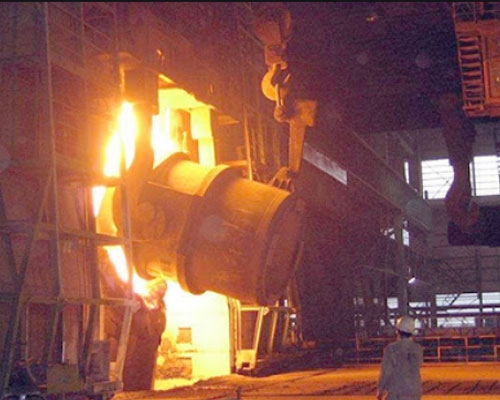
Secondary Aluminum Production

How to make such a variety of complex raw materials into qualified secondary aluminum ingots is the core issue of secondary aluminum production. The first step in the secondary aluminum production process is the classification process of scrap aluminum and miscellaneous aluminum. The finer the classification and the more accurate the classification, the easier it […]
24Oct 2020
Mold Coating

For a specific casting, if the mold coating is selected correctly, the coating operation is stable and controllable. In theory, qualified castings can be obtained. However, in the actual casting process, application operation is usually considered the most variable link. Therefore, it is very important to carefully prepare the mold before coating, prepare for coating […]

24Oct 2020
Aluminum Melt Purification Treatment

The aluminum melt purification treatment technology is the first key process that determines the application of aluminum alloy materials. It determines whether aluminum alloy materials have the heritability of metallurgical defects and high performance, and dominates its application and development in various fields. The company’s aluminum alloy melt purification treatment mainly uses furnace flux refining […]

24Oct 2020
Aluminum Purification

With the continuous development of aluminum alloy materials in various fields of the national economy, higher and higher requirements are put forward for the internal quality of aluminum alloy materials. In the production process, it is necessary to strictly control the chemical composition of the aluminum alloy and the defects of the ingot shrinkage, pores, […]

24Oct 2020
Secondary Pollution of Molten Aluminum

The secondary pollution of molten aluminum mainly occurs in the insulated washing tank from the furnace to the casting machine. On-line degassing and filtering equipment is installed on the insulating launder to purify the aluminum melt. As the melt passes through the tank system, it absorbs hydrogen to varying degrees when it comes into contact […]

24Oct 2020
Aluminum Melt Degassing

The aluminum melt degassing of die-cast aluminum alloy is very important to the mechanical properties of the casting. Hydrogen absorption is the main reason for the formation of pinholes in aluminum alloy castings and reduces air tightness and mechanical properties. Therefore, various measures must be taken to strictly control the content of hydrogen and other […]

24Oct 2020
Remelting Aluminum Ingots

The difficulty in producing remelting aluminum ingots lies in ripple control. The continuous casting machine adopts chain transmission, which has poor transmission stability and poor impact resistance. During operation, due to vibration and shaking, the molten aluminum in the mold that is not fully solidified will produce ripples. Therefore, the common surface ripple of aluminum […]

24Oct 2020
Standing Slab

Standing slab is a very important process in cast-rolled strip. The quality of the vertical plate and the success of the standing slab are directly related to the quality of the cast-rolled strip. In the standing slab operation, the following issues must be paid attention to: According to the planned thickness of the cast-rolled slab, […]

24Oct 2020
Slag Removal

The slag mixed into the ingot or other non-metallic impurities in the ingot are called non-metallic inclusions, commonly known as slag inclusions. Its fracture features are striped or flake-shaped, and the microstructure features are mostly black linear, massive, and flocculent disordered tissues, with obvious color difference from the matrix. So slag removal is important for […]

24Oct 2020
Non-metallic Inclusions

The slag mixed into the ingot or other non-metallic inclusions falling into the ingot are called non-metallic inclusions, commonly known as slag inclusions. The macroscopic structure is characterized by no fixed shape, black pits, and no clear boundary with the matrix. The characteristics of non-metallic inclusions can only be clearly revealed after the low-magnification test […]