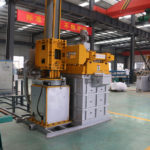
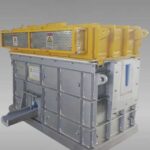
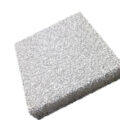
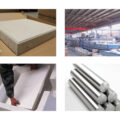
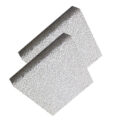
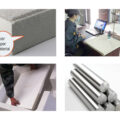
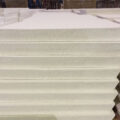
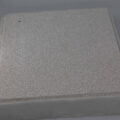
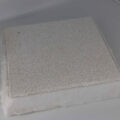
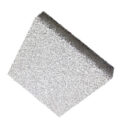
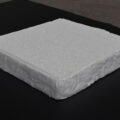
The molten metal aluminium filter is mainly ceramic foam filter. The ceramic foam filter is a filtering device that uses ceramic foam as the filter medium. Ceramic foam is an open-cell mesh with a sponge-like structure for filtering aluminum melt. The ceramic foam filter is installed in the molten metal aluminium filter box between the […]

Tag Archives: CFF Filtration
Home
Posts tagged: CFF Filtration
The smelting of aluminum alloy is an important part of the aluminum alloy processing process, which is reflected in the smelting process’s alloying, purification, and refinement processing technology. Alloy purification mainly adopts furnace flux refining and external foam ceramic filter to remove non-metallic inclusions in aluminum alloy melt, which has long become an important means […]
The filter plate has an open-pored structure, which is characterized by having a plurality of interconnected voids, so that molten metal can pass through to remove entrained solids. Such filters include solid filter plates made of sintered ceramic aggregate. A ceramic foam filter with an open-cell structure, which is characterized by a plurality of interconnected […]
The ceramic foam is made of an open-celled, preferably hydrophobic, flexible foam material having a plurality of interconnected voids surrounded by a network of said flexible foam material. Typical materials that can be used include polymer foams, such as polyurethane foams, and cellulose foams. Generally, any combustible organic plastic foam that has elasticity and the […]
In the field of automobiles and airplanes, there are more and more applications of large aluminum alloy parts, and the requirements for parts are getting higher and higher. In addition to ensuring the chemical composition, mechanical properties, and dimensional accuracy, the castings are not allowed to appear shrinkage, porosity, leakage, slag inclusion, and other defects. […]
The aluminum liquid removed from the aluminum electrolytic cell contains many impurities, which not only affects the casting and processing performance of metal aluminum, but also affects the quality of the product. In addition to the accompanying metal impurity elements accompanying aluminum precipitation during the electrolysis process, there are non-metal solid impurities (such as oxides, […]