A graphite cone is a tapered carbon component designed for extreme-temperature service in casting, metallurgy, chemical processing, and semiconductor manufacturing. Machined from fine-grain or isostatic-pressed graphite, it provides outstanding thermal stability up to 3,000°C in inert atmospheres, excellent chemical inertness against molten metals and corrosive media, and natural self-lubricating properties that reduce wear and maintenance. These characteristics make graphite cones one of the most reliable solutions for high-temperature sealing, flow regulation, and precision guiding across heavy industry.
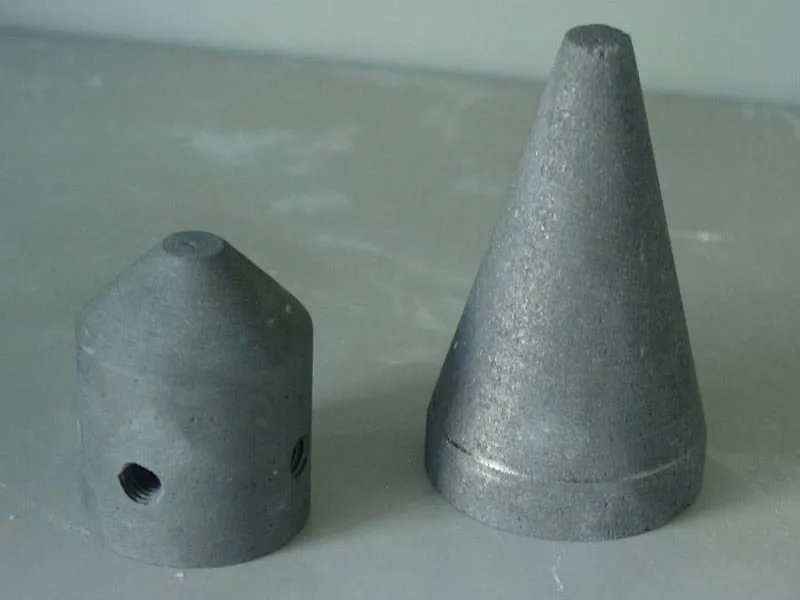
graphite cone
Request A Quote
What Makes a Graphite Cone Different from Other Refractory Components?
Most refractory parts — ceramic plugs, metal stoppers, or composite inserts — struggle with one or more limitations: brittle fracture under thermal shock, chemical reaction with molten metal, or excessive weight that complicates handling.
A graphite cone solves all three problems simultaneously.
The layered crystalline structure of engineered graphite absorbs thermal stress without cracking, even during rapid heating or quenching cycles. At the same time, graphite’s non-wetting behavior prevents molten aluminum, copper, zinc, and precious metals from bonding to the cone surface. And because graphite weighs roughly one-fifth as much as steel, operators can install and replace graphite cone components faster and with less equipment.
These are not marginal improvements. In real foundry and furnace environments, switching from ceramic or metal to a properly specified graphite cone often cuts unplanned downtime by 30–50% while extending component service life by two to three times.
Where Are Graphite Cones Used in Industry?
Aluminum and Non-Ferrous Metal Casting
Graphite conical stoppers and nozzle cones control the flow of molten aluminum in degassing units, launder systems, and continuous casters. Because graphite does not wet or react with aluminum melt, the cone surface stays clean and dimensionally stable across thousands of pour cycles — a critical advantage over ceramic alternatives that gradually erode and contaminate the melt.
Steelmaking and Iron Foundry Operations
Large-format graphite cones serve as tundish nozzles, ladle stoppers, and slide-gate components in steel plants. Operating in direct contact with liquid steel above 1,500°C, these parts must resist both thermal erosion and chemical attack from slag. High-density graphite grades with low porosity deliver the durability steelmakers demand.
Semiconductor and Photovoltaic Manufacturing
In Czochralski (CZ) crystal growth furnaces and chemical vapor deposition (CVD) reactors, ultra-high-purity graphite cones function as gas flow directors, crucible covers, and support elements. Semiconductor-grade graphite with ash content below 5 ppm ensures zero contamination of silicon ingots and wafers.
Chemical and Petrochemical Processing
Tapered graphite plugs and valve cones handle hydrofluoric acid, phosphoric acid, caustic soda, and chlorine-bearing compounds that would destroy most metals within hours. The broad chemical inertness of graphite makes it the default choice for reactor internals, scrubber components, and heat exchanger fittings in aggressive chemical environments.
Glass and Ceramic Industry
Graphite cone tools shape and guide molten glass during pressing, blowing, and drawing operations. The natural lubricity of graphite prevents glass adhesion, producing defect-free surfaces without the need for external release agents.
What Are the Key Properties of Industrial Graphite Cones?
Understanding material properties helps engineers select the right graphite cone grade for each application. The table below summarizes typical values for our most commonly specified grades:
| Property | Fine-Grain Graphite | Isostatic Graphite | High-Purity Graphite |
|---|---|---|---|
| Bulk density | 1.75–1.82 g/cm³ | 1.82–1.90 g/cm³ | 1.80–1.88 g/cm³ |
| Flexural strength | 45–65 MPa | 75–95 MPa | 70–85 MPa |
| Compressive strength | 85–110 MPa | 120–145 MPa | 100–130 MPa |
| Shore hardness | 48–58 | 60–72 | 55–68 |
| CTE (20–200°C) | 3.5–5.5 ×10⁻⁶/°C | 4.0–5.0 ×10⁻⁶/°C | 4.2–5.2 ×10⁻⁶/°C |
| Ash content | < 0.1% | < 0.05% | < 5 ppm |
| Max. service temp. (inert) | 2,500°C | 3,000°C | 2,800°C |
| Porosity | 12–18% | 8–13% | 9–14% |
Key takeaway: Isostatic graphite delivers the highest mechanical strength and tightest grain structure, making it the best all-around choice for precision graphite cone applications. High-purity grades are reserved for semiconductor and solar environments where trace contamination is unacceptable.
How Are Graphite Cones Manufactured?
Our production process follows a controlled sequence that ensures material consistency and dimensional accuracy from blank to finished part.
Raw Material Processing
Selected petroleum coke and pitch are calcined at 1,200°C, then milled and classified to achieve a controlled particle size distribution. For isostatic grades, the blended powder is cold-pressed in flexible molds under hydrostatic pressures of 150–200 MPa, producing green blanks with uniform density in all directions.
Baking
Green blanks enter gas-fired baking furnaces and are heated slowly — over a period of two to four weeks — to approximately 1,000°C. This carbonization step drives off volatiles and converts the pitch binder into solid carbon, bonding the coke particles into a rigid structure.
Graphitization
Baked blanks are loaded into Acheson-type electric resistance furnaces and heated to 2,500–3,000°C. At these temperatures, amorphous carbon transforms into crystalline graphite, developing the layered hexagonal structure responsible for graphite’s lubricity, thermal conductivity, and electrical properties.
Precision Machining
Graphitized blanks are machined on multi-axis CNC lathes and mills. Our equipment handles:
- Outer taper turning — angles from 1° to 60° with surface finish down to Ra 1.6 μm
- Internal boring — through-holes, blind holes, and stepped profiles
- Thread cutting — for cones that require mechanical fastening
- Compound profiles — multi-taper or curved conical geometries for specialized assemblies
Machining tolerances of ±0.02 mm are standard. For ultra-precision semiconductor tooling, we achieve ±0.01 mm on critical sealing surfaces.
Surface Treatment (Optional)
Depending on the end-use environment, finished graphite cones can receive:
- Anti-oxidation coating — extends service life in air atmospheres up to 1,600°C
- SiC impregnation — hardens the surface and reduces wear rate
- Resin impregnation — seals open porosity for improved gas-tightness in vacuum applications
- Purification treatment — thermal or halogen purification reduces ash content to below 5 ppm for semiconductor use
If your project requires the use of Graphite Cone, you can contact us for a free quote.
How to Select the Right Graphite Cone for Your Application
Choosing the correct graphite cone involves matching material grade, geometry, and surface condition to your specific process requirements. Here is a practical decision framework:
Step 1: Define the Operating Environment
- What is the maximum temperature the cone will experience?
- Will the cone contact molten metal, corrosive chemicals, or reactive gases?
- Is the atmosphere inert, vacuum, or oxidizing?
Step 2: Determine Mechanical Requirements
- What compressive or bending loads will act on the cone during service?
- Is the cone a static seal or a dynamic moving part?
- How many thermal cycles per shift or per day?
Step 3: Specify Dimensional and Tolerance Needs
- What taper angle provides the best sealing or flow-control performance?
- Are there mating parts (housings, seats, nozzles) that dictate interface dimensions?
- What surface roughness is required for the sealing face?
Step 4: Consider Service Life and Total Cost
A higher-density isostatic graphite cone costs more per unit than a standard fine-grain version, but it typically lasts two to three times longer in demanding applications. Calculate cost-per-pour or cost-per-cycle rather than unit price alone.
Our engineering team walks customers through this process regularly. If you are unsure which grade or geometry to specify, send us your application details and we will recommend the most cost-effective solution.
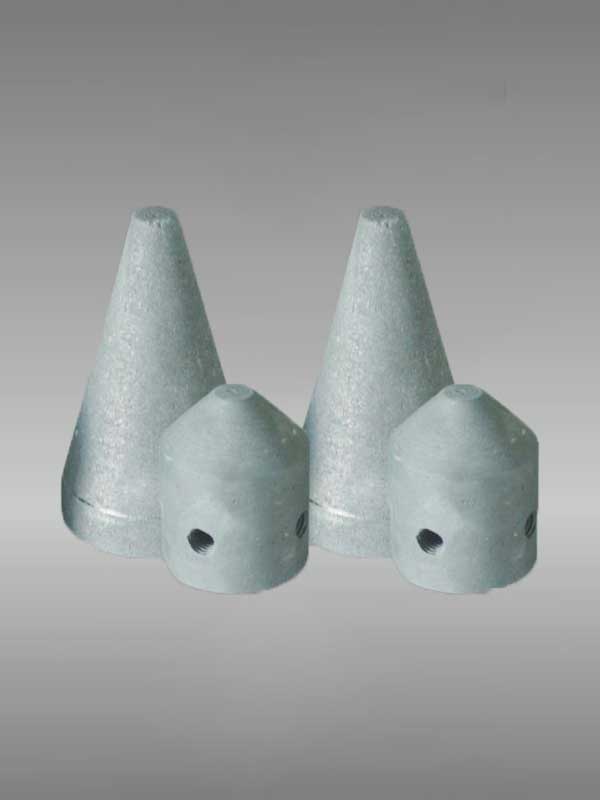
Cone Graphite
Graphite Cone Dimensional Capabilities
We supply graphite cones across a wide size range to cover everything from laboratory-scale equipment to full-production foundry and furnace systems:
- Outer diameter: 10 mm – 800 mm
- Overall length: 15 mm – 1,200 mm
- Taper angle: Custom, from shallow 1° tapers to steep 60° profiles
- Internal features: Solid, single-bore, multi-step bore, or threaded
- Quantity: Single prototypes through annual production contracts of 10,000+ pieces
All dimensions are manufactured to your drawing. We maintain digital records of every custom part, so repeat orders ship faster with guaranteed dimensional consistency.
What Advantages Does a Graphite Cone Offer Over Ceramic or Metal Cones?
Engineers frequently compare graphite, ceramic, and metal options before specifying conical components. This side-by-side view highlights the practical differences:
| Factor | Graphite Cone | Ceramic Cone | Metal Cone |
|---|---|---|---|
| Thermal shock resistance | Excellent | Poor to moderate | Good |
| Max. temperature (inert) | 3,000°C | 1,700°C | 1,100°C (steel) |
| Non-wetting to molten metal | Yes | Partially | No |
| Self-lubricating | Yes | No | No |
| Weight | Light | Moderate | Heavy |
| Machinability | Easy | Difficult | Moderate |
| Brittleness | Low | High | Low |
| Cost for custom shapes | Moderate | High | Moderate |
| Oxidation resistance | Low (without coating) | High | Moderate |
Bottom line: When thermal shock, chemical inertness, and low friction matter most, graphite cones win. When oxidation resistance in air is the primary concern and temperatures stay below 1,700°C, ceramics may be a better fit. Metal cones are limited to lower-temperature, non-reactive environments.
Quality Assurance for Every Graphite Cone We Ship
Every graphite cone leaves our facility with documented quality verification:
- Dimensional inspection — CMM measurement of all critical features against your drawing tolerances
- Material certification — density, hardness, flexural strength, and ash content test results
- Visual inspection — 100% surface examination under controlled lighting for cracks, chips, and porosity defects
- Non-destructive testing — ultrasonic inspection available for safety-critical or high-value components
- Traceability — each part is linked to a specific graphite billet lot for full material traceability
Our quality system is ISO 9001 certified, and we supply graphite cone products to customers with AS9100, IATF 16949, and semiconductor industry quality requirements.
How to Get a Quote for Custom Graphite Cones
Ordering is straightforward:
- Send your drawing or specifications — email a PDF, DXF, or STEP file with dimensions, tolerances, material grade, and quantity.
- Receive a technical review — our engineers confirm feasibility, suggest optimizations if needed, and select the best graphite grade.
- Get your quotation — typically delivered within 24 hours for standard configurations.
- Approve and produce — lead time is usually 7–15 working days depending on size and complexity.
- Inspect and ship — full inspection report included with every delivery. We ship worldwide by express, air, or sea freight.
For urgent requirements, we offer expedited production at 5–7 working days for small-to-medium graphite cone orders.
Related Carbon and Graphite Products
Customers who source graphite cones from us often also need:
- Graphite crucibles — for melting gold, silver, copper, and aluminum alloys
- Graphite nozzles — for continuous casting and metal pouring systems
- Graphite stoppers and plugs — for ladle and tundish flow control
- Graphite tubes — for heat exchangers, furnace linings, and protection sheaths
- Graphite plates and blocks — for EDM electrodes, sintering fixtures, and mold tooling
- Graphite heating elements — for vacuum and inert-atmosphere furnaces
We manufacture all of these products in-house from the same high-quality graphite stock, ensuring material consistency across your entire bill of materials.
Ready to source your next graphite cone? Contact our team with your specifications — we respond within 24 hours with a competitive quote and expert material recommendations tailored to your application.
FAQ
1. What is a Graphite Cone?
A Graphite Cone is a precision-machined tapered graphite component used in high-temperature, corrosive, or molten metal environments. It is valued for thermal stability, chemical resistance, and low friction.
2. What is a Graphite Cone used for?
A Graphite Cone is used for sealing, guiding, flow control, and positioning in casting systems, furnaces, chemical equipment, and semiconductor processes. It is especially common in molten metal handling applications.
3. Why is graphite a good material for cone-shaped components?
Graphite is ideal for cone components because it withstands extreme heat, resists thermal shock, offers self-lubricating performance, and does not easily react with many molten metals or corrosive media.
4. What temperature can a Graphite Cone withstand?
A Graphite Cone can typically withstand temperatures up to 3,000°C in inert gas or vacuum environments. In oxidizing air, the allowable temperature is lower unless an anti-oxidation coating is applied.
5. Can a Graphite Cone be used in molten aluminum applications?
Yes. A Graphite Cone is widely used in molten aluminum systems because graphite is non-wetting, heat resistant, and stable during repeated thermal cycling, which helps reduce sticking and contamination.
6. Do you provide custom Graphite Cone sizes?
Yes. Custom Graphite Cone manufacturing is available based on drawings, dimensions, taper angle, tolerances, and application requirements. Both prototype and bulk production can be supported.
7. What graphite grades are available for Graphite Cone machining?
Graphite Cone parts can be made from fine-grain graphite, isostatic graphite, and high-purity graphite. The best grade depends on the operating temperature, required strength, and purity level.
8. Can a Graphite Cone be coated for oxidation resistance?
Yes. A Graphite Cone can be treated with anti-oxidation coatings or SiC coatings to improve oxidation resistance and extend service life in air or oxygen-containing high-temperature environments.
9. How accurate can Graphite Cone machining be?
Graphite Cone machining can achieve high precision, including tight tolerances and smooth sealing surfaces. Final accuracy depends on part size, graphite grade, and the complexity of the cone geometry.
10. Which industries commonly use Graphite Cone products?
Graphite Cone products are commonly used in aluminum casting, copper processing, steelmaking, semiconductor manufacturing, chemical processing, glass production, and other high-temperature industrial applications.
Related posts:
 Aluminum silicate high temperature tap out cone
 High-temperature tap cone
 Aluminum Silicate Plug Cone
 Tap Out Cone For Aluminium Casting
 Ceramic Fiber Cone
 Ceramic Fiber Tap Out Cone
 Refractory Cone
 Aluminum Industrial Plug
 cône de sortie de four
Introduction to tap out cone sleeve
cône de sortie de four
Introduction to tap out cone sleeve
 Refractory Fiber Cone
 High Temperature Ceramic Filter
 Refractory Tap Cone
 Furnace Tapout Cone
 High Temperature Ceramic Filters