NEWS - Ceramic Foam Filter Supplier,Degassing And Purification System

NEWS

Foundry Alumina Ceramic Filter

Foundry Alumina Ceramic Filter

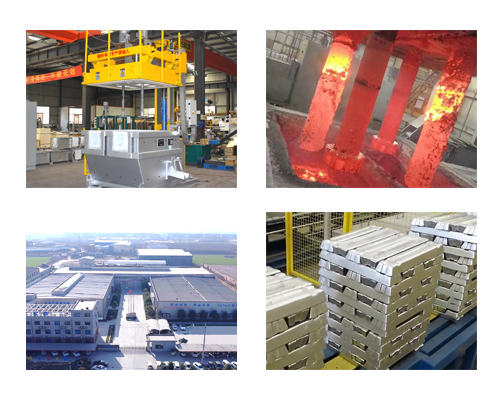
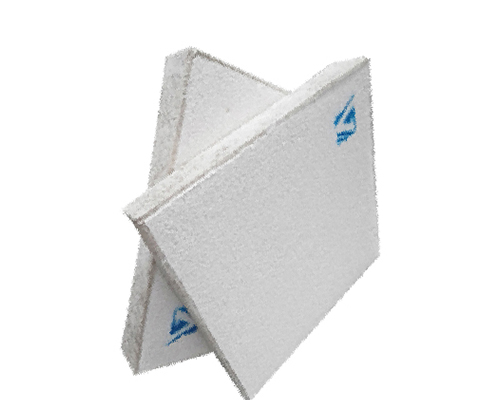
Foundry alumina ceramic filter mainly for filtration of aluminum and alloys in cast houses. The filter can effectively remove inclusions, reduce trapped gases and provide laminar flow, so the filtered metal is significantly cleaner. Cleaner metal results in better quality castings, less scrap and fewer embedding defects, which contributes to the bottom line. Features of Foundy Alumina Ceramic Filter -Reduce waste related to inclusions. -Reduce the costs associated with inclusion defects. -Increase productivity with higher extrusion or rolling speeds. -Increase casting flexibility with easy alloy changes. -No metal support. Foundry alumina ceramic foam filters are normally applied by placing them in a filter box. It is important to preheat the filter and the CFF filter box before use. During preheating, care should be taken to control both the rate of heating and the temperature distribution. This minimizes thermal shock and stress in the filters and the refractory of the filter box. Before alumina ceramic foam filter can be used, it must be completely wetted with molten metal. This happens when starting the casting operation. The amount of metallostatic pressure (or priming head) required to wet the filters depends on the alloy, metal temperature, preheating uniformity, preheating temperature, incoming metal quality, pre-filter treatments and filter cell size. Литейный глиноземно-керамический фильтр в основном для фильтрации алюминия и сплавов в литейных цехах. Фильтр может эффективно удалять включения, уменьшать количество захваченных газов и обеспечивать ламинарный поток, поэтому отфильтрованный металл значительно чище. Более чистый металл приводит к лучшему качеству отливок, меньшему количеству брака и меньшему количеству дефектов заделки, что способствует увеличению чистой прибыли. Характеристики керамического фильтра из литого глинозема -Сокращение отходов, связанных с включениями. -Снижение затрат, связанных с дефектами включения. -Повышение производительности за счет более высоких скоростей экструзии или прокатки. -Повышение гибкости отливки за счет легкой смены сплава. -Нет металлической опоры. Пенокерамические фильтры из литейной глинозема обычно применяются, помещая их в фильтровальную коробку. Перед использованием важно предварительно нагреть фильтр и коробку фильтра CFF. Во время предварительного нагрева следует следить за скоростью нагрева и распределением температуры. Это сводит к минимуму термический удар и напряжение в фильтрах и огнеупорном корпусе фильтра. Прежде чем использовать фильтр, его необходимо полностью смочить расплавленным металлом. Это происходит при запуске операции литья. Величина металлостатического давления (или напорной головки), необходимого для смачивания фильтров, зависит от сплава, температуры металла, однородности предварительного нагрева, температуры предварительного нагрева, качества поступающего металла, предварительной обработки фильтра и размера ячейки фильтра ...
Read More…
Inline Degassing Equipment

Inline Degassing Equipment

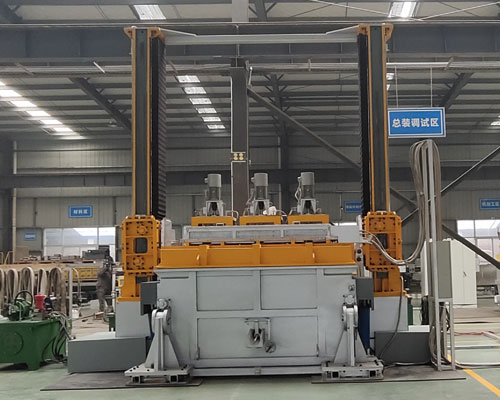
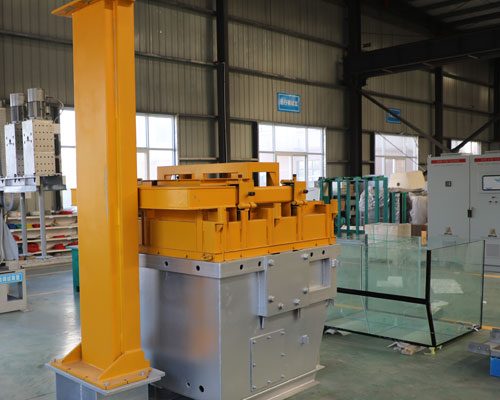
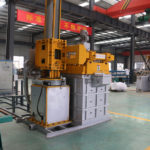
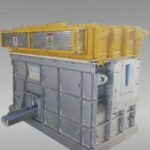
Inline degassing equipment mainly processes molten aluminum containing a certain amount of hydrogen and other residues (alkali metal, inclusion of slag), which are removed after being processed by degassing equipment. The principle of inline degassing equipment is the principle of gas flotation. Process gas (inert gas or mixture of inert gas and chlorine gas) is injected into the melt through the rotor and broken by the rotor into evenly dispersed microbubbles, and the microbubbles rise to the melt. The hydrogen is adsorbed in the bubble and excluded. The alkali metal is eliminated by chemical interaction with chlorine (formation of chloride); The inclusions are trapped by the bubbles and then rise to the surface of the bath to form dross. The degassing efficiency of the degassing box is stable at 60% on average, and when the aluminum to argon liquid is less than or equal to 1%, the best degassing effect can reach 0.09 cc / 100g. The inner liner is made of molten material with high silicon content. The service life of the internal cavity is on average 2 years, up to 3 years. The non-stick aluminum effect is good. It has no pollution to cast aluminum. The interior design has a baffle to ensure the stability of the aluminum melting surface. It can prevent the oxides on the surface of air and cast aluminum from being coiled into the cast aluminum, and bubbles or residue will flow out. The rotor is made of silicon nitride and has a lifespan of over 2 years (the longest lifespan can be 5 years). It has the strong corrosion resistance of aluminum, thermal shock resistance, oxidation resistance, wear resistance, and mechanical strength. Superiority, long-term immersion, using 60mm pole and 200mm head diameter, can minimize the resistance to agitation of cast iron; 450-550RPM high speed design can break the bubble to the maximum. (stability of degassing efficiency, service life, labor cost to replace the rotor, etc.) The overall cost performance is the best. It adopts silicon nitride material and has an average lifespan of 1 year and up to 2 years. The heating efficiency is high, the surface oxidation of the aluminum casting is reduced, and the slag is not polluted by aluminum water. The degassing device can be used with an optional mixture of argon, nitrogen and chlorine, and it is safe to use argon and chlorine protective measures. The sealing structure of ...
Read More…
Remove Hydrogen

Remove Hydrogen

As the demand for premium aluminum products increases, especially in the aerospace industry, the need to reduce the occurrence of inclusions in molded products also increases. A popular remove hydrogen method is to introduce nitrogen gas bubbled through liquid aluminum. The hydrogen is attracted to the nitrogen bubbles, then transported through the aluminum and released to the surface. Argon is also very efficient, but due to the high costs associated with this gas, nitrogen is preferred. Adtech Remove Hydrogen Method – Online Degassing Unit is mainly used for the removal of hydrogen (H) and slag from molten aluminum. It takes the principle of gas flotation. The degassing rotor takes an inert gas or a mixture of chlorine and inert gas in molten aluminum and crushes the gas into tiny scattered bubbles, the bubbles rise to the surface of the molten aluminum and complete the procedures given below by the same time: H is absorbed in bubbles and is eliminated. Chloride is removed (formed by chemical action with alkali metal and chlorine gas). Remove the slag. Online Degassing Unit Instruction: Switch off the heater after the degassing box has finished heating. Guide the inert gas into the rotor and release the molten aluminum in the can when the heater temperature is closed to the temperature of the molten aluminum. Check the seal between the inlet/outlet and the washing machine. Check the cone located in the thermal protection draining in the bottom. Check the temperature of the molten aluminum (min 720 ° C). Measure the height of molten aluminum away from the bottom of the washing machine at 3 cm to observe the molten aluminum entering the box. The operator must wear protective clothing to close the cover. Surface slag can be skimmed off through the scouring outlet as molten aluminum flows into the can. Start production when the temperature reaches 780 ° C. Close the scouring outlet to conserve heating. Molten aluminum can be retained in the can with a set temperature during the heat preservation phase but without handling molten aluminum. Guide the inert gases into the rotor to avoid blockage of the air outlet by molten aluminum. Turn on the heater as soon as the molten aluminum flows into the can and adjust the heat preservation settings. Start the heating system, control the temperature of molten aluminum, monitor the gas flow, the rotor speed is changed from the heat ...
Read More…
Aluminum Degassing Agent

Aluminum Degassing Agent

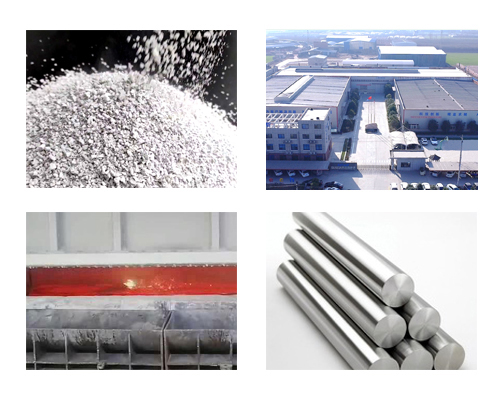
Aluminum degassing agent is a white powder or granular stream, which is prepared by drying a plurality of inorganic salts and mixing them in a certain ratio, and is mainly used for removing hydrogen and oxidized slag floating inside the aluminum liquid. The aluminum degassing agent is mainly used to remove the hydrogen inside the aluminum liquid and the floating oxidized slag, so that the aluminum liquid is purer and has the function of removing the slag. Some components of the aluminum degassing agent easily decompose at high temperatures, and the generated gas easily reacts with hydrogen and has a strong adsorption force with slag, and quickly escapes from the melt. The other components have a slag removal effect. Aluminum degassing fluxes are applicable to commonly used aluminum alloys (high magnesium alloys and aluminum-magnesium alloys) and pure aluminum smelting, degassing refining, and slag removal. The refining agent is sprinkled on the surface of the liquid and is quickly squeezed into the aluminum liquid. After being completely stirred, it is left to stand and slag; if it is sprayed, the refining agent is sprayed into the aluminum liquid with an inert gas. Role of Flux for Melting Aluminum 1. Changing the wettability of molten aluminum to oxide (alumina), so that molten aluminum is easily separated from oxide (alumina), so that most of the oxide (alumina) penetrates the flow and reduces melting. The content of oxides in the body. 2. The flux can change the state of the oxide film on the surface of the melt. This is because it can break up the solid and dense oxide film on the surface of the melt into fine particles, thus making it easier for the hydrogen in the melt to escape from the space between the particles in the layer of. oxide film and enter the atmosphere. 3. The presence of the flux layer can isolate the contact between the water vapor and the aluminum melt in the atmosphere, which makes it difficult for hydrogen to enter the aluminum melt and at the same time prevent time the oxidative loss of the cast iron. 4. The flux adsorbs the oxides in the aluminum smelting to purify the smelting. In summary, the effect of stream refining to remove inclusions is mainly achieved by adsorption, dissolution and chemistry with oxide films and non-metallic inclusions in the melt ...
Read More…
Ceramic Foam Filter Porosity

Ceramic Foam Filter Porosity

Porosity is the percentage of the total volume of cavities in the ceramic foam filter plate product relative to the total volume of the filter plate product. Porosity determines the filtration capacity of the ceramic foam filter plate per unit volume. The greater the porosity, the greater the filtration rate of the filter plate and the greater the filtration capacity, and vice versa. Porosity determining ceramic foam filter manufacturing process. There are currently two main methods for determining porosity. One is to calculate the volume of the hole in the filter plate according to Archimedes' law, that is, to inject water into the glass beaker with the overflow pipe until that water is flowing from the overflow pipe, and the water will be tested when the water is no longer flowing. All samples are gently placed in water, then water flows out of the overflow tube and the volume of water in this part is measured. The volume of the overflow water is subtracted from the physical volume of the filter plate, which is the total volume of the filter plate holes. volume. Another method is to separately determine the actual density and the bulk density of the test sample, and then calculate the porosity of the sample according to the following formula. These two methods have their own advantages and disadvantages. The method of operation is simple and convenient, and the detection speed is fast, but its fatal weakness is due to the water absorption characteristics of the filter plate material itself, so that the volume of water discharged is less than the actual volume. This makes the measured data too small. Although the test process of the second method is more complicated, the influence of water absorption of the filter plate material is excluded during the test and the data obtained is relatively accurate. The porosity index is determined to be greater than 84% in this standard. Pore ​​uniformity is used to describe the difference between the number of actual holes per 25.4mm length in the filter plate product and the number of holes theoretically required. The smaller the space, the better the quality of the product, and the space is too large, which will cause the ability of the filter plate product to reduce the retention of impurities or the slow filtration rate of the cast iron, which will not meet the user's individual production requirements. The ...
Read More…
Degas Molten Aluminum

Degas Molten Aluminum

The ability to degas molten aluminum is generally achieved by using an inert gas, typically introduced into the melt by a rotary degassing unit. This degassing process is limited by thermodynamic laws; when purge gas bubbles are introduced into the melt, they collect hydrogen as they float to the surface. The best possible situation is that these hydrogen saturated bubbles leave the melt and reduce the hydrogen levels. In this case, the efficiency of the process is 100% from the thermodynamic point of view. But as the gas content in the melt decreases, the equilibrium pressure of hydrogen in the bubbles also decreases, so the amount of purge gas needed to remove the remaining hydrogen must increase. The equilibrium gas removal rate for pure aluminum above 1400F (760C). A gas removal rate of 200, for example, means that it will take 200 liters of inert gas to remove one liter of hydrogen. This behavior limits the ability of a metallurgist to degas at a very low level of hydrogen. Solubility also increases exponentially with temperature, meaning that an increase of 200F (111C) doubles the solubility. All other things being equal, a higher temperature of cast aluminum will increase the degassing time required. Alloy elements can also have an effect on the solubility of hydrogen. Alloys with higher values ​​are more difficult to degas, thus, for example, 535 aluminum will take four times longer to degas than pure aluminum. Fortunately, these factors can be controlled and the gas content and process required to remove excessive porosity in aluminum castings can be achieved without undue difficulty in most cases. How to Degas Molten Aluminum? Degassing is usually carried out in one of three areas of the metal casting plant: 1. In the transfer ladle, used to transport metal between melting and holding furnaces. 2. In crucible furnaces, usually just before the casting of molten aluminum. 3. In an in-line system, when metal is routed to holding ovens via a laundry. The first two options are the most common and the degassing operation for both is usually performed using a rotary degassing system. Concretely, not all rotary degassers are created equal. It is important to have an optimal head design to produce very efficient small bubbles. Significant cost savings can be achieved through shorter process times and reduced gas consumption. In the past, the metal smelting industry has turned to simple head designs ...
Read More…
Rotary Nitrogen Degassing

Rotary Nitrogen Degassing

The rotary nitrogen degassing unit provides more complete removal of hydrogen compared to degassing the flow. In addition, the rotary degasser does not use harmful salts containing chlorine and fluorine. The rotary nitrogen degassing unit can also combine the functions of degassing and flow introduction. In this case, the inert gas serves as a support for the granulated stream. The method is called flow injection. Advantages of rotary nitrogen degassing unit High efficiency of the action of the flux due to better mixing with the melt; Short stream processing time; Introduction of controllable flow; More environmentally friendly fluxing method. In the rotary degassing method, an inert or chemically inactive Nitrogen is purged through a rotating shaft and a rotor. The energy of the rotating shaft causes the formation of a large number of fine bubbles offering a very high surface/volume ratio. The large specific surface area promotes rapid and efficient diffusion of hydrogen into gas bubbles, which helps to equalize the activity of hydrogen in the liquid and gas phases. For the degassing and filtration of molten aluninium and its alloys. Reduce the bubble and the impurities in the liquid aluminum. The in-line degassing unit for high purity aluminum adopts the type of furnace design, use the process chamber in degassing the degassing tank and the static chamber. Treat internally using a degassing rotor, when convection forms in the cabinet, ensure that the small bubbles in the liquid aluminum can fully propagate. The contact area increases the bubble and the liquid aluminum. Static protection aluminum liquid fluctuation, temperature compensation. In-line degassing unit cabinet adopted airtight design at the same time, end outside air intake and cause secondary pollution. Equipment degassing efficiency has been greatly improved. The degassing unit adopts the work station, the liquid aluminum method at work can maintain the temperature by electric heating, heating system using immersion heater, high heating efficiency, using elements silicon carbide heaters, silicon-controlled temperature control, the temperature control precision is high, easy to operate ...
Read More…
Aluminum Liquid Degasser

Aluminum Liquid Degasser

In the rotary method of the aluminum liquid degasser, an inert or chemically inactive gas (Argon, Nitrogen) is purged through a rotary shaft and a rotor. The energy of the rotating shaft causes the formation of a large number of fine bubbles offering a very high surface/volume ratio. The large specific surface area promotes rapid and efficient diffusion of hydrogen into gas bubbles, which helps to equalize the activity of hydrogen in the liquid and gas phases. The online degassing unit adopts advanced high silicon melting technology to achieve long service life, degassing rotor, heating protection lug and thermocouple protection lug adopt manufacturing technology of ceramic which can meet the requirements of high precision aluminum production. The online degassing unit should be installed between the furnace and the casting equipment. It is used for the removal of hydrogen (H) and slag from molten aluminum. The online degassing unit has a dual function: treatment and heating. It serves the high precision molten aluminum purification industry. The aluminum liquid degasser is based on the principle that dissolved hydrogen gas will move from an area of ​​high concentration (in the melt) to an area of ​​low concentration (in the inert gas). The hydrogen gas disperses in the molten metal as it would if released in a confined space. It will maintain a constant concentration throughout the fusion. Hydrogen gas can migrate through liquid metal almost as quickly as through the air. Sources of hydrogen in molten aluminum: atmospheric humidity wet metal filler wet furnace lining (crucible, transfer pockets) wet foundry instruments wet streams and other consumables furnace fuel combustion products containing hydrogen Therefore, it is not necessary to put every ounce of metal in contact with the inert gas. The efficiency of aluminum degassing is determined by two factors, the rate of transfer through the metal/gas interface and the total surface area available for the transfer ...
Read More…
Aluminum Silicate Castertip

Aluminum Silicate Castertip

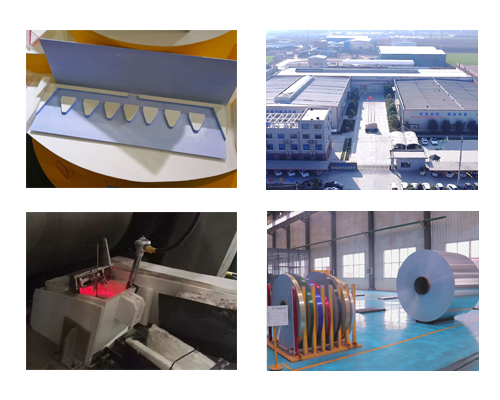
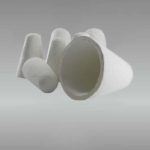
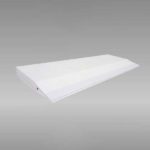
Aluminum Silicate Castertip is composed of ceramic fibers and other refractory materials. The opening surface and the coating of the working surface are smooth, and can resist the corrosion of liquid aluminum, ensure the purity of the aluminum foil. The casting tip is designed for the production of high quality continuously cast aluminum sheets. These tips are made of ceramic fibers bound by an inorganic binder. They are dimensionally stable, resistant to thermal shock and do not cause outgassing. Fully assembled Castertips are often preferred by customers due to their precision and convenience. These are custom made and shipped to the customer ready to be inserted into the base of the roulette tip. Internal designs can be made to customer specifications. Aluminum Silicate Castertip is the key component of aluminum continuous casting machine which directly affects the quality of aluminum sheets. The casting tips can be divided into several types according to different casting machines. Castertips with excellent non-wetting properties, low thermal conductivity, high temperature stabilities, uniform density, smooth surfaces and close tolerance, are superior products for the continuous casting of aluminum strips. The casting tip is made of nanoscale fiber composite material and used for crystallization and size control of aluminum foil casting. It features evenly distributed fibers, suitable density, good insulation, precise size, good stainless, strong layer, non-deformation. Can protect the surface of foil. To paint BN is recommended. Castertip advantages: Made of nanometer grade fiber composite material, precision size, proper density and inflexibility. Nano-paint, solid layer, good resistance to erosion. Can meet the mechanical requirements of molten aluminum. Good insulation, control parameters in the casting of sheets. Low deformation, improve the quality of aluminum foil. Ceramic fiber castertip is the centerpiece of aluminum continuous casting machine which directly affects the quality of aluminum sheets. The casting tips can be divided into several types according to different casting machines. The aluminum silicate caster tips produced by our factory are made of ceramic fibers and other refractory materials ...
Read More…
Alumina Molten Metal Filter

Alumina Molten Metal Filter

Alumina Molten Metal Filter can effectively remove a large amount of inclusions in the aluminum liquid, adsorb micron-sized fine inclusion particles, improve surface quality, improve product performance, improve microstructure and increase yield. It is widely used in the production of aluminum profiles, aluminum foil and aluminum alloys. Understanding the basics of filtration and choosing the right filter media are essential for molten metal filtration. Alumina ceramic foam filters have two main molten metal filtration modes, namely deep filtration and surface filtration. In the case of deep filtration, the particles are trapped inside the media; in surface filtration, they are retained on the surface where a particle cake is subsequently formed. Surface filtration is mainly a filtration (sieving) mechanism in which particles larger than the pore size of the filter medium are separated on the upstream surface of the filter. Their size prevents them from entering or passing through the pore openings. Subsequent particles accumulate into lumps, and as more particle-laden fluid is forced into the filter medium, its thickness increases. Due to its potentially finer pore structure, the filter cake may help separate finer particles than the filter media can achieve. However, the filter cake must have sufficient porosity to allow the filter cake to continue to flow during the filtration process. Since most surface filters do not have a completely uniform pore structure, some deep filtration may occur, which affects the life of the filter. Depth filtration is mainly used for applications where the level of small particles must be separated. The particles penetrate the medium and are subsequently captured by its multilayer structure. Understanding the filter's ability to remove particles is the key to successful operation of the filter. For aluminum melt, filtering by trapping inclusions within the depth of the porous medium is the key to achieving a high level of efficiency. The Alumina Molten Metal Filter has a three-dimensional porous structure, it provides a tortuous path for trapping particles ...
Read More…