Blog - Page 55 of 73 - Tap Out Cone,Refining Flux,Ceramic Foam Filter,Aluminum Cast Materials

Blog

24Sep 2020
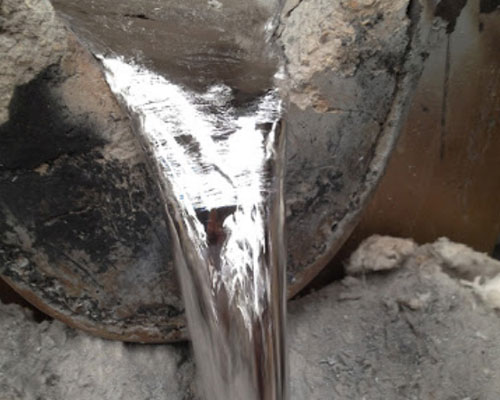
Molten Aluminum on Cleanliness

Molten aluminum on cleanliness, that is, reducing the inclusion of the aluminum melt, is a very important factor in the production of high-quality products. The inclusions in the aluminum alloy make the alloy structure discontinuous, reduce the compactness of the product, cause corrosion and cracks, and reduce the mechanical properties of the final product. Molten […]
19Sep 2020
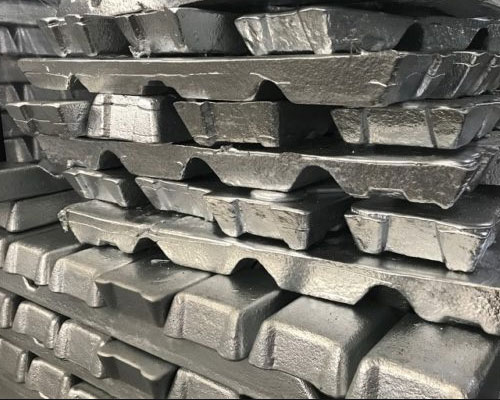
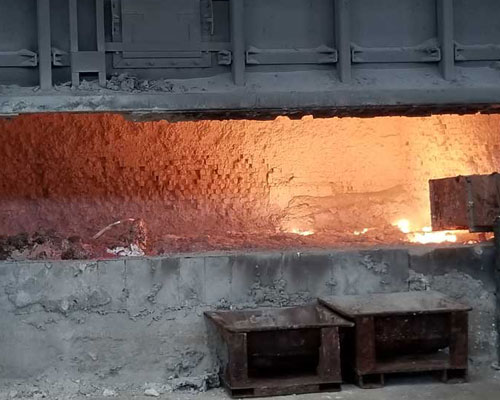
Porosity in Casting

There are many reasons for porosity in casting of die casting aluminum alloy, so we must find out the reason to solve the problem. Porosity in Casting Porosity Caused by Improper Die Casting Parameters In the process of liquid aluminum die casting, if the filling speed is too fast, the gas in the mold cavity […]

19Sep 2020
Degassing Process in Aluminum Alloy

The degassing process in aluminum alloy melting process can reduce the gas content in the molten aluminum and prevent the gas from precipitating during the solidification of aluminum alloy. If the gas content in liquid aluminum is very low, the amount of gas precipitated during solidification will be reduced, and the bubbles generated will also […]

19Sep 2020
On-Line Degassing System

The main function of the on-line degassing system is to remove hydrogen dissolved in molten metal, and the secondary function is to remove alkali metals and inclusions. The selection of on-line degassing equipment is related to the functionality of the final casting product. According to the humidity conditions in the ambient atmosphere, the on-line degassing […]

19Sep 2020
Rotating Degassing Method

Rotating degassing method, also known as bubble floating method, is the most advanced and effective purification method. The active gas chlorine, or inert gas argon and nitrogen, or flux mixture gas are introduced into the aluminum melt to form bubbles. The alkali metals and inclusions in the melt undergo chemical reactions through adsorption contact, so […]

18Sep 2020
Filtration Technology

As an advanced process technology, filtration technology has a significant effect on reducing inclusions and pore defects, and improving the mechanical properties and processing properties of castings. The application of filtration technology in casting has undergone a development process: glass fiber filters were used in the 1960s, ceramic foam filters appeared in the late 1970s, […]

18Sep 2020
Foam Ceramics

Polyurethane sponge, as the raw material for the production of foam ceramics, has a great influence on the performance of foam ceramics, and its influence mainly includes the following aspects. Impact of Product Shrinkage The elasticity and strength of the polyurethane sponge carrier have a direct impact on the shrinkage of the foam ceramics, and […]

18Sep 2020
Foam Ceramic Material

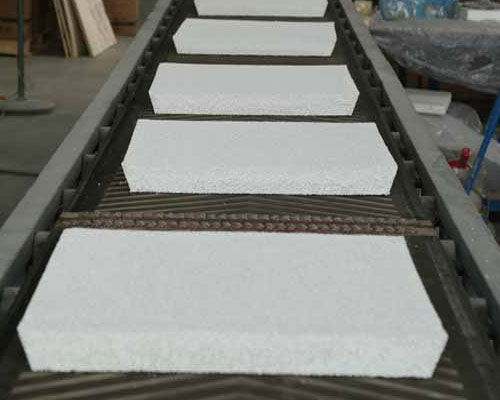
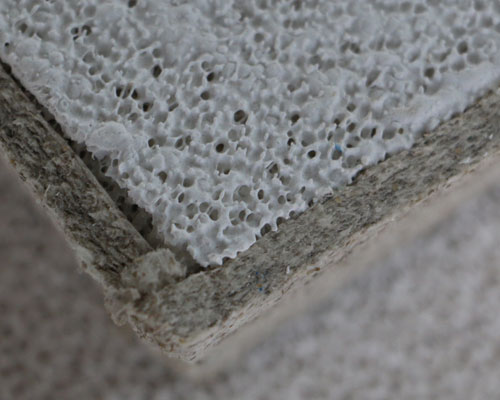
Ceramic foam filter (CFF) is a foam ceramic material with a three-dimensional grid structure and high porosity (70 to 90%). Because of its low density, high strength, high temperature resistance, large specific surface area, It has the advantages of large porosity and good filter adsorption, so it is widely used in metallurgy, chemical industry, light […]

17Sep 2020
Metal Elements Preparation Methods

The metal elements preparation methods of aluminum alloy include the direct addition of pure metals and the addition of metal additives. Metal Elements Preparation Methods Pure Metal Addition Method The alloy elements whose maximum solid concentration exceeds 1% (atomic molar concentration), such as silver, copper, gallium, germanium, lithium, magnesium, silicon and zinc, can generally be […]

17Sep 2020
Gas Refining

The requirements for the purity of the melt vary slightly with different alloy types and uses. Generally, the hydrogen content is required to be less than 0.15cm^3/100gAl, and the mass fraction of sodium is generally required to be controlled below 5/10^6. In order to obtain a pure aluminum alloy melt, it is necessary to add […]