Blog - Page 42 of 73 - Tap Out Cone,Refining Flux,Ceramic Foam Filter,Aluminum Cast Materials

Blog

20Nov 2020
How to Remove Dissolved Hydrogen

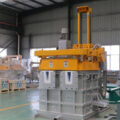
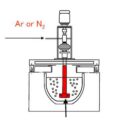
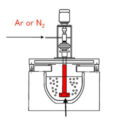
How to remove dissolved hydrogen in aluminum alloy? The hydrogen in aluminum can cause pores to form when the metal solidifies. To prevent this from happening, the hydrogen in the aluminum alloy can be removed by diffusing nitrogen particles into the liquid alloy. Nitrogen bubbles combine with hydrogen, rise to the liquid level and escape […]
20Nov 2020
Refining Effect of Molten Aluminum

The refining effect of molten aluminum has an important influence on the formation of pores, shrinkage cavities and inclusions, and directly affects the physical and mechanical properties of aluminum alloy castings. Without high-quality molten aluminum, even if the subsequent processing is advanced, the defects will always exist in the product once they occur, and high-quality […]

20Nov 2020
Risk Factors in Aluminum Casting

Major risk factors in the aluminum melting and casting workshop Liquid aluminum explodes when it meets with water, and it is also accompanied by a chain reaction of explosive spray and overflow of liquid aluminum. Very easy to cause serious burns, deaths, and fire accidents. The main loops that are prone to major safety accidents […]

20Nov 2020
How to Prevent Bubbles on Aluminum

Bubbles of different sizes often appear on the surface of aluminum alloy die castings, especially on thin-walled cover products. What is the reason? How to prevent and solve bubbles on aluminum, let’s make a brief analysis. The bubbles on the surface of the die-casting parts often appear on the end of the product far away […]

19Nov 2020
Impurities in Aluminum Alloy

The liquid impurities in the aluminum alloy liquid are mainly chloride salts generated in situ. The chloride salt can be in a solid state or in a molten state. Once formed, it is very difficult to remove from molten aluminum. Chlorine and aluminum can combine to form AlCl3 at about 178ºC. If there is no […]

14Nov 2020
Impurity Elements of 3000 Series Alloy

The impurity elements of 3000 series alloy generally include Fe, Si, Mg, Zn. Fe can be dissolved in MnAl6 to form (FeMn)Al6 compound, thereby reducing the solubility of Mn in Al. 0.4%~0.7% Fe is added to the alloy, but Fe+Mn must not exceed 1.85%, which can effectively refine the grains of the sheet after annealing. […]

14Nov 2020
Impurity Elements of 5000 Series

The impurity elements of 5000 series aluminum alloy mainly include Fe, Si, Cu, Zn and so on. Fe, Mn and Cr can form insoluble compounds, thereby weakening the role of Mn and Cr in the alloy. When more hard and brittle compounds are formed in the ingot structure, processing cracks are likely to occur. In […]

14Nov 2020
Impurities in 7000 Series

The main impurities in 7000 series Al-Zn-Mg and Al-Zn-Mg-Cu alloys are Fe and Si. Fe will reduce the corrosion resistance and mechanical properties of the alloy, especially for alloys with higher Mn content. Therefore, the Fe content should be as low as possible and its content should be limited to less than 0.3%. Si can […]

14Nov 2020
Impurity Elements in 2000 Series

The impurity elements in 2000 series Al-Cu-Mg and Al-Cu-Mn alloys are mainly Fe, Si, Zn and so on. In Al-Cu-Mg alloys with magnesium content of less than 1.0%, silicon content of more than 0.5% can improve the speed and strength of artificial aging without affecting the natural aging ability. Because silicon and magnesium form the […]

14Nov 2020
Aluminum Flux Purification

The molten salt used in the flux configuration is a non-metallic salt, which is the object of aluminum melt purification and slagging. In order to avoid secondary slagging of the flux itself, the amount of flux must be minimized, which requires improving the efficiency of aluminum flux purification, and After the flux is completed, all […]