If you are comparing ceramic foam filter manufacturers in India, you are probably not looking for theory. You want to know which supplier can deliver filters that stay intact in contact with molten aluminium, remove inclusions consistently, fit your filter box properly, and help reduce scrap instead of creating new problems. That is really what this market comes down to.
A lot of buyers start with price. In practice, experienced foundries do not. They start with stability. A ceramic foam filter that is slightly cheaper but cracks during pouring, varies in pore structure from batch to batch, or allows metal bypass around the edges is not a low-cost option. It is just a hidden source of rejection, poor finish, machining trouble, and customer complaints.
That is why the discussion around ceramic foam filter suppliers in India has changed. Buyers are no longer asking only, “What is the lowest price?” They are asking better questions: What is the actual PPI? How consistent is the porosity? How does the filter behave under thermal shock? Is the manufacturer controlling slurry formulation and firing, or simply sourcing generic material and reselling it? Can the supplier support aluminium casting, molten metal filtration, and related consumables as a complete system?
At AdTech, that is the side of the conversation we prefer. We work with foundries and aluminium processors that care about performance, not just paperwork. Our ceramic foam filter range is designed for stable molten metal filtration, and it is supported by a broader line of aluminum casting products used in real production conditions.
If your project requires the use of ceramic fiber board, you can contact us for a free quote.
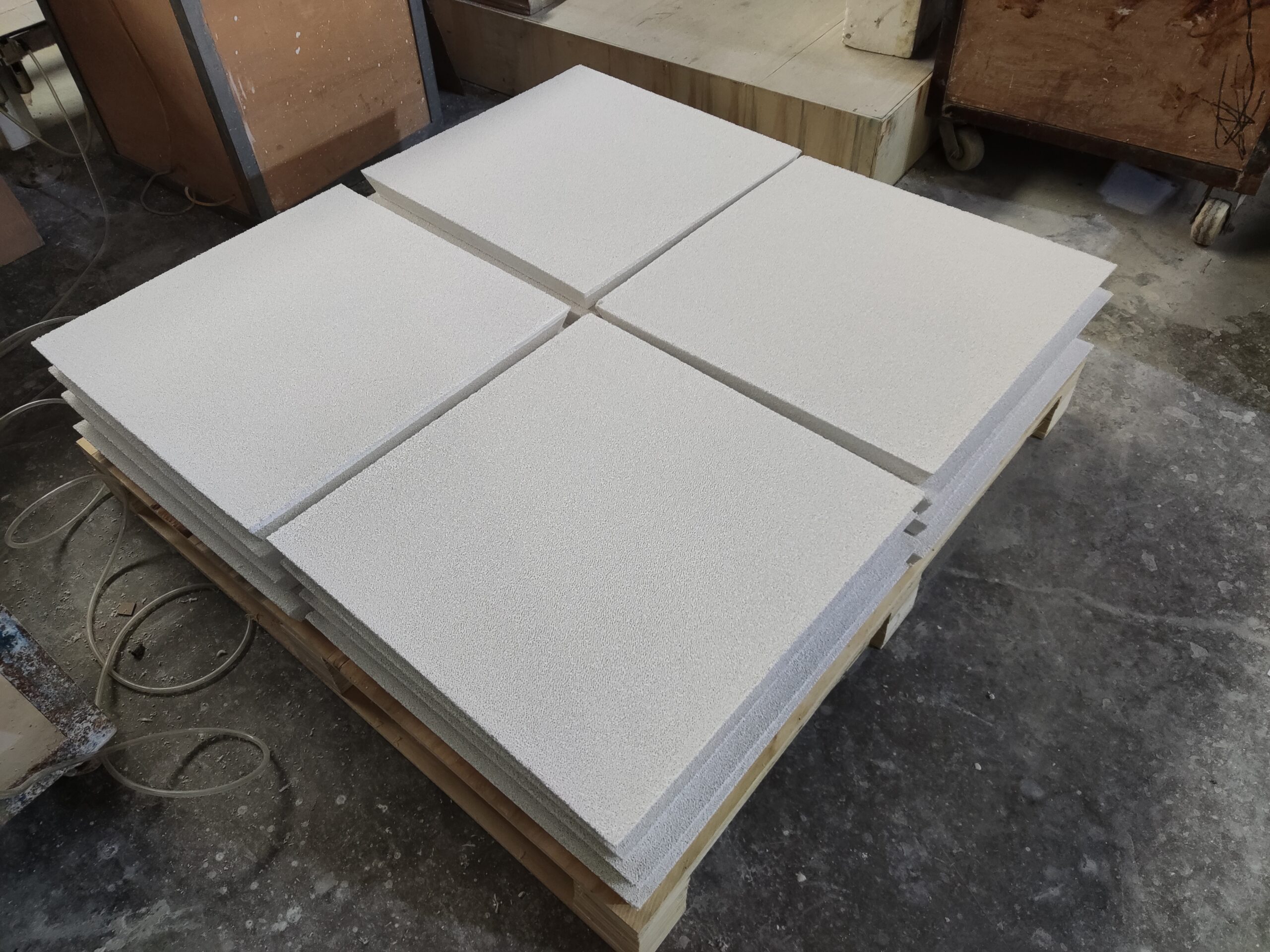
ceramic foam filter for aluminum
What do buyers really mean when they search for ceramic foam filter manufacturers in India?
Most of the time, they are not just looking for a factory address in India. They are looking for one of three things:
- a reliable ceramic foam filter supplier in India
- a better alternative to inconsistent local stock
- a manufacturer that understands aluminium filtration in foundries
That distinction matters. In this market, many sellers call themselves manufacturers, but they are actually traders, converters, or importers. There is nothing wrong with distribution when it is transparent. The problem begins when quality data is vague, technical support is weak, and the buyer has no clear way to verify what is being supplied.
For molten aluminium, the filter is not a commodity in the usual sense. It directly affects metal cleanliness. If the pore network is irregular, if the ceramic struts are fragile, or if the dimensions are off by a few millimetres, performance suffers fast. In other words, the difference between a good and poor foundry ceramic foam filter does not show up on the invoice. It shows up later on the shop floor.
Why do some ceramic foam filters perform well while others fail in casting?
This is where real manufacturing capability shows.
A ceramic foam filter looks simple, but its performance depends on several things being done correctly at the same time:
Is the raw material system right for the alloy being filtered?
For aluminium casting, alumina ceramic foam filters are commonly used because they offer good compatibility with molten aluminium and strong filtration performance. For other alloys, different materials may be used, including zirconia ceramic foam filters or silicon carbide foam filters. The right base material depends on metal temperature, chemical reactivity, and filtration target.
A serious manufacturer does not treat every application the same. The ceramic recipe, binder balance, and firing profile should match the operating conditions. That is one reason buyers comparing ceramic foam filter manufacturers in India need to look beyond brochure language.
The table below summarises the most common ceramic foam filter material types and their typical application in foundry and smelter environments:
| Filter Material | Base Composition | Max Service Temp | Primary Application | Chemical Compatibility |
|---|---|---|---|---|
| Alumina (Al₂O₃) | 80–85% Al₂O₃ | ~1100°C | Aluminium alloy casting, billet & slab filtration | Excellent with molten aluminium |
| Zirconia (ZrO₂) | 65–75% ZrO₂ | ~1600°C | Steel, iron, and high-temp alloy casting | Resistant to ferrous alloy attack |
| Silicon Carbide (SiC) | 70–80% SiC | ~1500°C | Iron casting, copper alloy filtration | Good with iron and copper melts |
| Phosphate-bonded Alumina | Al₂O₃ + phosphate binder | ~1000°C | General aluminium foundry use | Adequate for standard Al alloys |
Choosing the correct material is not a detail — it determines whether the filter survives contact with the melt and whether it introduces any contamination of its own.
Is the pore structure actually uniform?
PPI, or pores per inch, is the most familiar specification in the market, but not all filters marked with the same PPI behave the same way. A nominal 30 PPI ceramic foam filter for aluminum casting can still perform poorly if the internal structure is uneven, blocked, or weak.
In practical foundry use, uniformity matters just as much as rating. You want interconnected pores, consistent flow resistance, and stable metal head during pouring. If one side of the filter is denser than the other, metal flow becomes uneven and filtration efficiency drops.
Is the filter fired properly?
Poor firing is one of the easiest ways to ruin a good design. If the filter is under-fired, strength suffers. If it is poorly controlled, thermal shock resistance becomes unpredictable. When molten metal hits the filter face, there is no room for instability. The filter needs to hold shape, resist cracking, and maintain open flow.
That is why we put so much attention into production control at AdTech. Buyers looking at AdTech ceramic foam filters are usually trying to solve a very practical problem: they want stable filtration without batch-to-batch surprises.
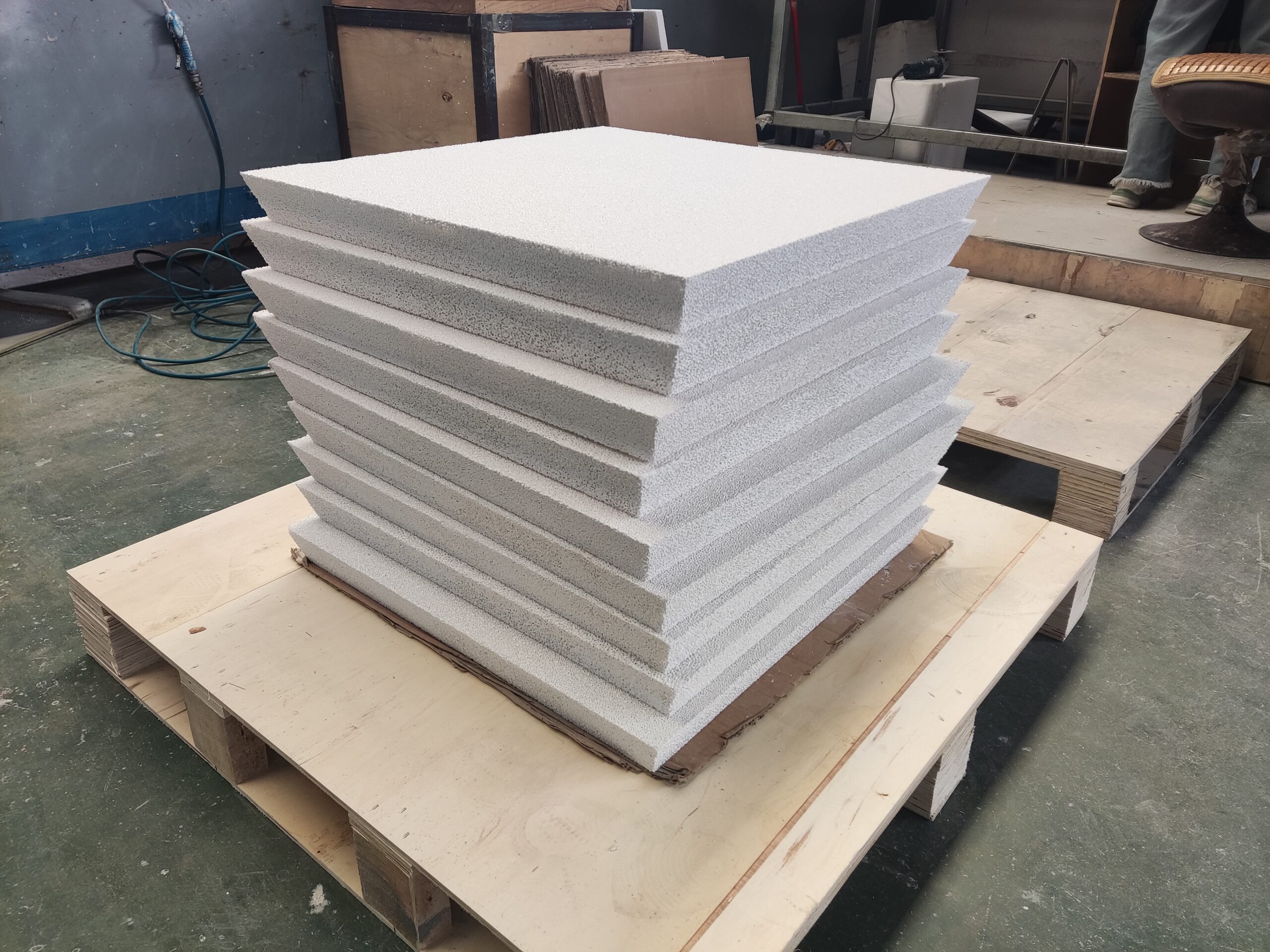
ceramic foam filter
Which PPI is right for aluminium casting and foundry filtration?
This is one of the most common buying questions, and the honest answer is that there is no single “best” grade for every process. The following table provides a practical reference for selecting the right PPI grade based on casting type and filtration requirement:
| PPI Grade | Typical Pore Size (mm) | Flow Rate (relative) | Filtration Efficiency (≥20μm inclusions) | Best Suited Applications |
|---|---|---|---|---|
| 10 PPI | ~4.0–5.0 | Very High | ~60–70% | Large billet casting, high-throughput launder systems |
| 20 PPI | ~2.0–3.0 | High | ~75–85% | General sand casting, semi-continuous casting |
| 30 PPI | ~1.2–1.8 | Medium-High | ~85–92% | Gravity die casting, wheel casting, most foundry work |
| 40 PPI | ~0.8–1.2 | Medium | ~90–95% | Low-pressure casting, precision sand casting |
| 50 PPI | ~0.6–0.8 | Medium-Low | ~93–97% | Thin-wall casting, electrical conductor rod |
| 60 PPI | ~0.4–0.5 | Low | ~95–98% | Aerospace, high-purity conductor applications |
Tips: Filtration efficiency values are approximate and vary depending on alloy cleanliness, pouring temperature, and gating design.
Is 10 PPI or 20 PPI better for high-flow applications?
For foundries that need high flow rate and are mainly targeting larger inclusions, 10 PPI ceramic foam filters or 20 PPI ceramic foam filters are often used. These grades are more open, which helps in systems where gating is tight or pouring temperature control is not ideal.
However, they do not capture fine inclusions as effectively as finer grades. They are useful, but not always the best choice for appearance-critical or mechanically demanding parts.
Why is 30 PPI the most common ceramic foam filter grade?
In real production, 30 PPI ceramic foam filter is often the sweet spot for aluminium casting. It gives a good balance between filtration efficiency and flow. For many gravity die casting, low-pressure casting, and sand casting applications, 30 PPI is where foundries get the cleanest practical result without choking the system.
If someone asks us where to start when evaluating ceramic foam filter suppliers in India, 30 PPI is often the first recommendation unless the gating system or part requirement points clearly in another direction.
When should you use 40 PPI, 50 PPI, or 60 PPI?
Finer grades like 40 PPI ceramic foam filter, 50 PPI, or even 60 PPI can improve cleanliness further, but only when the gating system, pouring practice, and melt condition are under control. A lot of suppliers push finer filters as if finer always means better. In our experience, that is not how foundries work.
If metal temperature fluctuates, head pressure is limited, or the runner is undersized, a very fine filter can create filling problems. So no, we do not tell every buyer to move to the highest PPI. The right answer depends on the whole process, not one number on a spec sheet.
What should you check before choosing ceramic foam filter suppliers in India?
If you are evaluating ceramic foam filter manufacturers in India or comparing imports against local supply, these are the points worth checking.
Are the dimensions consistent?
This sounds basic, but it matters more than people think. If the filter does not sit correctly in the print or filter box, molten metal can bypass around the edges. Once that happens, the filtration benefit is partly lost.
Dimensional tolerance, edge integrity, and flatness should all be stable. A filter that looks acceptable in the carton can still create bypass issues during production.
The table below shows the standard ceramic foam filter sizes commonly supplied to the Indian market, along with typical dimensional tolerance and thickness specifications:
| Nominal Size (inches) | Metric Dimensions (mm) | Standard Thickness (mm) | Dimensional Tolerance (mm) | Common Use |
|---|---|---|---|---|
| 7″ × 7″ | 178 × 178 | 50 | ±1.5 | Small gravity die casting, sample casting |
| 9″ × 9″ | 228 × 228 | 50 | ±1.5 | Medium gravity & sand casting foundries |
| 12″ × 12″ | 305 × 305 | 50 | ±2.0 | Wheel casting, general foundry use |
| 15″ × 15″ | 381 × 381 | 50 | ±2.0 | Billet casting, continuous casting lines |
| 17″ × 17″ | 432 × 432 | 50 | ±2.0 | Slab casting, large-volume filtration |
| 20″ × 20″ | 508 × 508 | 50 | ±2.5 | Primary aluminium smelter filtration |
| 23″ × 23″ | 584 × 584 | 50 | ±2.5 | High-throughput smelter and CFF box systems |
AdTech manufactures the full range of standard sizes and can produce custom dimensions for specific filter box designs. This flexibility is particularly relevant for foundries that are working with existing molds and hardware not designed around a single filter brand — rather than modifying your filter box, you can get a filter made to fit your existing setup.
Contact us for products tailored to your factory’s needs
Is the filter strong enough for handling and pouring?
A usable aluminium ceramic foam filter must survive transportation, installation, and metal contact. Brittle filters break during handling. Weak filters may crack during priming. Either case is expensive.
Does the supplier provide technical guidance or just a quote?
This is an easy way to separate real support from simple resale. A good supplier should be able to discuss:
- alloy type
- pouring temperature
- filter size
- PPI selection
- gating position
- expected metal throughput
- preheating practice if applicable
That is how we normally work at AdTech. We do not just ship filters. We help customers match the filter to the actual casting job.
Can the supplier support the broader molten metal treatment process?
Filtration does not work in isolation. If hydrogen is high, oxide generation is uncontrolled, or transfer practices are poor, filter performance alone will not fix the melt. That is why many foundries use ceramic foam filtration together with in-line degassing systems and other melt treatment tools.
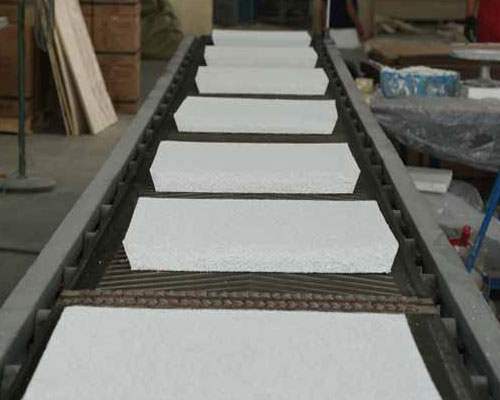
The Manufacturing Process of Ceramic Filter Plates
How much difference does a ceramic foam filter really make in casting quality?
A good one makes a visible difference.
In aluminium casting, ceramic foam filtration is mainly used to remove non-metallic inclusions such as oxides, refractory particles, spinel fragments, and flux residues. These contaminants are one of the major reasons castings fail on appearance, machining, leak testing, and mechanical performance.
When filtration is right, foundries usually see improvement in several areas:
- fewer surface defects
- lower inclusion-related scrap
- cleaner machining response
- more stable mechanical properties
- better pressure tightness
- improved finish on critical parts
In many production environments, that improvement is more valuable than the filter cost itself. This is exactly why buyers looking for ceramic foam filter price in India should not stop at unit price. The smarter question is cost per good casting.
Are cheaper ceramic foam filters in India really a better deal?
Usually not, at least not over time.
A low quote can look attractive when monthly consumption is high. But if the cheaper filter brings even a small increase in rejection, the savings disappear quickly. Anyone who has worked in casting knows this. One inclusion-related failure can waste more money than the price difference of an entire box of filters.
This is especially true in automotive, aerospace, electrical conductor, and export-driven foundries where quality claims are expensive. Buyers searching for ceramic foam filter manufacturers in India are often trying to get away from this exact cycle: cheap filter, unstable result, rising scrap, then another supplier switch.
Our view is simple. The right filter is not the cheapest one. It is the one that keeps process stability under control.
Why do many foundries use ceramic foam filters together with degassing?
Because inclusions and gas are different problems.
A ceramic foam filter removes solid contaminants from the melt. Degassing reduces dissolved hydrogen and helps float some impurities out before casting. In high-quality aluminium production, the best results often come from using both.
That is why customers who come to AdTech for filtration often also look at our online degassing equipment . If the target is cleaner metal, it makes sense to improve the whole treatment line rather than expecting one component to do everything.
In real foundry work, this integrated approach is what separates stable quality from patchwork troubleshooting.
How should a ceramic foam filter be installed for the best result?
Even the best molten metal filter will underperform if the setup is wrong.
Should the filter sit tightly in the print?
Yes. A proper seal is essential. If there is edge gap, molten metal will take the path of least resistance and flow around the filter. That is one of the most common reasons a foundry believes the filter “did not work,” when the real issue was bypass.
Does the gating design matter?
Absolutely. Filter performance depends on metal head, runner design, priming behaviour, and filling sequence. A filter should not be treated like a plug-in item that works regardless of system design. In well-designed filtration, metal flows through the full face area, primes quickly, and remains stable during pouring.
Should the filter grade be matched to the casting process?
Always. Sand casting, gravity die casting, low-pressure casting, and other aluminium processes do not behave exactly the same. If the process demands high cleanliness but has limited flow head, the filter and gating must be balanced carefully.
That is why the best ceramic foam filter supplier in India is not simply the one with stock on hand. It is the one that understands how the filter works in production.
How does ceramic foam filtration compare to other molten aluminium filtration methods?
Not all filtration technologies serve the same purpose. The table below compares the main types of filters used in aluminium foundries across India and globally:
| Filter Type | Structure | Filtration Mechanism | Typical Efficiency (≥20μm) | Flow Capacity | Cost Level | Best Use Case |
|---|---|---|---|---|---|---|
| Fiberglass Mesh | Woven flat screen | Surface sieving only | ~30–40% | Very High | Very Low | Low-end gravity casting, rough pre-screening |
| Extruded Ceramic (Honeycomb) | Straight-through channels | Mechanical screening | ~50–65% | High | Medium | Large billet casting with coarse inclusion load |
| Pressed Steel Mesh | Perforated metal plate | Coarse mechanical screening | ~20–30% | Very High | Low | Dross and slag holding, ladle pouring |
| Ceramic Foam Filter | Interconnected open-cell foam | Depth + surface filtration | ~85–98% | Medium | Medium-High | Foundry casting, billet, slab, rod, wheel casting |
| Bonded Particle Filter | Sintered ceramic granules | Depth filtration | ~80–90% | Medium-Low | Medium | Specialty alloy filtration |
As the table shows, ceramic foam filters offer the highest filtration efficiency among commonly available technologies, primarily because of their tortuous pore network that forces metal to change direction repeatedly. This greatly increases the probability that fine inclusions contact the ceramic surface and are captured by adhesion and mechanical trapping.
For the majority of aluminium casting applications — from sand casting and gravity die to continuous billet casting — ceramic foam remains the most practical and effective option. That is why demand from ceramic foam filter manufacturers in India continues to grow.
Why are more buyers choosing direct manufacturer support instead of general traders?
Because foundry problems are rarely generic.
When a buyer works directly with a manufacturer, several things usually improve:
- clearer technical communication
- better traceability
- more accurate product selection
- easier custom sizing
- more stable repeat orders
- faster root-cause support when issues arise
This is one of the reasons AdTech has built long-term relationships in overseas markets, including India. Customers do not just want cartons of filters. They want a supplier who can discuss molten metal cleanliness, filter performance, process matching, and related casting consumables in one conversation.
That broader capability is also why many customers who start with filters later source other hot top casting parts or aluminium casting consumables from the same system supplier.
What makes AdTech a strong option when comparing ceramic foam filter manufacturers in India?
We are realistic about this market. We know buyers have choices. We also know that “good quality” is easy to claim and harder to prove.
What we focus on is practical performance:
- stable ceramic foam filter production
- multiple PPI grades for aluminium casting
- standard and custom dimensions
- support for molten metal filtration and melt treatment
- reliable supply for repeat industrial use
- technical communication based on application, not just catalogue data
We also do not oversell. If a foundry does not need the finest filter, we will say so. If a gating change matters more than a PPI change, we will say that too. That kind of straightforward discussion tends to matter to serious buyers.
For customers evaluating ceramic foam filter manufacturers in India, that honesty usually stands out. They are tired of marketing language. They want filters that work.
We also support related foundry needs through ceramic fiber products and other consumables used around melt transfer, insulation, and casting operations.
Why does the right ceramic foam filter supplier matter more now than before?
Because casting tolerance is tighter, quality expectations are higher, and process waste is more expensive.
Foundries today are under pressure to improve yield, reduce scrap, and maintain cleaner metal with fewer interruptions. In that environment, a filter is not just a consumable. It is part of process control.
Choosing among ceramic foam filter manufacturers in India is really about choosing how much risk you are willing to tolerate in your melt system. If consistency matters, then manufacturing discipline matters. If casting quality matters, then filtration quality matters too.
AdTech is built around that logic. Our full product portfolio for aluminum casting and molten metal treatment is designed for foundries that want dependable performance, not guesswork. If you are reviewing suppliers for ceramic foam filters in India, that is the conversation worth having.
FAQ
1. Who are the best ceramic foam filter manufacturers in India?
The best ceramic foam filter manufacturers in India are usually the ones that offer consistent quality, stable PPI, custom sizes, and technical support for aluminum casting applications.
2. What is a ceramic foam filter used for in aluminum casting?
A ceramic foam filter is used to remove inclusions such as oxides, slag, and other non-metallic particles from molten aluminum before casting.
3. Which PPI is best for aluminum casting?
For most aluminum casting applications, 30 PPI is a common choice because it offers a good balance between filtration efficiency and metal flow.
4. What is the difference between 20 PPI and 30 PPI ceramic foam filters?
A 20 PPI filter has larger pores and higher flow, while a 30 PPI filter provides finer filtration and is more widely used for cleaner aluminum castings.
5. Are ceramic foam filters better than fiberglass mesh filters?
Yes. Ceramic foam filters usually provide much better inclusion removal than fiberglass mesh because they offer depth filtration instead of only surface screening.
6. Can ceramic foam filters be custom made in size?
Yes. Many manufacturers, including AdTech, can supply ceramic foam filters in both standard and custom sizes to match different filter boxes and gating systems.
7. How do I choose the right ceramic foam filter supplier in India?
Pressure drop can be controlled by selecting the correct pore size, maintaining an appropriate flow rate, preventing excessive particle loading, and performing regular backwashing or blowback cleaning. Proper system design also helps maintain stable filtration performance.
8. What material is commonly used for ceramic foam filters in aluminum foundries?
Alumina is the most commonly used material for ceramic foam filters in aluminum foundries because it performs well with molten aluminum.
9. Do ceramic foam filters help reduce casting defects?
Yes. A good ceramic foam filter can reduce inclusion-related defects, improve surface finish, and lower scrap rates in aluminum casting.
10. Why do foundries buy ceramic foam filters from AdTech?
Foundries choose AdTech for stable filter quality, multiple PPI options, custom dimensions, and support for aluminum casting and molten metal treatment.