When evaluating a ceramic foam filter for molten aluminum filtration, many buyers focus on pore size, dimensions, or price. However, the manufacturing process often has a greater impact on filtration efficiency than any specification listed on a datasheet.
The quality of a ceramic foam filter is determined by raw material selection, slurry formulation, pore structure replication, dimensional accuracy, sintering control, and final inspection standards. Small variations during production can influence inclusion removal efficiency, thermal shock resistance, metal flow stability, and casting quality. Understanding how ceramic foam filters are manufactured helps foundries select filters that deliver cleaner aluminum, lower defect rates, and more consistent casting performance.
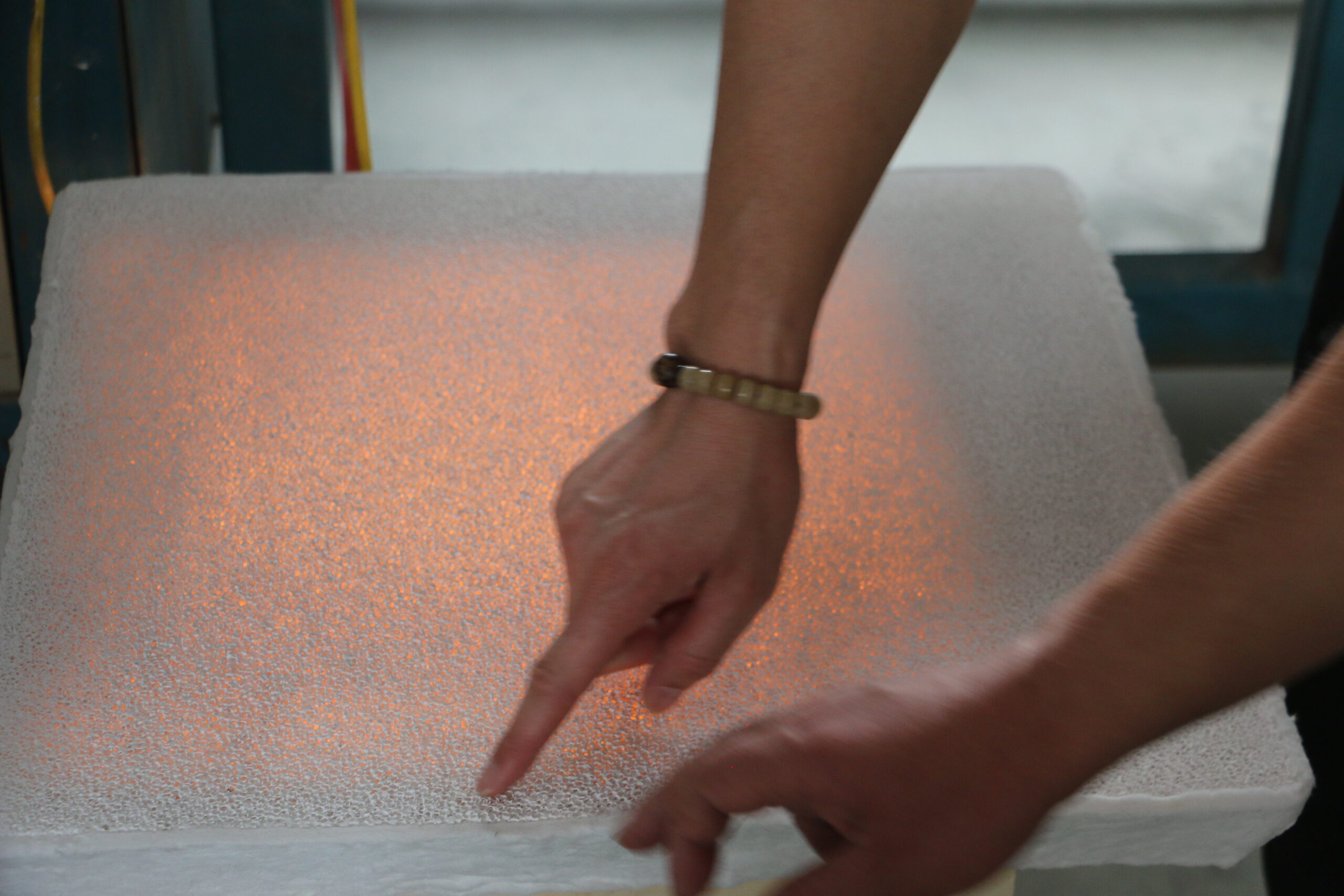
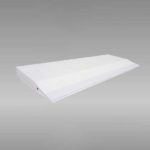
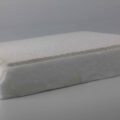
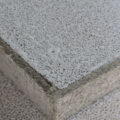
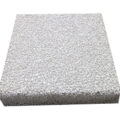
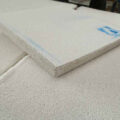
Close-up of a ceramic foam filter plate with uniform pore structure, designed for effective removal of inclusions in molten aluminum.
What Is the Ceramic Foam Filter Manufacturing Process?
The ceramic foam filter manufacturing process is a controlled production method used to create a three-dimensional interconnected ceramic structure capable of removing non-metallic inclusions from molten aluminum.
Most high-performance ceramic foam filters are manufactured using the polyurethane foam replication process. This technology reproduces the cellular structure of open-cell foam and converts it into a rigid ceramic network through high-temperature firing.
The production process generally includes:
- Raw material preparation
- Ceramic slurry formulation
- Foam impregnation
- Excess slurry removal
- Controlled drying
- High-temperature sintering
- Cutting and dimensional finishing
- Quality inspection
- Packaging and shipment
Each stage contributes directly to the final filtration performance.
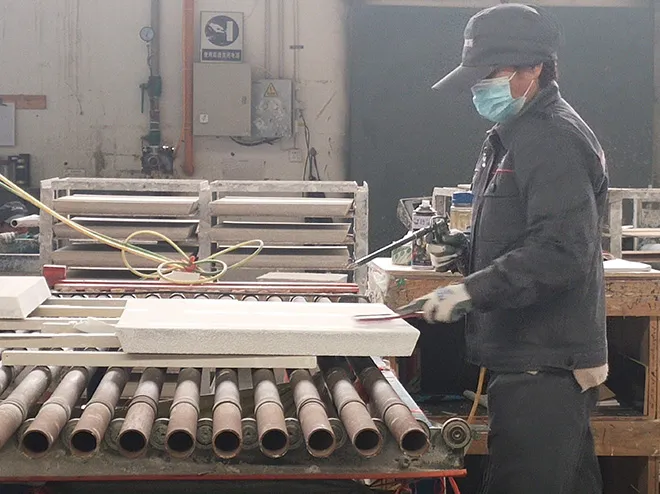
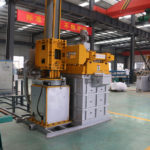
Ceramic Foam Filter Manufacturing
How Are Ceramic Foam Filters Made?
Why Does Raw Material Selection Matter?
The manufacturing process begins with the selection of refractory raw materials.
For molten aluminum filtration, commonly used materials include:
- High-purity fused silica
- Alumina-silica compositions
- Specialized refractory additives
- Organic binders
- Dispersants and stabilizers
Raw material quality affects:
- Thermal shock resistance
- Mechanical strength
- Chemical compatibility with molten aluminum
- Service life
Low-grade materials may increase the risk of cracking, premature failure, or inconsistent filtration performance.
How Is Ceramic Slurry Prepared?
The ceramic slurry forms the structural framework of the finished filter.
To achieve consistent results, the slurry must maintain:
- Stable viscosity
- Uniform particle distribution
- Controlled solid content
- Reliable adhesion to the foam substrate
Key production parameters include:
- Particle size distribution
- Mixing duration
- Temperature control
- Binder concentration
- Rheological stability
Poor slurry control often results in blocked pores, weak cell walls, and inconsistent filtration characteristics.
Why Is Polyurethane Foam Used in Ceramic Foam Filter Production?
Polyurethane foam serves as a sacrificial template.
Its open-cell structure determines the final pore network of the ceramic filter.
Common pore sizes include:
- 10 PPI
- 20 PPI
- 30 PPI
- 40 PPI
- 50 PPI
Lower PPI filters typically provide higher flow rates, while higher PPI filters offer finer inclusion removal.
The quality of the original foam template plays a significant role in achieving uniform pore distribution throughout the finished filter.
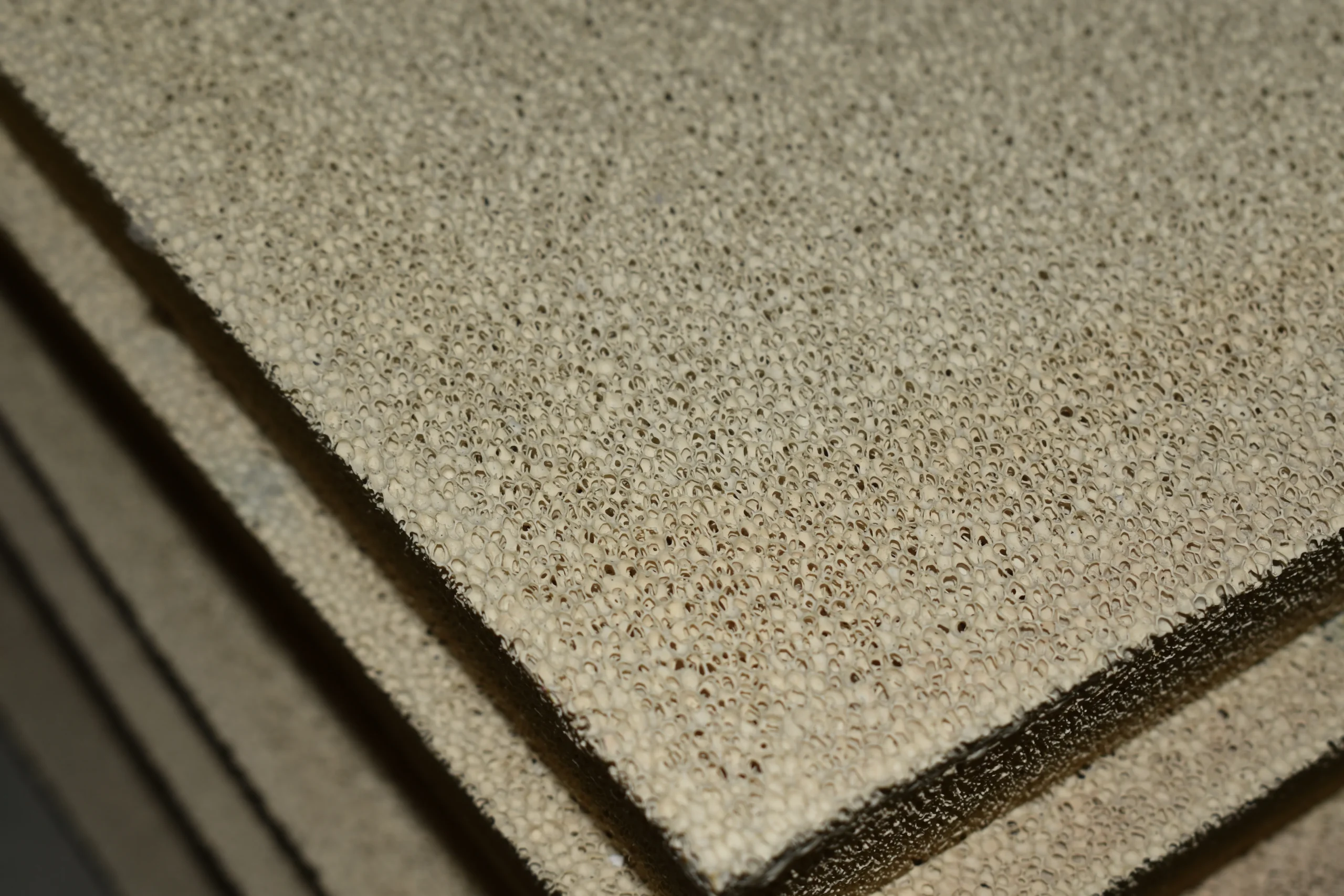
Polyurethane Foam Used in Ceramic Foam Filter
What Happens During Foam Impregnation?
How Does the Replication Process Create the Porous Structure?
The polyurethane foam is immersed in ceramic slurry until all cell walls are coated.
After impregnation, excess slurry is removed while preserving the interconnected pore network.
This step determines:
- Pore connectivity
- Metal flow characteristics
- Pressure drop
- Inclusion capture efficiency
Too little coating can weaken the ceramic skeleton, while excessive coating may block pores and reduce permeability.
Why Is Excess Slurry Removal So Important?
One of the most critical stages in ceramic foam filter manufacturing is controlling residual slurry.
Advanced production systems use calibrated compression and coating control techniques to achieve:
- Uniform coating thickness
- Stable pore geometry
- Consistent permeability
Poor slurry removal frequently leads to blind cells and blocked pores.
Blind cells are pores that become partially or completely closed during manufacturing and no longer participate in filtration. A high blind-cell ratio can reduce effective filtration area, increase flow resistance, and negatively affect casting performance.
High-quality ceramic foam filters typically exhibit fewer blind cells, particularly around the edges where pore blockage is most likely to occur.
How Are Ceramic Foam Filters Dried?
Drying is not simply a moisture removal step.
It is a carefully controlled process designed to prevent:
- Surface cracking
- Internal stress formation
- Structural deformation
- Irregular shrinkage
Drying conditions usually involve:
- Controlled airflow
- Gradual temperature increases
- Humidity management
Rapid drying can create microcracks that may not be visible during inspection but can become failure points when exposed to molten aluminum.
What Happens During Sintering?
Why Is Sintering the Most Critical Manufacturing Stage?
Sintering transforms the fragile coated foam into a rigid ceramic structure.
During firing:
- The polyurethane foam burns away
- Organic binders decompose
- Ceramic particles bond together
- Mechanical strength develops
The result is a porous ceramic skeleton that retains the original foam geometry.
How Does Sintering Affect Filter Quality?
Sintering conditions directly influence:
- Compressive strength
- Thermal shock resistance
- Porosity
- Dimensional stability
Poor furnace control may result in:
- Warping
- Excessive shrinkage
- Weak structures
- Surface defects
Consistent firing cycles are essential for producing filters capable of withstanding molten aluminum operating conditions.
Why Do Ceramic Foam Filters with the Same PPI Often Perform Differently?
Many buyers assume that filters with identical PPI ratings should perform similarly. In reality, filtration performance often varies considerably between suppliers.
PPI only describes pore density. It does not indicate:
- Manufacturing precision
- Blind-cell ratio
- Coating consistency
- Surface strength
- Dimensional accuracy
- Batch-to-batch repeatability
Modern manufacturing increasingly relies on automation to reduce production variation.
Adtech operating multiple manufacturing lines with automation levels exceeding 85% can achieve significantly better process consistency. Higher automation helps maintain stable coating thickness, pore structure, and dimensional control across large production volumes.
For aluminum casthouses producing billets, slabs, and rolling ingots, consistent manufacturing often translates directly into more predictable filtration performance.
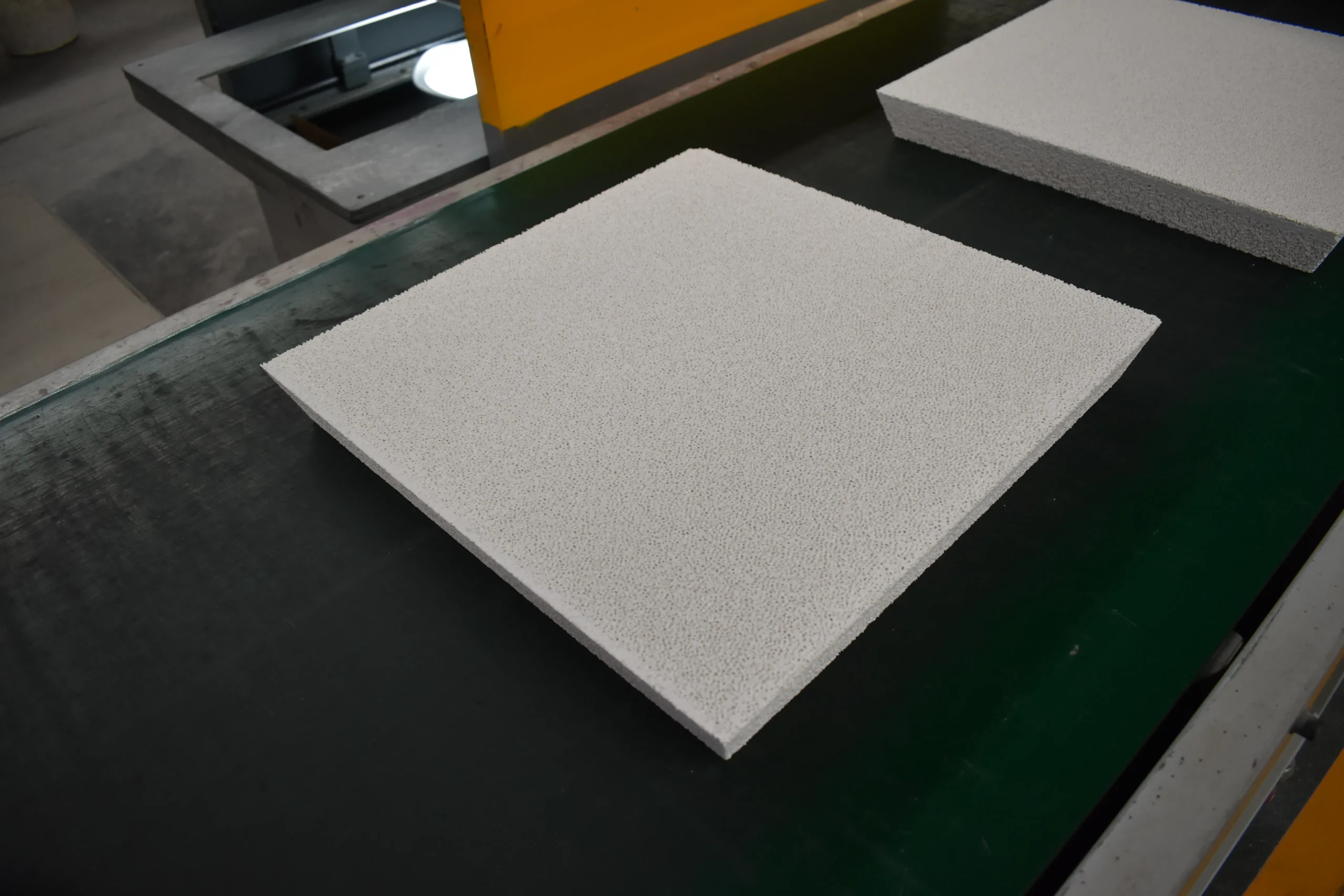
ceramic foam filter
How Does Dimensional Accuracy Affect Molten Aluminum Filtration?
Dimensional precision is one of the most overlooked factors in filter performance.
Even minor dimensional deviations can create gaps between the filter and the filter bowl, allowing molten aluminum to bypass the filtration zone.
High-quality ceramic foam filters are typically produced within strict dimensional tolerances. In demanding aluminum casting applications, dimensional accuracy controlled within +1/-2 mm helps ensure proper seating and sealing inside filtration systems.
Filter thickness consistency is equally important. Thickness variations can alter metal flow behavior and pressure distribution. Filters manufactured to approximately 50 ±1 mm thickness generally provide more stable operating conditions.
What Quality Standards Should Buyers Look for When Selecting a Ceramic Foam Filter?
Surface Strength
Mechanical strength must be balanced carefully.
While a minimum surface strength is necessary for handling and installation, excessively high strength is not always beneficial. Ceramic structures that become overly dense may lose some resistance to thermal shock and become more brittle.
Industry standards often regard surface strength above 0.7 MPa as acceptable. However, AdTech ceramic foam filters typically maintain higher-than-standard strength while avoiding excessive brittleness. The goal is not maximum hardness but an optimal balance between durability and thermal shock resistance.
Edge Geometry and Flow Design
Filter geometry affects installation stability and metal flow behavior.
Consistent inclination angles contribute to predictable positioning within filtration systems. Precision-controlled manufacturing can maintain inclination angles around 17.5° ±1°, helping improve installation consistency and flow distribution.
Uniform geometry supports smoother metal flow and more stable filtration performance.
Production Consistency
One of the strongest indicators of product quality is manufacturing repeatability.
Manufacturers operating multiple automated production lines are generally better equipped to maintain consistent:
- Porosity
- Thickness
- Strength
- Pore structure
- Dimensional accuracy
Stable production conditions help reduce batch-to-batch variation and improve casting reliability.
How Can Preheating Indicators Improve Casting Operations?
Proper preheating is essential before introducing molten aluminum into a ceramic foam filter.
Insufficient preheating can increase thermal shock and may contribute to filter damage during startup.
Some ceramic foam filters can be supplied with a preheating indicator spot. The indicator gradually disappears as the filter reaches the required preheating temperature.
This provides a simple visual confirmation that preheating is complete. Once the indicator has disappeared, operators can immediately begin metal flow without relying solely on timing estimates or operator judgment.
For casthouses seeking greater process consistency, preheating indicators can help standardize startup procedures and reduce uncertainty.
What Manufacturing Defects Can Affect Ceramic Foam Filters?
Common production defects include:
| Defect | Possible Cause |
|---|---|
| Blocked pores | Excess slurry retention |
| Blind cells | Inadequate coating control |
| Cracks | Improper drying |
| Low strength | Insufficient sintering |
| Dimensional deviation | Poor cutting accuracy |
| Uneven pore structure | Low-quality foam substrate |
| Surface chipping | Improper handling |
These defects can significantly reduce filtration efficiency and casting quality.
How Does Manufacturing Quality Influence Molten Aluminum Filtration?
The effectiveness of a ceramic foam filter depends on far more than its PPI rating.
Manufacturing quality influences:
- Inclusion removal efficiency
- Oxide capture capability
- Turbulence reduction
- Metal flow stability
- Casting surface quality
- Operational reliability
Filters produced under strict process control generally provide more predictable performance and lower defect rates.
Foundries seeking maximum metal cleanliness often evaluate filtration quality alongside upstream melt treatment technologies such as online degassing systems and advanced molten aluminum filtration solutions.
How to Choose a Ceramic Foam Filter Manufacturer?
When comparing suppliers, consider the following factors:
Do They Control Raw Material Quality?
Consistent raw materials help ensure consistent filtration performance.
Do They Perform Thermal Shock Testing?
Thermal shock resistance remains one of the most important requirements for molten aluminum applications.
Do They Use Automated Production Systems?
Higher automation improves repeatability and reduces production variation.
Do They Maintain Tight Dimensional Tolerances?
Dimensional precision directly affects sealing performance and filtration efficiency.
Do They Minimize Blind Cells?
A lower blind-cell ratio increases effective filtration area and improves metal flow.
Do They Offer Technical Support?
Application expertise can help optimize filter selection, installation, and operating performance.
Conclusion
The ceramic foam filter manufacturing process is far more than a simple forming operation. Every stage—from raw material preparation and slurry formulation to pore replication, sintering, and final inspection—affects filtration performance.
For aluminum foundries producing billets, slabs, extrusion ingots, and rolling stock, selecting a filter manufactured under strict quality control can have a greater impact on metal cleanliness than choosing a higher PPI rating alone. Understanding how ceramic foam filters are made enables better supplier evaluation and contributes directly to cleaner molten aluminum, fewer casting defects, and more reliable production results.
FAQ
1. How are ceramic foam filters manufactured?
Most ceramic foam filters are produced using the polyurethane foam replication process, where a foam template is coated with ceramic slurry, dried, and sintered to create an interconnected ceramic structure.
2. What raw materials are used in ceramic foam filters?
Common materials include fused silica, alumina-silica formulations, refractory additives, binders, and dispersants designed for molten aluminum filtration.
3. Why is the polyurethane foam replication process widely used?
It creates a highly uniform open-cell structure with excellent permeability and filtration efficiency.
4. How does PPI affect filter performance?
Lower PPI filters provide higher flow rates, while higher PPI filters capture finer inclusions and improve metal cleanliness.
5. What quality control tests should ceramic foam filters pass?
Typical tests include dimensional inspection, strength testing, pore structure evaluation, thermal shock testing, and visual defect inspection.
6. Why can filters with the same PPI perform differently?
Manufacturing quality, blind-cell ratio, dimensional accuracy, coating consistency, and sintering control all influence actual filtration performance.
7. What are blind cells in ceramic foam filters?
Blind cells are blocked pores that no longer contribute to filtration. A lower blind-cell ratio generally improves effective filtration area and metal flow.
8. Does higher surface strength always mean better filter quality?
No. Excessive strength can increase brittleness. The best filters balance mechanical durability with thermal shock resistance.
9. How can operators determine whether a filter has been sufficiently preheated?
Some filters include a preheating indicator spot that disappears when the target temperature is reached, providing a clear visual signal that the filter is ready for molten aluminum.
10. What production features indicate a reliable ceramic foam filter manufacturer?
Key indicators include automated production lines, strict dimensional control, low blind-cell ratios, stable pore structures, thermal shock testing, and consistent batch-to-batch quality control.
Related posts:
 Molten Alu Foam Ceramic Filter
 Ceramic Foam Filter Manufacturing
 Alumina CFF Filtration
 Alumina Foam Ceramic Filter Plate
 Molten Al Filtration
 Aluminum Filtration
 Foam Ceramic Filter Board
 Ceramic Filter Manufacturing Process
 Ceramic Filter Molten Aluminum Filtration
 Foam Ceramic Filter Manufacturing Process
 Molten Aluminum Ceramic Filter
 Metal Foam Filter Manufacturing Process
 Ceramic Foam Filter for Metal Casting
 Foam Ceramic Filters Manufacturing
 Foundry Filters Manufacturing Process