Blog - Page 41 of 73 - Tap Out Cone,Refining Flux,Ceramic Foam Filter,Aluminum Cast Materials

Blog

20Nov 2020
Floatation Degassing Method

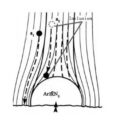
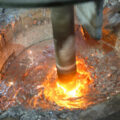
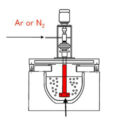
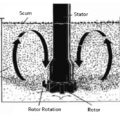
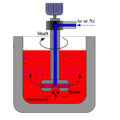
The floatation method is generally used for degassing. The principle is to pass a certain non-hydrogen-free gas into the aluminum liquid to generate bubbles, and use these bubbles to take the dissolved hydrogen out of the aluminum liquid and escape into the atmosphere during the floating process. In order to obtain a better refining effect, […]
20Nov 2020
Molten Aluminum Fluxes Refining

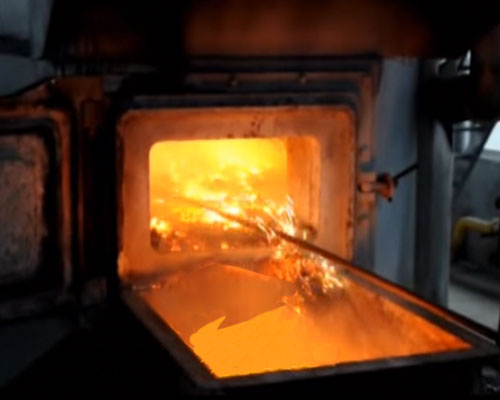
For non-metallic inclusions, molten aluminum fluxes refining can be used to effectively remove them for materials with higher requirements, a filter can be used in the casting process or the melt can be removed by ceramic foam filter filtration through a molten flux layer. For metal impurities, the general treatment method is to turn harmful […]

20Nov 2020
Strontium Modification Treatment

The silicon phase in the aluminum-silicon alloy eutectic will grow into flakes under spontaneous growth conditions, and even thick polygonal tabular silicon phases will appear. These silicon phases will severely split the Al matrix at the tips and corners of the Si phase. Causes stress concentration at the location, the alloy is easy to crack […]

20Nov 2020
Modification of Al-Si Alloy

Hypereutectic Al-Si alloy has a high silicon content, which reduces the thermal expansion coefficient of the alloy and improves wear resistance. It is suitable for wear-resistant parts such as pistons of internal combustion engines. There are tabular primary silicon and needle-shaped eutectic silicon in the hypereutectic Al-Si alloy structure. Primary crystal silicon as a hard […]

20Nov 2020
Aluminum Modification Process

The main factors of aluminum alloy modification process are: modification temperature, modification time, type and amount of modification agent. 1. Modification temperature. Higher temperature is beneficial to the modification reaction, the recovery rate of sodium is high, the modification speed is fast, and the effect is good. But the modification temperature should not be too […]

20Nov 2020
How to Remove Dissolved Hydrogen

How to remove dissolved hydrogen in aluminum alloy? The hydrogen in aluminum can cause pores to form when the metal solidifies. To prevent this from happening, the hydrogen in the aluminum alloy can be removed by diffusing nitrogen particles into the liquid alloy. Nitrogen bubbles combine with hydrogen, rise to the liquid level and escape […]

20Nov 2020
Refining Effect of Molten Aluminum

The refining effect of molten aluminum has an important influence on the formation of pores, shrinkage cavities and inclusions, and directly affects the physical and mechanical properties of aluminum alloy castings. Without high-quality molten aluminum, even if the subsequent processing is advanced, the defects will always exist in the product once they occur, and high-quality […]

20Nov 2020
Risk Factors in Aluminum Casting

Major risk factors in the aluminum melting and casting workshop Liquid aluminum explodes when it meets with water, and it is also accompanied by a chain reaction of explosive spray and overflow of liquid aluminum. Very easy to cause serious burns, deaths, and fire accidents. The main loops that are prone to major safety accidents […]

20Nov 2020
How to Prevent Bubbles on Aluminum

Bubbles of different sizes often appear on the surface of aluminum alloy die castings, especially on thin-walled cover products. What is the reason? How to prevent and solve bubbles on aluminum, let’s make a brief analysis. The bubbles on the surface of the die-casting parts often appear on the end of the product far away […]

19Nov 2020
Impurities in Aluminum Alloy

The liquid impurities in the aluminum alloy liquid are mainly chloride salts generated in situ. The chloride salt can be in a solid state or in a molten state. Once formed, it is very difficult to remove from molten aluminum. Chlorine and aluminum can combine to form AlCl3 at about 178ºC. If there is no […]