Blog - Page 54 of 73 - Tap Out Cone,Refining Flux,Ceramic Foam Filter,Aluminum Cast Materials

Blog

24Sep 2020
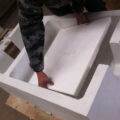
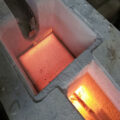
Molten Metal Filters Filtration

At present, the largest industrial use of foam ceramics is molten metal filters filtration. In the process of metal melting and casting, due to various reasons, there are different forms of inclusions in the melt. Their number, shape, size, distribution will have an adverse effect on the strength, plasticity, and toughness of the casting, and […]
24Sep 2020
Filtration Efficiency

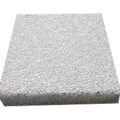
The filtration efficiency of CFF has a great relationship with the number of pores/pore size and the size of insoluble inclusions. The reduction of the pore size improves the ability to “trap” small inclusions and increases the filtration efficiency. The filtration mechanism of CFF is a deep filtration mechanism. When aluminum melt passes through the […]

24Sep 2020
Hydrogen Removal

In the aluminum melt, hydrogen not only exists in the atomic state, but also exists in the melt in combination with various inclusions. AdTech offers online degassing unit for hydrogen removal. Because the rotating nozzle has a “flotation” function while removing hydrogen, a considerable amount of insoluble inclusions can be removed, and the purpose of […]

24Sep 2020
Molten Aluminum Degassing

People have conducted extensive research on reducing the hydrogen content and insoluble inclusions in aluminum alloy melts. The simplest method of molten aluminum degassing in the early days was batch processing in the furnace. The refining gas was introduced into the bottom of the molten pool through a tube to produce bubbles. The refining gas […]

24Sep 2020
Aluminum Cast-rolled Sheet Defects

The surface quality of aluminum cast-rolled sheet defects are mainly longitudinal stripe and transverse ripple. The main reasons for the longitudinal streaks on the plate surface are as follows: the gap between the roller and the nozzle is too small, which causes friction between the roll and the casting nozzle, the local damage of the […]

24Sep 2020
Cast Rolling Plate Quality

In addition to chemical composition, the cast rolling plate quality mainly includes grain size, gas and slag inclusion. In addition to the proportion of electrolytic aluminum liquid and solid material will affect the internal quality of cast rolling plate, the melt refining is the key. In order to make the gas and slag in molten […]

24Sep 2020
Tip Cavity

In order to cooperate with the cooling and increasing speed of casting and rolling, based on the increase of the nozzle roll gap, the flow pattern of the nozzle must be improved to make the flow field, temperature field and concentration field in the tip cavity uniform. Due to the cooling and increasing speed of […]

24Sep 2020
Heat Balance

In order to cooperate with the cooling and speeding of casting and rolling, the cooling intensity must be increased to ensure the heat balance in production. Due to the increase of the casting-rolling speed, the defect of sticking rolls is very easy to appear. The aluminum sticking on the part or the entire width of […]

24Sep 2020
Gap on Nozzle and Rolls

Increase the gap on nozzle and rolls, optimize the nozzle flow pattern, help eliminate the longitudinal streak defects, and improve the surface quality of the cast-rolled strip. The surface features of the longitudinal stripes are defects that run through the entire length of the cast-rolled sheet. The longitudinal stripes are bright bands, sometimes deep. The […]

24Sep 2020
Front Box Temperature

Lowering the front box temperature and increasing the casting-rolling speed can not only improve production efficiency, but also improve melt fluidity and melt solidification conditions, and increase the internal density of the cast-rolled coil. In production, ensuring the temperature of the smelting furnace, the standing furnace, and the caster tip and nozzle of the standing […]