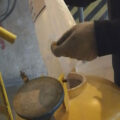
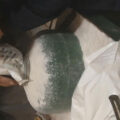
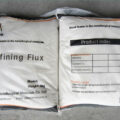
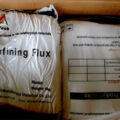
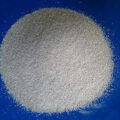
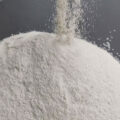
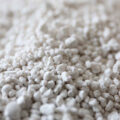
Granular Fluxes can reduce emissions by up to 85% without significantly reducing performance, as they allow less flux to be used and make it work in a different way. It has been found that the form of flux has a very important influence on the type and quantity of emissions. In an increasingly environmentally conscious […]

The high-efficiency aluminum melting refining agent is mainly used to remove the hydrogen and floating oxidized slag in the aluminum liquid, so that the aluminum liquid is more pure, and the metal solvent also has the effect of removing slag. The principle is that some members of the molten aluminum refining agent are easy to […]
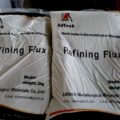
The aluminium refining flux is white powder and granular. It is mixed according to a certain proportion after the drying of various inorganic salts. It plays an important role in the process of smelting aluminium. What is the role of the specific aluminium refining agent? Aluminium refining flux is mainly used to remove the hydrogen […]
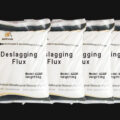
Deslagging Flux has the ability to absorb inclusions to float to the surface of the molten aluminum and form dry slag. The compound in the flux reacts with the impurities in the aluminum liquid, so that the oxide becomes more stable, and it is easy to generate high-temperature oxides with a smaller affinity for molten […]
Aluminum Refining Flux should be added in proportion. The aluminum refining agent is generally 0.3% of aluminum alloy. Method Use a seamless steel pipe inserted 20cm from the bottom of the molten aluminum, and spray the refining agent with nitrogen or argon. After the refining spray, the nitrogen or argon is blown for another 15-20 […]
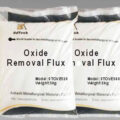
The surface of the aluminum material has an uneven thickness of the oxide film, sometimes also absorbs water, is mixed with sand, sticky with oil stains, and painted with paint. When melting, the aluminum material is further oxidized in a high-temperature environment, the thickness of the oxide film increases, and it reacts with moisture to […]
In the smelting process of aluminum and aluminum alloys, hydrogen and oxidized inclusions are the main substances polluting the aluminum melt. Aluminum easily forms A1202 or sub-alumina (Al2O and A10) with oxygen. At the same time, it is also very easy to absorb gas (H) whose content accounts for 70-90% of the total gas in […]