Blog - Page 65 of 73 - Tap Out Cone,Refining Flux,Ceramic Foam Filter,Aluminum Cast Materials

Blog

11Jul 2020
Aluminum Foil Casting

The aluminum foil is made of aluminum alloy containing 92% to 99% aluminum. The thickness of the foil is usually 0.00017 to 0.0059 inches, can produce a variety of widths and strengths, can be used in hundreds of applications. It is used to manufacture insulation materials for the construction industry, fin materials for air conditioning, […]
09Jul 2020
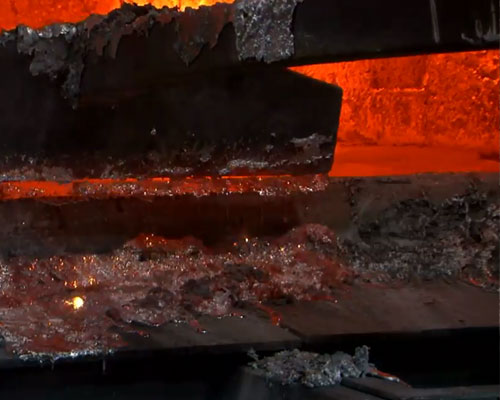
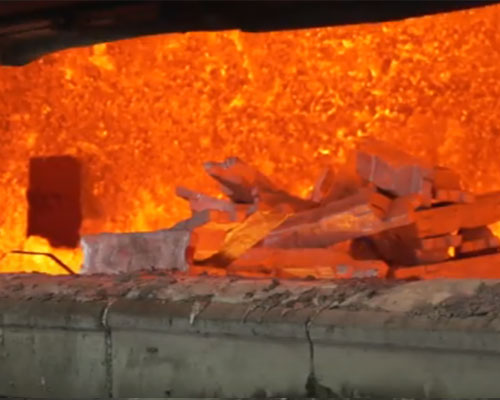
Extraction And Refining Aluminum

Known deposits of bauxite can supply the world with aluminum for hundreds of years at present production levels. When high-grade bauxite deposits are depleted, substantial reserves of secondary ores will remain to be exploited: laterite deposits in the northwestern United States and Australia, anorthosite in the western United States, apatite and alunite in Europe, kaolinite […]

09Jul 2020
Aluminum Ingot Smelting and Casting

Aluminum ingot smelting and casting use the Hall-Héroult process to extract aluminum metal from its oxide alumina. In this method, alumina is dissolved in cryolite in a cauldron at about 1000°C. The mixture is then electrolyzed to deposit heavier liquid aluminum on the cathode at the bottom of the pot. The aluminum can then be […]

09Jul 2020
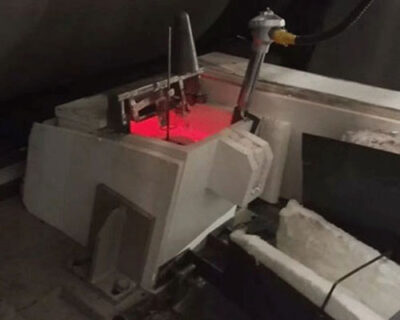
Aluminium Melt Purification

The aluminum liquid removed from the aluminum electrolytic cell contains many impurities, which not only affects the casting and processing performance of metal aluminum, but also affects the quality of the product. In addition to the accompanying metal impurity elements accompanying aluminum precipitation during the electrolysis process, there are non-metal solid impurities (such as oxides, […]

09Jul 2020
Refining Scrap Aluminum

When refining scrap aluminum, especially when the aluminum concentration is less than 50 wt%, particles of glass, oxides and stones are usually very harmful. When conventional techniques are used for this purpose, the removal of such foreign objects has caused considerable difficulties. However, before electrolytic purification, whether it is through three-layer electrolysis, bipolar electrolysis or […]

08Jul 2020
Aluminum Oxide Refining

Alumina is properly called aluminum oxide, which is a chemical compound comprised of aluminum and oxygen molecules (Al2O3). After aluminum oxide refining from bauxite, alumina generally looks like a white powder similar to table salt or granular sugar. Aluminum oxide is typically referred to as alumina, but may also be called aloxide, aloxite or alundum, […]

08Jul 2020
Grain Refinement

A finer grain size promotes improved casting soundness by minimizing shrinkage, hot cracking, and hydrogen porosity. Under normal solidification conditions spanning the full range of commercial casting processes, aluminum alloys without grain refinement exhibit coarse columnar and/or coarse equiaxed structures. A fine grain structure also minimizes the effects on castability and properties associated with the […]

04Jul 2020
Aluminum Alloy Plate Casting

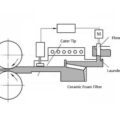
The basic process of aluminum alloy plate continuous casting and rolling process is: aluminum ingot → melting furnace → static furnace → degassing unit→ filtration unit→ casting nozzle → rolling mill → intermediate unit → coiling machine. It is characterized by casting and rolling molten aluminum into 6-10mm thick, 650-1400mm wide slab and rewinding. And […]

03Jul 2020
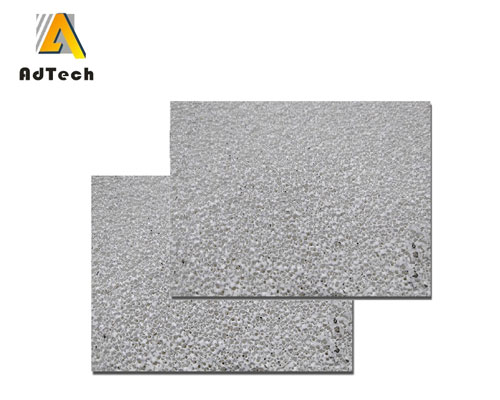
Honeycomb Filter Material

Honeycomb filter material has natural chemical adsorption (affinity) ability to oxides, and absorbs impurities (including particles smaller than the pore size) in the molten metal on the inner wall of the hole, which improves the filtering effect. The advanced extrusion production process makes the ceramic filter with a unique square and triangular design, which increases […]

03Jul 2020
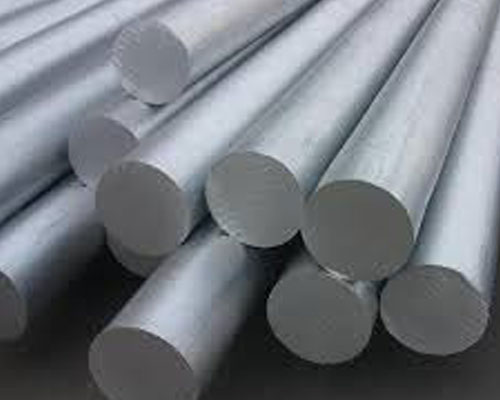
6063 Aluminum Bar

Iron is the main impurity element in aluminum alloys. In the 6063 aluminum bar, the national standard stipulates that it is not more than 0.35. If a first-grade industrial aluminum ingot is used in production, the general iron content can be controlled below 0.25. However, if in order to reduce production costs, a large amount […]