Blog - Page 60 of 73 - Tap Out Cone,Refining Flux,Ceramic Foam Filter,Aluminum Cast Materials

Blog

31Aug 2020
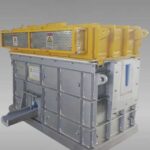
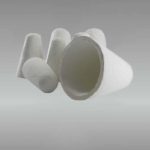
Tubular Filter Device

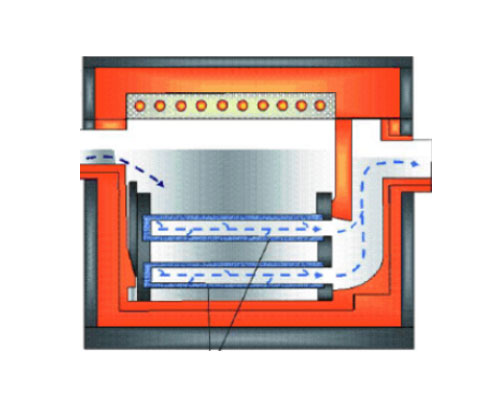
Tubular filter device was first proposed in the United States in 1960, and later developed and applied by Japan. In Japan and South Korea, tubular filter devices are mainly used as the standard configuration for producing double zero aluminum foil. The tubular filter device is a filter tube made of high-quality lead oxide sintered with […]
28Aug 2020
Aluminum Melt Filtration

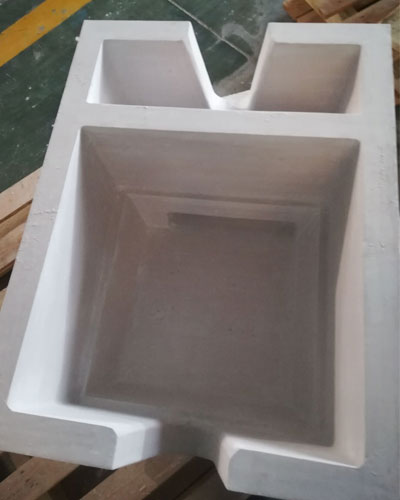
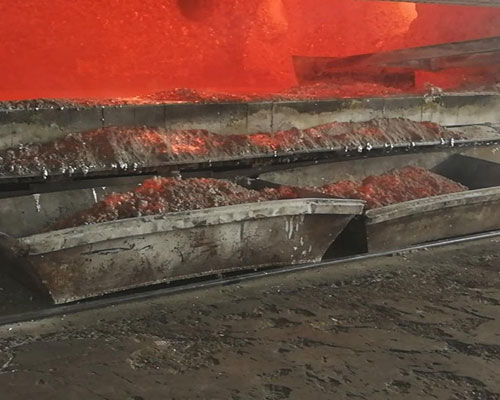
In order to optimize the process of aluminum melt filtration technology, a reasonable process configuration is very important. The harm of metallurgical defects in aluminum to processing deformation production and final mechanical properties of products cannot be ignored. To improve the quality of can materials, aircraft materials, etc., it is necessary to pay attention to […]

28Aug 2020
Alkali Metal Removal Technology

Aluminum alloy melt alkali metal removal technology can be divided into three types: alkali removal technology before furnace, furnace alkali removal technology, and after furnace alkali removal technology. In the production, you can select a variety or a combination of alkali removal technologies according to the alloy varieties produced to ensure the control of the […]

28Aug 2020
Alkali Metals in Aluminum Melt

Alkali metals in aluminum melt mainly include elements Na, Li, K. Among the alkali metal elements, lithium can be used as a strengthening element for aluminum alloys. Its function is to reduce the density of aluminum alloys and improve the elastic modulus of aluminum alloys. In other cases, the alkali metal elements are in the […]

28Aug 2020
Impurities in Aluminum Alloy Melt

Impurities in aluminum alloy melt contain more or less gas, various non-metallic inclusions, and other harmful metals. The presence of these impurities will directly affect the quality of aluminum alloy, causing ingots such as porosity, pores, slag inclusions, etc. Defects in turn have adverse effects on the mechanical properties, processing properties, corrosion resistance, surface treatment […]

27Aug 2020
Electrolytic Aluminum Liquid Purification

Electrolytic aluminum liquid purification is important for aluminum factory. Aluminum foundries use more stringent purification processes to ensure the purity of the aluminum melt. In production, after six times of purification, slag discharge and degassing, to ensure the effect of melt purification. The temperature of the electrolytic aluminum solution is as high as 950°C, which […]

27Aug 2020
LHC Casting System

LHC Casting System is advanced molten aluminum casting technology, uses electrolytic raw aluminum liquid to directly produce aluminum alloy slab ingots. The quality of aluminum and aluminum alloy ingots is closely related to the quality of final processed products and the yield rate. Defects that are not easy to detect or detect during the smelting […]

25Aug 2020
Aluminum Alloy Quality Control

Aluminum alloy quality control is important for aluminum melting. Melting and pouring of aluminum alloy is the main link in casting production. Strict control of the whole process of melting and casting plays an important role in preventing casting defects such as pinholes, inclusions, under casting, cracks, pores and shrinkage porosity. Due to the high […]

25Aug 2020
Cast Rolling Plate

In the production of sheet, strip, and foil, the quality of cast rolling plate is one of the key factors affecting the product quality. There are many factors affecting the shape of cast rolling plate, among which the hot charging quality of casting roll, the grinding precision of casting roll and the establishment of main […]

25Aug 2020
Airway Defects in Continuous Casting

Airway defects in continuous casting can be divided into mild and severe cases. On the cross-section of the cast rolling plate, there are some micro holes in the cross-section of the cast rolling plate, which are not continuous crystallization, but holes appear in the serious cases. Air passage is a serious defect in the production […]